Bear Market Survival Guide: How to Protect Principal and Compound Returns?
TechFlow Selected TechFlow Selected
Bear Market Survival Guide: How to Protect Principal and Compound Returns?
Use stablecoin yields + DCA accumulators to accumulate optionality in a bear market.
 Navigating Web3 tides with focused insights
Written by: @stacy_muur
Compiled by: AididiaoJP, Foresight News
The hardest part of a bear market isn't the price drop, but the punishment of two things: poor investment strategies and leverage.
My goal is simple—to provide a repeatable practical handbook, rooted in real on-chain data and historical cycles, to help you preserve capital, accumulate options with stable yields, and then enter risk markets at favorable positions.
What History Tells Us
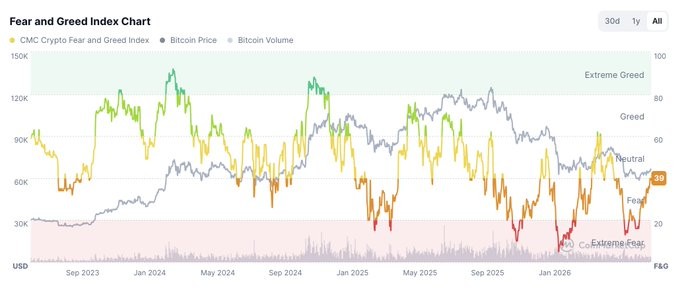
2018 was typical of extreme liquidation risk: Bitcoin fell from about $19,000 to about $3,600, a drawdown of over 80%. Those who bought at the bottom saw returns of about +192% one year later.
2022 was a governance and credit crisis: Bitcoin peaked near $69,000 and fell to a low of about $16,500, a drawdown of about 77%. The contagion effect triggered by the FTX collapse led to realized losses on about 1.2 million BTC. Those who bought at the bottom saw one-year returns of about +127%.
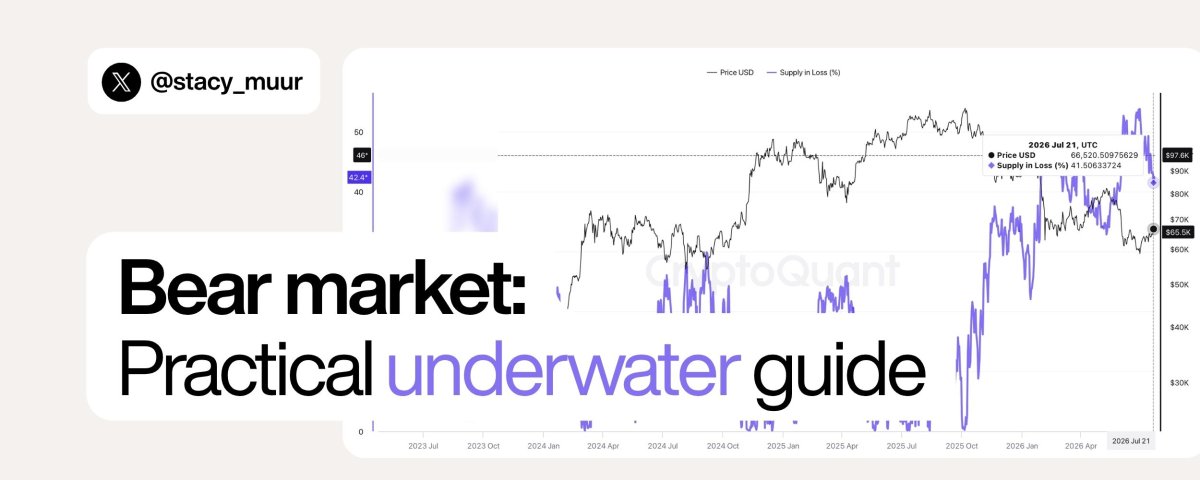
The 2025–26 cycle is completely different: peak about $124,800, low $58,115, drawdown 53.43%—the smallest on record. To date, this cycle has run for about 267 days. Supply in loss reaches 72.4% (about 10.74 million BTC underwater), MVRV Z-Score as low as about 0.24.
My interpretation is: structural risk is lower than in 2022 (less systemic contagion), but the market will still experience a capitulation phase—opportunities and dangers are concentrated here.
Core Tactics (What I'm Actually Doing, and Why)
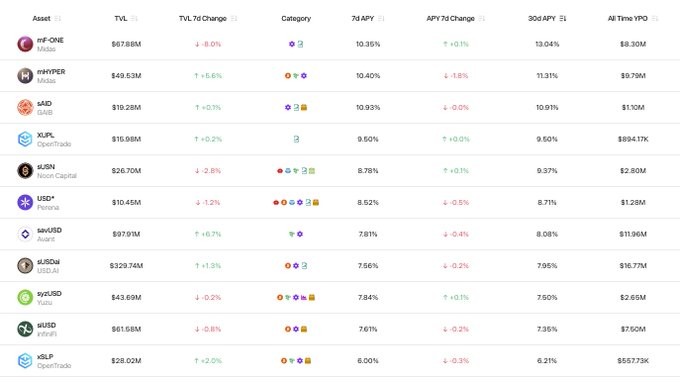
Keep Dry Powder in Stablecoins to Earn Reliable Yields
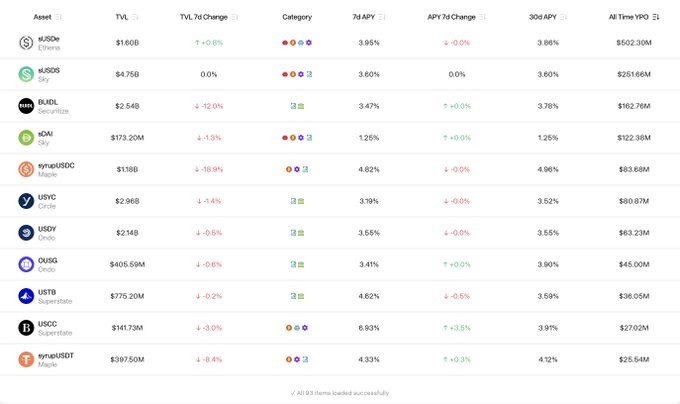
Why: The longer the bear market drags on, the more important opportunity cost becomes. Current stablecoin lending yield targets are about 5–10% APY, Bitcoin liquid staking yields are about 4.5–5.5%.
How: Based on your risk preference, place base positions in USDC/USDT, choosing reliable lending markets and custodians with provable reserves. Reinvest yields into your DCA/accumulation plan.
Example: Putting $50,000 in stablecoins at 7.5% annualized yields about $3,750 more deployable in one year—much better than letting BTC sit idle earning 0 yield; this is a real compounding engine.
Shift from "Guessing the Bottom" to Process: DCA + Accumulator
Why: Precisely timing the bottom is nearly impossible. DCA smooths entry risk; accumulator-style concentrated windows outperform pure DCA in medium-to-long term backtests (3-month accumulator +10%, 6-month +13%, 12-month +26%).
How: Set a base DCA rhythm (weekly or bi-weekly), and reserve a portion of accumulation positions specifically for deployment during statistical extreme drawdowns. You can refer to the multi-asset "Rule of Thirds": 1/3 deploy now, 1/3 DCA, 1/3 reserved for deeper pullbacks.
Example: Those who bought at the $16,500 low in 2022 caught a rebound of about +127% in one year, but only if they survived the contagion crisis. People with a process can avoid this black-or-white gambling.
Compound with Diversified, Low-Cycle-Risk Yield Strategies (Meta Vaults)
Why: Single-strategy yields may collapse or be compressed (e.g., Ethena's USDe relies heavily on funding rates). Meta vaults can automatically diversify strategies and rebalance, reducing single-cycle risk.
How: Use institutional-style vaults (such as Lombard Bitcoin Earn, Bybit Mantle Vault) or diversified lending pools that report transparent risk metrics. The goal is multi-source yields: lending, tokenized treasuries, liquid staking.
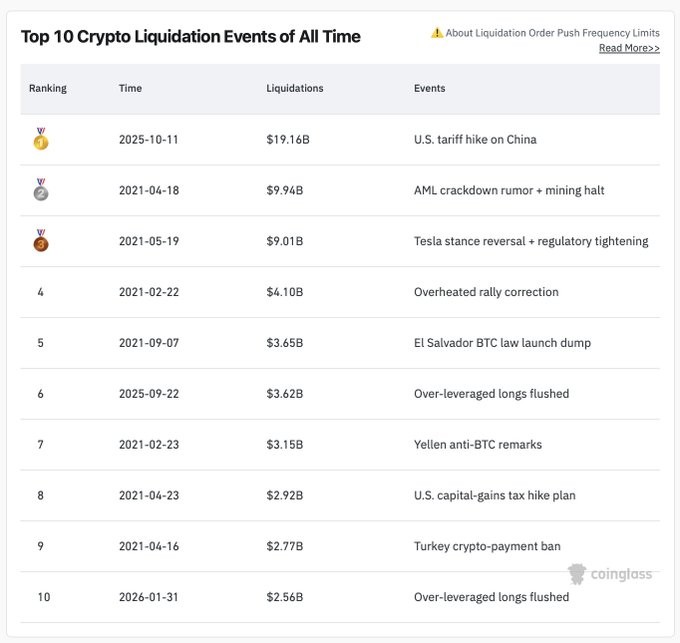
Stay Away from Leverage and OTC Financing Arbitrage Unless You Truly Understand Liquidation Risk
Why: In 2018 and 2022, leveraged traders were the biggest losers—forced liquidations create chain reactions. Current infrastructure reduces systemic contagion, but leverage still amplifies downward volatility.
How: If you must use leverage, keep positions conservative and conduct margin stress tests against reasonable drawdowns.
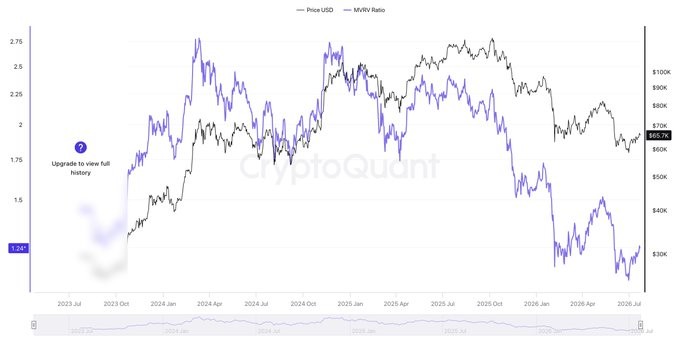
Adjust Allocation Tilt Using On-Chain Signals, Rather Than Precise Timing
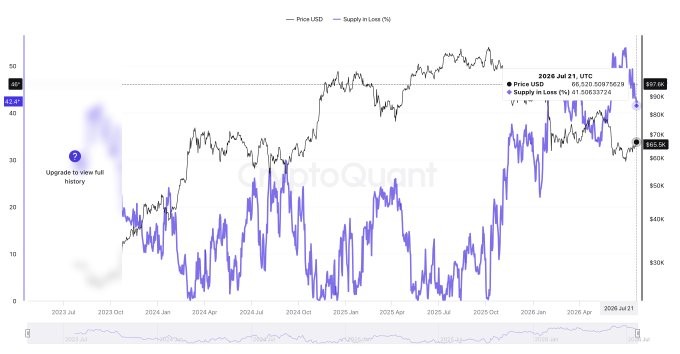
Watch Signals: MVRV Z-Score (currently about 1.24), Supply in Loss (about 41% underwater), divergence between short-term holder and long-term holder cost basis (according to CryptoQuant, short-term cost basis about $69,000 in July 2026).
My View: MVRV convergence combined with realized losses peaking has historically often marked the end of capitulation. When these signals align, I will accelerate deployment speed. Current indicators show maximum pain, but not yet fully converged—this supports process rather than going all-in.
Risk Control and What Could Go Wrong
- Yield Compression: Yields may reverse under pressure. Countermeasure: Prioritize diversified yields and tokenized treasuries, avoid single funding rate plays.
- Regulatory Shock: Some bills may target yield-bearing products. Countermeasure: Prioritize compliant stablecoins and Bitcoin (according to Benchmark January 2026 report, commodity attributes are becoming increasingly clear).
- Macro Extension: DXY or interest rate shocks may prolong the bear market. Countermeasure: Extend DCA window, maintain larger stablecoin buffer.
Specific Execution Checklist
- Allocate stablecoin reserves equivalent to X months of planned accumulation amount, invested in verified lending or meta vaults.
- Set DCA rhythm and size, reserve 1/3 as accumulation window. Backtests show accumulators have significant alpha relative to pure DCA.
- Core position leverage not exceeding 2x, and record margin buffer.
- Continuously track MVRV, Supply in Loss (CryptoQuant), and ETF fund flows; accelerate deployment speed when MVRV converges and realized losses peak.
Final Thoughts
I believe the 2025–26 bear market is more of an infrastructure-driven correction rather than the systemic collapse of 2022. This reduces tail risk, but also compresses the low-price window.
Strategies that have worked historically—preserving liquidity, earning diversified yields, strictly executing accumulation processes—still apply, and are now further amplified by DeFi yields and more robust custody.
The biggest mistakes I see are: treating yields as risk-free free lunches, or simply applying past maximum drawdowns to current downside limits.
Focus on MVRV convergence, realized loss peaks, and ETF fund flows; these are timing signals to switch from steady DCA to accelerated accumulation.
Execute the process, let math and on-chain evidence, rather than hope, compound advantages for you.
Join TechFlow official community to stay tuned
Telegram:https://t.me/TechFlowDaily
X (Twitter):https://x.com/TechFlowPost
X (Twitter) EN:https://x.com/BlockFlow_News
 @stacy_muur