US Stock Market Trends (June 18): Walsh’s Reversal Sparks Broad Sell-Off; SpaceX Posts First Decline, Semiconductors the Sole Safe Haven
TechFlow Selected TechFlow Selected
US Stock Market Trends (June 18): Walsh’s Reversal Sparks Broad Sell-Off; SpaceX Posts First Decline, Semiconductors the Sole Safe Haven
Waller’s debut is over; the next question is: when will he speak next—before or after the rate hike?
 Navigating Web3 tides with focused insights
By: TechFlow Research

On Wednesday, the Fed’s dot plot showed that half of its officials expect at least one rate hike this year. At the press conference, Chair Wach announced the abandonment of forward guidance. All four major indices fell more than 1%, gold erased all its gains for the week, and the U.S. dollar surged to a two-month high. The optimism from Monday failed to last three days—hawkish dots and a new chair refusing to signal direction wiped it out entirely.
Market Performance
The S&P 500 closed down 1.21% at 7,420.10; the Nasdaq fell 1.34% to 26,021.66; the Dow dropped 0.97% to 51,492.55; and the Russell 2000 declined 0.74%. All four indices posted their largest single-day drop of the week. Markets remained relatively subdued for most of the session. Indices dipped only slightly upon release of the FOMC statement—but a concentrated sell-off erupted within 30 minutes after Wach’s press conference began. The S&P 500 plunged nearly 0.8% in one direction and never recovered, closing near session lows alongside the other three indices.
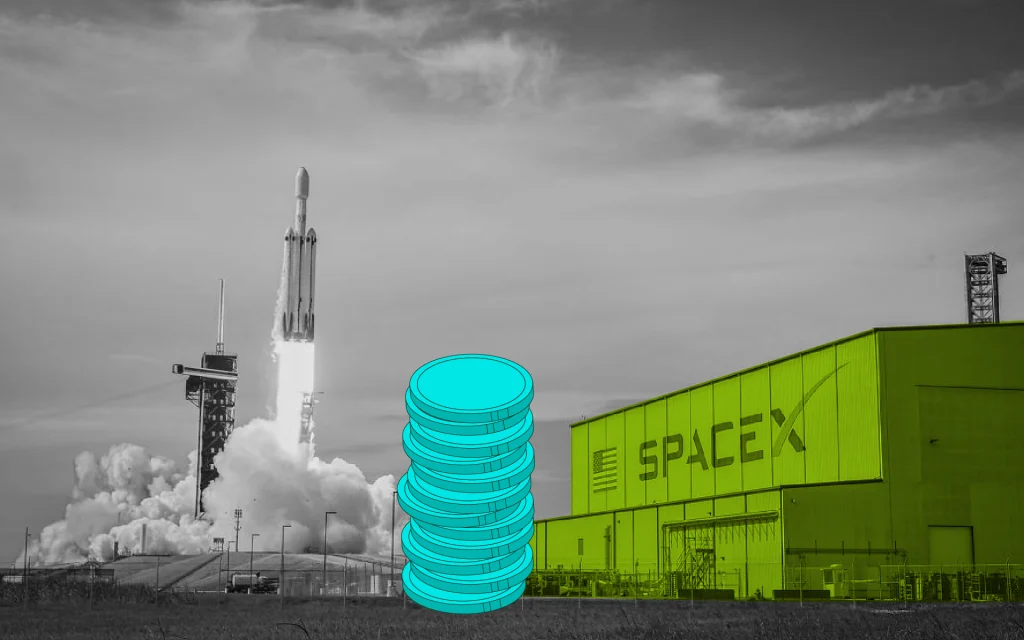
SpaceX fell roughly 5% to $191—the first-ever decline since its IPO. After three consecutive days of new highs, hawkish dot-plot expectations finally pressured valuation on this nearly $2.7 trillion market-cap stock. Implied volatility in its options rose accordingly, officially ending its post-IPO honeymoon period.
Meta slid over 5% to $586.20, leading losses among the “Magnificent Seven.” Alphabet, Amazon, and Microsoft followed suit. Under the new interest-rate framework, all seven tech giants faced uniform pressure. The pricing logic for highly valued tech stocks is being forcibly reset by hawkish expectations—and the tech sector accounted for most of the Nasdaq’s daily decline.
The Philadelphia Semiconductor Index rose 1.38%, the sole bright spot of the day. Applied Materials gained 9.3% to $214.60, Lam Research rose 6.6% to $97.40, and Arm Holdings climbed 6.2% to $182.30. Their shared rationale: the long-term AI compute-demand thesis remains intact despite rate shocks; capital rotated out of rate-sensitive software and internet names into equipment and infrastructure layers.
Consumer staples and utilities—the two defensive sectors—led declines. Their valuations have long relied on low rates; with renewed rate-hike expectations, they were hit first. Capital shifted from defense toward earnings-supported compute chains—the clearest rotation theme of the day.
Macroeconomic & Forward-Looking Analysis
The dot plot was the day’s centerpiece. Of 18 officials, nine projected at least one rate hike this year—including five expecting two hikes and one forecasting three. Only one official still anticipated a cut. The projected median federal funds rate at end-2026 jumped sharply from 3.4% in March to 3.8%, formally ending the easing cycle. The statement shrank by two-thirds, removing all rate guidance and retaining only a final line: “committed to achieving price stability”—the first unanimous FOMC decision in nine months.
At the press conference, Wach stated, “I can’t tell you what we’ll do next,” announcing the formal retirement of forward guidance—and reportedly failing to submit his own dot plot. Market participants speculated this may be the final dot plot. At the G7 summit, Trump praised Wach as “excellent,” called the rate hikes “unbelievable,” yet said he’d “listen to Wach’s judgment.” Tension between the White House and the Fed remains unresolved—merely overshadowed for now by the hawkish dot-plot shock.
May retail sales rose 0.9% month-on-month—the highest in over three years. Last week’s EIA report showed crude oil inventories plummeted 8.26 million barrels—far exceeding expectations—and Cushing inventories fell to a 10-year low. Combined, these data points reinforce the view of persistent elevated inflation, making any dovish messaging even harder to sustain.
The VIX spiked 12% to above 18. The 2-year Treasury yield jumped 13 bps to 4.18%; the 10-year yield rose ~7 bps to 4.49%. Traders now fully price in a rate hike before October—with September viewed as the most likely timing—and anticipate two cumulative hikes by Q1 next year.
The U.S. dollar surged 0.86% to a two-month high. Gold fell 1.64% to $4,258 per ounce; silver dropped nearly 3%. Bitcoin (CoinGecko) slid to the $64,100 range; Ethereum weakened to around $1,760. Crude oil ended flat near $76 after extreme volatility.
The U.S.-Iran memorandum of understanding has been signed remotely; formal signing is scheduled for June 19 in Switzerland. Yet Trump explicitly warned that military action would resume immediately if Iran fails to comply—leaving the timeline for reopening the Strait of Hormuz uncertain. U.S. markets will be closed Friday for Juneteenth, meaning all of Wach’s impact must be digested in Thursday’s single trading session.
TechFlow Perspective
Wach’s abandonment of forward guidance had an immediate consequence for markets: Wall Street lost its anchor. For the past decade, the Fed provided roadmaps, carefully crafted language, and dot plots—guiding investor pricing. With Wach dismantling the entire framework, uncertainty premiums have permanently risen by one notch.
The semiconductor sector’s outperformance confirms that the long-term AI compute thesis remains unchallenged. Yet Meta’s leadership in losses—and SpaceX’s first-ever post-IPO decline—show that rate-sensitive, high-valuation tech stocks are only just beginning their revaluation under the new “rate hikes more likely than cuts” paradigm.
Bulls hold onto two hopes: First, if the U.S.-Iran agreement is finalized smoothly on June 19, energy-related risk premiums could ease, offering temporary relief. Second, semiconductors’ counter-trend rally already signals that—as long as the AI capex narrative holds, the equipment chain retains support.
But if Thursday’s open sees markets continuing to absorb hawkish shocks—not pausing to await geopolitical tailwinds—this selloff is far from over. Wach’s debut is complete. The next question is: When he speaks again—will it be before or after the next hike?
Join TechFlow official community to stay tuned
Telegram:https://t.me/TechFlowDaily
X (Twitter):https://x.com/TechFlowPost
X (Twitter) EN:https://x.com/BlockFlow_News
 @BlockFlow_News