Elon Musk’s Self-Contradiction: Putting Rival Anthropic’s Money into His Own IPO Prospectus
TechFlow Selected TechFlow Selected
Elon Musk’s Self-Contradiction: Putting Rival Anthropic’s Money into His Own IPO Prospectus
After its listing on June 12, the market will deliver the first pricing assessment of this “restructured xAI narrative.”
 Navigating Web3 tides with focused insights
Author: Ada, TechFlow
As SpaceX approaches its IPO pricing deadline, two major monthly compute contracts have been disclosed via U.S. Securities and Exchange Commission (SEC) filings. The first, revealed in the S-1 filing on May 20, is a contract with Anthropic valued at $1.25 billion per month, leasing the entire computing capacity of xAI’s Colossus 1 data center in Memphis, Tennessee. The second, disclosed in the S-1/A amendment on June 5, is a contract with Google valued at $920 million per month, leasing approximately 110,000 Nvidia GPUs.
Combined, these two contracts generate $2.17 billion per month—or $26 billion annually—and exceed $70 billion in total value over three years, assuming no early termination. In its S-1 filing, SpaceX officially described the Anthropic contract as enabling it “to monetize idle compute capacity within our infrastructure,” placing the word “idle” squarely at the center of its narrative.
From $2.4 billion quarterly loss to $2.6 billion monthly revenue: A ledger reshaped in three weeks
SpaceX’s xAI division reported an operating loss of $2.47 billion for Q1 2026. According to data disclosed in SpaceX’s S-1, the division spent $12.7 billion on AI-related capital expenditures in 2025, followed by another $7.7 billion in Q1 2026. BitMEX’s analysis of the S-1 shows that, as of the IPO pricing date, SpaceX’s cumulative deficit stood at $41.3 billion.
The turning point came on April 1, when SpaceX confidentially submitted its IPO registration statement to the SEC. On May 20, the S-1 was publicly filed—and on the same day, the Anthropic contract was disclosed. On June 1, SpaceX filed its S-1/A amendment; on June 3, it priced shares at $135 each; on June 4, it launched its roadshow; on June 5, it disclosed the Google contract; on June 11, it finalized pricing; and on June 12, it began trading on Nasdaq under the ticker SPCX.
Indian financial platform IndMoney cut straight to the core in its interpretation of this timeline: “Three weeks ago, xAI looked like one of SpaceX’s biggest financial liabilities. Today, it generates ~$2.17 billion in monthly compute revenue from two creditworthy customers. This isn’t cosmetic storytelling—it’s structural rewriting.”
The disclosure window for both contracts was highly concentrated: the Anthropic contract was made public 22 days before IPO pricing; the Google contract, just six days before.
The origin of Colossus 1’s “idleness”: xAI has already relocated its training workloads
The “underlying asset” supporting both contracts is a facility Musk himself has already vacated.
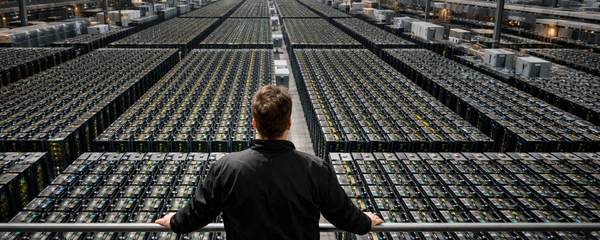
Colossus 1, located in Memphis, Tennessee, was built by xAI in just 122 days and completed in December 2024. It houses over 220,000 Nvidia GPUs—including H100, H200, and GB200 models—and draws up to 300 megawatts of power. Originally designed as xAI’s primary infrastructure for training its large language model Grok, Colossus 1’s utilization had dropped to roughly 11% prior to the Anthropic deal.
According to DataCenterDynamics, citing Musk directly: “After that, leasing Colossus 1 to Anthropic became acceptable to me—because SpaceXAI had already moved its training workloads to Colossus 2.”
xAI has expanded its data center footprint across the Memphis area: Colossus 2 went live in January 2026; a third facility is planned for Southaven; and the company acquired adjacent land for $659 million to build another data center. Grok—the product originally served by Colossus 1—has seen steadily declining usage recently. As reported by TechCrunch, xAI’s flagship AI assistant Grok has experienced a sharp drop in user engagement over recent months, freeing up server capacity—which the company is now selling to one of its closest competitors.
Google’s contract: “Bridge” language and its 5% equity stake
The Google contract—disclosed later but closer to the IPO window—contains several notable structural details.
Per SpaceX’s June 5 SEC filing, the contract is valued at $920 million per month, covering the period from October 2026 through June 2029. SpaceX must deliver the GPUs by September 2026, or Google may terminate the agreement or accept fewer units. Starting in 2027, either party may terminate the contract with 90 days’ notice. The leased hardware comprises approximately 110,000 Nvidia GPUs.
In its official statement to The Wall Street Journal, Google said: “This is a short-term, timely arrangement to ensure we have bridging capacity to meet surging demand for our Gemini Enterprise agent platform—demand that has exceeded even our own expectations.”
The choice of words—“short-term” and “bridging capacity”—stands in contrast to SpaceX’s characterization of the same contract in its prospectus as “contracted monthly committed revenue.” The two parties clearly hold divergent views on the nature of this agreement.
A further layer involves equity ties: Google is an early investor in SpaceX, holding roughly 5% of its equity, and Google executive Donald Harrison serves on SpaceX’s board of directors—giving Google a direct financial interest in SpaceX’s IPO pricing.
Anthropic contract: $1.25 billion/month—for inference, not training
The Anthropic contract is the larger, earlier-disclosed, and most closely watched of the two.
According to SpaceX’s S-1, the contract is valued at $1.25 billion per month through May 2029, with discounted pricing for the first two months. Either party may terminate with 90 days’ notice. Its total value exceeds $40 billion. French AI publication ActuIA estimates the implied cost at approximately $7.78 per GPU-hour.
Anthropic’s use of Colossus 1’s full compute capacity is exclusively for inference workloads—not model training. As reported by Basenor, this capacity will be used to expand usage quotas for subscribers of Claude Pro and Claude Max. This distinction is critical: renting a competitor’s compute for inference (i.e., responding to user queries) is fundamentally different from renting compute to train one’s own models.
A comparative benchmark underscores scale: CoreWeave’s compute contract with OpenAI is valued at roughly $11.9 billion over five years—making the Anthropic/xAI/SpaceX deal about 6.3 times larger.
Another contextual layer involves Musk’s prior public remarks about Anthropic. Earlier this year, Musk repeatedly labeled Anthropic “evil” in public appearances. Less than a few months later, he signed what is now the largest single AI compute contract in history.
Tension between 90-day exit clauses and the $1.77 trillion valuation
A shared structural feature of both contracts—the right of either party to terminate with 90 days’ notice—creates a striking contrast with SpaceX’s IPO valuation narrative.
Standard data center financing relies on stable cash flows anchored by “long-term anchor customers,” typically secured via contracts locking in commitments for 10+ years—aligned with long-horizon power procurement, construction timelines, and depreciation cycles. Both the Anthropic and Google contracts deviate sharply from this norm.
Each party also offered “soft” justifications for their respective agreements: Anthropic cited inference workloads—flexible and demand-responsive, tied to subscription growth—while Google characterized its commitment as “short-term bridging capacity.” Yet SpaceX’s S-1 classifies this revenue as “contracted monthly committed revenue,” presenting investors with a picture of predictable, recurring monthly cash inflows.
SpaceX’s IPO pricing itself rests on several forward-looking assumptions. As reported by CNBC on June 3, the $1.77 trillion valuation “assumes completion of the EchoStar spectrum and Cursor-related transactions.” Morningstar’s analysts deemed SpaceX “overvalued” and advised investors to wait until after the IPO before considering entry. Motley Fool analyst Adam Spatacco recommended investors “initially remain on the sidelines,” citing SpaceX’s decision to offer only ~4% of its shares to the public—far below the typical ~10% for mega-cap IPOs—and noting that a substantial number of early investors and employees will unlock additional shares within six months post-IPO.
On the underwriting side, Goldman Sachs led the offering, joined by Morgan Stanley, Bank of America, Citigroup, JPMorgan Chase, and 17 other banks—21 in total. Retail investors received an allocation of 30%, triple the conventional level (~10%) for mega-cap IPOs. SpaceX executed a 5-for-1 stock split on May 4.
Following its June 12 listing, the market will deliver its first pricing verdict on this “reshaped xAI narrative.”
Join TechFlow official community to stay tuned
Telegram:https://t.me/TechFlowDaily
X (Twitter):https://x.com/TechFlowPost
X (Twitter) EN:https://x.com/BlockFlow_News
 深潮TechFlow