From Cryptocurrency Exits to U.S. Stock Market Takeovers: Unveiling the Universal Capital Cash-Out Strategy
TechFlow Selected TechFlow Selected
From Cryptocurrency Exits to U.S. Stock Market Takeovers: Unveiling the Universal Capital Cash-Out Strategy
The cryptocurrency market’s exit-and-dumping model has been directly adopted by capital players in the U.S. stock market, leveraging passive funds to cash out at peak prices and harvest profits.
 Navigating Web3 tides with focused insights
By Tulip King
Translated by Saoirse, Foresight News
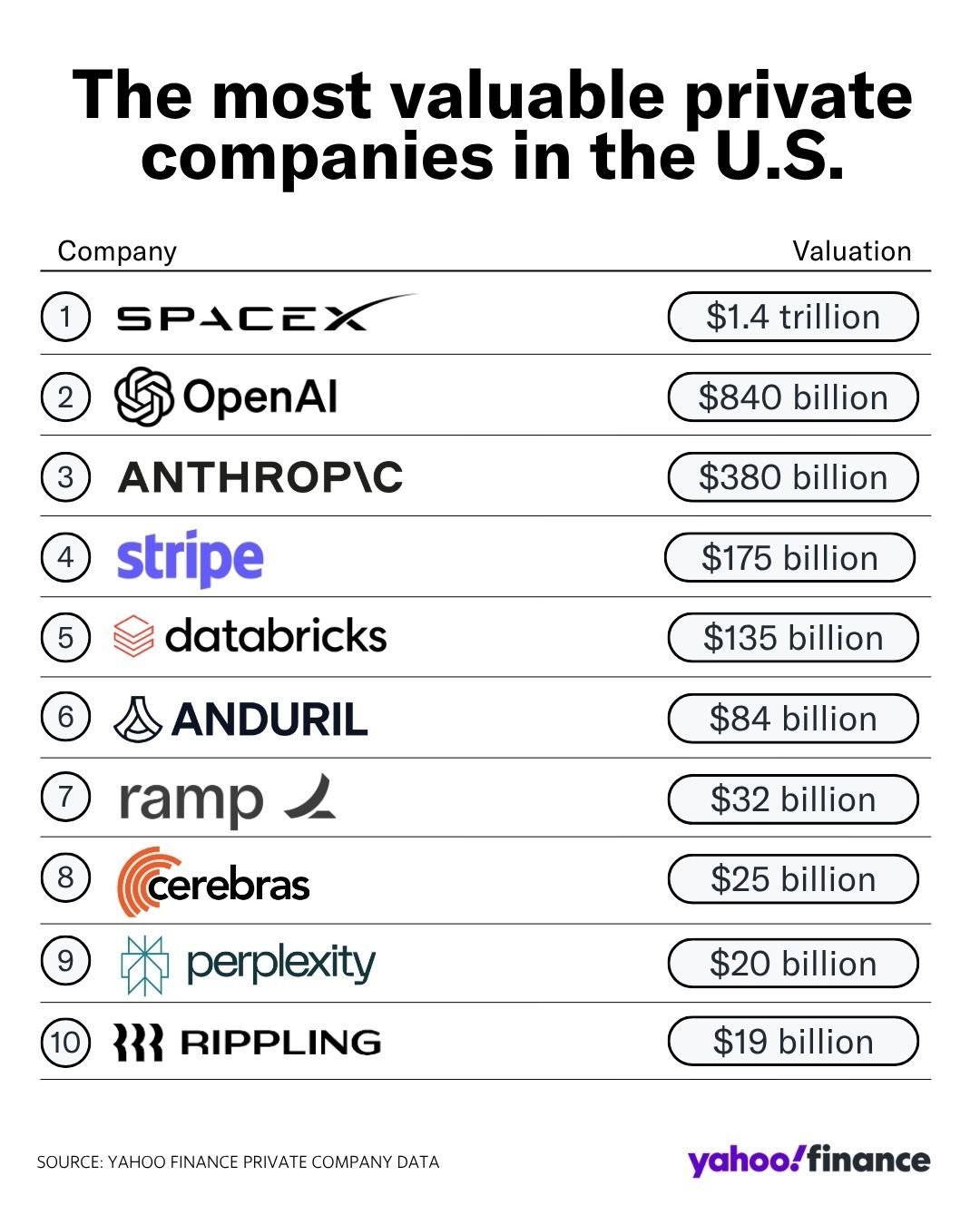
You may have already noticed that venture capital firms—after inflating private companies’ valuations to hundreds of billions, even trillions, of dollars—are finally preparing to cash out. Their sole challenge? Finding enough liquidity from buyers to absorb their exits.
Let’s be clear: I am not accusing the San Francisco VC community of illegal activity. What I condemn is behavior that is profoundly unethical—and that shatters capitalism’s original social contract.
The Original Bargain

Baby boomers were the last generation to fully ride the tailwinds of their era.
The U.S. never built a European-style high-welfare state—and historically, it didn’t need one. The original social bargain was this: the stock market *was* America’s welfare system. Traditional defined-benefit pensions faded away, replaced by individual contribution accounts; the retirement system shifted to 401(k) plans; Social Security became merely a safety net—no one expected to retire solely on it.
The implicit rule was simple: every ordinary worker would become a shareholder, and the gains from rising capital would lift all workers upward. Even with stagnant wages and widening inequality, it didn’t matter—because everyone’s retirement account was compounding quietly in the background. All rode the same wealth train; outcomes, ultimately, couldn’t be too bad.
That’s also why America’s income inequality remained politically tolerable. You could accept your boss earning 400 times your salary—as long as your retirement account grew along the same curve as his assets. Passive index funds were the purest embodiment of that bargain. Cashiers, teachers, plumbers—all could effortlessly capture market returns generated by professional capital allocators, sharing in the upside risk-free. Back then, capital markets functioned as a public wealth pool for all.
But this bargain required three conditions: (1) public markets had to be where value was genuinely created; (2) wealth appreciation had to be broadly inclusive; and (3) every new increment of capital growth had to be captured within index fund holdings. These conditions held for decades—but now, all three have collapsed.
This is exactly what they’ve stolen from you.
When companies stay private until their valuations reach tens or even hundreds of billions before going public, public markets no longer create value—they only distribute it. Everything happening in today’s stock market is wealth redistribution—not compound growth. Every dollar of earnings generated during a company’s growth phase—earnings that once flowed into ordinary people’s retirement funds—now flows exclusively to pre-IPO shareholders. After Figma went public, its share price halved within weeks relative to its private-market valuation; Klarna’s valuation plunged 90%. And this isn’t a bug—it’s how the system was designed to work.
The industry has noticed that ordinary retail investors are locked out of these gains, so it offers a soothing narrative: “democratizing investment,” “broadening access,” “bridging the wealth gap,” opening up private markets to retail participation. Reality is the opposite: it simply grants retail investors the “right” to buy in at the peak of a decade-long private-market bull run—taking over positions insiders accumulated cheaply when the company’s valuation was just one-thousandth of today’s level. Retail-facing private VC products aren’t investment opportunities—they’re tools for insider-led, high-price distribution of illiquid stakes. Even Naval Ravikant’s own promotional logic confirms this.
(Nota bene: Naval Ravikant is Silicon Valley’s foremost evangelist for privatizing venture investing for the masses—and this article directly accuses him of promoting retail private investing as a rhetorical tool enabling VCs to exit at peak valuations and harvest retail liquidity.)
A Carefully Engineered Exit Playbook
The crypto world was the first to master this extraction playbook.
Early crypto project foundations hold massive amounts of native tokens under lockup. Retail buying power has long since dried up. Token unlock deadlines loom—but there’s no buyer.
So they devise a solution: repackage those unwanted, locked-up tokens as compliant equity assets—enabling traditional financial institutions to legally purchase them. Tokens retail investors would never buy outright suddenly become “stocks.” Institutions buy compliantly; retail investors follow via brokers. Positions get distributed smoothly. The U.S. Securities and Exchange Commission (SEC) looks the other way. Founders cash out successfully—and the buyers, from day one, become targets for extraction.

Incidentally, Naval entered crypto early—and knows this playbook inside out.
After watching this model succeed in crypto, the San Francisco VC ecosystem scaled it up to the trillion-dollar mainstream capital markets. Retail-facing private VC products are the first channel; Nasdaq’s proposed listing rule changes are the second.
Nasdaq’s proposed new rule: For newly listed companies with extremely low public float, index weightings will be artificially inflated fivefold—and updated quarterly during index rebalancing. Take SpaceX, the space exploration company: valued at $1.75 trillion at IPO, with only 5% of shares publicly tradable. Under the new rule, passive index funds would be forced to buy $43.8 billion worth of its stock—based on an implied $219 billion weighting—just 15 days after listing, with zero price discovery. Internal share lockups would expire precisely ahead of the next index rebalance; at that point, full weighting kicks in, triggering unconditional large-scale passive fund purchases—while insiders legally cash out. SpaceX plans to go public mid-year, with the year-end index rebalance perfectly timed to execute the entire sequence flawlessly.
Index funds were once ordinary investors’ shield against insider extraction. Now, they’ve become instruments for capital exit. Your retirement savings are being siphoned off—free of charge—by this mechanism.
The logic is identical across crypto and VC: insiders first accumulate cheaply in markets inaccessible to retail; assets appreciate; native-market demand collapses at peak valuations; a new packaging vehicle is engineered to connect with another pool of capital—namely, pension funds and passive index funds, which buy mechanically, without regard to price; insiders exit cleanly; new retail investors absorb the overpriced inventory. The entire process is legal—because the packaging itself complies with regulations. Regulators are effectively toothless—because institutionalized extraction, while morally bankrupt, isn’t technically illegal under current rules.
The Endgame
Many current anomalies stem from this root cause: Sam Altman facing public backlash, autonomous vehicles deliberately vandalized, data centers met with community protests. Those resisting don’t understand theories of exit liquidity—but they feel it viscerally: society has split into two rigid castes—early entrants and late buyers—and the chasm between them widens faster than any individual effort, talent, or luck can bridge.
The elite tech class has proven, in practice, that the public’s shared capital is being systematically extracted—to generate outsized wealth for those already advantaged.
Wealth polarization—the “K-shaped” divergence—will intensify dramatically. What lies ahead won’t be normal market corrections, because corrections presuppose participants still believe the rules are fair.
Today’s public resistance and conflict have already evolved into societal-level political tensions.
Join TechFlow official community to stay tuned
Telegram:https://t.me/TechFlowDaily
X (Twitter):https://x.com/TechFlowPost
X (Twitter) EN:https://x.com/BlockFlow_News
 @mikeykremer