SpaceX Purchases Nearly One-Fifth of U.S. Cybertrucks; Musk’s “Left Hand to Right Hand” Move Generates Over $100 Million in Sales
TechFlow Selected TechFlow Selected
SpaceX Purchases Nearly One-Fifth of U.S. Cybertrucks; Musk’s “Left Hand to Right Hand” Move Generates Over $100 Million in Sales
Excluding purchases by Musk’s companies, Cybertruck registrations in Q4 would have plummeted 51% year-on-year.
 Navigating Web3 tides with focused insights
Author: Friday, TechFlow
TechFlow Intro: According to registration data from S&P Global Mobility, SpaceX purchased 1,279 Cybertrucks in Q4 2025—18% of all Cybertruck registrations in the U.S. during that quarter.
Adding purchases by other Musk-affiliated companies—including xAI—the group collectively accounted for approximately 19% of quarterly sales. After excluding related-party transactions, Cybertruck’s actual registered volume for the quarter plunged 51% year-on-year.
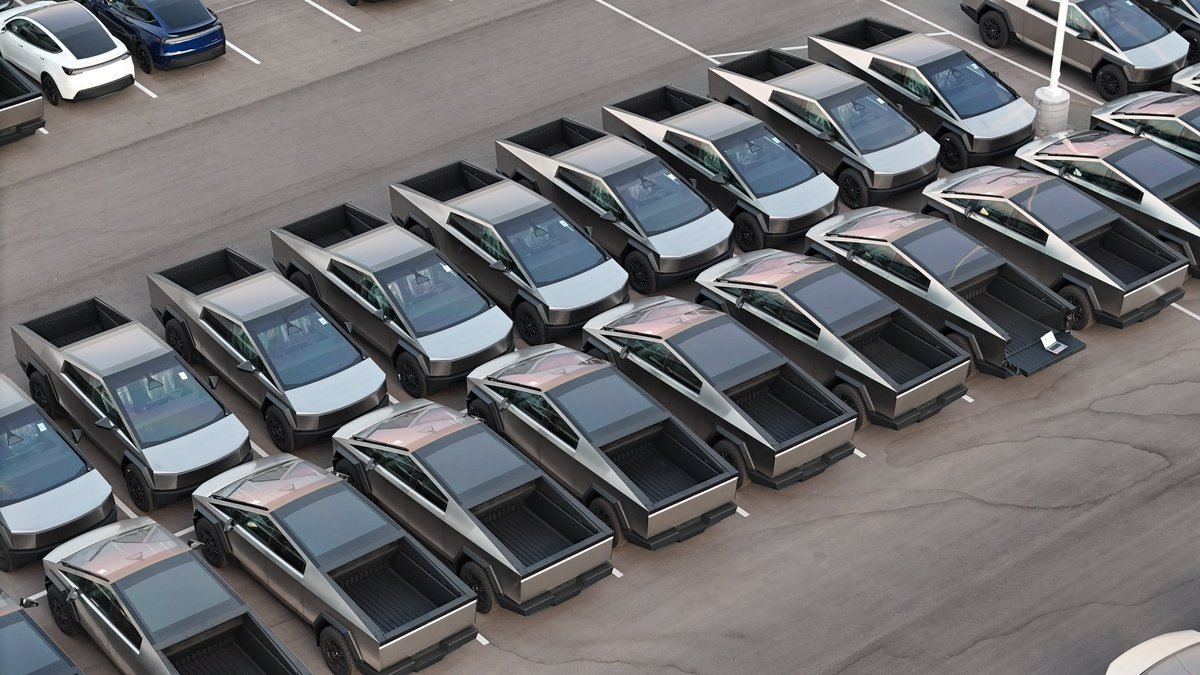
Musk’s companies are becoming the Cybertruck’s largest buyers.
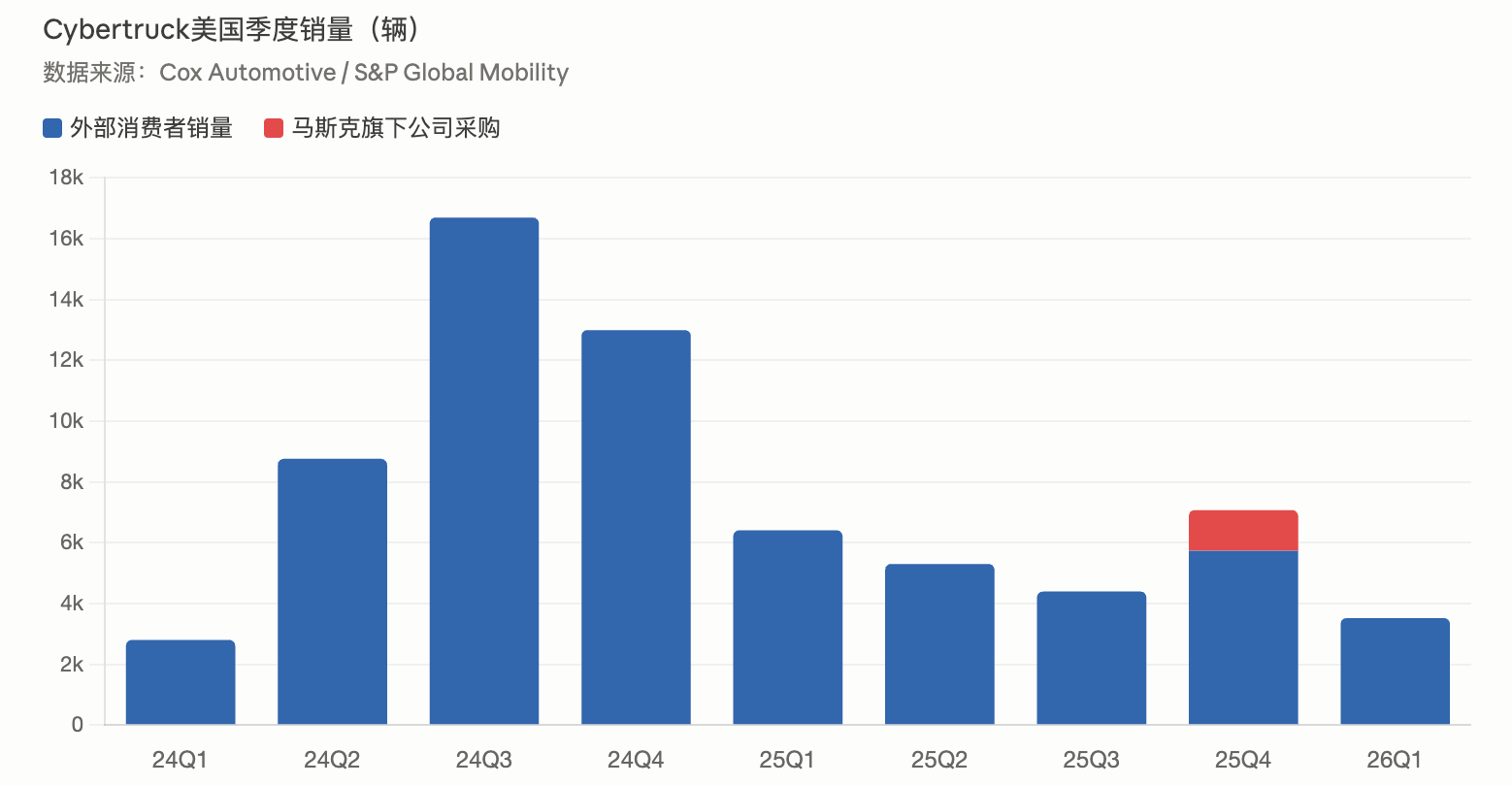
According to a Bloomberg report dated April 16, U.S. vehicle registration data from S&P Global Mobility shows that 7,071 Cybertrucks were registered nationwide in Q4 2025—of which SpaceX alone accounted for 1,279 units, over 18%. xAI, The Boring Company, and Neuralink purchased an additional 60 units during the same period, bringing the total related-party purchases to 1,339—roughly 19% of Q4’s total registrations. At an estimated starting price of around $70,000 at the time, the total value of these related-party transactions likely exceeded $100 million.
Sam Fiorani, Vice President of Global Automotive Forecasting at AutoForecast Solutions, told Bloomberg bluntly: “Tesla’s Cybertruck is losing buyers.” Tesla, Musk, and SpaceX have all declined to comment.
Excluding Related-Party Purchases, Cybertruck’s Actual Decline Reaches 51%
After subtracting purchases by Musk-affiliated companies, Cybertruck’s Q4 registration volume dropped 51% year-on-year.
Electrek has been tracking this trend since October last year, when photos first surfaced showing large numbers of Cybertrucks being delivered to SpaceX’s Starbase facility in Texas. Wes Morrill, Cybertruck’s Chief Engineer, confirmed on social media that SpaceX was using the Cybertruck to “replace its support fleet.” A documentary by the YouTube channel NASA Space Flight also captured rows of Cybertrucks parked inside SpaceX facilities.
Related-party purchases continued beyond Q4. According to the same dataset, Musk-affiliated companies registered another 158 units in January 2026 and 67 more in February.
From Nearly 40,000 Annual Units to Just 20,000—Only 8% of Target Achieved
According to Cox Automotive, approximately 38,965 Cybertrucks were sold in the U.S. in 2024—making it the best-selling all-electric pickup truck in the country that year. However, full-year 2025 sales plummeted to roughly 20,300 units—a 48.1% decline year-on-year—and just 8.1% of Musk’s 2019 production target of 250,000 units annually.
The situation deteriorated further in 2026. Only 3,519 units were delivered in Q1—the lowest quarterly figure since deliveries began—and down 45.1% year-on-year. Although Tesla launched its lowest-priced Cybertruck yet in February, starting at $59,990, initial deliveries won’t begin until June, and current delivery estimates for new orders now extend into 2027.
Related-Party Transactions Spark Governance Concerns
The controversy centers on transparency. SpaceX is not a publicly traded company, so these purchases aren’t subject to public disclosure requirements like fleet orders from Hertz or Uber. From an outside perspective, a private company is absorbing unsold inventory from a public company—both led by the same CEO.
Cross-company business ties among Musk’s ventures are nothing new: xAI uses Tesla Megapack batteries; Grok has been integrated into Tesla vehicles; and Tesla and SpaceX are collaborating on chip development. Yet large-scale sales of a slow-moving vehicle model to affiliated entities under shared leadership remain rare in the automotive industry.
Tesla faces the prospect of a third consecutive year of declining annual sales—having already lost its title as the world’s top-selling EV maker to BYD last year. Its stock has fallen roughly one-fifth since hitting an all-time high in mid-December last year. Whether the $60,000-tier Cybertruck can truly reignite external demand will be the most critical test ahead.
Join TechFlow official community to stay tuned
Telegram:https://t.me/TechFlowDaily
X (Twitter):https://x.com/TechFlowPost
X (Twitter) EN:https://x.com/BlockFlow_News
 深潮TechFlow