OneBullEx Upgrades Its Exchange-Layer Infrastructure for a New Phase of the Latin American Crypto Market
TechFlow Selected TechFlow Selected
OneBullEx Upgrades Its Exchange-Layer Infrastructure for a New Phase of the Latin American Crypto Market
OneBullEx is a next-generation AI-powered derivatives trading platform, focusing on exchange-level infrastructure, intelligent execution capabilities, and platform transparency.
 Navigating Web3 tides with focused insights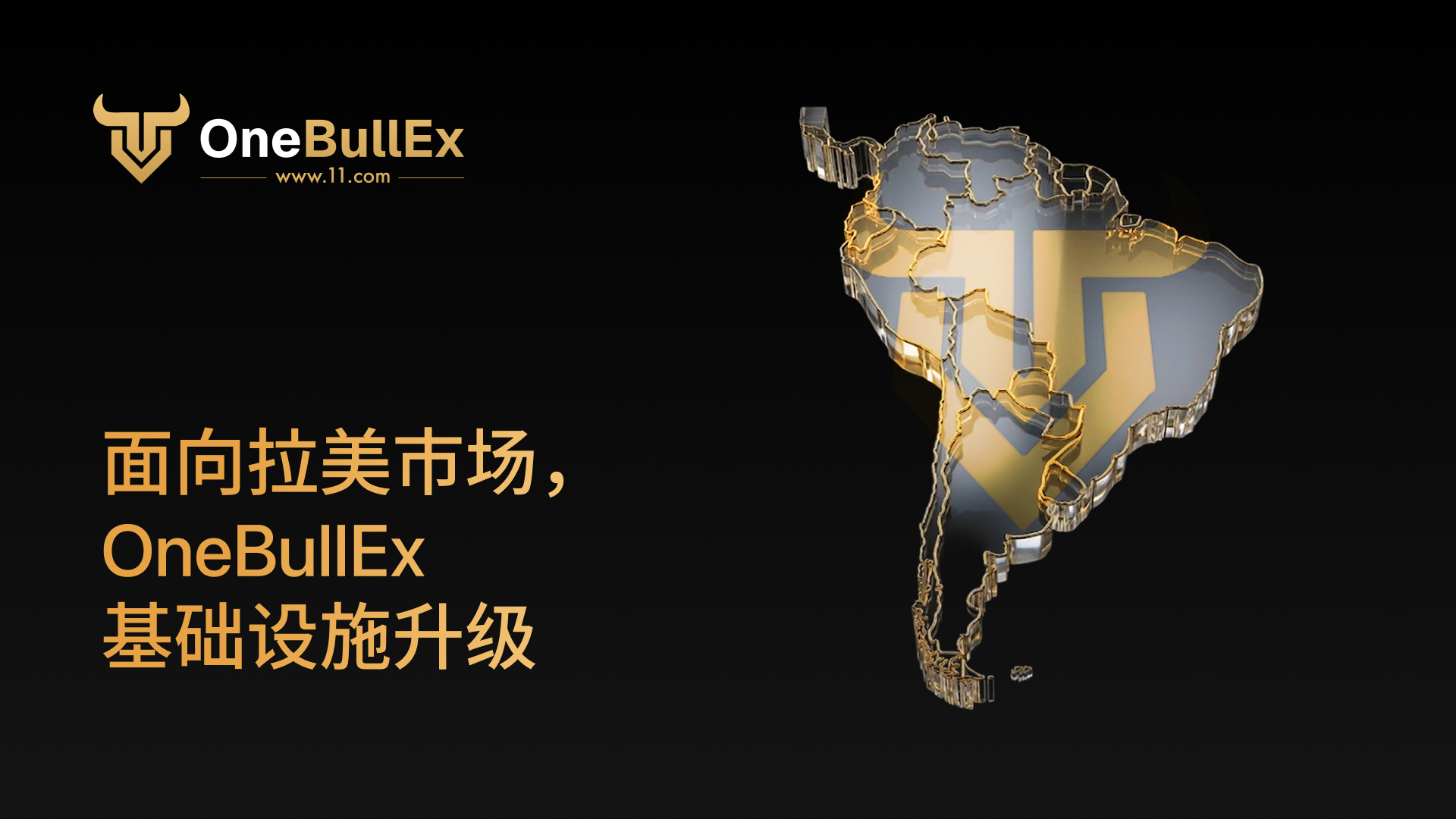
OneBullEx recently launched a new exchange-layer infrastructure architecture, further integrating AI-powered process capabilities, order execution, and platform-level visibility directly into the core of the trading environment—accelerating the platform’s evolution from a “functional tool” to an “intelligent execution infrastructure.” This update arrives amid growing market emphasis across the crypto derivatives space on platform architecture, trade process design, and operational transparency.
This shift is especially pronounced in Latin America. According to Chainalysis’ 2025 Global Cryptocurrency Geography Report, cumulative cryptocurrency transaction volume in Latin America reached nearly $1.5 trillion between July 2022 and June 2025. Brazil led the region with $318.8 billion, followed by Argentina ($93.9 billion), Mexico ($71.2 billion), and Colombia ($44.2 billion). Over the same period, regional crypto adoption grew by 63% year-on-year.
These figures signal that Latin America has clearly moved beyond the early-adopter phase. Today, market focus has shifted from “Can users access the crypto market?” to “Can platforms deliver higher-quality support to users?”
Currently, the mainstream retail trading experience in Latin America remains heavily signal-driven: Telegram group alerts, social media predictions, and app notifications. While such tools may offer directional guidance, they fall short in supporting critical aspects like order execution, adaptive responses to liquidity shifts, and process transparency during rapid market volatility. In a region where 64% of crypto activity occurs on centralized exchanges—and markets operate 24/7—execution quality directly translates into real cost. Stablecoins remain the most actively traded crypto asset in the region, further amplifying the importance of precise order handling.
Why Platform Infrastructure Matters Especially in Latin America
Demand for cryptocurrency in Latin America is driven by a set of real-world conditions distinct from those elsewhere: persistent inflation, volatile local currencies, capital controls, and massive cross-border remittance needs—all pushing users toward crypto assets, not merely for speculative gains.
Chainalysis consistently highlights these macroeconomic pressures as long-term drivers of crypto adoption in Latin America. Today, stablecoins account for a substantial share of crypto trading volume across the region; in several major Latin American fiat markets, they have become the primary source of trading activity. The head of Brazil’s central bank has publicly stated that roughly 90% of the country’s crypto flows are tied to stablecoins—used predominantly for payments, cross-border transfers, and USD-denominated asset allocation.
When users’ crypto activity intersects directly with savings, salary conversions, and cross-border settlements, poor order handling incurs costs in ways pure speculators may not readily perceive. For example, during periods of high BRL-USDT volatility, a poorly timed market order can affect not only the trade outcome itself but also alter the USD value of a remittance or the actual exchange cost of a cross-border purchase.
Yet in Latin America, users face challenges that go well beyond directional decision-making. Differences among platforms in process support, order handling capability, and execution transparency are becoming increasingly decisive.
From Signals to Execution
In recent years, discussions around regulation and market structure have increasingly distinguished two distinct layers: one centered on signal generation, and another focused on the actual order execution and processing occurring within the trade lifecycle.
The European Securities and Markets Authority (ESMA), in its regulatory briefing on algorithmic trading, explicitly states that using algorithms solely to generate trading signals does not constitute algorithmic trading. The true challenge lies at the level of execution itself—including how orders are processed, when they are executed, how they are structured, and whether the entire process offers sufficient transparency and visibility—especially in 24/7 markets.
Across markets, execution quality often hinges on factors that traditional signal tools handle poorly: order size, timing, routing, and latency. Research in traditional finance repeatedly shows that in fragmented or rapidly changing environments, these operational details materially impact order quality. This underlying logic holds regardless of asset class. For OneBullEx, the future competitive edge lies in integrating AI, execution logic, order management, and risk control directly into the exchange layer.
Latin America’s Transformation Is Unfolding in Diverse Ways
Brazil is Latin America’s largest crypto market—far surpassing all others. OneBullEx’s recent research on Brazil’s crypto futures market reveals clear shifts in user behavior and market structure. Its phased growth rate stands at 109.9%, with institutional-scale large trades driving a significant portion of this expansion. As market maturity increases, transparency, platform controllability, and trustworthiness are rising in priority for users. Regulatory developments taking effect in early 2026 have further reinforced this trend. For any platform seeking entry into Brazil, infrastructure quality has become an unavoidable baseline requirement.
Argentina faces a different kind of pressure. Reuters reported in March 2026 that the country’s monthly inflation rate was 2.9% in February, with annualized inflation still at 33.1%. Though peak inflation has passed, financial decisions remain highly sensitive in this environment. Argentine users are also among the region’s highest adopters of stablecoins. For those seeking purchasing-power protection, platform performance in process management and order handling directly shapes their real-world experience.
Mexico’s crypto market follows yet another logic. Kaiko’s research shows that MXN-denominated trading volume in 2025 has begun diverging from regional trends—suggesting some users may be shifting toward stablecoin-based remittance tools and alternative withdrawal methods. Mexico’s largest domestic exchange, Bitso, reports that XRP and stablecoins constitute a major share of its trading volume—highlighting the structural role of cross-border remittances in Mexico’s crypto economy. For users relying on stablecoin channels for cross-border transfers, exchange quality, execution timing, and order handling directly affect the final value received.
Colombia, meanwhile, is emerging as a new center of demand under fiscal pressure. Kaiko’s report notes that COP-denominated trading volume hit a record high in early 2025, closely correlated with USDT inflows and peso depreciation. As trading activity accelerates, the limitations of relying solely on alerts and directional signals become increasingly apparent—making platform capabilities in process support and order handling more critical than ever.
Platform Quality Standards Are Rising
Across Latin America, the crypto market is maturing—and growing more discerning. As adoption expands and stablecoin usage deepens, expectations around transparency, platform controllability, and order handling quality are rising in tandem.
In this environment, platform quality is increasingly defined not by flashy features, but by the robustness of underlying trading processes. Clear disclosures, consistent control mechanisms, and greater execution transparency are becoming essential—not least because users are actively seeking platforms they can both understand and trust.
OneBullEx’s latest infrastructure upgrade is specifically designed to meet this evolving market reality. As platform competition shifts from feature stacking to process quality, transparency, and execution support, foundational architectural capability becomes the key determinant of value.
The Value of AI Goes Beyond Prediction
For OneBullEx, the value of AI trading lies not just in prediction—but in integrating research, execution, risk control, and process support into a unified, exchange-layer capability system. Boston Consulting Group (BCG) research points to a similar conclusion: 35% of organizations have already adopted advanced AI systems to some degree, while another 44% plan to do so. Early benefits observed are largely attributable to AI-driven end-to-end process optimization—not isolated point solutions.
Within trading environments, this means AI’s value should manifest in more stable order execution, clearer process control, more efficient research collaboration, and higher process transparency in 24/7 markets. In Latin America—where stablecoin trading, currency hedging, and derivatives converge on a single platform, and users cannot monitor markets continuously—the execution-level support capability is precisely what predictive models alone cannot address.
OneBullEx embeds automated execution technology directly into the trading workflow—covering order management, systematic risk control, and full-process transparency for every position and order. Within this architecture, products like 300 SPARTANS integrate strategy execution, process management, and research support into a unified platform environment—enabling AI to participate meaningfully in the execution chain. Overall, OneBullEx prioritizes embedding process support directly into exchange-layer infrastructure.
The Next Inflection Point in Platform Competition
Latin America’s crypto market has evolved beyond the stage where mere connectivity defines user experience. Stablecoins dominate a large share of regional trading activity, and use cases continue expanding.
As Latin America’s crypto market matures, OneBullEx believes the next phase of platform competition will be increasingly defined by AI-enhanced process strength, execution stability, operational transparency, and exchange-layer support capability. This is precisely the direction targeted by OneBullEx’s latest infrastructure upgrade—and it will continue to define the platform’s long-term development and product evolution roadmap.
About OneBullEx
OneBullEx is a next-generation, AI-driven derivatives trading platform focused on exchange-layer infrastructure, intelligent execution capabilities, and platform transparency. It offers USDT-settled perpetual contracts and continuously optimizes order handling, process management, and trading environment visibility through AI-powered research, execution, and risk control. Supported by OneMore Group, OneBullEx is committed to delivering a more stable, transparent, and efficient trading experience for users worldwide.
Website: www.onebullex.com
Join TechFlow official community to stay tuned
Telegram:https://t.me/TechFlowDaily
X (Twitter):https://x.com/TechFlowPost
X (Twitter) EN:https://x.com/BlockFlow_News
 @One_BullEx