OneBullEx Drives Crypto Derivatives Platforms from Copy Trading to AI-Powered Trade Execution
TechFlow Selected TechFlow Selected
OneBullEx Drives Crypto Derivatives Platforms from Copy Trading to AI-Powered Trade Execution
OneBullEx is a next-generation cryptocurrency exchange powered by AI and centered on derivatives trading.
 Navigating Web3 tides with focused insights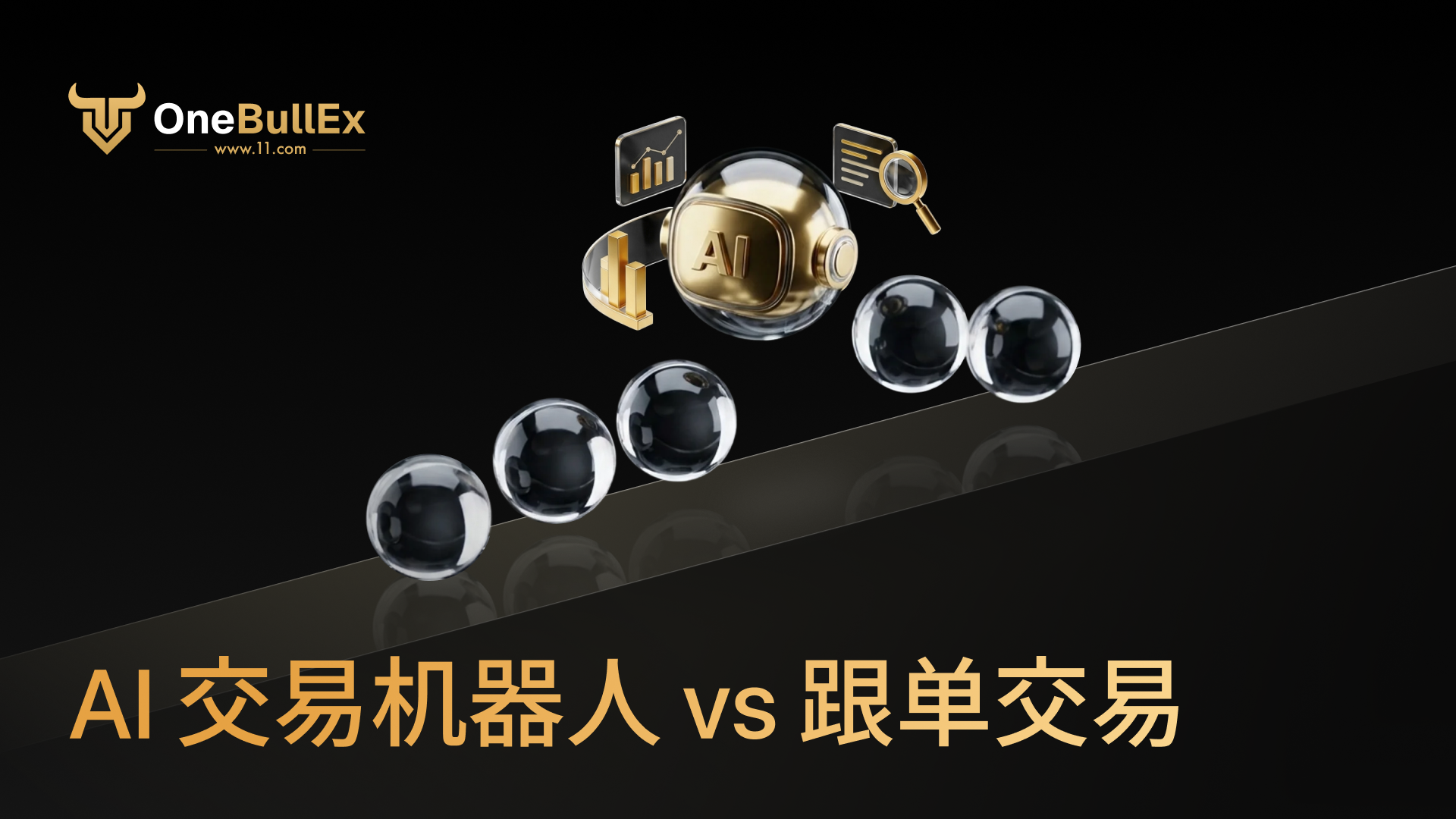
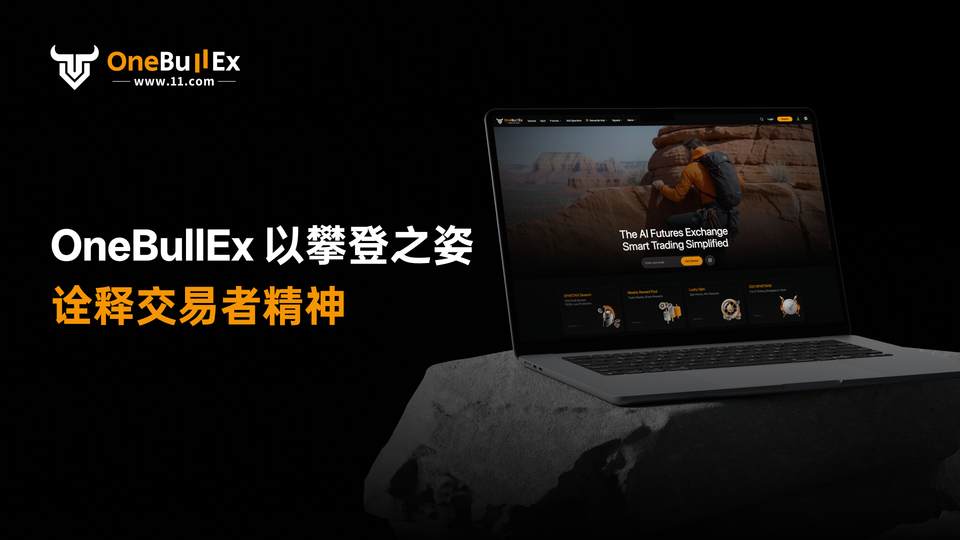
OneBullEx has recently officially announced its Chinese-market brand name, “YiNiu Exchange,” and is simultaneously rolling out its AI-powered futures trading product suite across multilingual markets. Headquartered in Dubai and centered on AI and futures trading, OneBullEx positions itself as “The AI Futures Exchange”—a futures exchange that directly embeds AI automation capabilities into its trading infrastructure.
This positioning reflects a clear product judgment: the next phase of competition in the crypto futures market is no longer about the number of trading bots or isolated copy-trading functionality. The key differentiating dimension is whether a platform can integrate strategy research, automated execution, and risk-control mechanisms into a single, verifiable infrastructure. This is the architectural direction OneBullEx has chosen—and it serves as a crucial starting point for understanding current market evolution.
This judgment is supported by data from two directions. The global algorithmic trading market was valued at approximately $15.5 billion in 2021 and is projected to continue expanding at a compound annual growth rate (CAGR) of 12.2%. In traditional markets, roughly 70% of U.S. equity volume is already handled by algorithms—while automation penetration in crypto futures remains far below that level. Meanwhile, the social copy-trading platform market is expected to grow from $3.2 billion in 2024 to $6.7 billion by 2034, indicating that both copy-trading and automated execution are expanding in parallel.
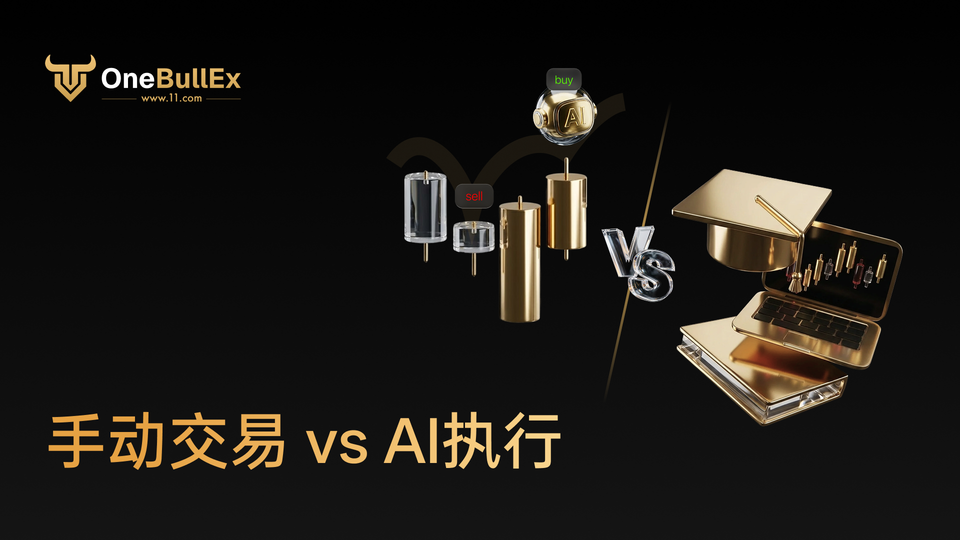
More direct changes are evident at the user-behavior level. Q2 2025 data shows that 67% of Gen Z traders used an AI trading bot at least once during the quarter, averaging 11.4 days of usage per month—and panic liquidations dropped by 47%. Automated execution has become part of daily trading; this generation will not revert to fully manual, screen-based trading.
Two Models, One Core Need
Copy-trading and bot subscription both address the same fundamental problem: transforming a trading process that traditionally demands professional expertise, continuous judgment, and strict execution discipline into an outcome accessible to ordinary users. The former attracts novice users with low entry barriers and strong social attributes; the latter meets passive traders’ demand for stable execution through preconfigured strategies, 24/7 operation, and higher levels of automation. Both models have already established solid user bases—and users’ choices often hinge on how much active control they wish to retain.
Weaknesses Under Extreme Market Conditions
Under normal market conditions, both models operate relatively smoothly. But when liquidity dries up or prices reverse rapidly, their respective vulnerabilities become sharply exposed. Copy-trading transmits not only the original trader’s position timing but also their emotional state to followers—meaning the actual risk profiles borne by the two parties are not fully aligned. Bot subscription, meanwhile, suffers primarily from limited information visibility: underlying logic, backtesting methodology, and out-of-sample performance are typically opaque to users, and many products still lack sufficient disclosure on returns and drawdowns—a gap that widens significantly amid heightened volatility.
Competition Shifts to the Infrastructure Layer
The key variables shaping the next phase of futures-platform competition are already emerging. First is full historical performance disclosure: whether time-weighted returns, maximum drawdowns, and out-of-sample test results are comprehensively presented directly determines whether a strategy can be meaningfully evaluated. Closely related is clarity in accounting standards: some copy-trading services execute orders at prevailing market prices upon trigger, creating systematic price discrepancies between followers’ entry points and those of original traders; similarly, net asset value (NAV) calculation methods in bot-subscription products are frequently opaque.
A deeper variable lies in whether research and execution are genuinely integrated. Today, most bot markets focus narrowly on execution—but users seeking to validate new ideas, tune parameters, or deploy strategies still typically need to switch to separate tool environments. Most platforms currently deliver point solutions; end-to-end workflow integration remains in its early stages.
Regulatory attention is also converging along the same axis. The U.S. Commodity Futures Trading Commission (CFTC) has launched a public consultation on AI trading systems, focusing specifically on explainability, risk control, and auditability. Since the 2010 Flash Crash, regulators’ sensitivity to algorithmic feedback loops has steadily increased. For futures platforms aiming to build user trust in the next phase, transparency and auditability of underlying architecture will become core differentiators.
OneBullEx’s Architectural Direction
OneBullEx’s brand proposition—“Intelligent Trading, Simplified”—directly responds to these observations. From the product-definition stage onward, OneBullEx has deliberately embedded AI capabilities into the foundational architecture of the crypto exchange, making AI an intrinsic part of the execution infrastructure—and building two product lines around this framework.
The 300 SPARTANS trading bot targets the execution layer. Every live strategy comes with its historical NAV curve, maximum drawdown, time-weighted return, and out-of-sample test results—presented via Glass-Box–level transparency, which constitutes one of the product’s core constraints. Users’ funds remain within the exchange’s account system; when a strategy hits a predefined risk threshold, the system pauses execution and displays the corresponding triggering logic to the user. This level of disclosure and risk-control transparency clearly distinguishes it from conventional bot-subscription offerings.
The upcoming OneALPHA addresses the other side of the gap: traders who possess sound trading logic but lack quantitative development expertise. Its goal is to translate natural-language trading ideas into backtestable, deployable strategy code—further lowering the barrier to strategy creation. This product line remains under active development.
Within OneBullEx’s product architecture, these two lines represent the front and back ends of a unified workflow: OneALPHA handles strategy generation and validation; 300 SPARTANS handles execution, disclosure, and risk control. The platform proactively bridges the longstanding gap between research and execution.
Copy-Trading Is Not the Endpoint
Copy-trading will continue serving as an onboarding channel for new users; bot subscription will continue meeting passive traders’ execution needs. Yet a more advanced cohort of traders is now seeking a complete product ecosystem—one that enables them to truly own, verify, and deploy their own strategies.
To fully meet this demand, platforms must unify research, validation, execution, and risk control within a single system. YiNiu Exchange is building its product architecture precisely along this path. How far—and how fast—it advances will ultimately be determined by market and user feedback.
About OneBullEx
OneBullEx is a next-generation cryptocurrency trading platform powered by AI and built around futures trading. As “The AI Futures Exchange,” OneBullEx focuses on deeply integrating AI automation, transparent execution mechanisms, and trading infrastructure—delivering a more transparent, efficient, and verifiable futures trading experience through products such as the 300 SPARTANS bot and OneALPHA. Supported by OneMore Group, OneBullEx is committed to building a more stable, transparent, and intelligent trading environment for global traders.
Join TechFlow official community to stay tuned
Telegram:https://t.me/TechFlowDaily
X (Twitter):https://x.com/TechFlowPost
X (Twitter) EN:https://x.com/BlockFlow_News
 @One_BullEx