Tiger Research: If I Were the Founder of Kaito, How Would I Survive?
TechFlow Selected TechFlow Selected
Tiger Research: If I Were the Founder of Kaito, How Would I Survive?
Future InfoFi will shift from a "permissionless model" focused on scale to a "boutique model" featuring in-depth collaboration between vetted KOLs and project teams.
 Navigating Web3 tides with focused insights
Author: Ryan Yoon
Translation: TechFlow
TechFlow Editorial: In January 2026, a policy change by social media giant X (formerly Twitter) brought the entire InfoFi (information finance) sector to a standstill within just three days. The once-dominant "post-to-earn" model led by platforms like Kaito was dealt a devastating blow after crossing the platform's red lines.
This article, written by Tiger Research, deeply analyzes why the InfoFi ecosystem appeared so fragile under the will of centralized giants. It also explores, from the founder’s perspective, five viable paths for project transformation in the post-InfoFi era. This is not merely a post-mortem on survival, but a profound reflection on how Web3 projects have become overly dependent on Web2 infrastructure.
The full article follows:
Key Takeaways
- A single policy update from X (formerly Twitter) caused the collapse of the entire InfoFi ecosystem within three days—exposing the structural risks Web3 projects face when overly reliant on centralized platform infrastructure.
- InfoFi projects now face five choices: shut down, transition into bounty-based grant platforms, adopt Korea-style sponsored blog models, expand across multiple platforms, or shift toward MCN-style KOL management.
- The future of InfoFi may be smaller, more controlled, and quality-focused. It will likely evolve from a permissionless, scale-driven model to a curated “boutique” model built on deep collaboration between vetted KOLs and projects.
- Unresolved fundamental challenges: Even after transformation, InfoFi still faces two core problems: establishing a fair compensation system and proving token value.
1. The Three Days of InfoFi’s Death
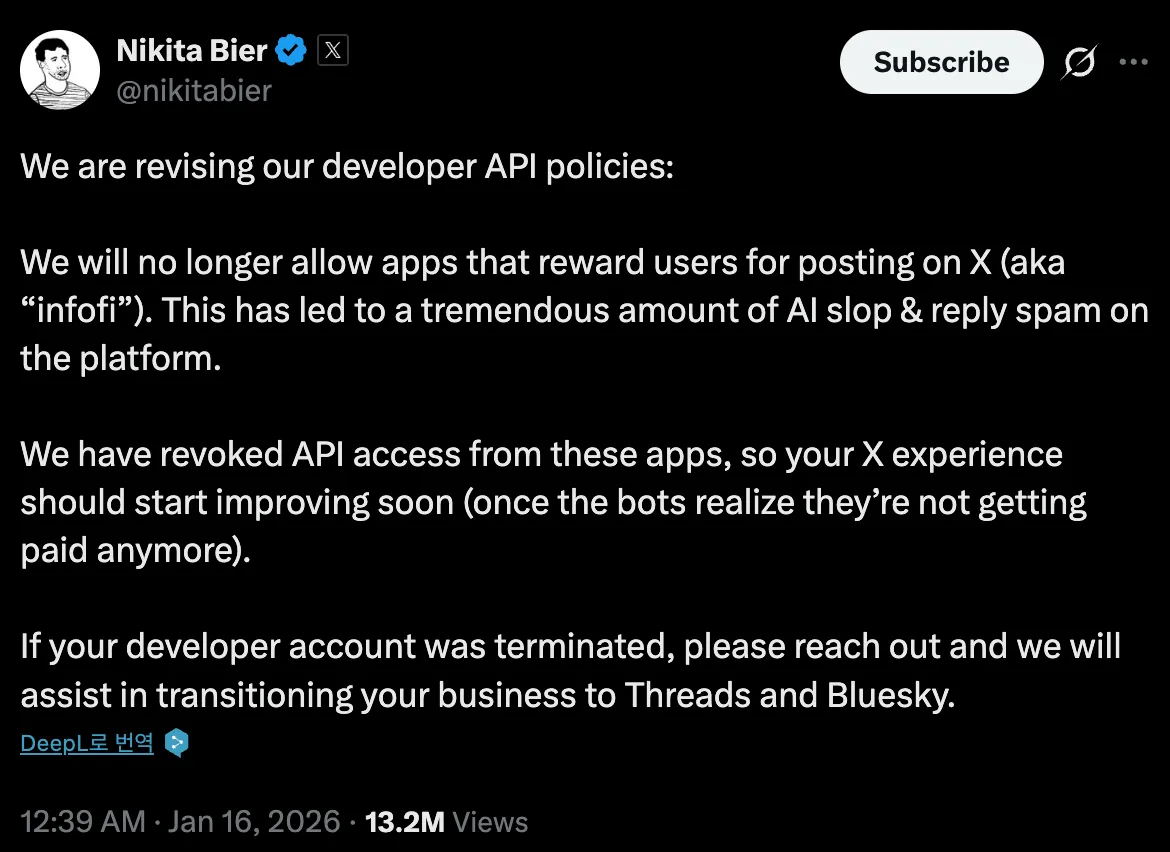
Caption: Source X (@nikitabier)
On January 15, Nikita Bier, head of product at X, posted a brief message stating the platform would no longer allow apps that reward users for posting content. For InfoFi projects, it was the end.
According to Yu Hu, founder of Kaito, here's how events unfolded:
- January 13: Kaito received an email from X hinting at potential enforcement actions and immediately requested clarification.
- January 14: X sent an official legal notice; Kaito submitted its legal response the same day.
- January 15: Nikita Bier’s public post dropped. Kaito learned about the decision at the same time as everyone else.
The market reaction was brutal.
$KAITO’s price plummeted, and the community criticized the team for failing to provide advance warning—even though the team claimed they had been preparing for such scenarios. That evening, Kaito issued an emergency statement explaining they had previously received multiple legal notices from X, all resolved through new agreements. Thus, they were still expecting further discussions this time.
Regardless of explanations, one decision from X ended the InfoFi ecosystem. In just three days, an entire sector collapsed—because one company decided the model harmed platform quality.
2. If I Were an InfoFi Founder Today
Does this mean InfoFi is completely over? Projects like Kaito are already planning next steps. But what’s needed now isn’t a revival of old models, but rather a reimagining of InfoFi 2.0.
If I were the founder of an InfoFi project, what realistic options would remain? By mapping out these “viable paths,” we can begin to outline the contours of InfoFi’s next phase.
2.1 Shutting Down
This is the simplest option: wind down operations before funds run out. In practice, many small-to-mid-sized projects may enter a “zombie” state—largely inactive, occasionally posting social updates, then disappearing entirely.
Given that the product-market fit (PMF) built around X no longer exists, continuing to burn cash in search of a new direction may be unrealistic. Shutting down could be the most rational choice. If the project holds valuable data assets, selling them to other companies could recover partial value. As such, most中小型 InfoFi projects may take this path.
2.2 Bounty-Based Grant Platform
If access to X’s API is no longer possible, another option is to revert to older models: KOLs apply directly to campaigns, submit content for manual review, and receive rewards upon approval.
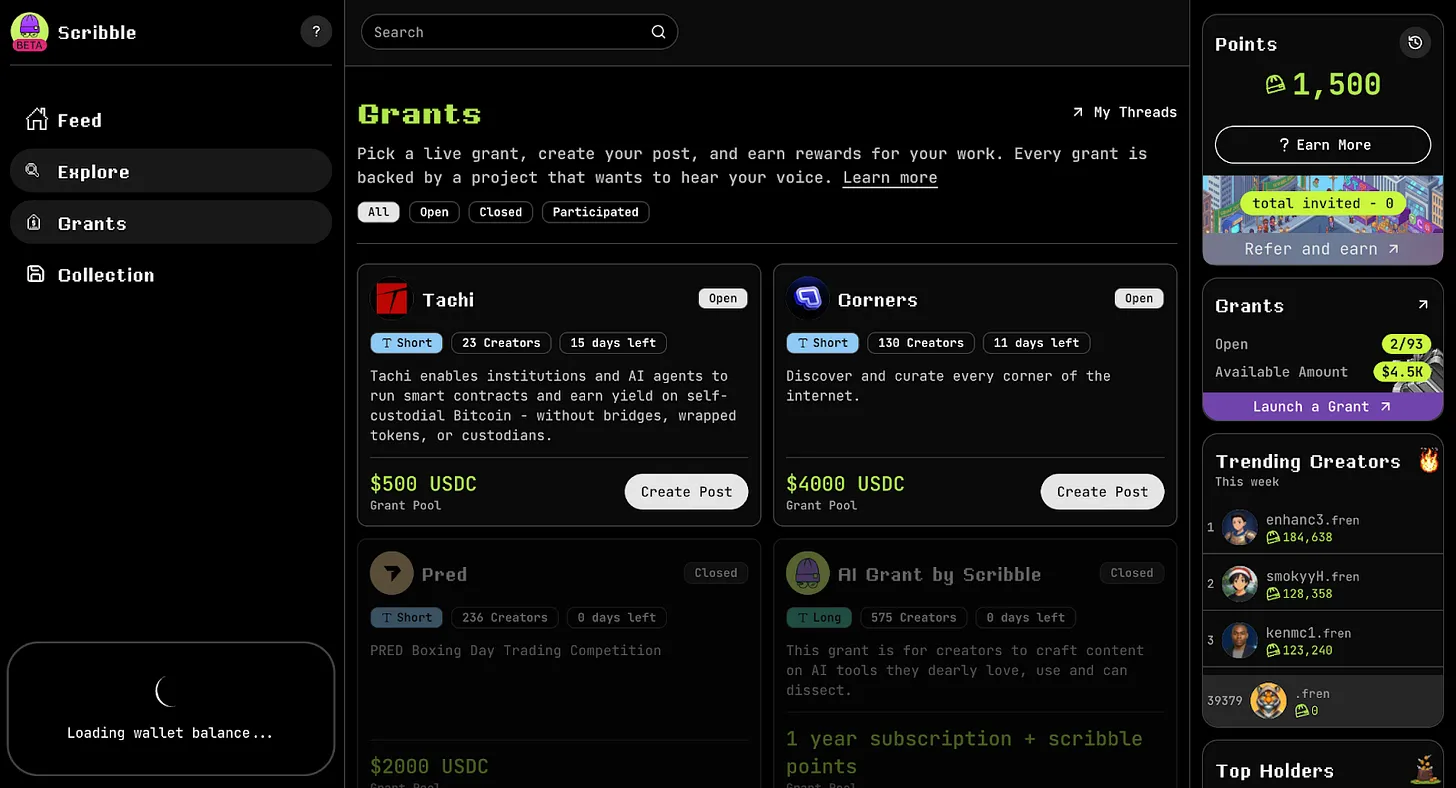
Caption: Source Scribble—a typical example of pre-submission review platforms
Scribble is a classic case. Projects issue grants as bounties, KOLs create and submit content for approval. This is a “submit-and-review” model, not real-time tracking.
This structure can scale into an open platform. The platform provides matching and infrastructure, while individual projects manage their own campaigns. As more projects join, the KOL pool expands; in turn, a larger KOL base offers more options for projects.
The downside? Uncertainty for KOLs. If content gets rejected, their time is wasted. After repeated failures, high-quality creators may leave the platform.
2.3 Korean-Style “Brand Blog” Model
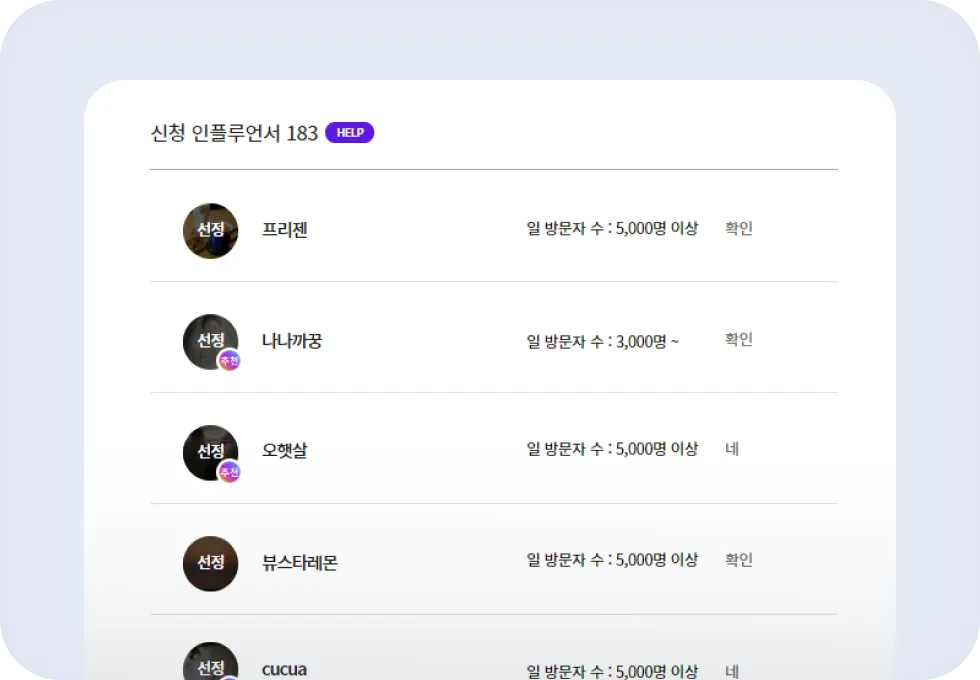
Caption: Source Revu
Korea’s branded sponsorship blog model follows a “pre-screen, then manage” approach instead of post-hoc review. Firms like Revu have operated under this model for over a decade.
The process is straightforward: projects set target engagement metrics and launch campaigns; applicants apply; projects select KOLs based on follower count, past performance, and other data. Selected KOLs receive clear guidelines. Content is reviewed by operators after publication. If standards aren't met, revisions are required; missed deadlines result in penalties.
In this model, KOLs avoid futile effort. Once selected, following the guidelines almost guarantees payment. Unlike bounty systems, there’s no risk of rejection after completion. From the project side, quality control is easier since only pre-vetted participants are involved.
2.4 Multi-Platform Expansion
If X is no longer viable, the next move is to shift to YouTube, TikTok, and Instagram. Across Web3, there’s growing momentum to break free from X. The argument is that true growth requires moving beyond crypto-native platforms to broader-audience channels.
The main advantage is access to vastly larger user bases than X. TikTok and Instagram wield strong influence in emerging markets like Southeast Asia and Latin America. Each platform runs different algorithms—so even if one channel shuts down, business continuity remains possible.
The trade-off is operational complexity. On X, you only need to audit text; on YouTube, video length and production quality matter; on TikTok, the first three seconds determine success; on Instagram, Story execution and format quality must be evaluated. This demands platform-specific expertise or new internal tools. API policies and data collection methods also vary widely across platforms. In effect, it’s nearly equivalent to rebuilding from scratch.
Policy risk persists. Platforms can change rules overnight, just like X did. However, distributing activities across multiple platforms reduces reliance on any single one. For large-scale projects, this is the only path offering meaningful scalability.
2.5 MCN-Style KOL Management
In the Web2 MCN (multi-channel network) model, a KOL’s brand value is critical. In Web3, it’s even more decisive. Narratives drive capital flows, and opinion leaders (KOLs) hold immense sway—one sentence can swing token prices.
Successful InfoFi projects have already cultivated active, aligned KOL communities. These creators grew through months of participation on the platform. Rather than recruiting new creators from scratch, projects can retain this group and shift toward data-driven management—unlike traditional Web2 MCNs that rely on constant new talent acquisition.
An MCN-style structure implies formal contractual relationships rather than loose, opt-in platform participation. With accumulated data and established relationships, platforms can exert greater influence within the Web3 ecosystem and negotiate better commercial terms.
For InfoFi projects, this requires a robust management system. Data becomes the core asset. If platforms can use data to guide KOLs and deliver professional, data-driven go-to-market (GTM) strategies for projects, this model can offer lasting competitive advantages.
3. InfoFi 2.0
The fall of InfoFi leaves two lessons for the Web3 ecosystem:
- The irony of decentralization: Web3 projects depended on the centralized platform X—and a single decision from X was enough to bring the whole system down.
- Limits of incentive design: Reward mechanisms successfully attracted participants, but lacked effective quality controls. Spam surged, giving X a clear justification for intervention.
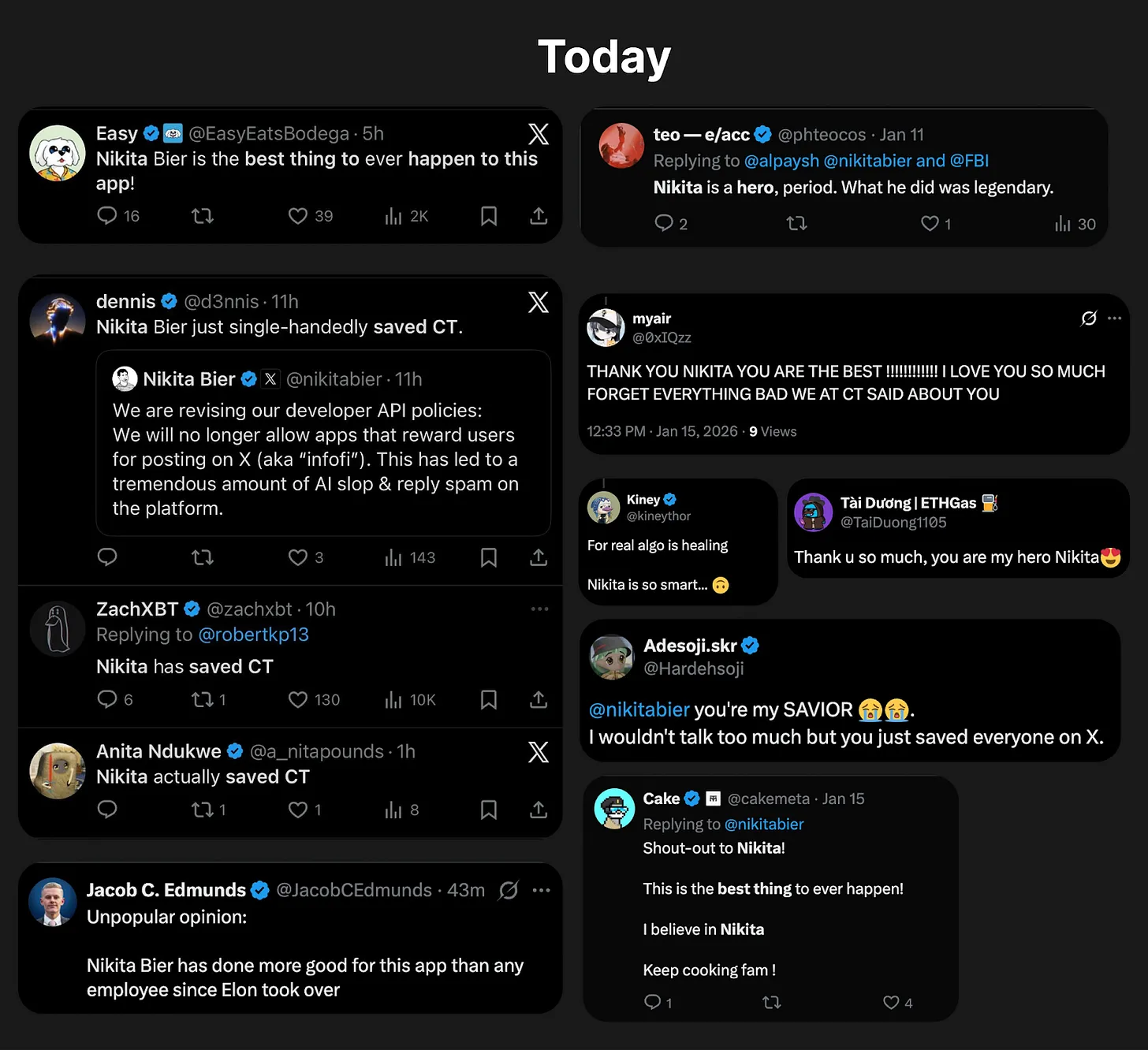
Caption: Source X (@nikitabier)
Does this mean InfoFi is truly finished?
Not entirely. A few projects that achieved product-market fit may survive through transformation—by expanding across platforms, running curated campaigns, or adopting MCN-style management.
InfoFi 2.0 is likely to be smaller, more controlled, and quality-oriented. It will shift from open, permissionless platforms to curated networks—closer to integrated marketing platforms that combine local GTM efforts (including offline components like ads).
Yet core challenges remain.
Joel Mun from Tiger Research House points out that once rewards are introduced, participants inevitably seek loopholes, making fair system design extremely difficult. This behavior generates low-quality content, creating negative feedback loops that can destabilize the platform—the central problem facing InfoFi projects.
David raises an even more fundamental question. He argues that InfoFi token value has largely relied not on platform performance, but on staking rewards, airdrops, and belief in narratives. Now both pillars have weakened. This leads directly to the key question: Why should investors buy InfoFi tokens?
For InfoFi 2.0 to survive, these questions demand clear answers. A project cannot sustain itself if it becomes disconnected from its token holders.
Join TechFlow official community to stay tuned
Telegram:https://t.me/TechFlowDaily
X (Twitter):https://x.com/TechFlowPost
X (Twitter) EN:https://x.com/BlockFlow_News
 @tiger_research