Single post 150 million views: Dan Koe and his solopreneur business
TechFlow Selected TechFlow Selected
Single post 150 million views: Dan Koe and his solopreneur business
The most profitable way to become a super individual is to teach others how to become super individuals.
 Navigating Web3 tides with focused insights
Author: Curry, TechFlow
What was the hottest article on X last week?
"How to fix your entire life in 1 day."
The author, Dan Koe, is an American creator in the "solopreneur" space—teaching people how to quit their jobs and make a living through writing. One week after publication, the article had already reached 150 million views.
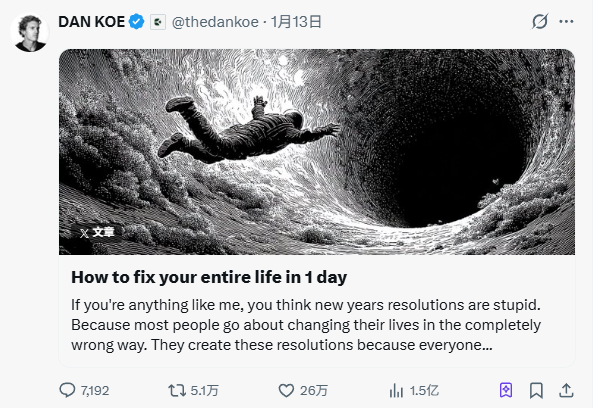
What does 150 million mean? X has just over 600 million monthly active users globally—meaning one in every four users likely came across this article.
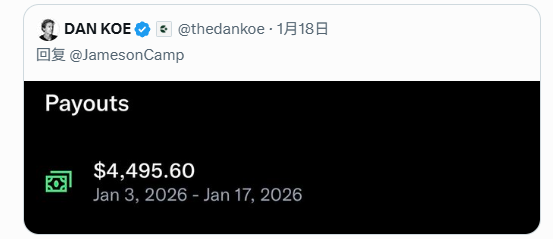
Some wondered how much money it made. Dan Koe shared his earnings: $4,495 from X’s revenue-sharing program over 14 days.
150 million views, $4,495. Yet Dan Koe actually earned over $4 million last year.
Clearly, the money didn’t come from platform payouts.
You’ve definitely heard the term “solopreneur.”
It means you don’t need a job or a team—just share your ideas and creativity online, attract an audience that resonates with you, and then sell them courses. In the U.S., it's called a One-Person Business.
Dan Koe is a top player in this field: 750K followers on X, 1.2 million YouTube subscribers, and a 170K-person email list.
His story is textbook. Studied design in college, worked as a freelancer after graduation, tried e-commerce and lost money. Started posting on Twitter in 2019—no one cared. He stuck with it for two years before gaining traction.
This journey itself becomes content. Failure, struggle, persistence, breakthrough—the same narrative arc you see on any self-help influencer.
Ji Xiaolei talked about it. Luo Zhenyu talked about it. Fan Deng talked about it.
Americans package it as Philosophy and Productivity; Chinese creators call it "cognitive upgrading." The skeleton is identical.
So how does Dan Koe make money?
Visit his website and you’ll find a few offerings: a paid newsletter subscription, two books (“The Art of Focus” and “Purpose & Profit”), and an AI tool named Eden, which he co-founded.
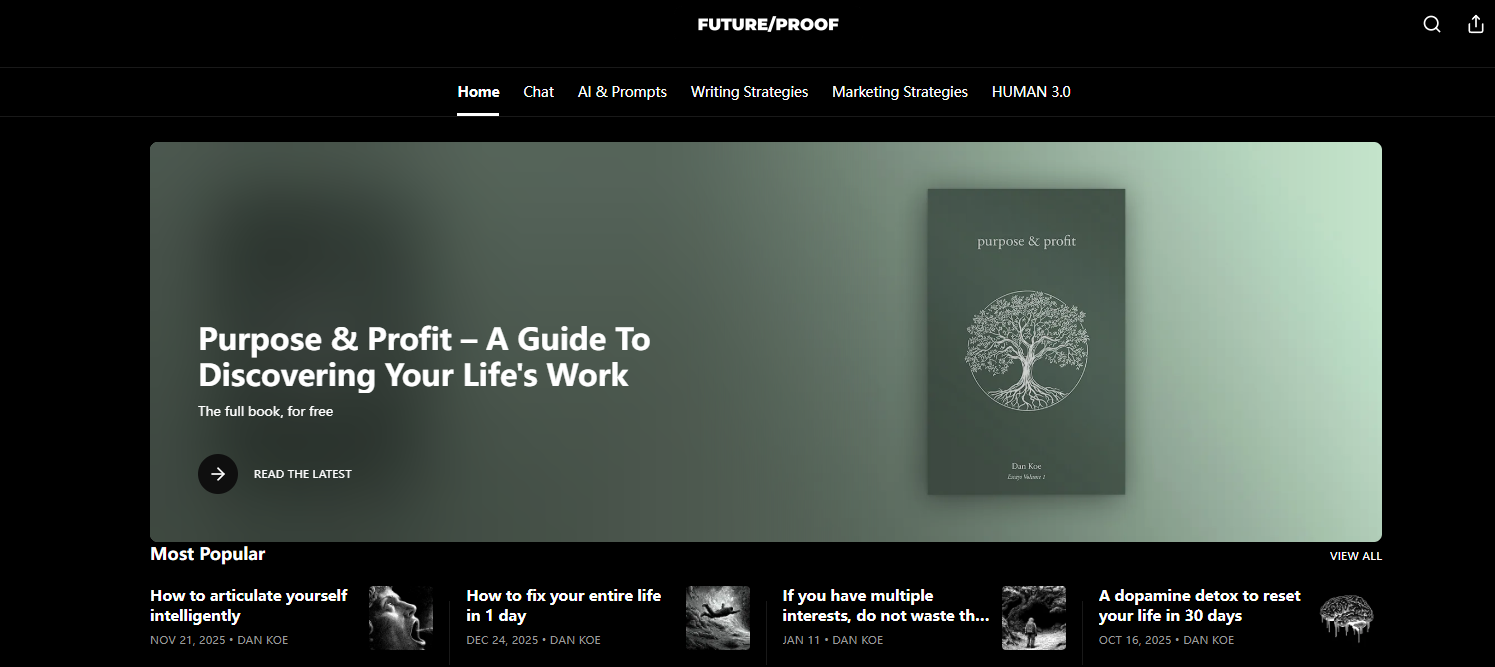
He used to sell writing courses and a membership community—those are no longer visible on his site, possibly discontinued or merged into the paid newsletter.
I couldn’t find official pricing, but the business logic is standard:
Free content filters for those willing to pay; low-cost products filter for those willing to spend more.
How much does he earn? In 2023, he tweeted that he made $2.5 million that year. In a 2024 interview with beehiiv, a subscription platform, Dan revealed annual earnings exceeding $4 million.
Given his audience size, it’s not outrageous. With nearly 200K in his email list and millions across YouTube, even if 5% bought a product, that’s close to 50K paying customers.
So what is the value of 150 million views to him?
A top-of-funnel traffic source. The $4,495 from X’s revenue share is pocket change. What matters is brand exposure and reach—the real money comes from the minority who convert into paying customers.
You might ask: Who buys this stuff?
Precisely those who want to become the next Dan Koe.
These students’ goals are typically: “build a personal brand,” “monetize content creation,” “escape the 9-to-5 grind.” They’re paying to learn how to do exactly what Dan Koe is doing.
This model only works with one assumption: there will always be newcomers entering the game.
Like gym memberships spiking every January, the solopreneur space always has people believing they can be the next big success. Dan Koe published his viral post on January 12—right when Western audiences are most motivated by New Year resolutions.
The title says “fix your entire life in one day.” What do you think people expect when they click?
Meanwhile, X is also placing its bets.
On January 16, just days after Dan Koe’s post went viral, X announced a new policy: double the creator revenue pool, boost long-form content ranking, and allocate an extra $1 million to reward top-performing original articles.
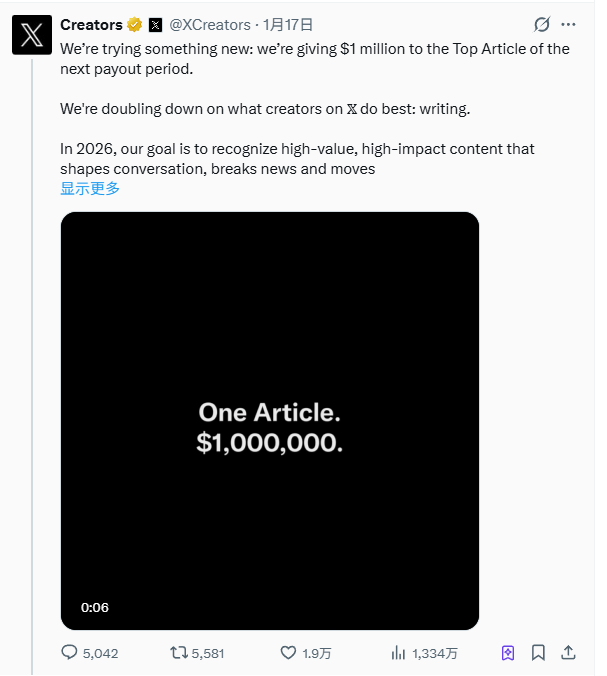
Musk’s goal is clear. TikTok has sliced everyone’s attention into 15-second fragments. X wants to go the opposite way—use long-form content to keep users engaged. In the comments, Dan Koe wrote something along the lines of: “We’ve been scrolling too hard on short videos—now the internet has a chance to swing back.”
X loves to hear that.
But what can $1 million actually buy?
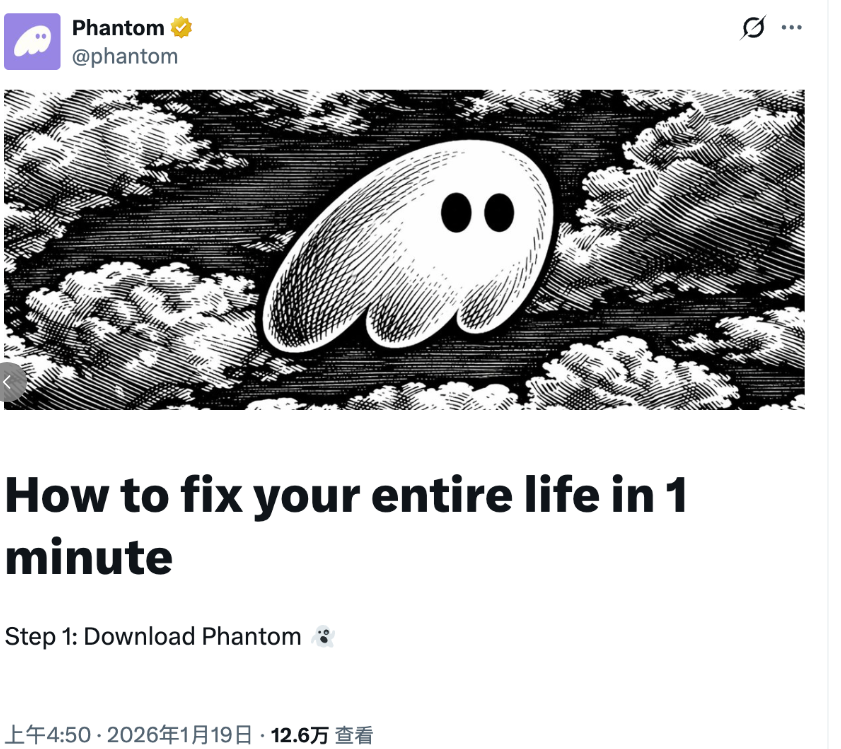
Search X now and you’ll find countless imitators. Articles teaching AI skills or serving up motivational fluff are popping up everywhere: “How to change your life in 2026,” “The one skill you need,” “Why most people will never succeed”...
Same structure, same image style as Dan’s viral post, even mimicking that “let me tell you the truth” tone.
This writing style has even become a meme, sparking waves of parody and imitation.
Not surprising. Dan Koe himself said he uses AI to assist writing—by having AI interview him, extract ideas, and format them into highly shareable structures.
Anyone can learn this method. ChatGPT can generate a “life-changing” long-form article in ten minutes—grammatically correct, structurally sound, sprinkled with psychological jargon to appear profound.
Yet it’s still Dan Koe who goes viral, not the copycats.
Why?
One explanation: trust takes time. Dan Koe has been writing for six years, with real failures and a traceable growth journey. AI can mimic his sentences, but not replicate that history.
Another: the solopreneur space is overcrowded.
When everyone teaches “how to become a solopreneur”—whether about AI tools, credit cards, life fixes, or business tips—attention concentrates at the top. Early entrants get the meat, latecomers get soup, and those who arrive even later get nothing.
A third factor: luck. Dan Koe hit the sweet spot—X tweaked its algorithm, it aligned with New Year motivation cycles, and Musk pushed long-form content policies. Three forces叠加 (overlapped), and boom—150 million views.
Someone else, another time, same-quality article—might only get 1.5 million views.
An interesting twist: Dan Koe’s article was posted a few days too early to qualify for X’s $1 million content reward program.
But it doesn’t matter to him. His business model doesn’t rely on platform payouts. The 150 million views have already served their purpose—spreading the name “Dan Koe” and filling the top of his funnel with new eyeballs.
So who will X’s $1 million ultimately go to? According to the rules: original long-form posts, at least 1,000 words, ranked by visibility on paying users’ home feeds.
In other words: you need not only good writing, but an existing large audience.
So it’ll likely go to top creators again.
This is how the game is structured. Platforms need star creators to prove “long-form can succeed.” Top creators need platform traffic to feed their funnels. AI enables mass production of “life-changing” content—but only a tiny few actually profit from it.
What role do most people play?
Readers.
They read “How to fix your entire life in one day,” feel deeply inspired, believe they can become solopreneurs, then hit like, save, share—and keep scrolling to the next post.
Join TechFlow official community to stay tuned
Telegram:https://t.me/TechFlowDaily
X (Twitter):https://x.com/TechFlowPost
X (Twitter) EN:https://x.com/BlockFlow_News
 深潮TechFlow