If you are long on oil, Maduro's arrest is not good news.
TechFlow Selected TechFlow Selected
If you are long on oil, Maduro's arrest is not good news.
It depends on the specific path, but ultimately it should lead to peace and the well-being of humanity.
 Navigating Web3 tides with focused insights
Author: Alexander
Compiled by: TechFlow

Let me quickly break down the major events currently unfolding in Venezuela. As oil is one of my areas of expertise, I will try to keep my points concise and clear, and make this reading free. If you appreciate my analysis, please help by sharing it.
The dictator Nicolás Maduro, who rose from a bus driver to a dictator, is responsible for tens of thousands of deaths, the exodus of 8 million people, and the oppression of 34 million. The root of all this lies primarily in the curse of oil wealth, corruption, and the "breeding ground of collectivism." Yes, the resource curse is very real.
Today, the U.S. government announced the successful capture of Maduro in a special military operation. It is reported that Maduro and his wife have been transported from Caracas to the United States, are currently detained at an undisclosed location, and are slated to be prosecuted in New York on charges of "narco-terrorism" and "drug trafficking."
So, what happens next? We don't know yet. But if Trump decides to reclaim U.S. oil assets expropriated by the Venezuelan government, or even temporarily take over the country to rebuild its institutions, I am fully supportive. If you think deeply, you should be too.
Why? Because for decades, Venezuela's elite have proven incapable of escaping the "resource curse." Such a policy would not only benefit humanity and freedom but also be a blessing for peace. Why do I think so?
The reason is that Venezuela is not just any ordinary OPEC member, as can be seen from my OPEC production chart below. (Note: The mentioned actions by Trump and the U.S. government here are hypothetical discussions, not facts. Readers should note the distinction.)
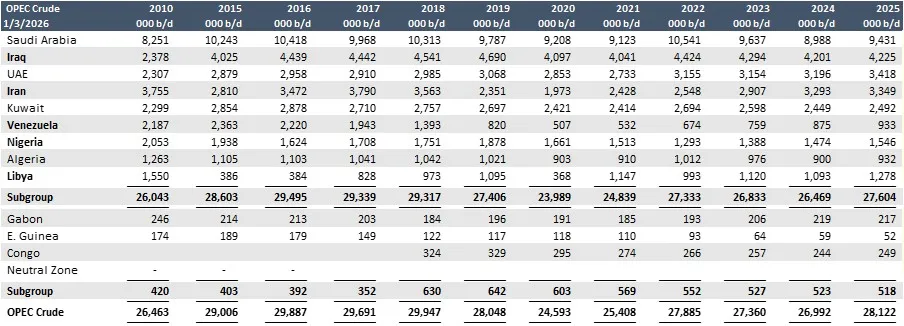
Chart: OPEC Oil Production (Excluding Natural Gas Liquids)
Source: Burggraben Analysis; Multiple Data Sources
In fact, Venezuela holds the world's largest oil reserves, with conventional oil quality comparable to Saudi Arabia's. In other words, it has the potential to significantly impact global oil prices just like Saudi Arabia. Generally, lower oil prices (which is what Trump desires) are often considered a boon for peace and prosperity.
Before delving into geological conditions and oil production, let's return to first principles. In my humble opinion (I am Swiss, not a U.S. voter), Trump's view that "U.S. oil assets should be returned to their rightful American owners" is correct. This is clearly his stance. Therefore, yes, this intervention is not just about drugs; it's also closely tied to oil, and I fully support this position.
As a resource investor, I am truly tired of seeing dictators and regimes around the world expropriate Western assets without fair compensation, while Western leaders either turn a blind eye or hide behind procedures and polite statements.
We should not reward corrupt leaders, now or in the future. We should firmly uphold the rule of law when Western corporate interests are violated. Even if you disagree with me (that's perfectly fine), as a resource investor, you should be comforted that Trump may have somewhat reduced the above-ground risk for all commodities in emerging markets, at least in the short term.
In any case, Venezuela holds the world's largest oil reserves, a significant portion of which originally belonged to Western companies that discovered and developed them. These companies not only developed part of the resources but also paid due taxes to the host country.
The Orinoco Belt alone represents the largest accumulation of oil on Earth, with a mean estimate of technically recoverable heavy oil of about 513 billion barrels. In terms of reserves, i.e., the portion proven economically recoverable, Venezuela accounts for roughly 20% of the world's known reserves.
However, in a market with total daily oil demand of about 85 million barrels (note, this excludes total liquids production of about 103 million barrels per day), Venezuela's oil production accounts for only 1%.
Ladies and gentlemen, this is the consequence of socialism and corruption.
Under Maduro's rule, for years, people have even died on the streets from hunger. Remember this the next time someone tries to sell us the "warmth of collectivism."
It should be noted that OPEC's oil reserve data is incentivized to be inflated, as these figures determine their production quotas. This is why every seasoned geologist will tell you, for example, that Kuwait's heavy oil reserve numbers are overstated.
However, if you carefully study U.S. Geological Survey (USGS) reports, you'll find that Venezuela's heavy oil resources are unlikely to be overestimated.
Even if the medium viscosity of the Orinoco Belt halves the ultimately recoverable amount, other resources are highly likely to be found elsewhere, including offshore Venezuela (like neighboring Guyana).
Therefore, from any perspective, this is a massive "cake" and has the potential for significant production growth in the long run.
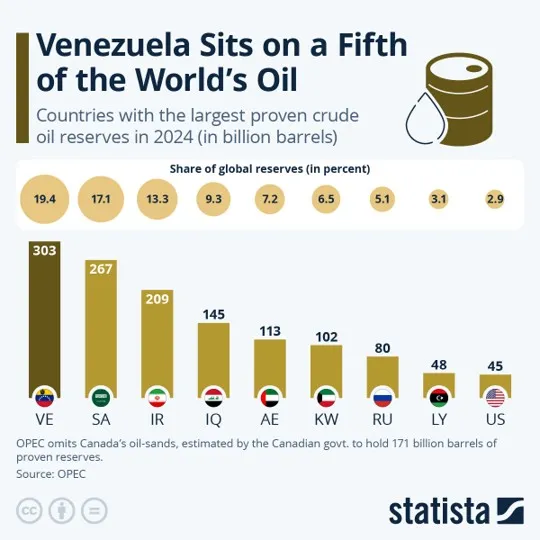
Chart: Global Oil Reserves
If the U.S. oil industry and the global oil services sector are allowed to develop this "treasure," Venezuela could surpass Saudi Arabia's production within the next decade.
Mark my words, I'm telling you now.
The conventionality and richness of these oil fields are so high that once the advanced technology of today's oil industry is fully applied to these reserves, the potential is immeasurable.
American entrepreneurship has already squeezed 9.8 million barrels of oil per day out of hard shale.
Venezuela's oil resources are like a Texas-sized swimming pool filled with oil, just waiting to be extracted, pipelined, and utilized. This is the last frontier of oil wealth.
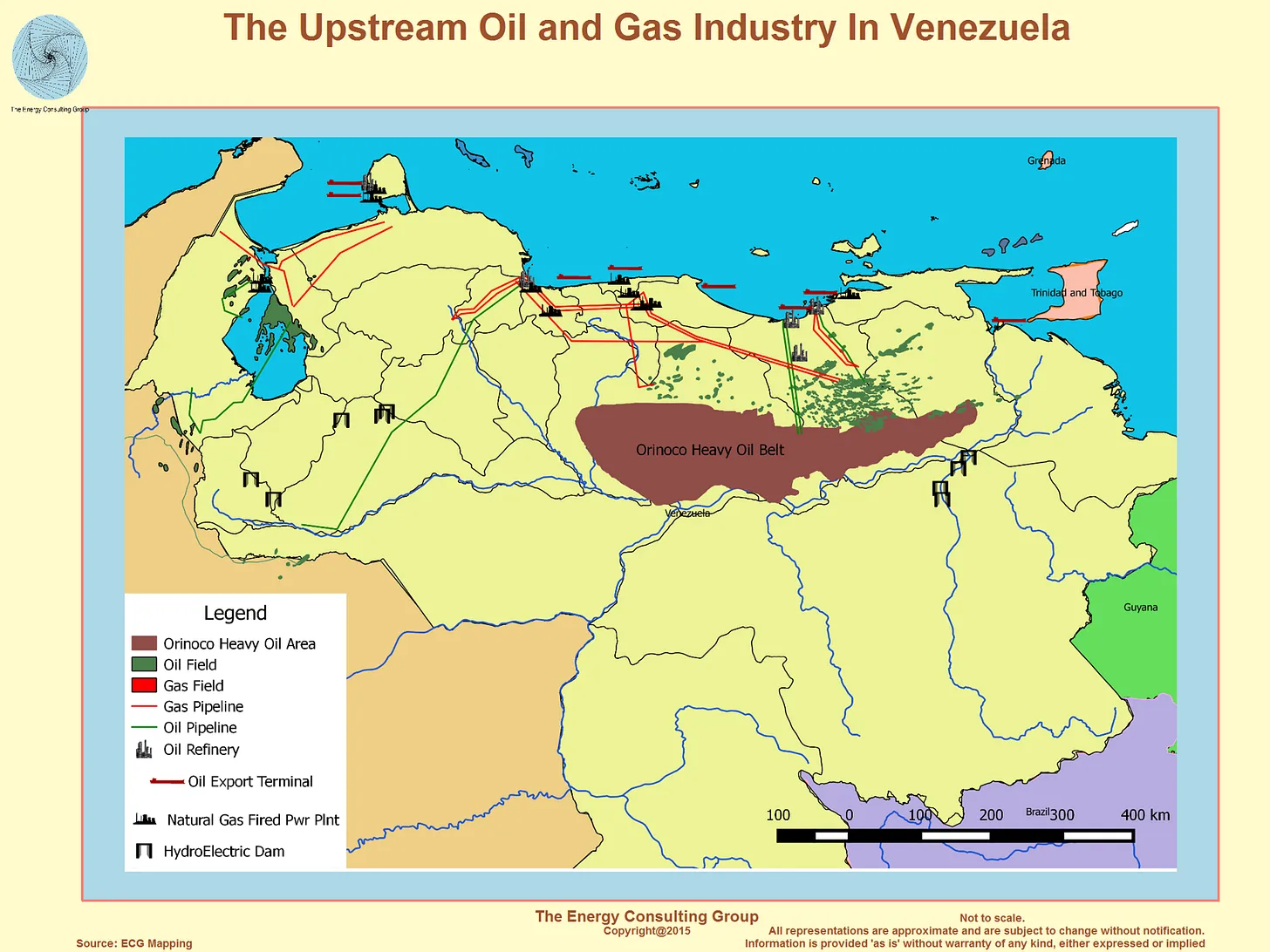
Chart: Geological Map of Venezuela's Oil Resources
Growth in oil production would be a blessing for all aspects of Venezuela: massive tax revenues, high-paying jobs, and explosive growth in related service industries—from oil services to construction, from leisure and entertainment to hospitality—a complete ecosystem would form.
Imagine the prosperity of Texas, but on a larger scale.
The left might label this as "colonialism." But as Texas and Norway have shown, this is called capitalism.
Capitalism works well in environments with sound institutions and struggles in emerging markets lacking effective institutions.
This is a fact; you can quote me anytime, anywhere.
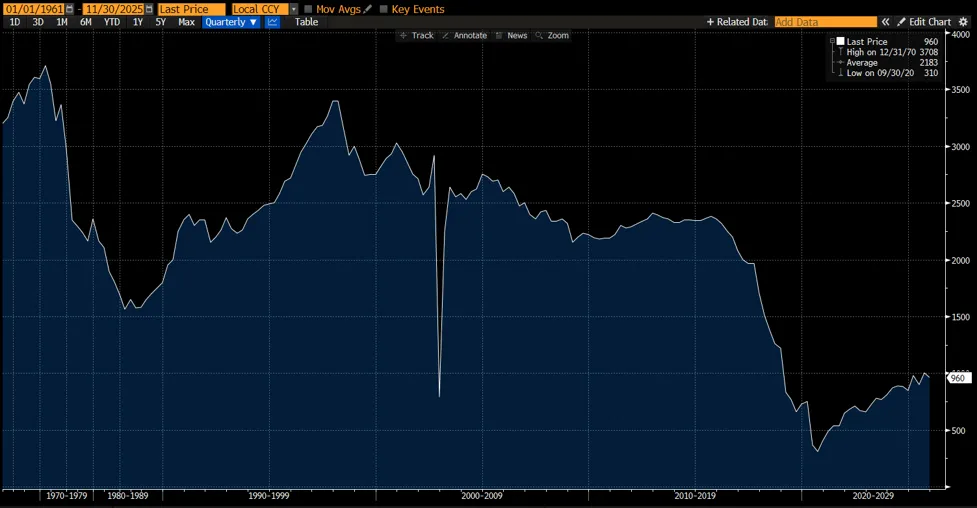
Chart: Venezuela's Oil Production Since 1965 (Thousand Barrels per Day)
Source: Bloomberg
Under the right conditions, Venezuela's oil production could ramp up quickly. Even a "modest" increase would have a massive impact in a commodity market determined by marginal pricing.
Currently, Venezuela's oil production is about 900,000 barrels per day. If property rights and the rules of the game are fixed, raising production to 1.5 million barrels per day within 18 months is a realistic initial goal. This growth would be led by international oil majors with the most experience, strongest financials, and largest pending claims, including Chevron, ConocoPhillips, Exxon, and possibly Shell and Italy's ENI.
These companies have suffered losses in the past and still have substantial outstanding claims to recover. ConocoPhillips alone reportedly has over $10 billion unpaid. However, it's important to clarify that, except for Chevron, these oil majors are unlikely to engage actively until political stability is achieved, the actual managers of the country are clear, and a solid, non-arbitrary legal framework is established.
If bottlenecks in infrastructure like pipelines, electricity, upgrading, and ports are resolved, a return to 3.5 million barrels per day is achievable. But note, big numbers can sometimes be misleading. Assuming $60 billion is needed to restore pipeline, power, and export infrastructure to normalcy might sound huge, but remember, the U.S. shale oil industry alone spent more than that on drilling in 2010.
The capital exists, the capability exists, and the key determinant of speed is the legal framework.
Without a stable legal environment, not much will change.
If the rules after Trump are rewritten, or if Venezuela merely transitions from one corrupt mess to another, production might at best hover between 1.5 and 3 million barrels per day. That's the worst-case scenario. However, if the rule of law is genuinely implemented, reaching 10 million barrels per day within a decade is not fantasy. It's simply the natural outcome of world-class resources being developed by a world-class industry.
The key point: Even without the best-case scenario, simply making Venezuela a stable 5 million barrel per day producer (similar to Canada today) and maintaining that level for decades would at least offset future production declines from maturing U.S. shale fields. In a market where marginal barrels determine price, this would be a massive impact.
In fact, you don't even need to wait for Venezuela to reach 5 million barrels per day. Just the trend of increasing from the current 900,000 barrels per day to 1.5 million next year would be enough to pressure Brent crude prices, as the market is already in "surplus" for 2026 and 2027 supply.
Yes, physical commodities are priced based on current demand, not future expectations. But in the oil market, the number of "paper barrels" traded far exceeds the physical market volume, and market expectations often move prices before the physical oil arrives.
Recall Q4 2018, when Trump alone pulled Brent from $90 to $55 per barrel just with Iran sanction waivers and tone changes, with almost no actual supply change.
In any case, sustained low oil prices are a blessing for all humanity.
I want to further explain my views and preemptively address critics who might challenge my predictions. After all, consultancies like Energy Aspects always try to make things sound more complex.
First, without further modesty, I have invested directly or indirectly in the oil industry for twenty years. I have visited more remote oil fields than many industry "keyboard experts." I have experienced successes and failures with my own capital, not someone else's money.
I have spent hundreds of hours analyzing this market from scratch, from single wells to countries to every barrel globally. I have used almost all serious data tools, from Kpler to OilX, Kayrros, JODI, and services from major agencies. For a while, I genuinely felt I could almost track every barrel in real-time. So trust me, when I simplify the analysis here, I have a basis.
Second, of course, I cannot precisely predict future production; this isn't physics. It's path-dependent, meaning it entirely depends on what happens next. If Trump doesn't follow through, if property rights aren't resolved, if Venezuela after Maduro just shifts from one corrupt mess to another, then nothing changes, or only marginally.
But if Trump gets it half right, believe me, Venezuela's outlook exceeds expectations. These wells will be "monsters," and the industry will be able to develop these resources at record speed, provided political interference is excluded.
However, these key conditions must be established first. The starting point for driving oil production growth lies in property rights protection, rule of law, and a free-market economy. Without these foundations, even with abundant oil reserves, significant growth is difficult. Maybe by the end of 2027, production could reach 1.5 million barrels per day? Who knows.
Third, and this is what most people miss, Venezuela is not starting from zero. In industry terms, it's a "brownfield," meaning its oil fields already have some development foundation. Currently, Chevron produces about 300,000 barrels of oil per day in Venezuela. They received licenses during the Biden administration, and Chevron's history in Venezuela goes back nearly 100 years.
This means Chevron possesses decades of geological data, production history, and operational experience. ConocoPhillips and Exxon left in 2007 when then-President Hugo Chávez forcibly renegotiated contracts with all oil majors, including European companies.
Thus, these oil majors already know where the fields are, what technology works, which equipment breaks easily, and how to scale production. They likely have more detailed data than Venezuela's state oil company PDVSA. This provides a huge first-mover advantage for any revival plan.
This is why Venezuela's situation is not like post-Soviet Union scenarios, where Western companies were blocked for political reasons and had to learn everything from scratch. The oil industry is not just pipes and pumps; it involves logistics, engineering, process management, and massive data. Once that knowledge is acquired and the rules of the game are clear, capital and capability will naturally follow.
Of course, many uncertainties remain. But even a middling outcome, like 4 to 5 million barrels per day, would structurally alter the global supply-demand balance for liquid energy. Believe me, it would be a brutal shock, as Venezuela would produce some of the world's cheapest oil. This change would be profound. We can only hope it materializes.
For those skeptical about Venezuela achieving significant oil production growth, I offer another perspective. The U.S. accomplished a feat that seemed equally absurd. U.S. shale oil production grew from 1.8 million barrels per day in 2010 to 9.8 million by the end of 2025. In other words, American entrepreneurship extracted a "Saudi Arabia" worth of oil from rock. If you add Alaska and Gulf of Mexico production, total U.S. oil output is now about 13.8 million barrels per day, a whole new level above what most thought possible 15 years ago.
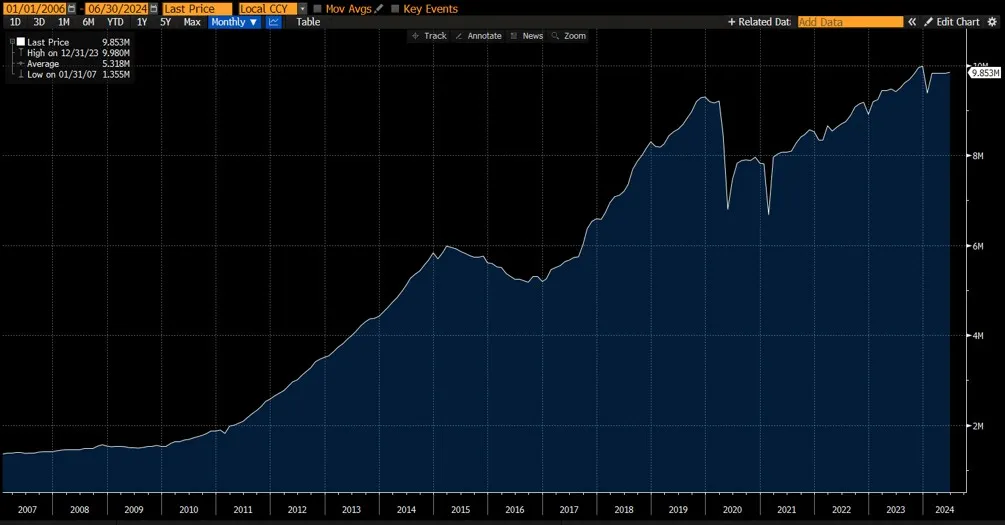
Chart: U.S. Shale Oil Production (Million Barrels per Day)
Source: Bloomberg
So, the question: Why is shale oil extraction so complex? Compared to conventional onshore fields, shale oil extraction is exceptionally difficult. Oil in conventional fields is typically stored in "natural tanks" of limestone or sandstone, where oil and gas flow naturally. Shale oil is trapped in dense source rock with extremely low porosity and permeability, meaning oil almost cannot flow on its own.
In shale fields, you don't simply "drill a well" and let it produce. Instead, you need to "attack" the rock through horizontal drilling, multi-stage fracking, and massive inputs of equipment, personnel, water, sand, steel, and capital, just to release a small amount of oil.
Moreover, each shale well yields only hundreds of thousands of barrels, not millions or tens of millions like conventional fields, and lasts for years. In contrast, shale wells typically produce for only months before the next well needs drilling.
This phenomenon is known in the industry as the "Drilling Frenzy."
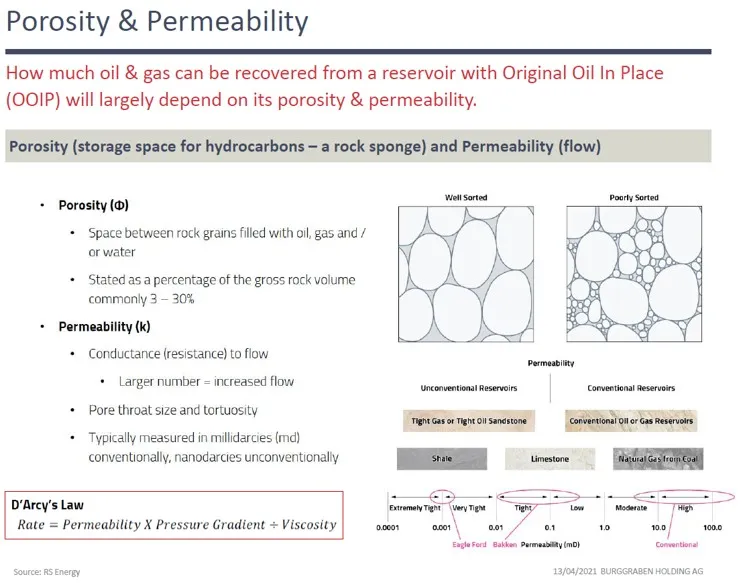
Chart: Key Factors for Oil Recovery & Potential of Venezuela's Orinoco Belt
Data Source: Burggraben Analysis
The shale revolution is one of the greatest industrial achievements of our time. It's not just a geology story; it's the result of incentives, property rights, technology, logistics, and capital markets working simultaneously.
Now compare that achievement to Venezuela, specifically the Orinoco Belt. Whatever you think about heavy oil, yes, it faces upgrading and processing challenges, but from the pure perspective of "can we get the oil molecules out of the ground," extracting Orinoco's heavy oil is much easier than shale.
A quick glance at the chart above gives you a numerical intuition. Shale permeability typically ranges from 0.001 to 0.1 millidarcies, while Venezuela's Orinoco Belt heavy oil reservoir permeability is typically above 1,000 to 13,000 millidarcies. This isn't a simple rounding error; it's orders of magnitude difference.
The same goes for porosity. The world's best Permian shale has porosity typically between 4% to 8%, while Orinoco heavy oil sands have porosity between 20% to 38%. So, ask yourself a simple question: If politics were removed, which resource would you rather drill and produce? Which do you think has a lower full-cycle breakeven cost?
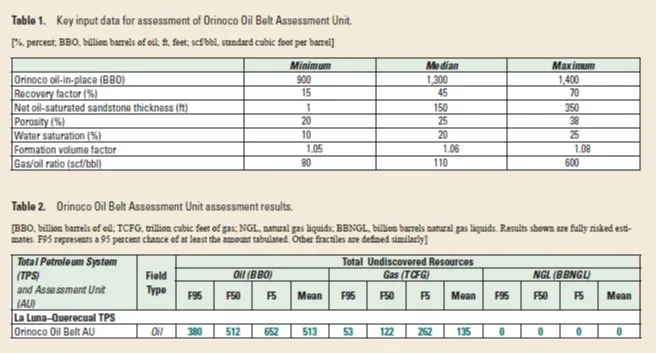
Chart: Heavy Oil Resource Potential of the Orinoco Belt
Data Source: U.S. Geological Survey, 2009
Yes, the rapid development of U.S. shale oil benefited from three strong tailwinds.
First, property rights. In places like Texas, landowners typically own the mineral rights beneath their land, directly incentivizing them to develop those resources.
Second, the oil services ecosystem. Texas has a vast, decentralized oil services industry that can mobilize quickly and compete effectively.
Third, financing capability. The U.S. has the world's deepest debt and equity markets, which funded shale oil at scale even when it seemed unrealistic to outsiders. Combine these, and you get the shale oil boom.
But the key point: Even with these tailwinds, shale oil is a technical nightmare compared to the Orinoco Belt's conventional onshore resources. If American capitalism could create a "Saudi Arabia" from tight rock in 15 years, then once Venezuela establishes effective property rights and basic rule of law, the global oil and gas industry will flock to the Orinoco Belt as what it should be—the world's last great frontier of oil wealth. Because it truly is.
Will Trump accept the political risk of nation-building in this context?
The answer is yes. This is actually his explicitly stated goal, expressed in the most straightforward way a president can. You can listen to him yourself.
The Trump administration will not leave easily. They want to reclaim oil assets, rebuild the oil industry, and seek compensation for past expropriations and losses. That's their strategy, clear and simple.
My take? Very bearish on oil prices. Trump's statements are significant. From my vantage point in the oil industry, this is a game-changer. Of course, it won't happen overnight, but it will change incrementally, day by day. You have been warned.
Furthermore, I don't believe this administration faces the risks typically described by critics. This isn't fighting hostile insurgents in Afghanistan or trying to transplant Western institutions into an Islamic political order like Iran or Afghanistan, places inherently hostile to Western values.
This is Venezuela. It is culturally Western, overwhelmingly Christian, and was once a successful beacon before socialists Hugo Chávez and Nicolás Maduro systematically destroyed it. The country is fixable.
Now let's zoom out. This is not just a story about Venezuela; it's a story about global oil prices, hence a geopolitical story. Venezuela has the potential to structurally deliver sustained low oil prices, or at least maintain current low prices (ceteris paribus). If that materializes, it would cut off the "financial oxygen" funding the war in Ukraine, weaken the Kremlin's grip, and significantly diminish the geopolitical influence of certain major powers.
And before that happens, another chain reaction might begin, such as the potential collapse of hardline regimes in certain countries that also hold vast untapped oil reserves, just waiting for the "invisible hand" of the rule of law to unlock them.
All of this would break the funding chains of terrorism sponsors, whether in Qatar or elsewhere. And all of this, ladies and gentlemen, is a blessing for peace and humanity.
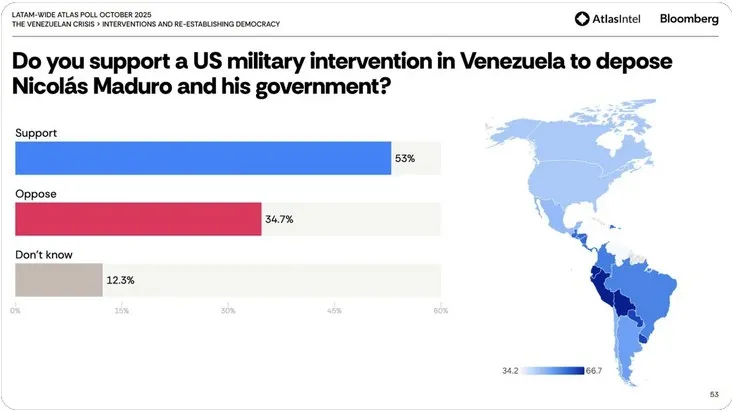
In the coming weeks, you won't hear these points from the so-called progressive left's "do-gooder" Marxist cult. But the truth is, low oil prices are one of the greatest drivers of peace and prosperity. Yet, few truly realize this.
Instead, the left will raise every objection, no matter how absurd, until they inevitably side with murderers and dictators. Sadly, that's the rule of the game in today's legacy media, which is entirely partisan.
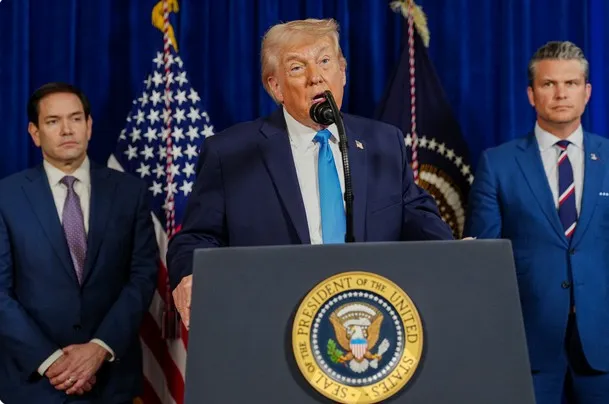
Chart: Trump's Press Conference on Venezuela, January 3, 2026
On January 3, 2026, President Trump held a press conference on Venezuela. Of course, the situation in Venezuela is far from over, and the final outcome is not yet settled. But if good luck, sustained courage, and correct decisions continue with Trump, he might truly deserve a Nobel Prize. From my perspective, he is currently moving in the right direction.
Therefore, credit where credit is due. We should praise or criticize each action based on its actual performance, not on partisan lines. President Trump and his team, well done.
Please do not attempt to criticize this precise and highly successful military operation for even a second. Salute it; I already have.
Sincerely,
Alexander
Join TechFlow official community to stay tuned
Telegram:https://t.me/TechFlowDaily
X (Twitter):https://x.com/TechFlowPost
X (Twitter) EN:https://x.com/BlockFlow_News
 @BurggrabenH