








This American makes $250 million a year from podcasts, and Luo Yonghao is learning from him
TechFlow Selected TechFlow Selected
This American makes $250 million a year from podcasts, and Luo Yonghao is learning from him
One episode with 50 million views: Joe Rogan and the media power he redefined.
 Navigating Web3 tides with focused insights
By David, TechFlow
You might not listen to podcasts, but you’ve definitely seen this scene.
In 2018, an image of Elon Musk holding a cigarette, surrounded by smoke, spread across the internet, becoming one of the most iconic and widely shared moments in his public persona.
Yet, few know where this moment took place, and even fewer care about the person sitting across from him.
In fact, it was recorded during an episode of an American podcast.
The host handed Musk a cigarette laced with marijuana and tobacco. Musk asked, “This is legal, right?” then took a puff.
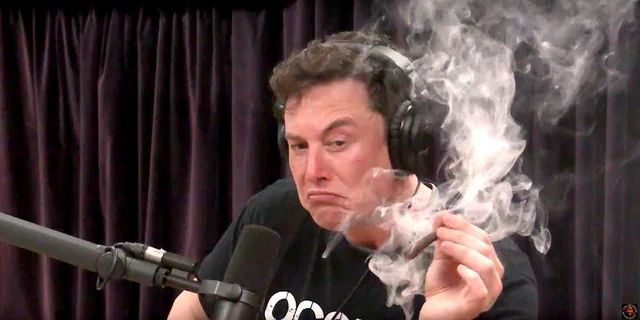
The next day, Tesla’s stock dropped 9%.
That episode has since garnered over 69 million views on YouTube, making it the most-watched episode in the podcast’s history.
What kind of show, what kind of host, could get the world’s richest man to do something like this on camera?
In the 2024 U.S. presidential election, Trump appeared on the same show for a three-hour conversation, later thanking the host by name in his victory speech; just half a month ago, NVIDIA CEO Jensen Huang sat in that same studio, discussing AI and the chip wars for two and a half hours—racking up over 2.8 million views within two weeks.
His name is Joe Rogan. His show, The Joe Rogan Experience, is currently the world’s largest podcast.
From Comedian to King of Podcasts: A $250 Million Valuation
Joe Rogan’s podcast influence is built on an unconventional personal background.
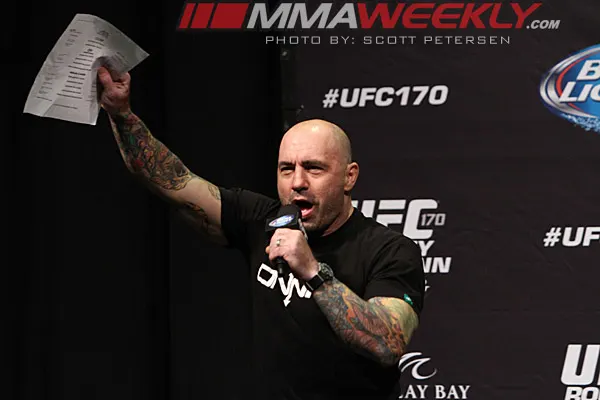
Comedian, reality TV host, UFC commentator. Put these three identities together, and he hardly looks like someone destined to create the world’s biggest podcast.
He’s not a traditional talk show host—the kind trained in media schools, sitting upright with polished interviewing skills. His roots lie in entertainment and combat sports, not journalism.
But precisely because of this "unconventional" path, he created something entirely different from mainstream media—one that connects with guests and audiences far beyond most professional media programs.
Rogan started as a stand-up comedian, performing at clubs in Boston during the 1990s. Later moving to Los Angeles, he acted in sitcoms for years and hosted a reality show called *Fear Factor*.
The show leaned into shock value—making contestants eat insects or jump from tall buildings—to grab viewers through disgust and adrenaline. In today’s short-video landscape, it would surely be labeled lowbrow yet highly engaging.
But it was another role that truly made him famous.
Since 1997, he has served as a UFC commentator, calling mixed martial arts fights from ringside—an occupation he’s held for over two decades. This cemented his status in the combat sports world and earned him a loyal base of mostly male fans.
In 2009, he began recording a podcast from home.
Like many early podcasts, it started with minimal equipment, no sponsors, and no business plan. Yet each episode ran two to three hours long, featuring casual conversations with friends or guests on any topic imaginable.
In hindsight, all his seemingly random past experiences turned out to be valuable assets.
His comedy background taught him how to keep dialogue engaging and rhythmically paced. Hosting reality TV made him comfortable being on camera while staying relaxed. And two decades as a UFC commentator meant a ready-made audience already accustomed to hearing him speak.
Besides, not being an expert in any single field gave him an unconventional advantage:
He could confidently ask “dumb questions.”
Facing physicists, he’d inquire about basic concepts. With politicians, instead of drilling policy details, he’d simply ask, “So what kind of person are you, really?” This style is nowhere to be found in traditional media.
TV interviews operate under strict time limits—hosts must quickly cut to the point. News journalism emphasizes confrontation, aiming to extract information subjects don’t want to reveal.
Rogan does the opposite: he gives you three hours, no editing, no interruptions, free to talk about anything.
As a result, many celebrities say things on his show they wouldn’t say elsewhere. Musk smoking marijuana is just one example. Zuckerberg came on to discuss MMA training and seemed more human than in any congressional hearing.
Gradually, Joe Rogan’s podcast became the go-to place for celebrities to “show their real selves.” Traditional media interviews feel performative; here, they can just be themselves.
With high-profile guests flocking in, the show grew increasingly valuable.
In 2020, Spotify paid $200 million for exclusive distribution rights to *The Joe Rogan Experience*, marking the largest deal in podcast history.
In 2022, Rogan sparked controversy for expressing negative views about certain COVID-19 vaccines on his podcast. A number of musicians pulled their music from Spotify in protest.
At that critical moment, video platform Rumble publicly offered $100 million to poach his podcast, but Rogan didn’t budge.
In 2024, he renewed his deal with Spotify—but at a new price tag of $250 million.
This time, however, he refused exclusivity. The show returned to simultaneous availability on Spotify, YouTube, and Apple Podcasts. Spotify paid more but gained fewer rights.
In 2025, *The Joe Rogan Experience* topped the annual podcast charts on Spotify, Apple Podcasts, and YouTube simultaneously for the first time.
A casual chat show recorded from home, running for sixteen years, now valued higher than many traditional media companies.
Podcast Chats That Precisely Mobilize Votes
On October 25, 2024, during the final stretch of the U.S. election, Trump sat down in Rogan’s Austin studio.
The episode lasted a full three hours. After recording, Trump flew to a campaign rally in Michigan, making thousands of supporters wait an extra three hours.
What did they talk about during those three hours?
UFOs. Trump said he interviewed fighter pilots who described seeing a spherical object moving four times faster than an F-22 jet.
The White House bed. He vividly recounted his first time entering the Lincoln Bedroom, noting the large size of the bed due to Lincoln’s six-foot-six height.
Tariffs. Trump proposed replacing income tax entirely with tariffs. Rogan asked, “Are you serious?”
Trump replied: “Of course. Why not? In the 1880s, when our country was wealthiest, we relied on tariffs.”
These topics may seem unrelated, but they share one thing in common:
They’re exactly what traditional political interviews would never cover.
TV networks focus on policy specifics, press controversial statements, and enforce time limits. No serious political journalist would let a presidential candidate spend ten minutes talking about UFOs and Lincoln’s bed.
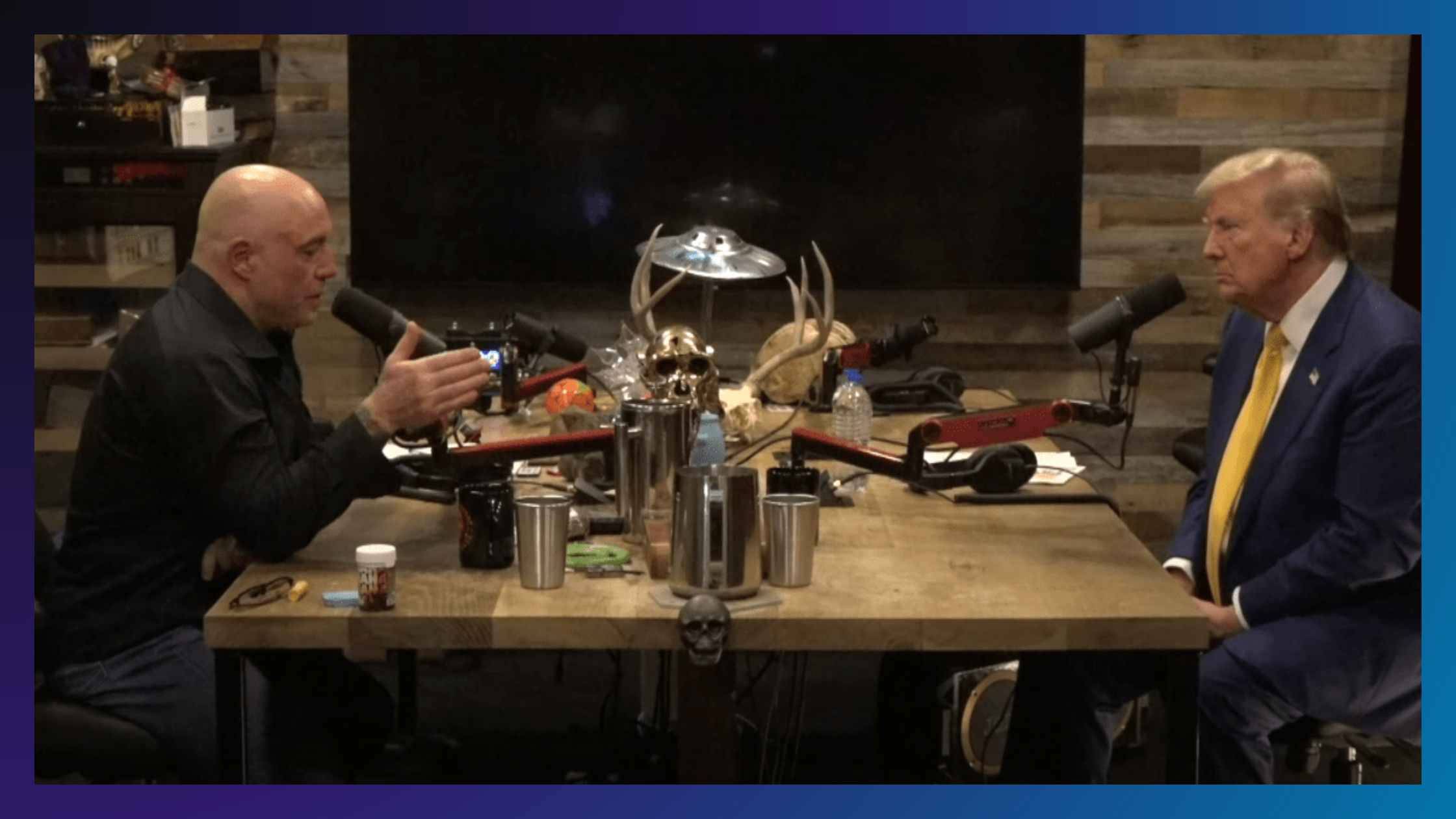
But this is precisely Rogan’s style: three uninterrupted hours, no agenda, no cutting—just free-flowing conversation.
The audience doesn’t see a candidate boxed in by media narratives, but a whole Trump: curious, eccentric, capable of casual banter.
One comment from Rogan himself perfectly captures the effect:
“You say a lot of crazy things, but when mainstream media picks them up as news, you actually become more popular. People are tired of robotic politician-speak. Even if they disagree with you, at least they know you’re real.”
This sense of authenticity resonates deeply with Rogan’s audience.
Data from foreign research institutions shows that 80% of his listeners are male, over half between ages 18 and 34. Politically, 35% identify as independents, 32% lean Republican, 27% lean Democratic. They share one key trait:
They rarely watch traditional TV news, generally distrust mainstream media, yet spend hours every week listening to Rogan’s conversations.
In other words, they’re an audience largely unreachable through conventional political messaging. By spending three hours speaking casually with a host they trust, Trump achieved far greater impact than any campaign ad.
After release, the episode quickly surpassed 50 million views on YouTube.
The full video was chopped into countless clips, spreading across X, TikTok, and Instagram. Every soundbite, every outrageous remark, became standalone content reaching people who’d never click on a three-hour video.
Meanwhile, Trump’s opponent Harris did not appear on the show.
Reports indicate discussions occurred, and Rogan publicly invited her. But Harris’ team wanted to limit the session to under an hour—Rogan refused. On his podcast, he said:
“It’s not that I didn’t want to have her—it’s that she didn’t want to come.”
For comparison: Trump’s episode exceeded 50 million views; Harris’ appearance on another podcast, *Call Her Daddy*, reached 600,000.
After Trump won, UFC chairman Dana White specifically thanked Joe Rogan in the victory speech, naming him among the key contributors to the win.
A podcast being acknowledged in a presidential victory speech—this had never happened before in U.S. political history.
The Chinese Mirror: Luo Yonghao and Others’ Attempts
Can Joe Rogan’s model be replicated in China?
Some are trying.
In June 2025, Luo Yonghao revealed at an AI conference that DeepSeek founder Liang Wenfeng suggested he leverage his strength in “earning a living with his mouth.” A few months later, he launched a video podcast titled *Luo Yonghao’s Crossroads* on Bilibili, explicitly modeled after Joe Rogan and Lex Fridman.
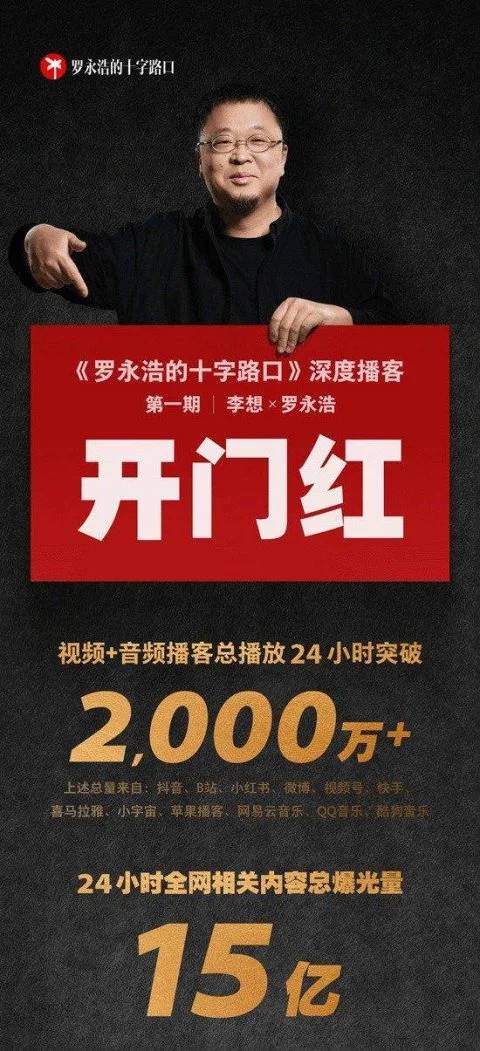
The format closely resembles *The Joe Rogan Experience*: long-form conversations, minimal editing, each episode lasting three to five hours.
The first guest was Li Xiang, founder of Li Auto. They spoke for four hours, discussing everything from childhood trauma to his relationship with Wang Xing—no question off-limits, no answer avoided. Audience reactions read:
In the age of short videos, such “long, potent, oversized” content feels incredibly rare.
Luo Yonghao isn’t alone. Ru Yu, Yu Qian, Li Dan, Yang Di—well-known personalities—are all launching video podcasts on Bilibili. Bilibili itself is investing heavily, allocating a 1-billion-level traffic boost during summer, offering free recording studios in Beijing, Shanghai, Guangzhou, and Hangzhou, and planning to launch AI creation tools dedicated to podcasters.
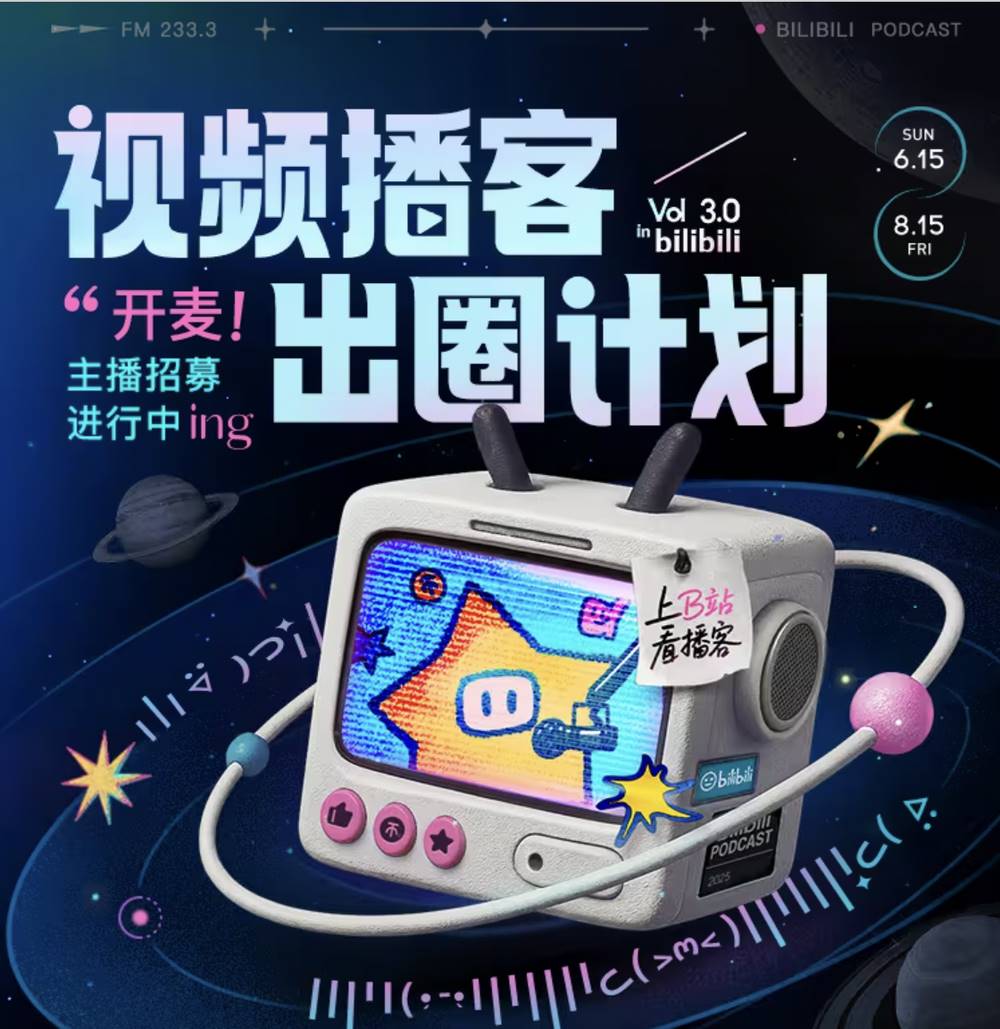
It seems China’s “year zero” for video podcasts has finally arrived—but things aren’t that simple.
During a conversation with Tim from Film Squirrel, Luo Yonghao mentioned his videos reach around 20–30 million views, while Tim believes “only crossing 100 million counts as truly popular.” This reveals a structural issue:
In China’s internet ecosystem, long-form content is inherently disadvantaged.
Over recent years, users have been conditioned by short videos to “watch a movie in three minutes.” Algorithms on Douyin and Kuaishou reward completion rates—three-hour videos have almost no chance in recommendation feeds.
Ironically, highlights from many long-form podcasts gain traction precisely through tens-of-seconds-long clips on Douyin and Xiaohongshu.
Monetization remains another challenge.
The U.S. podcast industry generated over $2 billion in ad revenue in 2024, with top hosts securing exclusive deals worth hundreds of millions. In China, a podcast brand with nearly 500,000 subscribers might charge less than 40,000 RMB per spoken ad, with annual net income possibly only in the tens of thousands.
YouTube has a mature AdSense revenue-sharing system—longer videos mean more ad slots and higher earnings, financially incentivizing long content. Bilibili’s monetization capabilities are far from reaching that level.
There’s also a more fundamental issue:
Rogan’s influence stems largely from his ability to invite figures like Trump, Musk, and Jensen Huang—and have them say things they wouldn’t say elsewhere.
This status as an “information first-mover” requires long-term trust and a unique media environment.
Luo Yonghao can bring Li Xiang, He Xiaopeng, and Zhou Hongyi—that’s already the top lineup in China’s tech circle. But there are inherent limits to how openly they can speak.
So, can Joe Rogan’s model be replicated in China?
The format can be copied, but the soil is different.
Controversy and Boundaries
At this point, one unavoidable question remains: Joe Rogan is a deeply controversial figure.
In 2022, he stirred backlash for questioning the effectiveness of certain COVID-19 vaccines on his show. Spotify didn’t drop him, but added “content warning” labels to all episodes involving COVID topics and removed over 70 older episodes.
This wasn’t his first controversy.
In 2024, he discussed the origins of AIDS with a guest, spreading claims already debunked by the medical community, drawing public criticism from the American Foundation for AIDS Research.
A Yale University study found that eight out of the ten most popular podcasts in the U.S. had spread false or misleading information about climate change—all including Rogan’s show.
His podcast also serves as a hub for various American conspiracy theories.
From JFK’s assassination to UFOs, from Big Pharma to government surveillance, he maintains an “open-minded” stance toward these topics. Critics argue he provides a platform for misinformation, while supporters claim he challenges dominant narratives.
In July 2025, he posted on X:
“Respect to those who still don’t believe in conspiracy theories—your ability to hold your ground is admirable.” The post received over 15 million views.
This reflects Joe Rogan’s complexity.
He doesn’t maintain consistent ideological alignment. Supporting same-sex marriage, marijuana legalization, and universal healthcare—these are classic liberal positions. Yet he also questions mainstream media and gives platforms to controversial figures, making him popular among conservatives.
His show’s influence stems precisely from not belonging to any camp. People disillusioned with mainstream media find in him an “anti-establishment” alternative.
Yet the same traits make him a vector for misinformation. When someone with hundreds of millions of listeners says, “I’m just asking questions,” those questions alone begin shaping public perception.
This is the inherent tension of the podcast medium:
Its appeal lies in authenticity, relaxation, and freedom—but when its influence grows large enough, “freedom” itself becomes a problem.
Joe Rogan is both a product and a mirror of this era.
Join TechFlow official community to stay tuned
Telegram:https://t.me/TechFlowDaily
X (Twitter):https://x.com/TechFlowPost
X (Twitter) EN:https://x.com/BlockFlow_News
 深潮TechFlow


