








From "Subscription Hell" to Precision Payments: A History of Internet Pricing Model Evolution
TechFlow Selected TechFlow Selected
From "Subscription Hell" to Precision Payments: A History of Internet Pricing Model Evolution
This is what we will delve into next: how developers can use x402 without worrying about future failures.
 Navigating Web3 tides with focused insights
Author: Sumanth Neppalli, Nishil Jain
Translation: AididiaoJP, Foresight News
Programmatic Payments vs Advertising
There are two distinct schools of thought in crypto. One believes everything is a market and pricing things brings clarity. The other sees crypto as better financial infrastructure. Because like all markets, there's no single truth—just patterns being explored.
In today’s discussion, Sumanth dissects how a new payment standard evolves on the web. Simply put, it asks: what if you could pay for every article? To find out, we go back to the early 1990s and examine what happened when AOL tried charging by the minute for internet access. We trace Microsoft’s path in pricing its SaaS subscriptions.
Along the way, we explain what x402 is, who the key players are, and what it means for platforms like Substack.
The internet’s business model is misaligned with how we use it. In 2009, the average American visited over a hundred websites per month. Today, the average user opens fewer than thirty apps monthly—but spends far more time within them. Then it was about half an hour daily; now it’s close to five hours.
The winners—Amazon, Spotify, Netflix, Google, and Meta—became aggregators, bundling consumer demand and turning browsing into habits. They monetized these habits through subscriptions.
This works because human attention follows patterns. Most of us watch Netflix most evenings; we order from Amazon weekly; Prime bundles delivery, returns, and streaming for $139 a year. Subscriptions eliminate recurring friction. Now, Amazon pushes ads to subscribers to boost margins, forcing users to either watch ads or pay more. When aggregators can’t justify subscriptions, they fall back to advertising, like Google, monetizing attention instead of intent.
Now consider what’s inside today’s ad traffic:
Bots and automation now account for nearly half of web traffic. This is driven largely by the rapid adoption of AI and large language models, making bots easier to create and scale.
API requests make up 60% of Cloudflare’s dynamic HTTP traffic. In other words, machine-to-machine communication dominates traffic.
We designed today’s pricing models for a purely human internet, but today’s traffic is machine-driven and bursty. Spotify during your commute, Slack at work, Netflix at night. Advertising assumes eyeballs—someone scrolling, clicking, thinking. But machines have neither habits nor eyes. They have triggers and tasks.
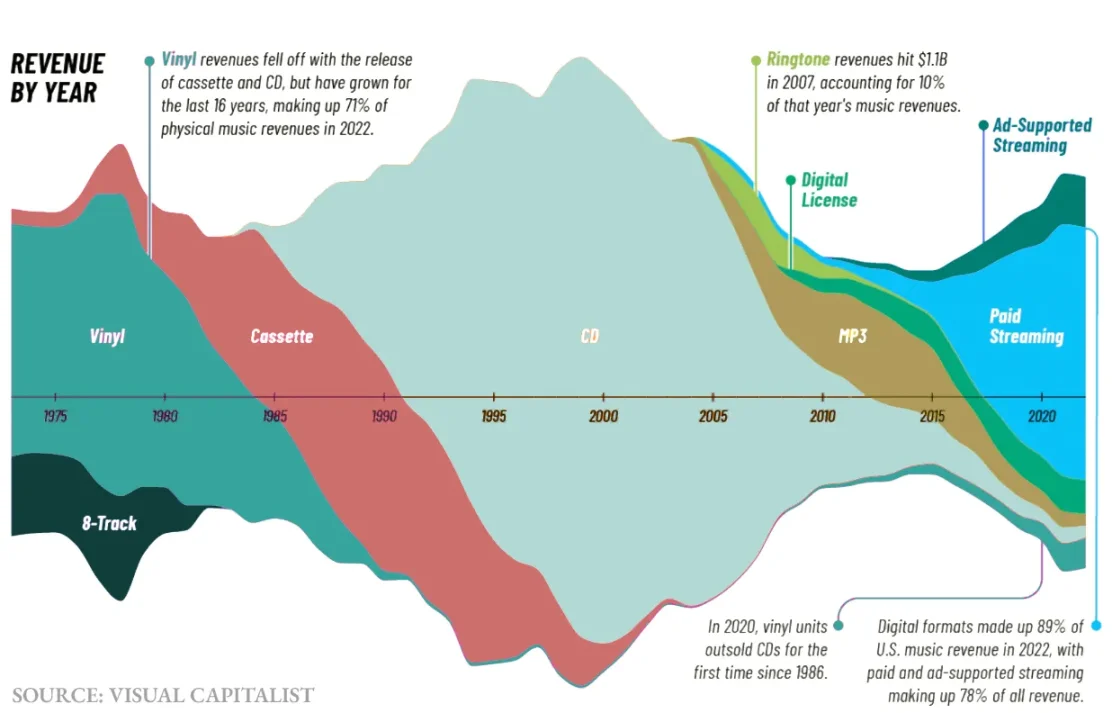
Pricing content depends not just on market constraints, but also on underlying distribution infrastructure. Music existed in albums for decades because physical media required bundling. The cost of etching one song or twelve onto a CD was nearly identical. Retailers needed high margins, and shelf space was limited. In 2003, when distribution shifted online, iTunes changed the unit of accounting to individual songs. You could buy any track on your computer for $0.99 via iTunes and sync it to your iPod.
Unbundling increased discovery but eroded revenue. Most music fans bought hit songs, not filler tracks, compressing per-fan income for many artists.
Then the iPhone arrived, changing infrastructure again. Cheap cloud storage, 4G, and global CDNs made accessing any song instant and seamless. Phones were always online, instantly connecting to an infinite library. Streaming re-bundled everything at the access layer: $9.99/month for all recorded music.
Music subscriptions now account for over 85% of music revenue. Taylor Swift wasn’t happy: she had to return to Spotify.
Enterprise software follows the same logic. Because products are digital, vendors can charge precisely for consumed resources. B2B SaaS providers offer predictable access to services monthly or annually, often “per seat,” with tiered feature limits—for example, $50/user/month plus $0.001 per API call.
Subscriptions cover predictable human usage, while metering handles bursty machine usage.
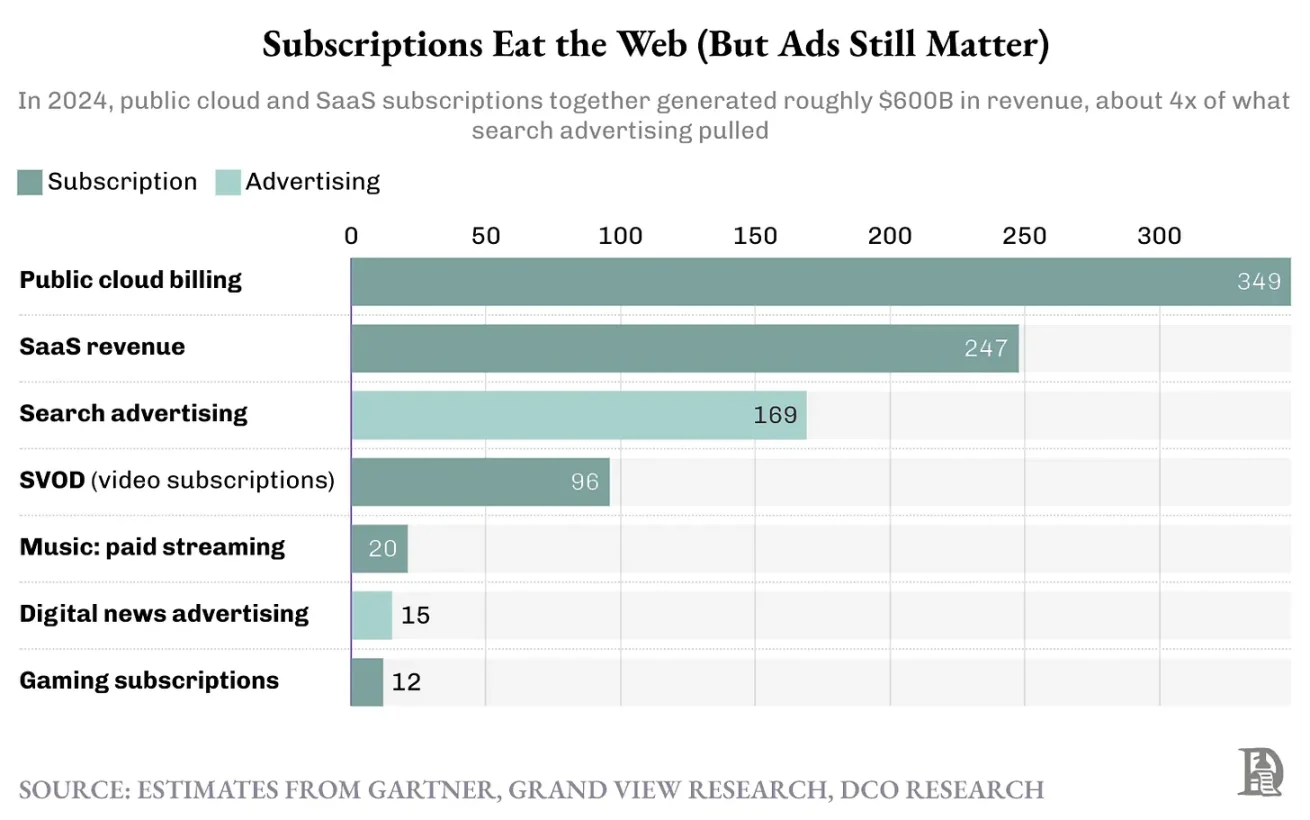
When AWS Lambda runs your function, you pay exactly for what you consume. B2B transactions often involve bulk orders or high-value purchases, leading to larger deal sizes and significant recurring revenue from smaller, concentrated customer bases. Last year, B2B SaaS revenue reached $500 billion—twenty times the size of the music streaming industry.
If most consumption today is machine-driven and bursty, why do we still price like it’s 2013? Because our infrastructure was built for humans making occasional choices. Subscription became the default because one monthly decision beats a thousand micro-payments.
Crypto didn’t invent the underlying infrastructure enabling micropayments—but even beyond that, the internet itself has become such a massive beast that it needs new ways to price usage.
Why Micropayments Failed
The dream of paying cents for content is as old as the web itself. Digital Equipment Corporation’s Millicent protocol promised sub-penny transactions in the 1990s. Chaum’s DigiCash ran bank pilots. Rivest’s PayWord solved the cryptography. Every few years, someone rediscovers this elegant idea: what if you could pay $0.002 per article, $0.01 per song—exactly their cost?
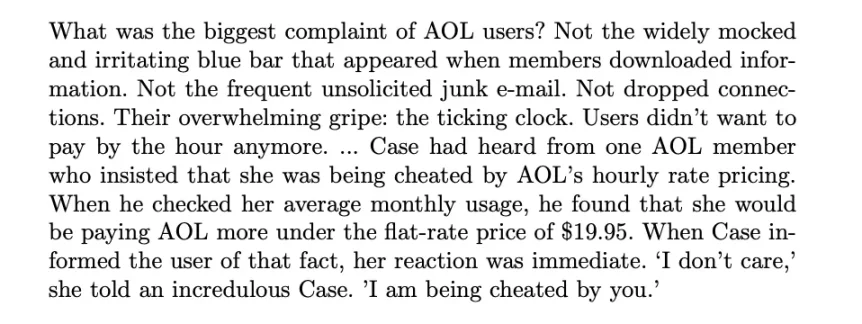
America Online learned this the hard way in 1995.
Source - "The Case Against Micropayments"
They charged hourly for dial-up internet access. For most users, this was objectively cheaper than flat-rate subscriptions. Yet customers hated it—it created mental burden. Every minute online felt like a meter running, every click carrying a tiny cost. People couldn’t help framing each micro-cost as a “loss,” even if trivial. Each click became a micro-decision: is this link worth $0.03?
When AOL switched to unlimited plans in 1996, usage tripled overnight.
People pay more to reduce thinking. “Pay exactly for what you use” sounds efficient, but for humans, it often feels like anxiety with price tags.
Odlyzko summarized this in his 2003 paper, “The Case Against Micropayments”: people pay more for flat-rate plans not because they’re irrational, but because they value predictability over efficiency. We’d rather pay $30 extra per month for Netflix than optimize $0.99 rentals. Later experiments, like Blendle and Google One Pass, tried charging $0.25–$0.99 per article—but ultimately failed. Unless a large portion of readers convert, unit economics don’t work, and the UX adds cognitive load.
Subscription Hell
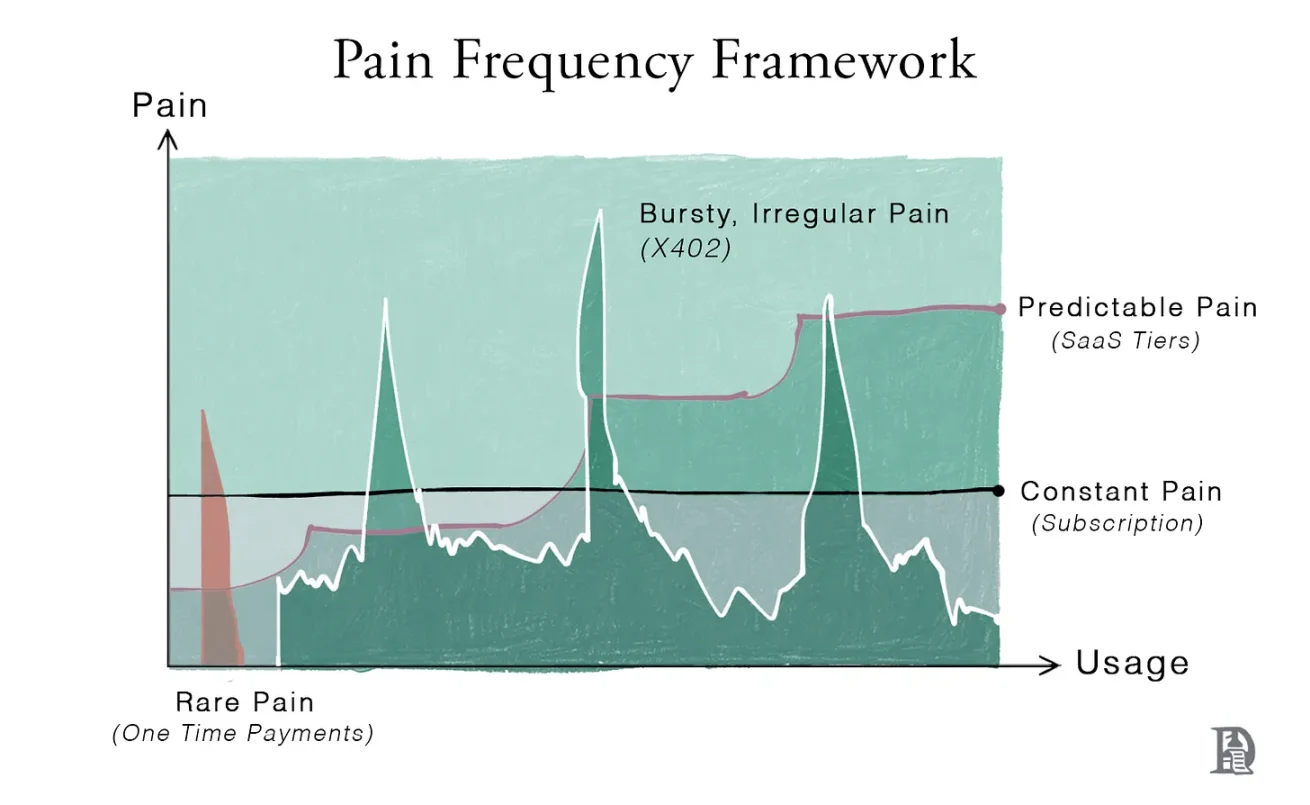
If we crave subscription simplicity, why are we complaining about subscription hell today? A simple way to understand pricing is to ask: how frequently do you feel the pain the product eliminates?
Entertainment demand is infinite. The black line in the chart represents this constant pain point—the shared dream of users and companies: a flat, predictable, steady curve of pain. That’s why Netflix evolved from a quirky DVD-by-mail service into the elite FAANG club. It offers endless content and eliminates bill fatigue.
Subscription simplicity reshaped the entire entertainment industry. As Hollywood studios watched Netflix’s stock soar, they pulled back their libraries to build their own subscription empires: Disney+, HBO Max, Paramount+, Peacock, Apple TV+, Lionsgate, and more.
Fragmented content libraries force users to buy more subscriptions. Want anime? Subscribe to Crunchyroll. Pixar films? You need Disney+. Consuming content becomes a portfolio construction problem for users.
Pricing depends on two things: how precisely the underlying infrastructure can measure and settle usage, and who must make the decision each time value is consumed.
One-time payments work well for rare, bursty events. Buy a book; rent a movie; pay a one-time consulting fee. Pain hits hard once, then disappears. This model works when tasks are infrequent and value is clear. Sometimes the pain is even desirable—we romanticize trips to theaters or bookstores.
With precise usage metering, prices align tightly with the unit of work. That’s why you don’t pay for half a movie—value is ambiguous. Figma can’t extract a fixed cut from your monthly output; creative value is hard to measure.
Even if not maximally profitable, monthly fees are simply easier to collect.
Metering is different: the cloud can observe every millisecond. Once AWS could meter execution at such fine granularity, renting entire servers became unreasonable. Servers spin up only when needed—you pay only while they run. Twilio did the same for telecom: one API call, one SMS segment, one charge.
Ironically, even where perfect metering exists, we still charge like cable TV. Usage meters run in milliseconds, but money flows via monthly credit card subscriptions, invoice PDFs, or prepaid “credit” buckets. To enable this, every vendor puts you through the same gauntlet: create an account, set up OAuth/SSO for authentication, issue API keys for authorization, store cards, set monthly caps, and pray you won’t be overcharged.
Some tools make you pre-load credits. Others, like Claude, throttle you to lower-tier models when quotas are exceeded.
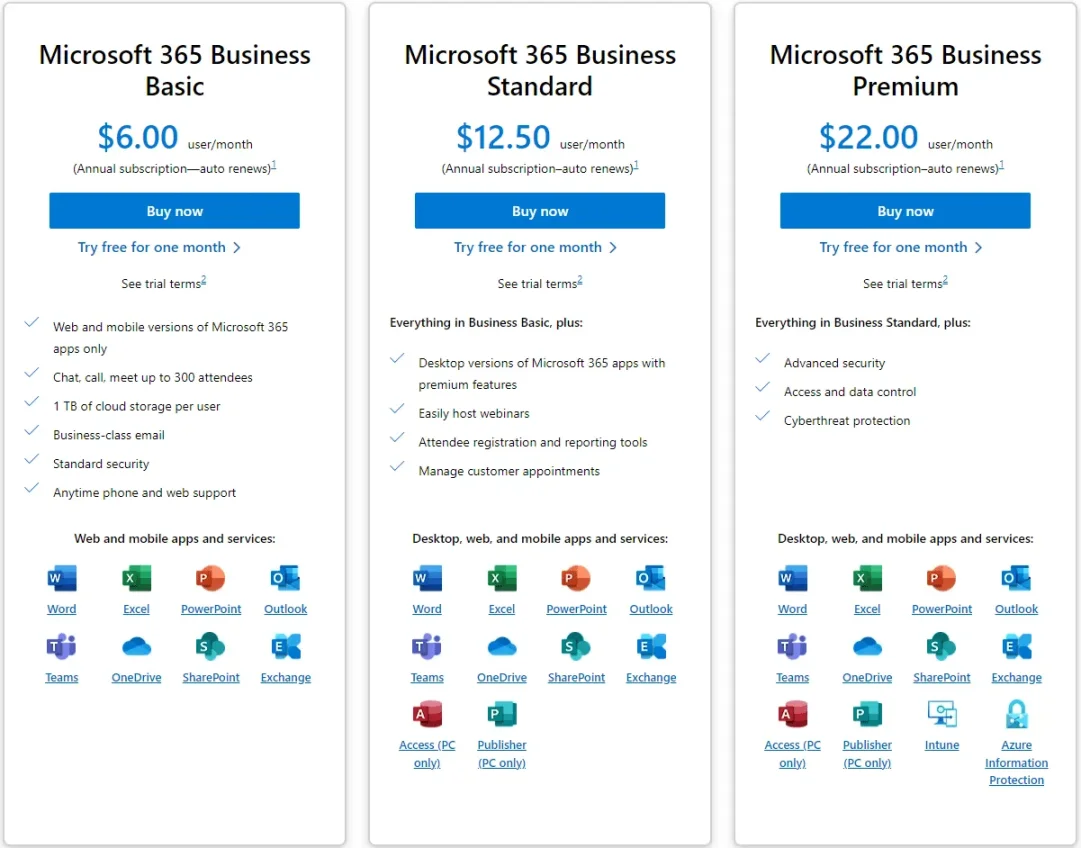
Most SaaS lives in the green “predictable pain” zone. Too frequent for one-time purchases, too stable to justify event-level metering, so tiered pricing prevails. You pick a plan matching your typical monthly usage and upgrade when you exceed limits.
Microsoft’s 1TB-per-user limit is an example—differentiating light from heavy users without metering every file operation. CFOs limit access to higher tiers by allocating permissions.
The Messy Middle Ground
A clean way to map pricing models is a 2D chart: x-axis for usage frequency, y-axis for usage variance. Variance here means burstiness—the degree of fluctuation in a single user’s pattern over time. Watching two hours of Netflix most nights is low variance; an AI agent hammering 800 API calls in ten seconds then going silent is high variance.
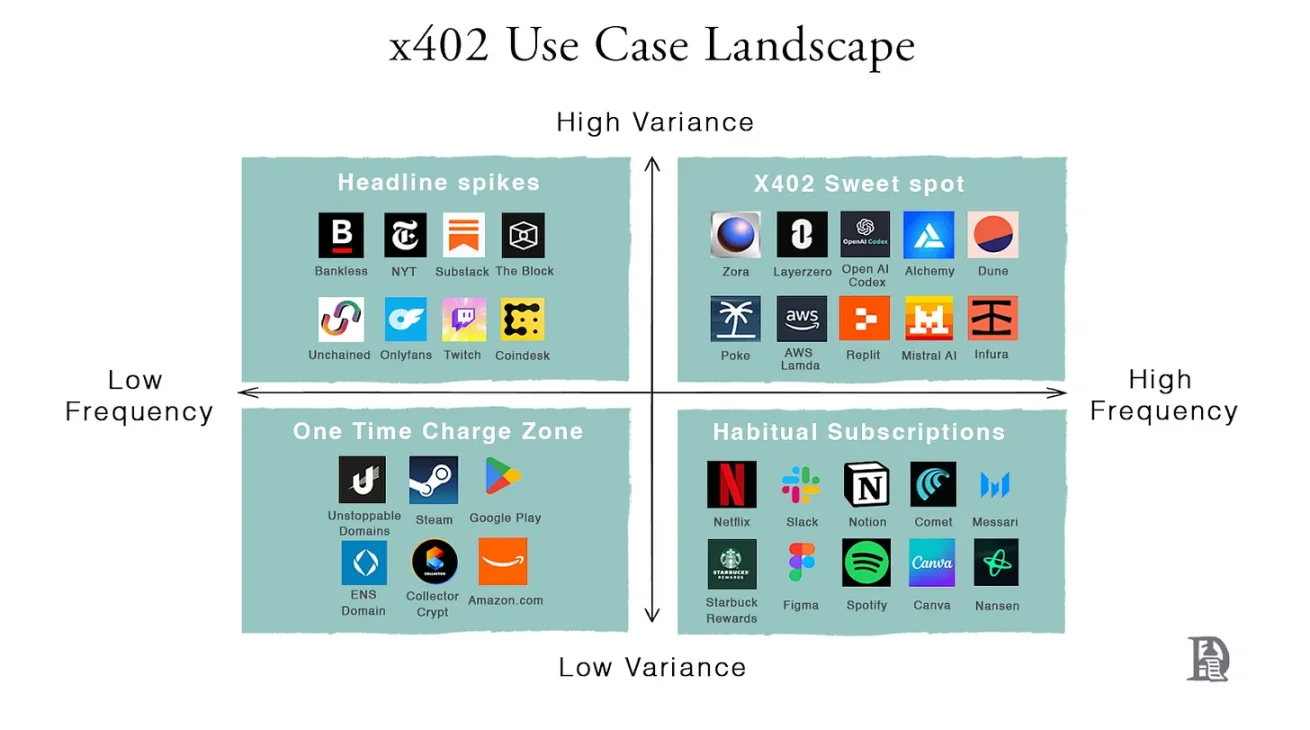
Bottom-left: one-time purchases. When tasks are rare and predictable, simple pay-and-go pricing works—you feel the cost once and move on.
Top-left: the messy casual web, with irregular news binges, link hopping, and low willingness to pay. Subscriptions feel excessive, while per-click micropayments collapse under decision and transaction friction. Advertising becomes the funding layer, aggregating millions of tiny, inconsistent views. Global ad revenue surpassing $1 trillion, with digital ads taking 70% of spend, shows how much of the web lives in this low-commitment corner.
Bottom-right: where subscriptions make sense. Slack, Netflix, Spotify align with human daily rhythms. Most SaaS lives here, using tiers to separate heavy from light users. Most products offer freemium tiers to encourage adoption, gradually shifting user behavior from top-left to bottom-right through daily, stable habits.
Subscriptions account for roughly $500 billion in global annual revenue.
Top-right: the core of the modern internet—LLM queries, agent actions, serverless bursts, API calls, cross-chain transactions, batch jobs, IoT device communication. Usage is both continuous and volatile. Fixed per-seat fees misprice this reality but lower the psychological barrier to start paying. Light users overpay, heavy users are subsidized, and revenue drifts from actual consumption.
That’s why seat-based products are quietly shifting toward metering. Retain base plans for collaboration and support, but charge for heavy loads. For example, Dune offers limited monthly credits. Small, simple queries are cheap; longer, larger queries consume more.
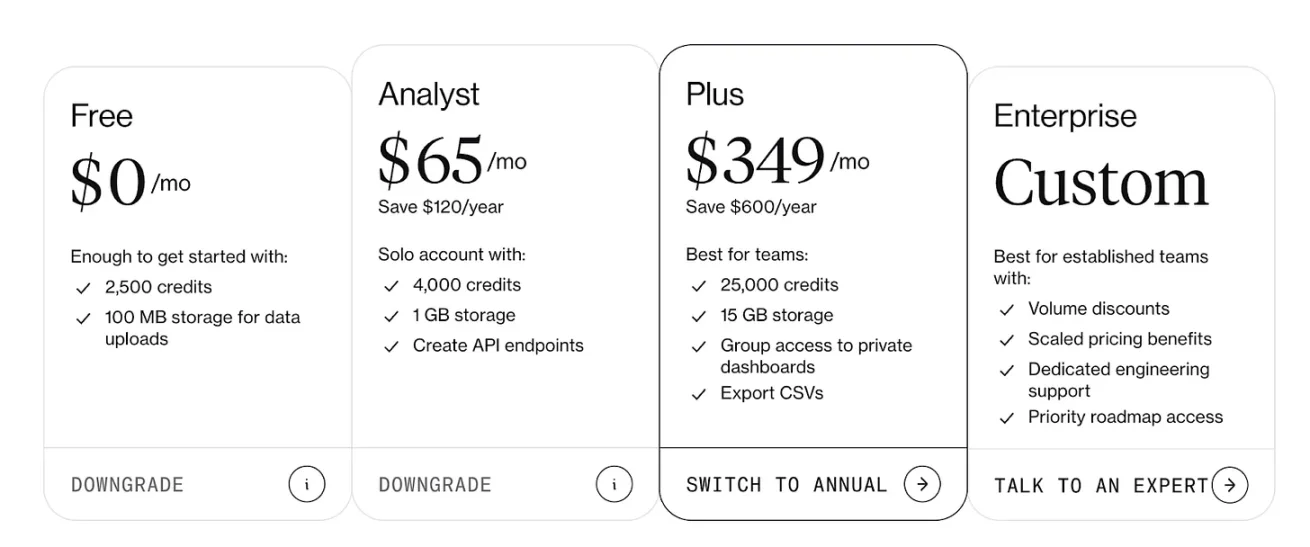
Cloud services standardized per-millisecond billing for compute and data, while API platforms sell credits that scale with actual work. The trend is toward tying revenue to the smallest observable unit on the network. In 2018, less than 30% of software used usage-based pricing. Today, usage-based pricing—eroding commission-based models—approaches 50%, while subscriptions still dominate at 40%.
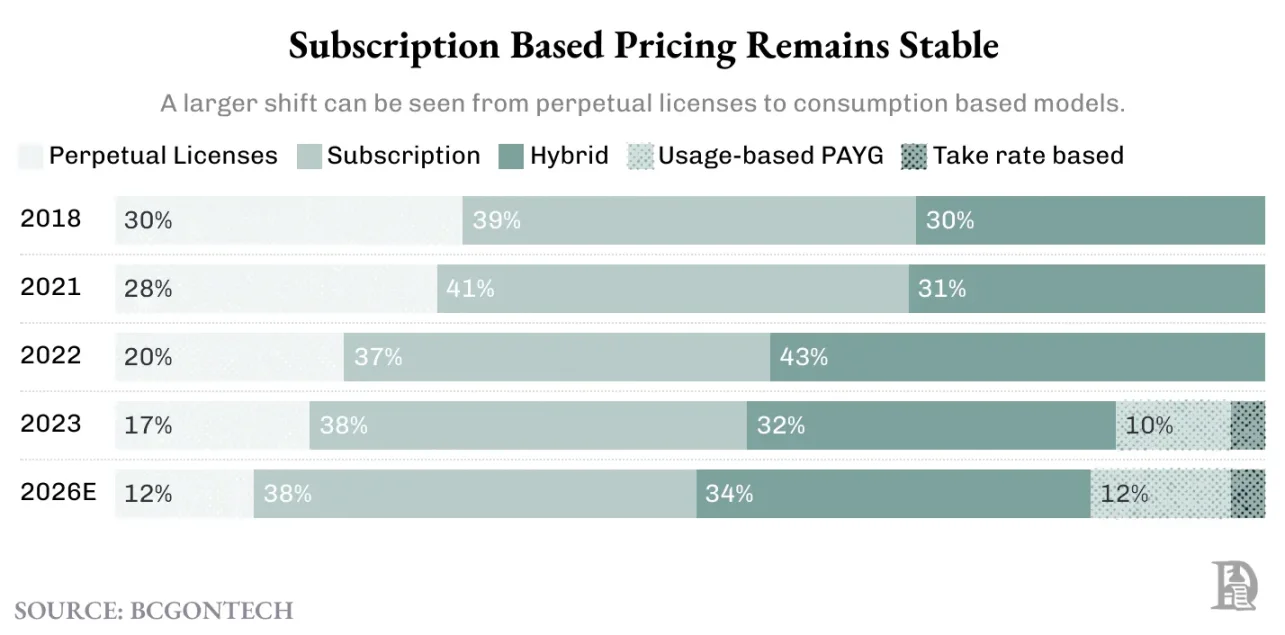
If spending is shifting toward consumption, the market signals that pricing wants to move in step with work. Machines are rapidly becoming the internet’s largest consumers—half of users already use AI search. And machines now generate more content than humans.
The problem is our infrastructure still runs on annual accounts. Once you register with a software provider, you get access to dashboards with API keys, prepaid credits, and end-of-month invoices. Fine for habitual humans; clunky for bursty software. In theory, you could set up recurring bills via ACH, UPI, or Venmo. But these require batching—they break down under high-frequency, sub-penny traffic due to fee structures.
This is where crypto matters for internet economics. Stablecoins offer programmable, global, granular payments down to fractions of a cent. They settle in seconds, run 24/7, and can be held directly by agents—not trapped behind bank UIs. If usage is becoming event-driven, settlement should be too—and crypto is the first infrastructure capable of keeping up.
What x402 Actually Is
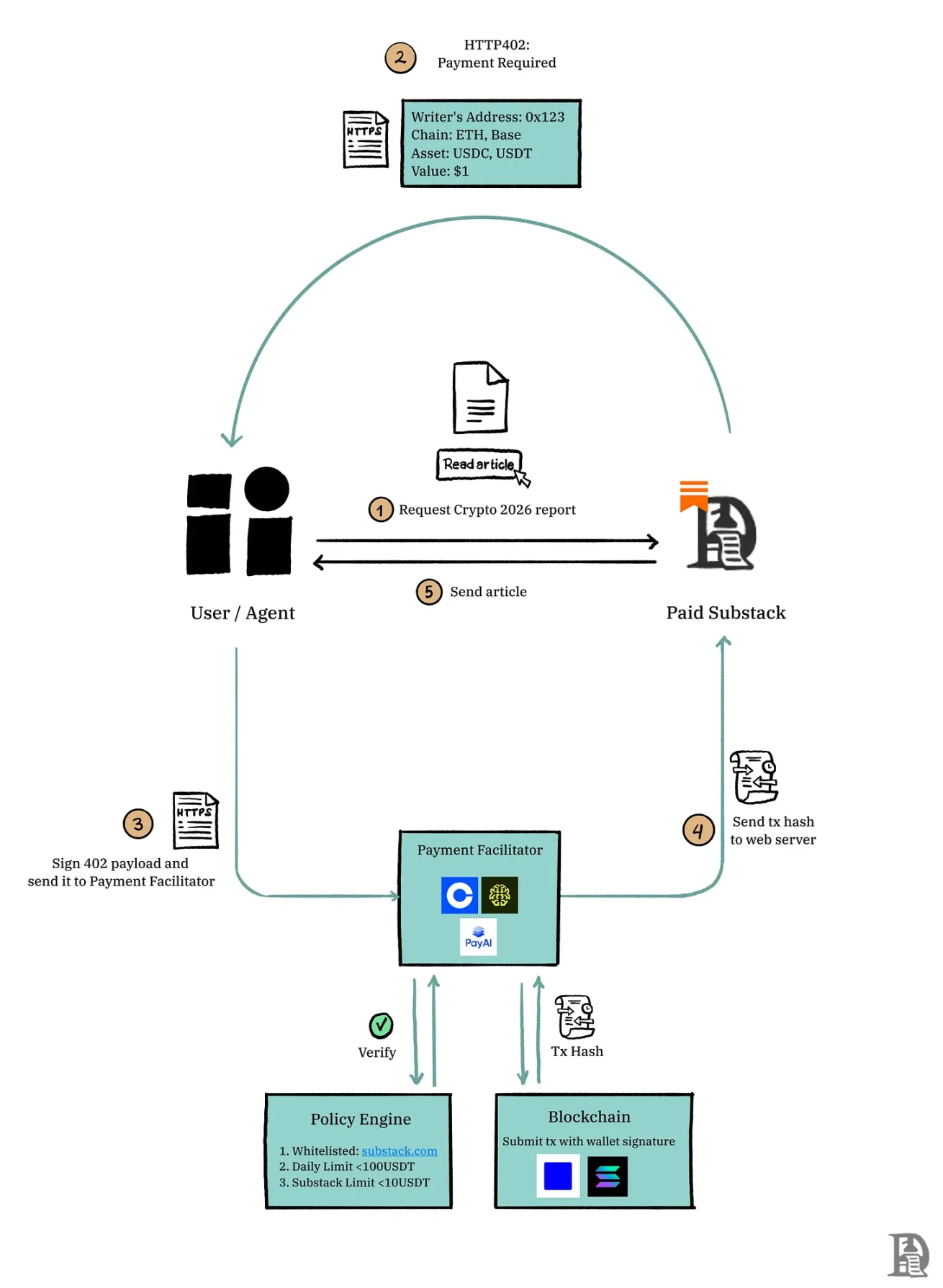
x402 is a payment standard that works alongside HTTP, leveraging the 402 status code—a decades-old code reserved for micropayments.
x402 is simply a way for sellers to verify payment completion. Sellers wishing to accept gasless on-chain payments via x402 must integrate with facilitators like Coinbase and Thirdweb.
Imagine Substack charges $0.50 for a premium article. When you click “Pay to Read,” Substack returns a 402 code containing price, accepted assets (e.g., USDC), network (e.g., Base or Solana), and policy. It looks like this:
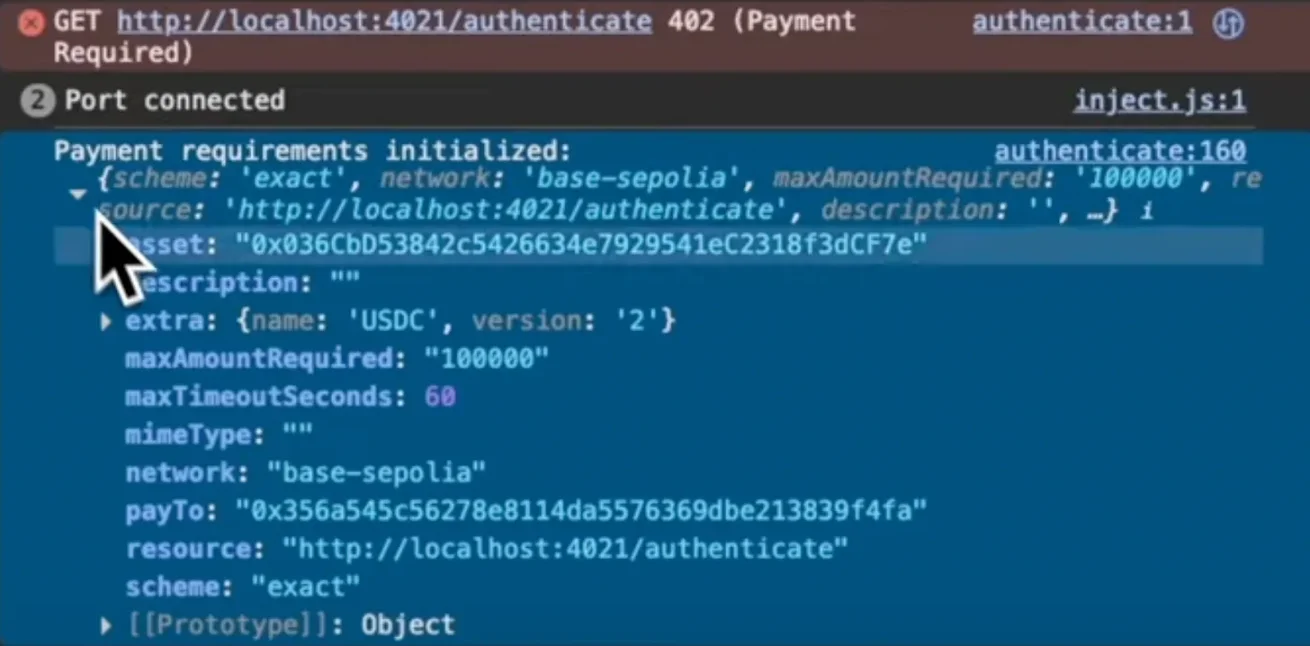
Your MetaMask wallet authorizes the $0.50 by signing a message and passes it to the facilitator. The facilitator sends the transaction on-chain and notifies Substack to unlock the article.
Stablecoins make accounting easy. They settle at network speed, in tiny denominations, without requiring accounts with every vendor. With x402, you don’t preload five credit buckets, rotate API keys across environments, or wake up at 4 AM to find your job failed due to exhausted quota. Human billing stays efficiently on credit cards, while all bursty, machine-to-machine paths become automatic and cheap in the background.
You feel the difference in agent checkout. Suppose you’re trying a new fashion style on Daydream (an AI fashion chatbot). Today, the purchase flow redirects you to Amazon to pay with saved card details. In an x402 world, the agent understands context, retrieves the merchant’s address, and pays from your MetaMask wallet—all without leaving the conversation thread.
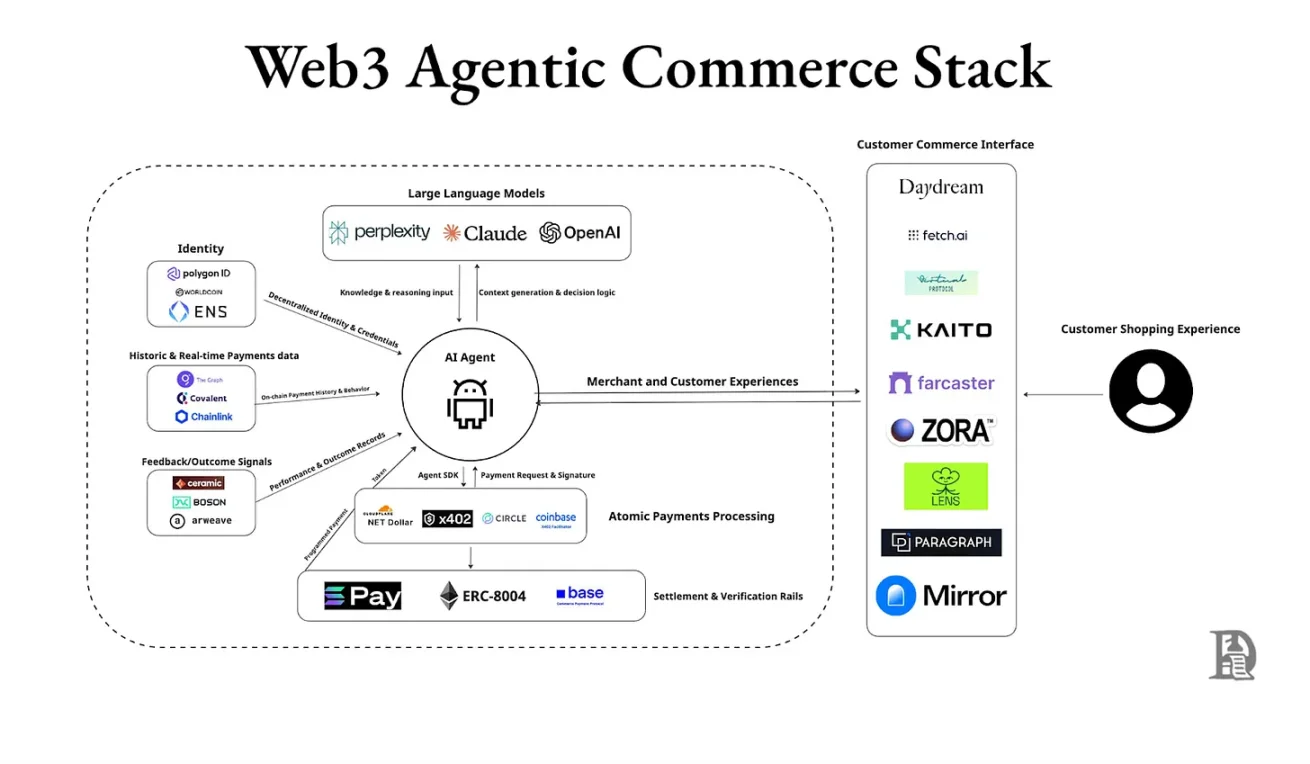
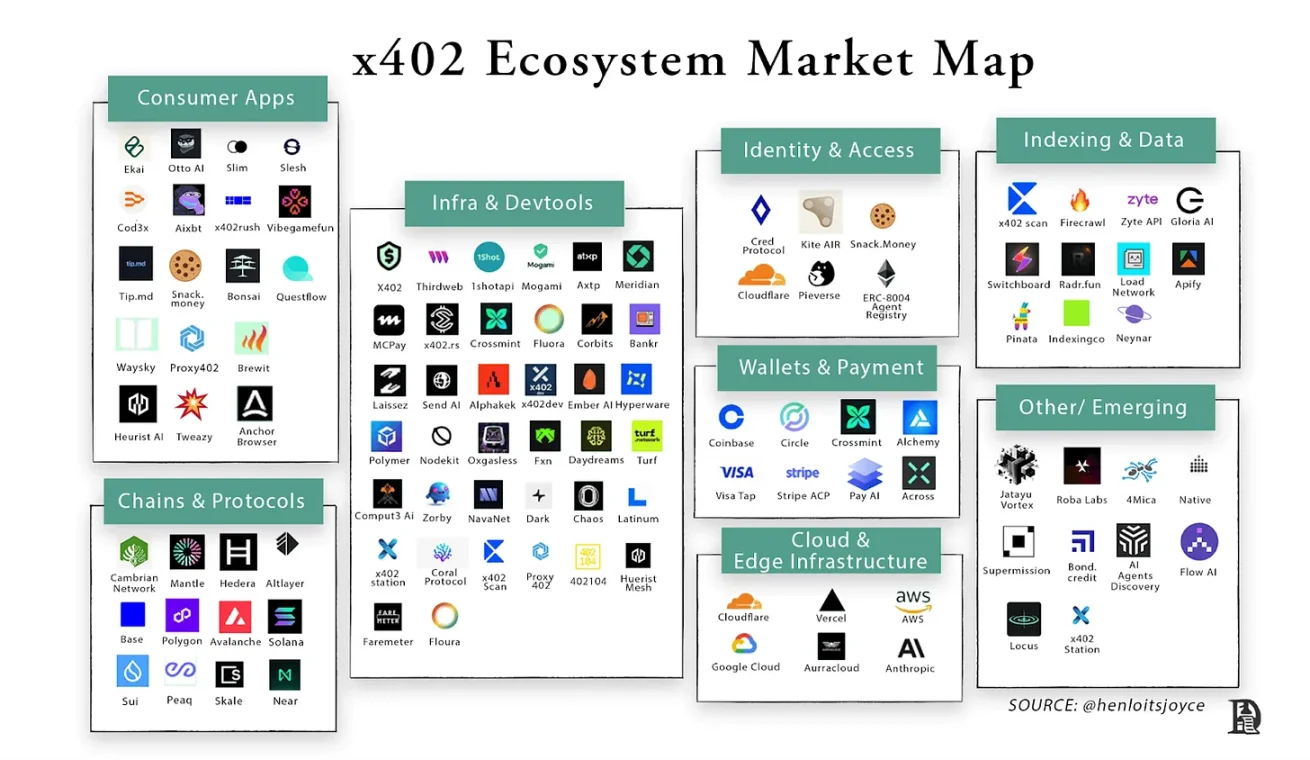
The interesting part about x402 is that it’s not a single entity today—it’s composed of layers you’d expect in real infrastructure. Anyone building AI agents with Cloudflare’s Agent Kit can create bots priced per action. Payment giants like Visa and PayPal are adding x402 as supported infrastructure.
QuickNode offers a practical guide to adding x402 paywalls to any endpoint. The direction is clear: unify “agent checkout” at the SDK layer and make x402 the way agents pay for APIs, tools, and eventually retail purchases.
Integrating x402
Once the web supports native payments, an obvious question is where it will first take off. The answer lies in high-frequency areas where transaction values are below $1. This is where subscriptions overcharge light users. Monthly commitments force light users to pay minimum subscription fees just to start. x402 can settle each request at machine speed, down to $0.01 granularity, as long as blockchain fees remain viable.
Two forces make this shift urgent. On the supply side, “tokenization” of work is exploding: LLM tokens, API calls, vector searches, IoT pings. Every meaningful action on the modern web already carries a tiny, machine-readable unit. On the demand side, SaaS pricing leads to absurd waste. Roughly four in ten licenses sit idle because finance teams prefer per-seat billing—it’s easier to monitor and predict. We meter work at the tech layer but charge humans at the seat layer.
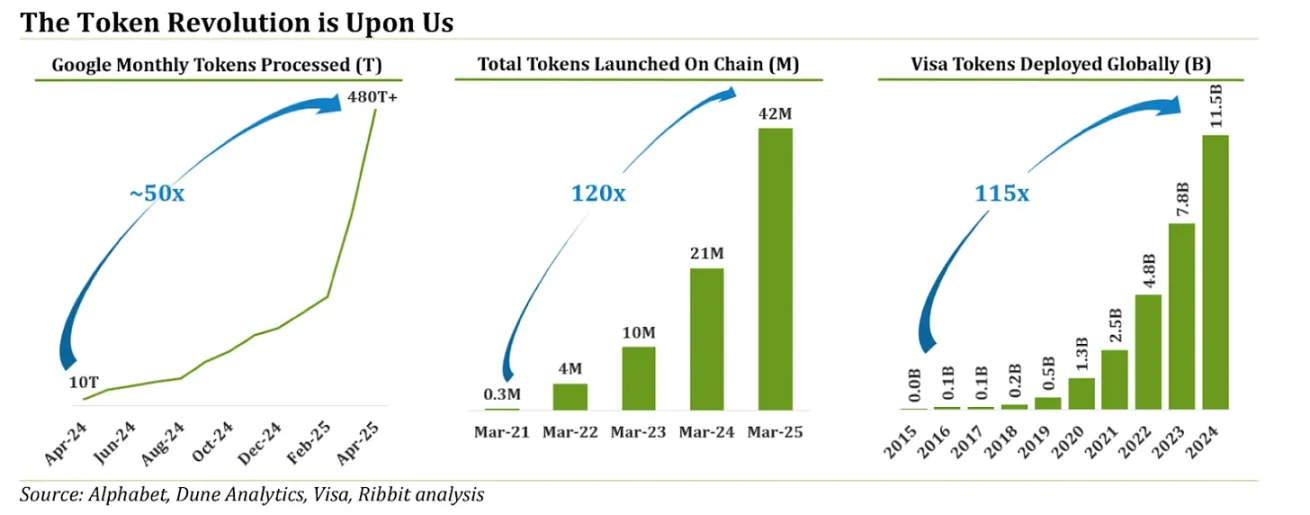
Event-native billing with caps is a way to align these worlds without scaring buyers. We can have soft caps, with final reconciliation to optimal pricing. A news site or developer API charges per request all day, then auto-refunds to a published daily cap.
If The Economist announced “$0.02 per article, $2 daily cap,” a curious reader could browse 180 links without mental math.
At midnight, the protocol settles all charges to $2. The same model applies to developer interfaces. News outlets can charge per LLM scrape to sustain future AI browser revenue. Search APIs like Algolia can charge $0.0008 per query, totaling $3 daily.
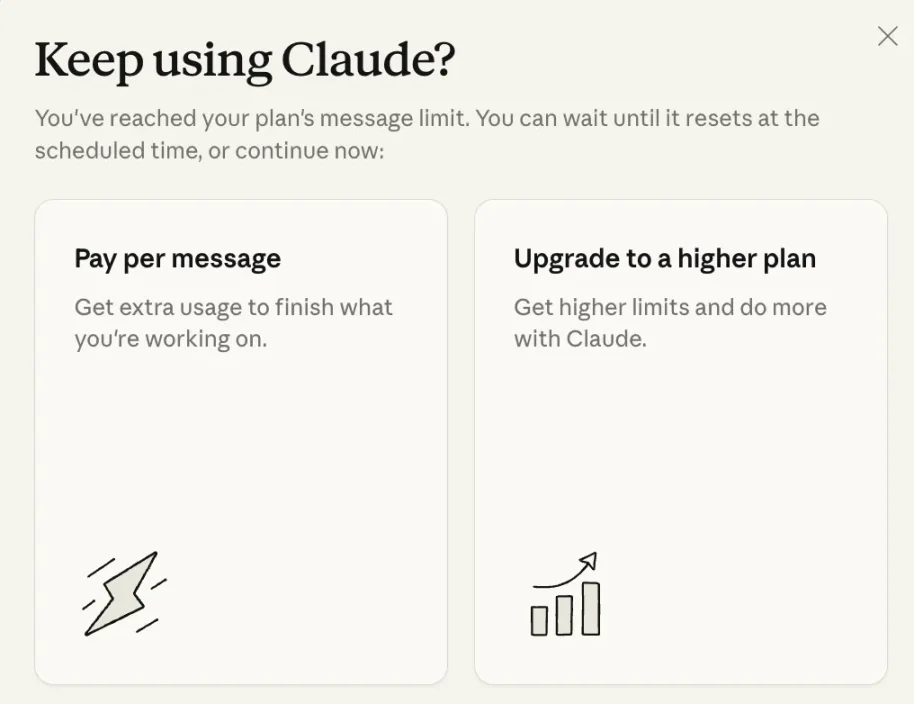
You can already see consumer AI moving this way. When you hit Claude’s message limit, it doesn’t just say “limit reached, come back next week.” It offers two paths on the same screen: upgrade to a higher subscription, or pay per message to finish what you’re doing.
What’s missing is a programmable infrastructure allowing agents to automatically choose the second option—paying per request, without UI popups, cards, or manual upgrades.
For most B2B tools, the real end state looks like “subscription floor + x402 burst.” Teams keep a base plan tied to headcount for collaboration, support, and background use. Occasional heavy compute (build minutes, vector search, image generation) flows via x402 instead of forcing an upgrade to the next tier.
Double Zero aims to sell faster, cleaner internet via dedicated fiber. Routing agent traffic through them, you can price per gigabyte via x402 with clear SLAs and caps. An agent needing low latency for trading, rendering, or model jumps can temporarily enter the fast lane, pay for that specific burst, then exit.
SaaS will accelerate toward usage-based pricing—but with guardrails:
Customer acquisition and activation costs drop. You earn on the first call. Casual developers can still pay $0.03. Agents favor vendors they can pay instantly.
Revenue scales with actual usage, not seat inflation. This cures the 30–50% seat waste common in most organizations. Heavy loads shift to capped burst billing.
Pricing becomes a product interface. “$0.002 extra per request for fast lane,” “batch mode at half price”—these are knobs startups can experiment with to boost revenue.
Lock-in weakens. With the ability to trial vendors instantly—no integration effort or time—switching costs decrease.
A World Without Ads
Micropayments won’t kill ads; they’ll shrink the domain where ads are the only viable model. Ads still excel in casual intent. x402 prices interfaces where ads can’t reach—occasional humans might choose to pay $0.02 for a good article without committing to a monthly subscription.
x402 reduces payment friction; at scale, it could reshape the future.
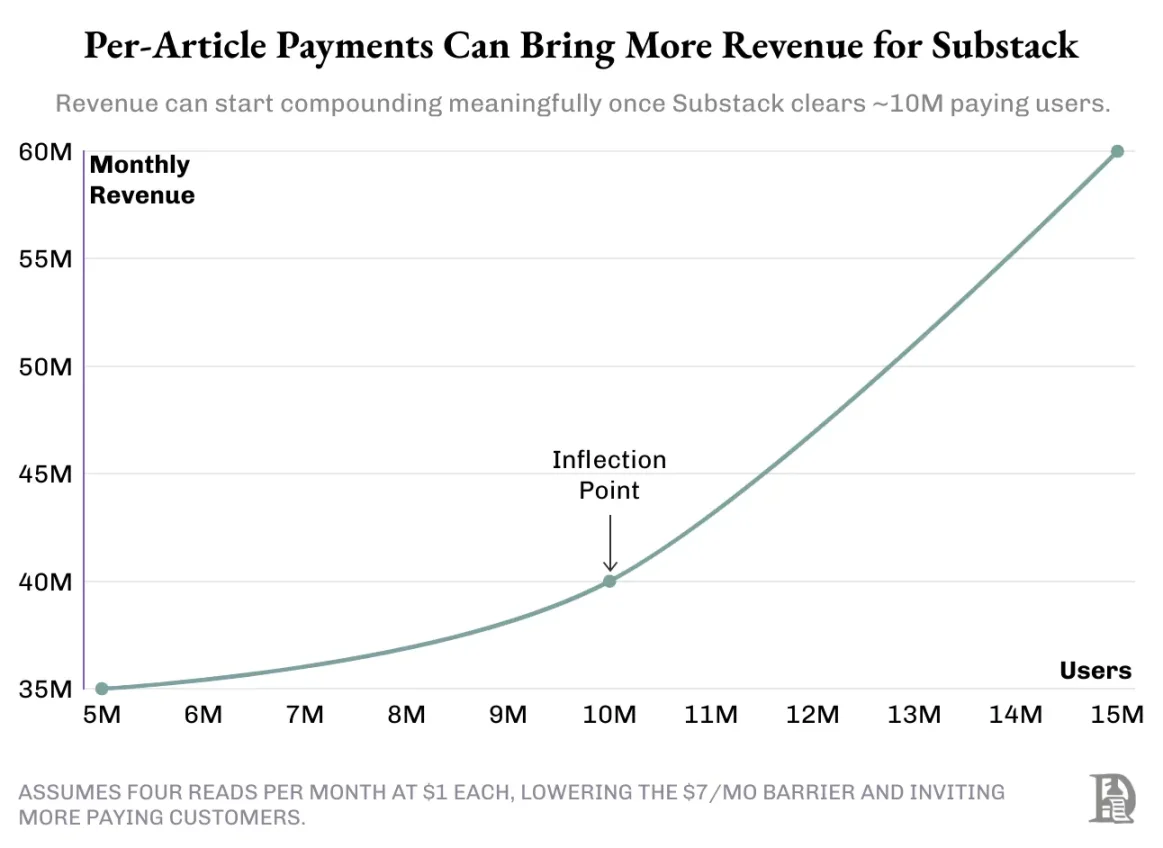
Substack has 50 million users, 10% conversion—5 million subscribers paying ~$7/month. When that subscriber base doubles to 10 million, that may be when Substack starts earning more from micropayments. With lower friction, more casual readers can shift to per-article payments, accelerating the revenue curve.
The same logic applies to any seller with high-variance, low-frequency sales: when people use a product occasionally rather than habitually, pay-per-use feels more natural than long-term commitment.
It’s a bit like my experience visiting local badminton courts. I play two or three times a week, usually at different places with different friends. Most courts offer monthly memberships, but I dislike being locked into one place. I prefer freedom to choose which court, how often, and skip a session when tired.
Don’t get me wrong—I know this varies. Some prefer sticking to the nearest court, others like a subscription that enforces routine, and some may want to share one with friends.
I can’t speak for offline payments, but with x402, this flexibility can exist digitally. Users can set payment preferences via policies, and companies can respond with flexible pricing models tailored to individual habits and choices.
Where x402 truly shines is in agent workflows. If the past decade was about turning humans into logged-in users, the next decade is about turning agents into paying customers.
We’ve already succeeded halfway. AI routers like Huggingface let you choose among multiple LLMs. OpenAI’s Atlas is an AI browser that uses LLMs to run tasks for you. x402 fits as the missing payment infrastructure in that world—a way for software to settle tiny bills with other software precisely when work is done.
Yet infrastructure alone doesn’t make a market. Web2 built full scaffolding around card networks: bank KYC, merchant PCI, PayPal disputes, blocked fraudulent cards, chargebacks when things go wrong. Agent commerce has none of that today. Stablecoins plus x402 give agents a way to pay—but they also strip away the built-in recourse people are used to.
When your shopping agent books the wrong flight, or your research bot blows through its data budget—how do you get your money back?
That’s what we’ll dive into next: how developers can use x402 without worrying about future failures.
Join TechFlow official community to stay tuned
Telegram:https://t.me/TechFlowDaily
X (Twitter):https://x.com/TechFlowPost
X (Twitter) EN:https://x.com/BlockFlow_News
 @Decentralisedco











