








The Making of a Crypto "Veteran"
TechFlow Selected TechFlow Selected
The Making of a Crypto "Veteran"
Survival first, profit second.
 Navigating Web3 tides with focused insights
Written by: tradinghoe
Translated by: AididiapJP, Foresight News
In the world of crypto, nothing matters more than survival. You must ensure you can keep playing the game every day—preserving capital and continuously learning.
Most people entering this space don’t understand this at first. They expect rapid wealth accumulation within months, treating crypto as a get-rich-quick shortcut—this fundamental misunderstanding is precisely why most ultimately fail.
A myth circulates in crypto: if you just stay long enough, you’ll eventually make money. Many assume that after three or five years in this field, financial freedom is guaranteed.
When seeing early participants, people often ask: "Why aren't you a billionaire yet?"
But the truth is: crypto isn't a fast-riches game—it's about who survives the longest. 'Success' doesn't arrive on anyone’s schedule; it only comes when preparation, capital preservation, and opportunity align.
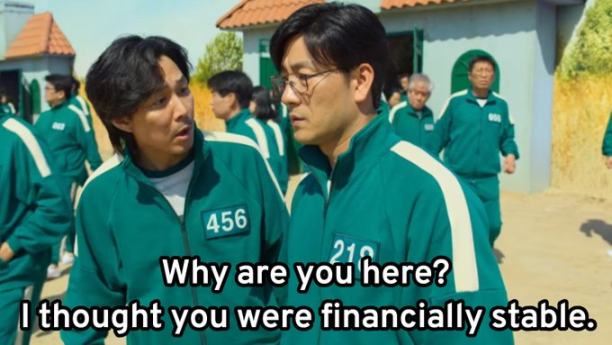
This game isn't won by those who merely survive the first or second cycle, but by those who are still present when opportunity strikes—who are still learning, still have capital.
Survival first, profits second.
The Two Truly Successful Types
After spending time in crypto, you'll notice that successful people generally fall into two categories:
1. Cross-Cycle Veterans
These are battle-tested veterans who’ve endured multiple full market cycles.
They lived through the 2017 ICO bubble burst, witnessed the rise and fall of DeFi summer, participated in NFT mania, suffered heavy losses during the FTX collapse, and were liquidated many times over.
Yet they survived.
Because they treat “staying at the table” as their highest principle.
These “veterans” are scarred all over, knowing exactly what market collapse feels like—scammed, hacked, educated. But each disaster made them sharper: better at choosing, more patient, more vigilant.

2. The Chosen Ones
The second type should’ve been eliminated long ago:
They’ve lost everything repeatedly—had assets wiped out on FTX, got margin-called on October 10th due to high leverage and wrong positioning. They bought at peaks, held through crashes, fell for obvious scams, made every beginner mistake possible.
Yet somehow, they’re still here.
Maybe they kept only small funds on FTX, maybe they had reserves in cold wallets after liquidation, maybe they rebuilt from scratch again and again, maybe luck gave them a turnaround chance, or someone pulled them back up. Call it luck, fate, or sheer refusal to give up.
They’re the ones who gambled until finally fortune smiled.

They learned survival through pain.
The difference between someone who lasts five years and one who exits early is simple:
Survivors learn risk control; failures chase profits.
Survivors focus on:
-
Protecting principal
-
Making only high-probability trades
-
No revenge trading
Failures focus on:
-
Catching every price swing
-
Quick doubling
-
Thinking “everyone else is making money, why not me?” instead of “where did I go wrong?”
Like boxing: no matter how hard your punch, if you can't defend, you won't last one round. One counter and you're down. No matter how strong your offense, without defense, it's meaningless.
Trading is the same—defense determines victory.
No matter how skilled your analysis, failing to protect capital renders it pointless. One mistake, one over-leveraged trade, could knock you out entirely.
Offense excites, but defense keeps you in till the end.
The harsh reality: most fail because they only want to make money, forgetting they must first learn not to lose it.
The Paradox of “Zeroing Out”
People often say: losing everything once changes you.
Watching your portfolio go to zero brings humility and vigilance. The process hurts, but it makes you grow.
Losses break bad habits, crush arrogance, teach you that the market doesn’t care about your emotions, your analysis, or how smart you think you are. The market will humble you whenever it wants.
In a way, it’s a rite of passage: those who’ve hit zero and climbed back up learn lessons smooth-sailing traders never grasp. They know the taste of rock bottom—and so become more cautious, smarter, more patient.
In some sense, going broke once or twice may even be beneficial: it shatters illusions and filters out casual participants. Those who return from zero are tougher, wiser, more resilient.
But ironically:
If you’d learned survival from the start, you could’ve avoided the lesson of total loss altogether.
That’s the paradox: the lessons from blowing up are invaluable—but if you’d started with the right mindset, they’d have been unnecessary.
-
Learn position sizing early, and you won’t blow up
-
Practice risk management early, and you won’t need massive losses to learn
-
Put capital preservation first from day one, and you won’t suffer rebuilding from scratch
-
Learn from others’ mistakes early, and you won’t pay tuition yourself
"The Chosen Ones" endure multiple wipeouts before learning survival; "cockroaches" either learn after one loss or are smart enough to learn by watching others fail. But the best case? Never blowing up—because you understood survival from the beginning.
You don’t need to touch a hot stove to know it burns—you can listen to those who already did. You can learn without paying the price.
But most won’t. They must feel the pain themselves. They must hit zero to realize where they went wrong. Such is human nature—only pain leaves a lasting impression.
The lessons are the same—the difference lies in whether you learn from others’ experiences (observational learning) or your own money (firsthand experience). Gamblers prefer the latter.
Beware the “Survival Trap”
But survival-first also hides a danger: you might become overly afraid of risk.
Yes, survival comes first. Yet few discuss its dark side: the survival trap.
It creeps in slowly: you begin by simply not wanting to lose money, growing increasingly cautious, waiting for better opportunities and new narratives. But不知不觉, caution turns into fear.
You’ve fallen into the “survival trap.”
You’re no longer waiting for good opportunities—you’re waiting for perfect ones. But perfection doesn’t exist, so you wait forever.
You watch everything slip away: A new narrative emerges? “No one’s talking about it on X, forget it.” A great opportunity? “Too late, probably a bull trap.”
Each missed chance chips away at confidence. You fear loss so much you forget the goal is actually to make money.
You use “waiting” as an excuse—you’re really avoiding action. You hide behind survival to completely evade risk.
But moderate, controlled risk is precisely how profits are made.
The survival trap is common among those deeply scarred: they’ve blown up before, rebuilt capital, but remain traumatized by loss and dare not act.
Every group has such people: always analyzing, commenting, never buying. Shouting “I’ll enter soon” for five months straight, while prices move from $100 to $500, still doing nothing—“might pull back.”
Surviving without acting equals spectating.
You need balance. Survival isn’t avoiding risk—it’s taking calculated risks. Protect your downside while chasing upside.
Top traders survive and strike when timing is right. They don’t hesitate excessively.
The goal is measured aggression—not perpetual defense.
If you find yourself sitting out for months, missing chances, constantly comforting yourself with “waiting for better timing/narrative,” you’ve already fallen into the survival trap.
The market rewards patience, but punishes hesitation.
Learn to survive, then learn to act. Masters do both.
The Overlooked Math: Compound Survival
Rarely discussed: repeated zeroing prevents compounding.
Assume starting with 10,000:
-
Triple to 30,000—great
-
One bad trade loses 80%, leaving 6,000
-
Then quintuple back to 30,000—recovered
-
Then invest 90% of capital, lose down to 3,000—second wipeout
You won two major battles, yet overall net worth is 70% below initial capital.
Compare to someone focused on survival:
-
Start with 10,000
-
One good trade gains 50% → 15,000
-
Wait for next opportunity, hold at 15,000
-
Next good trade gains 40% → 21,000
-
Keep waiting
-
Next opportunity gains 50% → 31,500
-
Stay patient amid noise
-
When clear signal appears, gain 80% → 56,700
Smaller gains, longer timeline, but capital increased 5.7x—with no major drawdowns.
Real compounding doesn’t come from explosive trades, but consistent, steady growth.
“Veterans” understand this. “The Chosen Ones” learn it through pain. Failures never get it.
The Unseen Superpower: Risk Management
Risk management decides whether you’ll still be around in five years—or become a cautionary tale.
Key principles:
Position Sizing
Never size a single investment so large that losing it would devastate you. If a position going to zero keeps you awake, reduce it to a comfortable level.
Counterparty Risk
After FTX, there’s no debate: don’t keep large assets on centralized exchanges. If you don’t control it, it’s not your money.
In crypto, nothing is “too big to fail.” Always withdraw to self-custody.
Leverage = Amplified Destruction
Leverage magnifies both gains and losses, making you vulnerable to flash crashes and liquidations. October 10th was just one example—markets show no mercy to the over-leveraged.
If used at all, do so with extreme caution—and accept full risk of total loss.
Liquidity Management
Always keep dry powder. When others panic, cash lets you seize opportunities. This requires not locking all funds at peaks. Best chances often emerge amid bloodbaths—but only if you have ammo.
Emotional Circuit Breakers
Set rules during calm moments: stop trading after big losses, take partial profits when winning, no revenge trades, no FOMO buying.
The market constantly tests discipline—use rules to protect yourself.
Risk management means intelligently surviving until the next opportunity arises.
Wait for “Good Enough” Opportunities
Waiting is a core part of trading—even the most important part.
Top traders only act when a “good enough” opportunity appears: they track new narratives, follow smart money, read reports, and compare current patterns to past cycles.
“Good enough” means favorable risk-reward ratio, deep understanding of the narrative, genuine belief in logic, and comfort building a position.
Such moments are rare—that’s why waiting is essential.
To win, you don’t need to participate in every move. Trying to catch everything is how you lose.
Not trading is also a trade.
The Comparison Trap
Social media worsens this: everyone posts profits, “told you so” threads, “$10k to $1M” stories—creating the illusion that “everyone’s getting rich except me.”
But what you don’t see: those who blew up and quietly left, people still recovering from October 10th.
Survivorship bias is real and brutal: only survivors post wins. Behind every profit screenshot, countless others have already lost everything.
So when someone asks, “You’ve been in crypto for n years and still not rich?”—the question itself reveals ignorance.
Those years may include:
-
Months of bear market where the best move was inaction
-
FTX collapse, wiping out many people’s assets
-
Multiple flash crashes liquidating leveraged positions
-
Countless scams catching participants off guard
-
Costly mistakes that were essentially tuition fees
-
Time spent learning rather than gambling
Anyone who’s been in crypto for n years, still has capital, understands the market, and knows when to act or step back—is actually in a strong position.
They may not be rich yet, but they’re prepared for the next opportunity.
Compare this to someone who blew up four times in three years: same timeframe, one survives, one doesn’t.
Stop comparing your journey to curated highlights online. Everyone has different timelines, risk tolerance, and starting capital.
The only meaningful comparison is personal growth: if your knowledge, capital, and strategy are better than last year, you’re winning.
Learn First, Profit Later
All successful traders went through a learning phase.
During this period, you don’t make big money—you pay tuition, learn lessons: understanding market psychology, spotting danger signals, sensing cycle rhythms, decoding narrative logic.
This phase cannot be skipped.
Some try: enter during bull markets, get lucky a few times, think they’ve mastered it. When the market turns, they lose everything—because their foundation is weak. Profiting before learning doesn’t last.
“Veterans” spent years learning: reading whitepapers, understanding L1 architecture, grasping DeFi mechanics, seeing through Ponzi schemes, distinguishing value creation from extraction. During silent bear markets, they studied.
“The Chosen Ones” eventually realize they must learn too—after multiple wipeouts, they see luck isn’t enough.
The pattern is always the same: learn first, profit later.
Those who try to profit without learning end up broke; those who learn first make money slower, but once earned, they keep it.
So being in crypto for n years without getting rich doesn’t mean failure—it may mean you spent n years learning: accumulating knowledge, developing intuition, mastering risk control. That’s not wasted time—it’s laying the foundation.
The profit phase comes later. When it arrives, you’ll be ready—because while others were gambling or complaining, you were working.
Survive Until the Next Opportunity Arrives
The ultimate truth in crypto: you just need to still be here when the next real opportunity appears.
After the FTX collapse, many thought crypto was dead. But if you endured, you could wait for the next cycle’s warming phase and seize the next chance.
After flash crashes like October 10th wiped out leveraged traders, pessimists turned bearish, shouting “top confirmed, cycle over.” **Cough, these pessimists probably didn’t last.
But if you survived, you can keep waiting for the next wave.
Every crisis creates new survivors and those who leave. Survivors stay until something new emerges; those who leave miss it.
Bitcoin was declared dead, then Ethereum, then NFTs “will all go to zero,” every bear market labeled “the end of crypto.” Yet each time, something new emerged—and those who stayed caught it.
Your task isn’t to predict what the next opportunity will be, but to survive until it appears.
It might be a scaling breakthrough, a fun new technology, or something no one expected. You can’t foresee it.
But as long as you survive, you’ll be present. That’s the real advantage.
Truthfully, survival often feels slow.
Watching opportunities pass because risk levels don’t fit, feeling sluggish while others sprint ahead.
But the key is: slow motion beats no motion.
The sprinters have already crashed—they’re gone.
Each day of survival makes you smarter. Every preserved dollar becomes fuel for the next chance.
The tortoise wins not by speed, but because the hare makes mistakes, takes unnecessary risks, and fails to finish.
You don’t need to be fast—just keep moving. Keep learning. Keep preserving capital. Keep showing up.
In the end, you’ll win the race.
Join TechFlow official community to stay tuned
Telegram:https://t.me/TechFlowDaily
X (Twitter):https://x.com/TechFlowPost
X (Twitter) EN:https://x.com/BlockFlow_News
 @herxbt






