








Forbes: The Five Most Controversial Crypto Moments of 2025
TechFlow Selected TechFlow Selected
Forbes: The Five Most Controversial Crypto Moments of 2025
2025 was a year fraught with political entanglements and power struggles for the cryptocurrency industry—both troubling and highly revealing.
 Navigating Web3 tides with focused insights
By Becca Bratcher, Forbes
Translated by Saoirse, Foresight News
From billion-dollar hacks to presidential meme coins, 2025 has been a year of troubling entanglements between cryptocurrency, politics, and power—both alarming and revealing. As the fourth quarter of 2025 unfolds, five moments stand out—each deeply illustrating how the crypto industry continues to test the boundaries of public trust and regulatory tolerance.
January: The Launch of Trump Meme Coin
The year began with an unexpected move by the incoming U.S. president.
Just hours before his inauguration, Donald Trump launched the official meme coin TRUMP. Priced initially at around $1, the token surged to over $70 before crashing sharply. Soon after, First Lady Melania Trump released her own token, MELANIA, which followed a nearly identical price pattern. As of now, TRUMP trades around $7, while MELANIA hovers near $0.13.
Marketed as "commemorative digital collectibles," the tokens immediately sparked ethical and legal concerns. Trump, who had long dismissed cryptocurrencies, repositioned himself as a supporter—actively courting the growing bloc of crypto voters and pledging to make the U.S. a global hub for digital assets. Meanwhile, his family’s company, World Liberty Financial, expanded its footprint in the crypto sector.
Within hours, the combined market cap of the two meme coins approached $11 billion, transforming what started as a political branding exercise into the first major controversy of the 2025 crypto landscape.
February: The Largest Financial Heist in History
Just one month later, confidence in crypto security took a severe hit.
Dubai-based cryptocurrency exchange Bybit disclosed that hackers had stolen approximately $1.5 billion worth of ETH from one of its offline cold wallets. This unprecedented security breach sent shockwaves through investors, and blockchain analytics firm Elliptic later confirmed it as the largest single theft ever recorded across both digital and traditional finance.

Bybit exchange (Illustration: Thomas Fuller / SOPA Images/LightRocket via Getty Images)
Subsequent investigations linked the data breach to a hacker group backed by the North Korean government. This revelation elevated an incident that might have been labeled a routine exchange vulnerability into a matter of geopolitical significance.
May: The President Rewards Top Buyers of TRUMP Meme Coin
In May, trading volume for the TRUMP meme coin saw a "small but significant" surge after President Trump announced he would invite only top holders of the TRUMP token to a formal dinner at his private golf club. This "pay-to-play" model effectively turned the token into a bidding tool: anyone holding enough tokens could gain private access to the president.
Attendees included Tron founder Justin Sun, who had previously invested over $18 million in the TRUMP token and faced SEC charges (later suspended).
The event sparked dual controversies: protesters gathered outside, while inside, the gathering drew close scrutiny from Congress. Although the White House insisted Trump's assets were under blind trust management, on-chain blockchain analysis revealed entities linked to Trump controlled about 80% of the remaining token supply and had already earned over $320 million in transaction fees.
Representatives Adam Smith and Sean Casten led 35 House Democrats in sending a letter to the Department of Justice demanding an investigation into whether offering dinner with the president to top TRUMP token investors constituted bribery or violated the Foreign Emoluments Clause of the U.S. Constitution—which prohibits federal officials from accepting unauthorized compensation from foreign governments or individuals.
In their letter, they stated the event “opens the door to foreign influence over U.S. policy decisions, potentially constitutes corruption, and may violate emoluments clauses. This is merely the latest example of President Trump’s disregard for ethical standards, worsening conflicts of interest, and using office for personal enrichment.”
October: The '10.11' Incident
Fast forward to October: blockchain analysts discovered that an anonymous trader suddenly shorted Bitcoin and Ethereum minutes before President Trump announced new tariffs on China. Trump’s tariff announcement directly triggered the largest liquidation cascade in crypto history—where massive leveraged positions were forcibly closed due to plummeting prices, further accelerating the downward spiral.
Reports indicate the anonymous trader profited $160 million before markets stabilized. Observers, including commentary outlet The Kobeissi Letter, publicly questioned: “Did someone get advance word on the tariffs?”
No direct evidence of insider information has emerged, but the incident reignited public concern over digital asset markets—suggesting information asymmetry and political influence on markets may be far more severe than previously imagined.
October: A Profitable Pardon
Just weeks later, another controversy erupted: President Trump pardoned Binance founder Changpeng Zhao.
Zhao had pleaded guilty in 2023 to anti-money laundering violations, serving four months in prison; Binance itself paid over $4 billion in penalties.
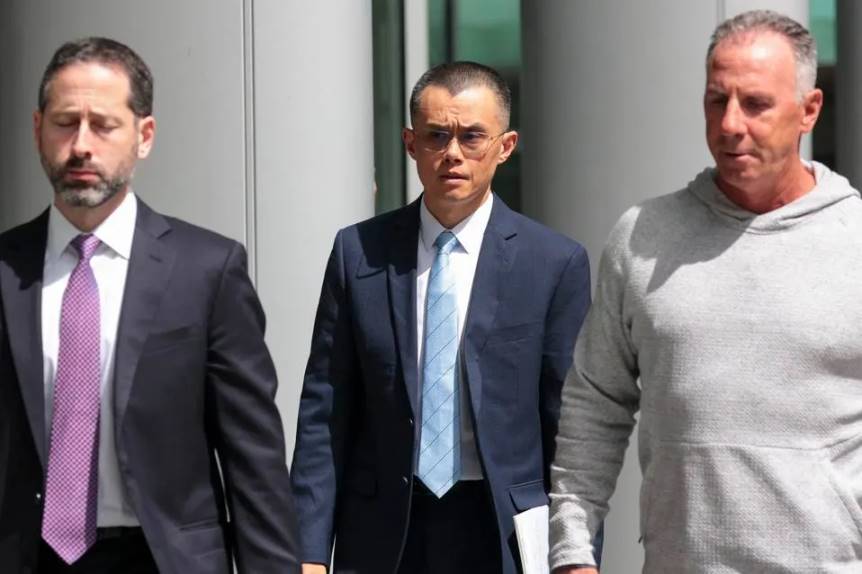
April 30, 2024: Former Binance CEO Changpeng Zhao leaves the U.S. Federal Court in Seattle, Washington. The founder and former CEO of the world’s largest cryptocurrency exchange was sentenced to four months in prison after pleading guilty to violating anti-money laundering laws. (Photo: Jason Redmond / AFP via Getty Images)
The pardon erased Zhao’s criminal record and cleared his path back into the crypto industry. The White House justified the move as correcting “regulatory overreach during the Biden administration.”
However, a BBC report intensified controversy: companies tied to Zhao had previously collaborated with firms linked to the “Trump family’s cryptocurrency projects.” This connection significantly heightened public suspicion of quid pro quo behind the pardon.
Objectively, the pardon further solidified the current U.S. administration’s alignment with the digital asset industry, while raising deeper questions: to what extent can political influence shape regulatory outcomes?
Conclusion: Another 'Normal' Year in Crypto
Together, these five events made 2025 yet another “headline year” for the cryptocurrency industry. Despite ongoing controversies, this year was far from the sector’s worst by historical standards.
January’s meme coin launch blurred the line between hype and governance; February’s Bybit hack exposed vulnerabilities even in the most trusted systems; May’s dinner turned token ownership into political access; October’s trading scandal revealed how speculation and timing can manipulate entire markets; and the same month’s presidential pardon made 2025 a year of repeated challenges to the legitimacy and ethical boundaries of crypto.
Every year in crypto brings new innovations, challenges, breakthroughs, and controversies—2025 was no exception.
Join TechFlow official community to stay tuned
Telegram:https://t.me/TechFlowDaily
X (Twitter):https://x.com/TechFlowPost
X (Twitter) EN:https://x.com/BlockFlow_News
 Forbes


