In the crypto world, betting on privacy is betting on freedom
TechFlow Selected TechFlow Selected
In the crypto world, betting on privacy is betting on freedom
The walls of traditional systems are gradually collapsing, and the era of on-chain has already set sail.
 Navigating Web3 tides with focused insights
Author: Blocmates.
Translation: TechFlow
If history is any guide, freedom always finds a way to prevail. And in this space, betting on privacy is ultimately a bet on freedom itself.
Hey! I’m telling you, if you have ZachXBT-level on-chain investigative capabilities (plus a bit of patience), crypto transactions can be traced—you already knew that, didn’t you?
Today, we can uncover whether it was a 78-year-old grandmother who drained your wallet or a North Korea-linked hacking group threatening every protocol.

Yes, these so-called "bad" cases do exist—but they only occur because on-chain activity is publicly visible to everyone. Surprised? Public blockchain ledgers are indeed public.
Cryptography and Privacy
Perhaps today’s younger generation may not know, but the old-timers (Uncs) remember well: the journey of Bitcoin and today's entire cryptocurrency ecosystem began with the vision of cypherpunks—building an open society grounded in privacy.
It was this very idea that inspired David Chaum’s privacy-focused digital currency Digicash (based on blind signature technology), and Wei Dai’s proposal for an anonymous decentralized payment system called b-money (sounds like a rapper’s name, right?).
Satoshi Nakamoto went even further by embedding a degree of privacy protection within a fully transparent ledger. Bitcoin relies on pseudonymous addresses and cryptographic hashes instead of real names or identities, creating an illusion of anonymity.
However, this illusion of anonymity didn’t last long. With the rise of smart contracts, attention gradually shifted from privacy to on-chain programmability.
Now, as cryptocurrency adoption accelerates once again, we’re circling back to where it all began—the primacy of privacy.
In crypto, privacy has become a major topic, extending beyond simply sending and receiving funds on public chains to encompass privacy protection across on-chain applications.
In this article, we’ll explore what privacy means in the crypto world, its various dimensions, products built around privacy, key considerations, and our outlook on the future of crypto privacy.
Buckle up!
What Does Privacy Really Mean in Crypto?
The best way to understand privacy is through the lens of traditional finance (TradFi).
In TradFi, privacy is straightforward: personal data is protected and not made public, accessible only to authorized entities. This includes user information such as biometric data, transaction history, account balances, etc.
When we bring this concept into crypto, the core of privacy lies in protecting personal data within on-chain transactions. True privacy means only the user themselves or their designated recipient—as authorized parties—can view or comprehend their own data.
In crypto, people often conflate privacy with anonymity. While anonymity culture stems from the concept of privacy, there are technical distinctions between the two.

For example, privacy focuses on hiding transaction details such as the amount sent from one person to another, counterparties, and other metadata; anonymity, on the other hand, emphasizes concealing the identity of users involved in transactions.
A clear example differentiating privacy and anonymity is Zcash and Monero. The former primarily uses encryption via zk-SNARKs (zero-knowledge succinct non-interactive arguments of knowledge) to hide transaction amounts, while the latter employs stealth addresses and ring signatures to pseudonymize user identities.
However, for the purpose of this article, we will treat privacy as an overarching phenomenon that includes anonymity.
Why Is Privacy a Critical Issue in Crypto?
As previously mentioned, the foundation of the crypto industry stems from the cypherpunk ethos—pursuing privacy and decentralization to achieve freedom from national-level control.
Yet, as private surveillance firms rapidly expand and exert growing influence in finance—and concerns rise over AI-driven data abuse—the alarm bells are ringing louder than ever.
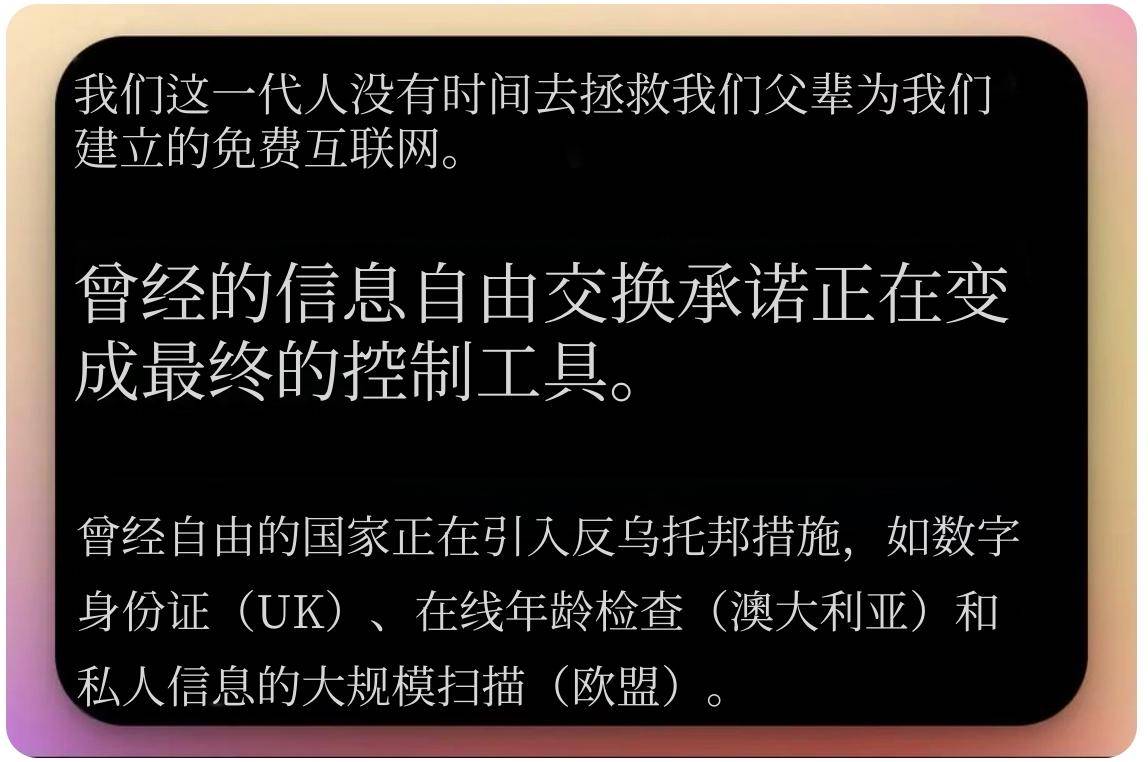
Without privacy, blockchain data could expose users’ spending habits, wealth distribution, political donations, and counterparty relationships. If this data falls into the wrong hands, it could be used for extreme control or exploitation.
Another crucial reason privacy matters in crypto: without privacy-enhancing technologies, cryptocurrencies cannot achieve true censorship resistance. Privacy protects individuals and organizations from coercion, enabling genuine permissionless participation in on-chain financial systems.
Moreover, privacy ensures both real-world safety and on-chain asset security. In public transaction graphs, high-value targets are especially vulnerable to hacks, ransom demands, or even physical threats—something we’ve seen play out in numerous recent cases.
Privacy-Enhancing Technologies (PETs)
There are multiple approaches to implementing privacy, each tailored to specific use cases, yet all aiming toward the same goal: providing privacy and security for end users.
Different technical paths come with their own trade-offs and applicability. Below, we’ll explain several major PETs in non-technical terms.
Zero-Knowledge Proofs (ZK)
From the name alone, the essence of this technology is clear—proving something is true without revealing underlying details or data.
Zero-knowledge proofs involve two key participants:
-
Prover: proves that a statement is true.
-
Verifier: confirms the truth of the statement without accessing the underlying data.
As a privacy-enhancing technique in cryptography, zero-knowledge proofs come in two main forms:
-
zkSNARKs (Zero-Knowledge Succinct Non-Interactive Arguments of Knowledge)
-
zkSTARKs (Zero-Knowledge Scalable Transparent Arguments of Knowledge)
ZK proofs support various privacy-preserving applications, including but not limited to:
-
Confidential Transactions: hiding transaction amounts to protect financial privacy.
-
Proof of Assets: proving solvency without exposing addresses or sensitive data.
-
Privacy-Preserving Authentication: applicable to decentralized identity systems (DID).
-
Private Smart Contracts: enabling privacy-protected interactions with on-chain contracts.
Ring Signatures and RingCT: Strong Backing for Anonymity
If you've heard of privacy coins with built-in or default privacy features, they likely use ring signatures. A classic example is Monero, often referred to as the "OG" of privacy coins.
Ring signatures allow a user to sign a transaction on behalf of a group without revealing which member actually signed. By obfuscating the source of transactions, ring signatures effectively hide the sender’s identity.
This technique is particularly useful for anonymity, allowing users to transact on-chain without worrying about on-chain analysts like ZachXBT tracing their activities.
Given this, it's no surprise Monero faces significant compliance challenges, such as delisting from exchanges or regulatory scrutiny.
In contrast, Zcash offers both transparent addresses (t-addresses) and shielded addresses (z-addresses). Centralized exchanges can choose to support only fully transparent ZEC transactions to meet compliance requirements.
Fully Homomorphic Encryption (FHE): The Ultimate Weapon for Privacy
Remember passing secret notes in school? If you wrote messages using encrypted combinations of letters and numbers that only your friend could decode, you were already engaging with the concept of fully homomorphic encryption (FHE).
FHE is a cryptographic PET that allows computations to be performed on encrypted data without decrypting it. This means users can securely transmit sensitive information without fear of it being viewed by verifiers.
While FHE leans more toward privacy protection rather than solving anonymity, it is undoubtedly one of the most powerful technologies for on-chain privacy.
Trusted Execution Environments (TEEs)
If you're a loyal reader of blocmates, you might already be familiar with TEEs. If needed, feel free to revisit our earlier dedicated piece on TEEs.
In short, a Trusted Execution Environment (TEE) is a hardware-based PET that safeguards data confidentiality and integrity within secure regions of a processor or network—also known as secure enclaves.
A common example is facial recognition on smartphones. When you set it up, your device captures your facial features via the camera, encrypts the data, and securely transfers it to the TEE for processing. The biometric data never leaves the TEE in unencrypted form.
Inside the TEE, raw facial data is converted into a template—a mathematical representation of your unique facial features—and securely stored in the enclave for future authentication.
Multi-Party Computation (MPC)
In crypto, certain activities require collaborative computation, and Multi-Party Computation (MPC) is a cryptographic PET specifically designed for such scenarios.
Examples include:
-
An AI product relying on multiple AI inferences to optimize output.
-
A decentralized autonomous organization (DAO) conducting governance votes without revealing individual decisions.
-
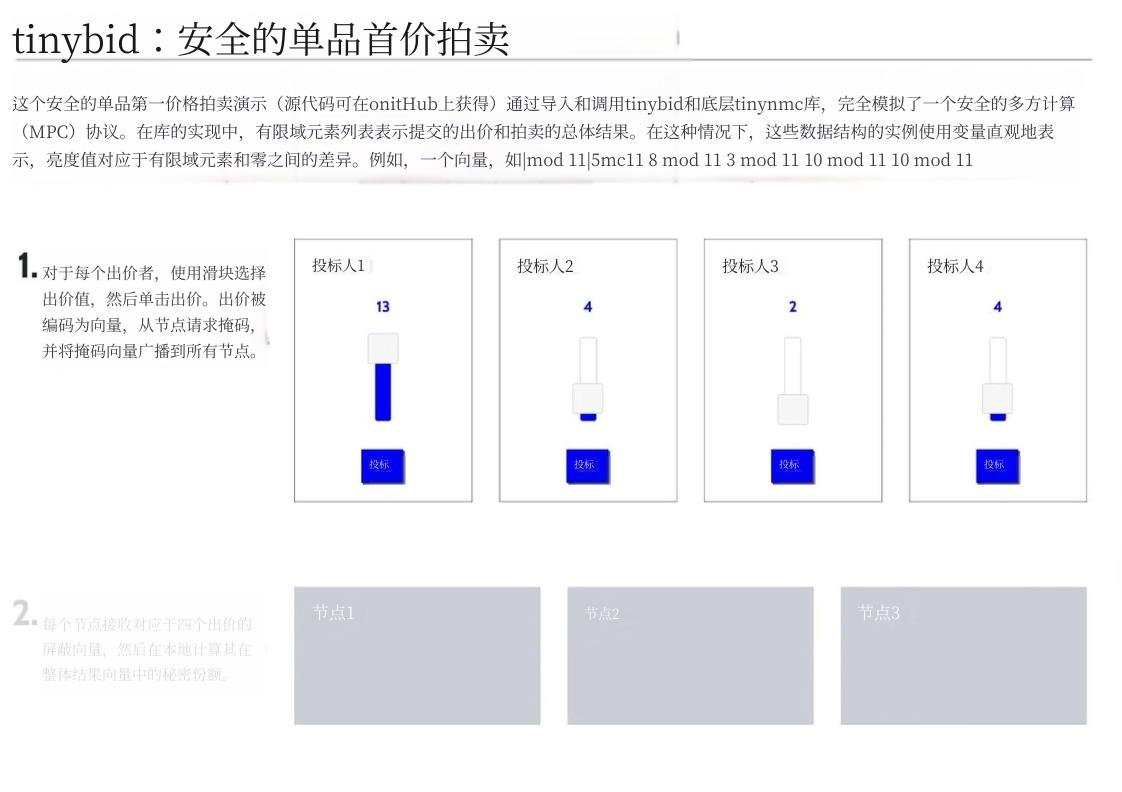
An on-chain auction, such as Nillion’s experimental case.
MPC enables multiple parties to jointly compute a function (e.g., signing a transaction or verifying balances) without revealing their individual inputs. This ensures data privacy while achieving collaborative computational goals.
Besides the PETs discussed above, other techniques like coin mixers, homomorphic encryption, and composable privacy also exist. These combine multiple privacy tools to offer stronger protection.
In the crypto space, some projects focus on building products directly atop these cryptographic techniques, while others aim to build foundational privacy infrastructure supporting crypto applications.
Key Projects Building Privacy Infrastructure
Privacy in crypto isn't a one-size-fits-all solution. Different projects and teams typically focus on specific aspects of PETs to support particular use cases and needs.
Below are some notable projects in the privacy infrastructure space.
Nillion
We’ve previously covered Nillion’s technology and use cases in detail—if you’d like to dive deeper, check out those articles.
In short, @nillion’s infrastructure focuses on decentralized trust for sensitive data.
Nillion’s core technology—“Blind Computer”—uses multiple PETs to protect sensitive data, including:
-
MPC: used in its NilDB database.
-
TEEs: used for AI inference (e.g., NilAI and NilCC).
Additionally, Nillion has developed innovative consumer applications based on its infrastructure, which we'll cover later.
Succinct
@SuccinctLabs’ airdrop brought joy to some and disappointment to others, but the underlying technology is absolutely worth attention.
Succinct Labs promotes zero-knowledge proofs (ZK Proofs) and has built a framework capable of verifying any software. While not entirely privacy-centric, its flagship product—the SP1 ZK Virtual Machine—can provide client-side privacy. For instance, in the case of Hibachi, public order flow is hidden while the central operator (Hibachi) retains full visibility.
Zama
@zama_fhe leads in Fully Homomorphic Encryption (FHE), focusing on enabling confidential applications.
Zama builds technology supporting confidential blockchain protocols compatible with Solidity-based networks, enabling privacy-preserving applications such as:
-
Privacy-first decentralized exchanges (DEXs) for token swaps.
-
Confidential lending protocols.
-
Asset tokenization with built-in privacy.
Zcash
To be honest, Mert deserves a “KoL of the Year” award just for successfully promoting @Zcash (ZEC).
As an OG in the privacy space, Zcash pioneered peer-to-peer private payments using zero-knowledge encryption (ZK Encryption).
Zcash uses zkSNARKs to enable optional privacy in transactions. While the tech may seem relatively simple, combined with its Bitcoin-inspired tokenomics, it's easy to see why it’s becoming a go-to alternative to Bitcoin for those still believing in the cypherpunk ethos amid renewed interest in privacy.
Monero
Beyond its passionate $XMR community, @monero is also a noteworthy privacy tech project.
Monero achieves full transaction privacy through three cryptographic techniques:
-
Ring Signatures: hides the real sender by mixing their signature with decoy signatures pulled from the blockchain.
-
Stealth Addresses: generates a unique one-time public key for each incoming transaction, preventing linkage between recipient wallets and payments.
-
RingCT: uses cryptographic commitments and range proofs to hide transaction amounts while allowing the network to verify that inputs equal outputs, ensuring no tokens are created out of thin air.
Unlike Zcash, Monero’s privacy features are not optional—they’re mandatory. This means all Monero transactions are fully hidden, with no concept of “selective privacy” or “shielded transactions.”
However, this enforced privacy has drawn regulatory hostility, leading to Monero being delisted from many compliant centralized exchanges.
Arcium
Remember how we said privacy isn’t one-size-fits-all, especially at the infrastructure level?
Yes, @Arcium is a prime example.
Arcium is a multi-party computation network that has built multiple protocols on top, including:
-
Cerberus Protocol: a general-purpose protocol with a unique security model.
-
Cerberus adopts a "dishonest majority" trust model, equipped with cheating detection and identifiable abort mechanisms.
-
This means privacy is preserved as long as at least one node is honest.
-
If a node is found to be dishonest, it is identified, expelled from the network, and penalized (slashed).
-
Note that protocols like Cerberus typically operate under an "honest majority" model (requiring >51% honest nodes), making Cerberus’ model more flexible and robust.
-
-
Manticore Protocol: designed specifically for AI use cases.
-
Though Manticore’s security assumptions aren’t as unique or strong as Cerberus’, it still plays an important role in specific contexts.
-
Manticore suits permissioned environments, supporting AI training in trusted settings to meet specialized needs.
-
Like Nillion, Arcium’s tech already powers some impressive consumer applications, which we’ll explore shortly.
Core Consumer Projects Driven by Privacy Tech
The appeal of crypto privacy lies in not having to abstractly discuss complex backend technologies—especially since most of us aren’t developers who can directly “play” with these underlying systems.
But the end products—consumer apps built atop this infrastructure—are things we can directly experience. Here are some privacy-powered applications:
Hibachi: Private Perpetual Futures Trading
Not everyone wants their positions or liquidation records publicly exposed.
If you recall the James Wynn incident (whether he was a pawn in a larger scheme or genuinely targeted), his position on Hyperliquid was public—and he got hunted and liquidated. This shows that privacy is indeed necessary in on-chain perpetual trading.
@hibachi_xyz addresses this using Succinct’s zero-knowledge proof tech (SP-1) and Celestia’s data availability (DA). It employs a novel architecture blending on-chain and off-chain components, with Succinct verifying centralized limit order books (CLOBs) within Celestia’s blobs.
As a privacy-focused app, Hibachi also optimizes execution speed with latency as low as 5 milliseconds. No token yet—so definitely one to watch.
NilGPT: Privacy-First AI Chatbot
Let’s be honest—sometimes AI feels creepy, especially when it starts referring to itself with pronouns.
Still, AI tech is genuinely cool, especially given the creative ways people experiment with prompts.
Yet, many users overshare with AI chatbots, forgetting that behind-the-scenes, centralized software may be watching—products like ChatGPT, Gemini, and even Grok are built on such models.

@nilgpt_ is a privacy-focused AI chatbot built on Nillion’s confidential computing infrastructure, designed to keep conversations and data secure without collecting or exposing personal information.
NilGPT leverages Nillion’s Blind Compute layer to encrypt and process data across distributed nodes, ensuring no single entity can access plaintext input or output—delivering true privacy.
Railgun: A Privacy-Powered On-Chain Ecosystem
If you want anonymity on blockchains, @RAILGUN_Project is one to watch (psst—it’s also backed by Vitalik).
Railgun is a zero-knowledge (ZK)-powered on-chain ecosystem, functioning as a smart contract system compatible with Ethereum-like chains. It enables private transactions and DeFi interactions without sacrificing security or composability.
Fully decentralized and governed by Railgun DAO, Railgun uses zk-SNARKs to encrypt balances, transactions, and smart contract executions on chains including Ethereum, Polygon, BSC, and Arbitrum.
Importantly, unlike traditional mixers, Railgun provides full anonymity via zero-knowledge cryptography while seamlessly integrating with existing dApps and liquidity protocols.
Privy Home: Wallet Infrastructure
Frankly, Privy might be one of the most market-fit products in crypto. Its product, Privy Home, is a secure control layer and unified management hub for embedded wallets in crypto apps. Built by @privy_io, Privy Home serves as wallet infrastructure, empowering on-chain experiences by helping users easily and securely manage multiple wallets and applications.
Privy allows users to track, manage, and oversee assets from multiple apps on a single platform. Using key sharding and Trusted Execution Environments (TEEs) for security, Privy delivers enhanced self-custody and interoperability—making wallet management easier while preventing apps from accessing private keys.
Umbra
This year, Solana has become the de facto hub for on-chain entertainment, where users earn big rewards—and attract more attention and surveillance.
That’s why products like @UmbraPrivacy matter.
Umbra is a privacy protocol offering “incognito mode” for Solana transactions, enabling private transfers via Arcium’s confidential network to deliver real financial privacy.
Currently live with private transfers, Umbra plans to evolve into a full-fledged Solana privacy DeFi hub, launching private swaps, a Solana-Zcash bridge, and an SDK for native privacy integration into wallets and other apps.
If you're a wallet-snooping “observer,” you might hate Umbra. But if you're a crypto user, it might excite you.
Zashi App
If you’ve been “awakened” to buying $ZEC and privacy is now a priority, what’s next?
Just download and use @zashi_app! It’s a mobile wallet built specifically for Zcash by Electric Coin Co. (ECC)—the same team behind Zcash’s 2016 launch. Zashi focuses on shielded, privacy-preserving transactions.
Zashi is a self-custodial app allowing users to send, receive, and use $ZEC without intermediaries, government, or corporate surveillance.
By default, Zashi transactions are shielded, leveraging Zcash’s zero-knowledge encryption for end-to-end privacy—the easiest entry point for private peer-to-peer payments.
Honestly, I’ve downloaded it myself and it feels smooth. So maybe give it a try?
Although many other privacy-powered consumer products deserve exploration, we’ll pause here for the sake of readers with shorter attention spans. Next, we’ll share our thoughts on all this.
Conclusion
The walls of traditional systems are crumbling. The on-chain era has begun.
Though adoption may seem slow, going from nothing to something is always the hardest part. The leap from “one” to “ten” tends to happen much faster.
My point is, as on-chain tech advances to the point where even your grandma starts using it, privacy—hers and yours—will become critical.
We firmly believe privacy isn’t a “nice-to-have” feature—it’s essential. It shouldn’t be an afterthought, but a cornerstone of your short- and long-term strategy.
The infrastructure is being built—some already live—and with applications emerging, these products are proving privacy’s potential.
To stay ahead, you need to watch for deeply integrated solutions—find the AWS-like “ultimate fix,” or at least something that lets you be a truly anonymous John Doe on-chain.
If history is any guide, the forces pursuing freedom will always win. In blockchain, betting on privacy is betting on freedom.
Join TechFlow official community to stay tuned
Telegram:https://t.me/TechFlowDaily
X (Twitter):https://x.com/TechFlowPost
X (Twitter) EN:https://x.com/BlockFlow_News
 @blocmatesdotcom