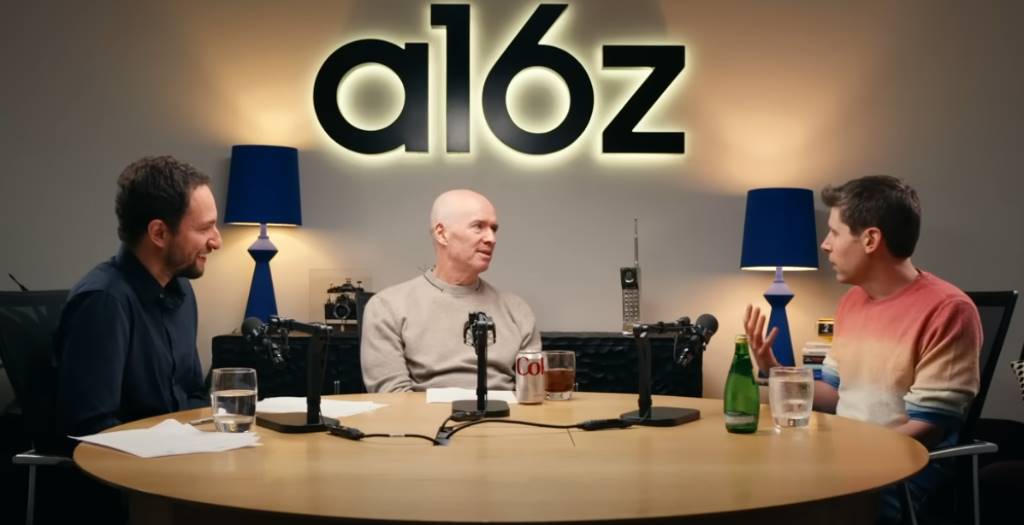
Sam Altman in conversation with a16z co-founder: We will make radical bets on infrastructure, Sora is a key strategic tool
TechFlow Selected TechFlow Selected
Sam Altman in conversation with a16z co-founder: We will make radical bets on infrastructure, Sora is a key strategic tool
OpenAI is transforming from a research lab into a vertically integrated "AI empire."
 Navigating Web3 tides with focused insights
Author: Long Yue
OpenAI is transforming from a research lab into a vertically integrated "AI empire".
On October 8, OpenAI CEO Sam Altman revealed in a recent conversation with Ben Horowitz, co-founder of prominent venture capital firm a16z, that OpenAI has decided to make a "very aggressive infrastructure bet"—one so large in scale that it requires the entire industry to participate.
He explained that this decision stems from strong confidence in model capabilities over the next one to two years, as they foresee upcoming models creating massive economic value, and current expansion rates are no longer sufficient to meet future demand.
This strategy directly explains OpenAI's recent series of partnerships with tech giants such as NVIDIA, Oracle, and AMD. Altman previewed that more such collaborations will be announced in the coming months, indicating its attempt to leverage the entire industrial chain "from electronics to model distribution".
This may also mean that the AI race is shifting from algorithms to a comprehensive battle involving computing power, capital, and energy.
Altman also directly linked the future of AI with the future of energy, pointing out that AI's exponential growth will require cheaper and more abundant energy. He predicted that long-term solutions will combine solar plus storage with advanced nuclear energy, and asserted that the cost of nuclear energy will be the key variable determining how quickly it can be widely adopted and thus support AI development.
Regarding the company's vision, Altman stated that OpenAI is not merely a research laboratory, but a hybrid entity integrating consumer AI subscription services, hyperscale infrastructure operations, and cutting-edge AI research, all dedicated to building artificial general intelligence (AGI) and ensuring it benefits humanity.
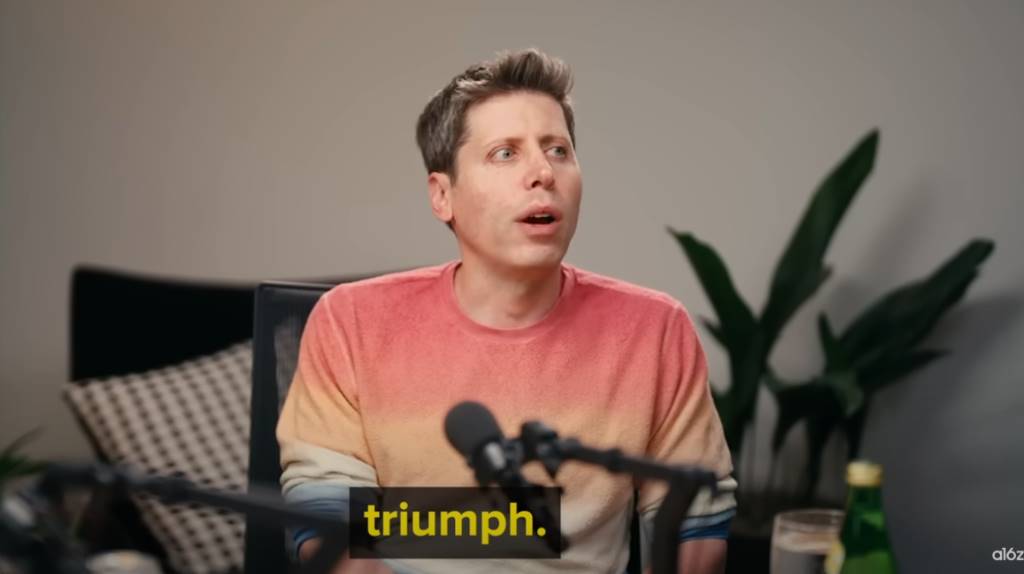
Key points from Sam Altman's interview:
-
Aggressive infrastructure bet: Altman disclosed that the company is making a "very aggressive infrastructure bet", a massive investment requiring industry-wide collaboration. This is based on confidence in future model capabilities one to two years ahead, not current models, and he previewed more industry partnerships in the coming months.
-
Energy future blueprint: Altman stated that AI and energy have become "one and the same". AI's exponential growth depends on cheaper, more abundant energy. He predicted that future energy will be dominated by "solar + storage" and nuclear energy. Once nuclear energy demonstrates "overwhelming economic advantages", its adoption will accelerate rapidly, and he called past restrictions on nuclear energy "an extremely foolish decision".
-
Strategic role of Sora: Sora is not just a video generation tool, but a strategic instrument for building "world models" to advance AGI and help society adapt to AI development.
-
"AI scientists" are coming: Altman predicted that within two years, AI models will be capable of making significant scientific discoveries, which he sees as the true sign of AI changing the world. He noted that GPT-5 has already begun demonstrating the ability to make small, novel scientific findings.
-
Shift toward vertical integration: Altman admitted he was previously wrong about his skepticism toward vertical integration and now views it as a necessary path for OpenAI to fulfill its mission, comparing it to Apple's iPhone success.
-
New copyright model: He anticipates that AI training may eventually be considered fair use, but generating content using specific IP will give rise to new business models. Some rights holders are even more concerned that their IP won't be used enough by AI, rather than being overused.
-
Commercialization and trust: On monetization, Altman expressed openness but caution toward advertising, emphasizing that user trust in ChatGPT must never be compromised. Recommending paid products instead of the best ones would destroy this trust.
"A Very Aggressive Bet": Infrastructure Expansion Based on Future Demand
Amid ongoing debates about whether AI is in a bubble, Altman's remarks undoubtedly add fuel to market enthusiasm. He stated bluntly: "We've decided it's time to make a very aggressive infrastructure bet."
This decision is not based on current product demands like ChatGPT, but on a firm belief in the future. Altman explained: "The reason we're being so aggressive isn't because of the models we currently have... We can see one or two years ahead [in terms of future model capabilities]." He believes the economic value created by upcoming models will far exceed imagination, necessitating early preparation.
The scale of this bet is so large that it requires industry-wide support. Altman said: "To bet at this scale, we kind of need the whole industry... to back it up." This spans "everything from electronics to model distribution and everything in between."
This also explains why OpenAI is actively forming partnerships with companies like AMD, Oracle, and NVIDIA. He further hinted that this is just the beginning: "In the coming months, you should expect to see more moves from us."
The Energy Lifeline of AI: The Future of Nuclear and Solar Power
Altman admitted that the two areas he cares most about in his career—AI and energy—have now become "one and the same". Looking back, he believes the single biggest factor improving human quality of life has been access to cheaper, more abundant energy. And the immense computational demands of AI are now placing energy issues squarely at the forefront.
On addressing future energy needs, Altman laid out a clear roadmap. He expects near-term baseload energy growth in the U.S. to come primarily from natural gas. But in the long run, he believes "the two dominant sources will be solar plus storage, and nuclear energy". The nuclear category includes the full stack of advanced nuclear technologies, including small modular reactors (SMRs) and fusion.
On nuclear development, Altman offered a key economic insight: the speed of nuclear adoption hinges entirely on cost. "If it has overwhelming economic advantages over everything else, then I expect it to happen very quickly," he said.
He added that immense political pressure would then push regulators to act swiftly. Conversely, if nuclear costs are comparable to other sources, anti-nuclear sentiment could make progress painfully slow. He openly labeled past decisions to ban nuclear energy in many regions as "an extremely foolish decision".
Sora's Strategic Value: More Than Just Video Generation
Regarding the recently launched text-to-video model Sora, Altman elaborated on its multifaceted strategic role within the company. While Sora may superficially seem unrelated to artificial general intelligence (AGI), he believes that building powerful "world models" is far more critical to achieving AGI than people realize.
Beyond that, Sora is also a crucial tool for OpenAI to guide societal and technological "co-evolution". Altman said that just as ChatGPT made the world take large language models seriously, Sora allows society to anticipate the impact and opportunities posed by powerful video models. "It's very important for the world to understand where video technology is headed," he said.
Of course, Sora also presents new commercial challenges. Altman observed that users aren't just employing it for professional creation, but also for making fun memes and sharing them. The high cost of generation clashes with frequent, entertainment-driven usage, meaning OpenAI must develop a business model for Sora that's entirely different from ChatGPT's.
Catalyst for AGI: The Arrival of "AI Scientists"
Among all potential AI applications, Altman said the one he is "most excited about" is the "AI scientist". He believes the world will truly change when AI can independently make scientific discoveries.
"We're seeing small examples of this happening for the first time on GPT-5," he revealed. He observed that models are already capable of making novel mathematical discoveries or minor advances in physics and biology, and he believes this trend will accelerate.
He predicts that within two years, models will handle larger chunks of scientific work and make significant discoveries, having a "major impact" on the world.
From Investor to Operator: A Shift in Thinking on Vertical Integration
In the interview, Altman also reflected on his personal evolution from investor to company operator, and how this shift influenced OpenAI's strategy. He candidly admitted that he once opposed vertical integration but now realizes "I was just wrong".
He attributed this change to hands-on operating experience. As an investor, he favored theoretical market efficiency—companies doing just one thing well. But as CEO, he realized that fulfilling the company's mission required doing much more themselves. Apple's iPhone, a prime example of extreme vertical integration, is what he calls "the most incredible product in the history of the tech industry".
This mental shift—from advising to executing—explains why OpenAI has evolved from a pure research lab into a company building its own large-scale infrastructure, striving to control the full stack from underlying compute to top-level applications, laying the foundation for its ambitious AI empire.
Join TechFlow official community to stay tuned
Telegram:https://t.me/TechFlowDaily
X (Twitter):https://x.com/TechFlowPost
X (Twitter) EN:https://x.com/BlockFlow_News