Naval's shoutout drives ZEC surge—what other privacy projects are worth watching?
TechFlow Selected TechFlow Selected
Naval's shoutout drives ZEC surge—what other privacy projects are worth watching?
Let's review the entire process of this old coin's new hype.
 Navigating Web3 tides with focused insights
Author: David, TechFlow
October's Uptober market movement belonged not only to Binance's new Meme coins but also to some long-forgotten ancient cryptocurrencies.
Industry jargon refers to these old coins as "Dino Coin," denoting mature tokens that pioneered certain tracks but whose initial popularity has gradually faded.
Take ZEC (Zcash), for example. It surged from a low of around $53 at the end of September to $230 after China's National Day week, achieving a monthly gain exceeding 370%. What drove this revival wasn't institutional buying or technical upgrades—it was directly triggered by a single tweet.
On October 1, Naval Ravikant, a legendary Silicon Valley investor with 2.9 million followers, posted a highly controversial view on X: "Bitcoin is insurance against fiat, and Zcash is insurance against Bitcoin."
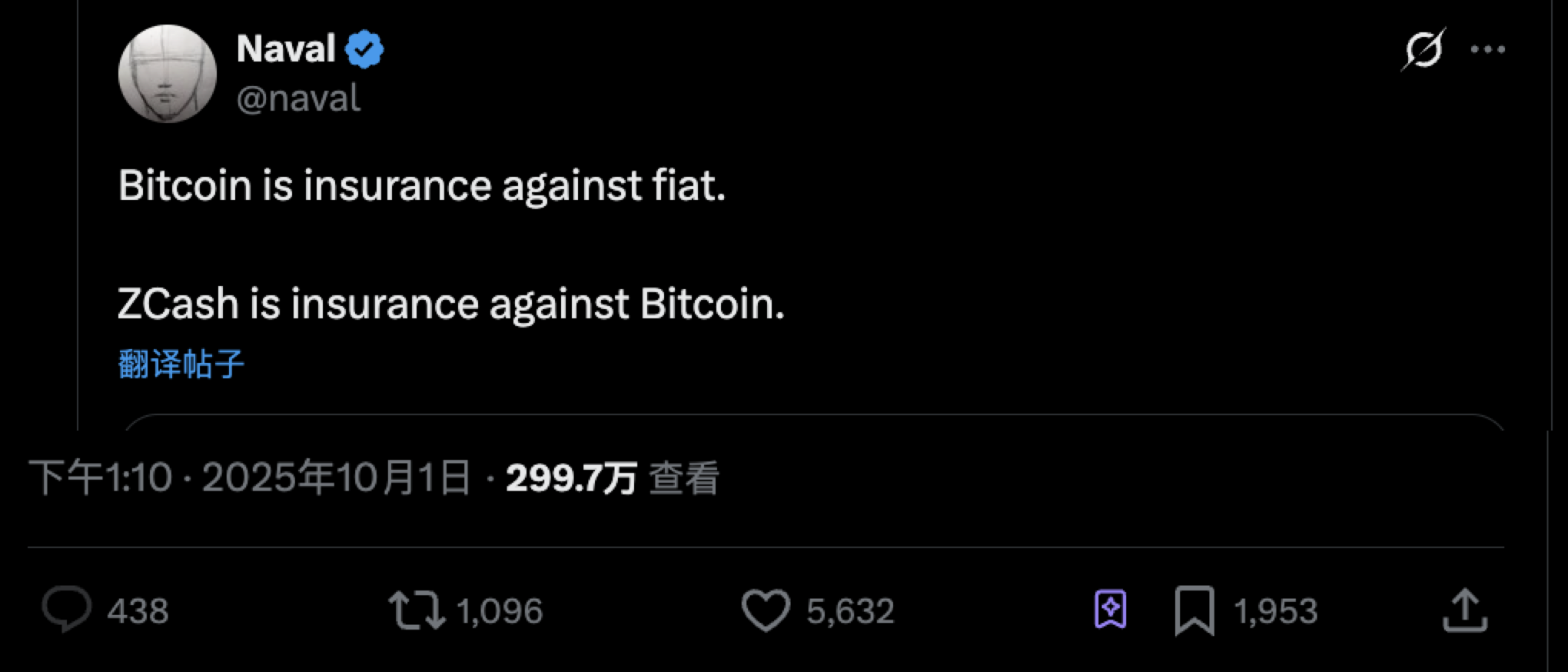
Following this, ZEC quickly rallied, and other privacy coins also saw long-absent gains amid spillover sentiment. When prices rise, scholars always emerge to debate; the long-silent privacy narrative suddenly became a hot topic again.
If you missed ZEC’s recent surge, let’s review together how this old coin revival unfolded, examine just how influential top figures can be, and explore which opportunities in the privacy sector might be worth watching next.
Conflict of Interest: Reviving Old Coins
Naval Ravikant is a big name in Silicon Valley's investment circle. As co-founder of AngelList, he built it into a $4 billion-valued startup funding platform.
His personal investment track record is equally impressive, having made early investments in over 200 companies including Uber and Twitter.
In the crypto space, Naval’s credentials run deep too. In 2014, he co-founded MetaStable Capital, one of the earliest cryptocurrency hedge funds. Public reports indicate the fund achieved a 540% return in 2017, with early holdings including Ethereum, Bitcoin, and other digital assets.
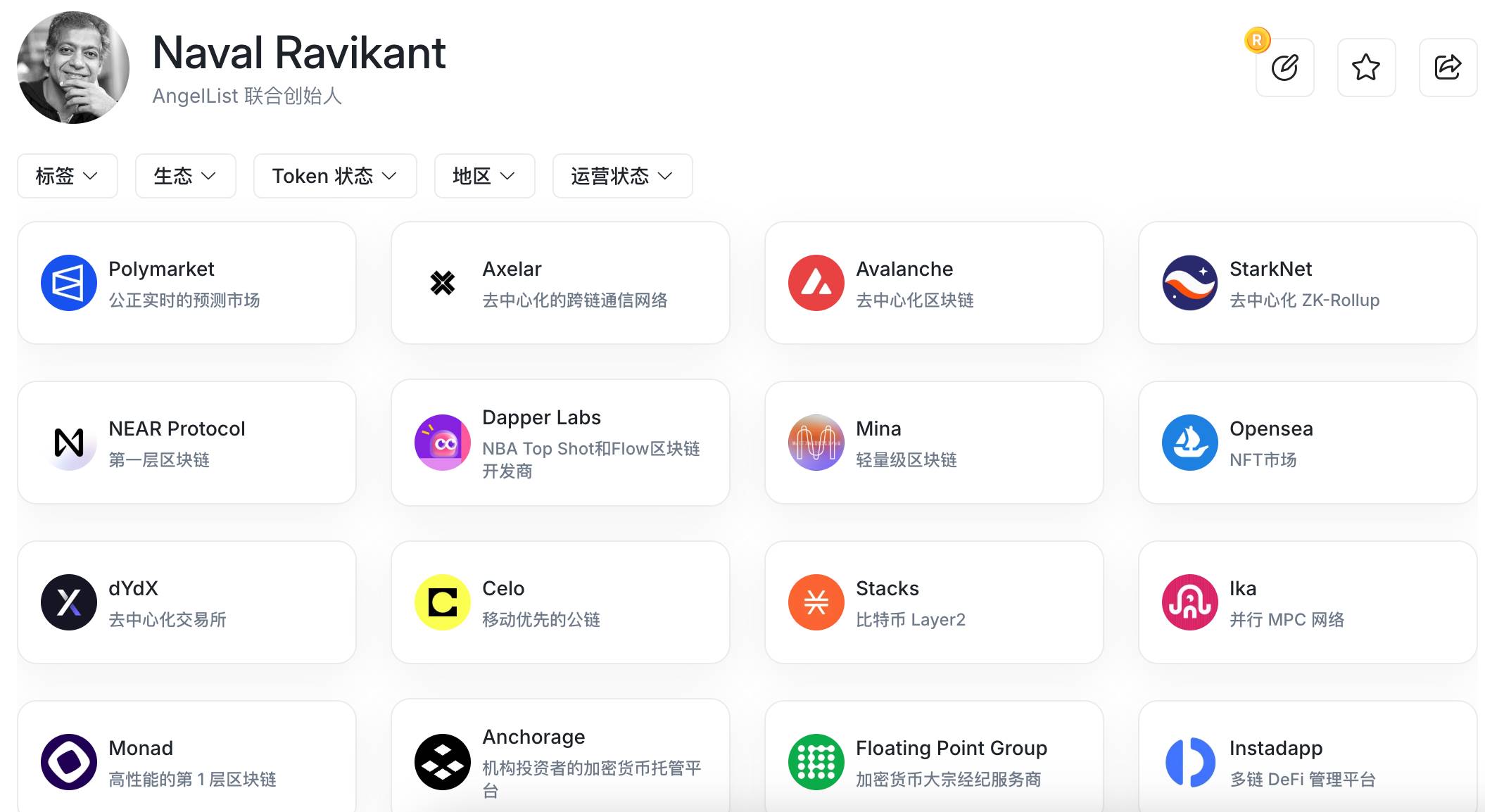
On October 1, Naval tweeted that Zcash is insurance against Bitcoin, followed by several additional tweets arguing that Bitcoin lacks privacy, pointing out that Bitcoin’s public ledger makes it impossible for “Satoshi himself” to use Bitcoin without exposing his identity, and that governments/banks can trace all transactions via chain analysis.
Zcash, he argued, complements rather than competes with Bitcoin—using zero-knowledge proofs to hide key information such as sender, receiver, and amount.
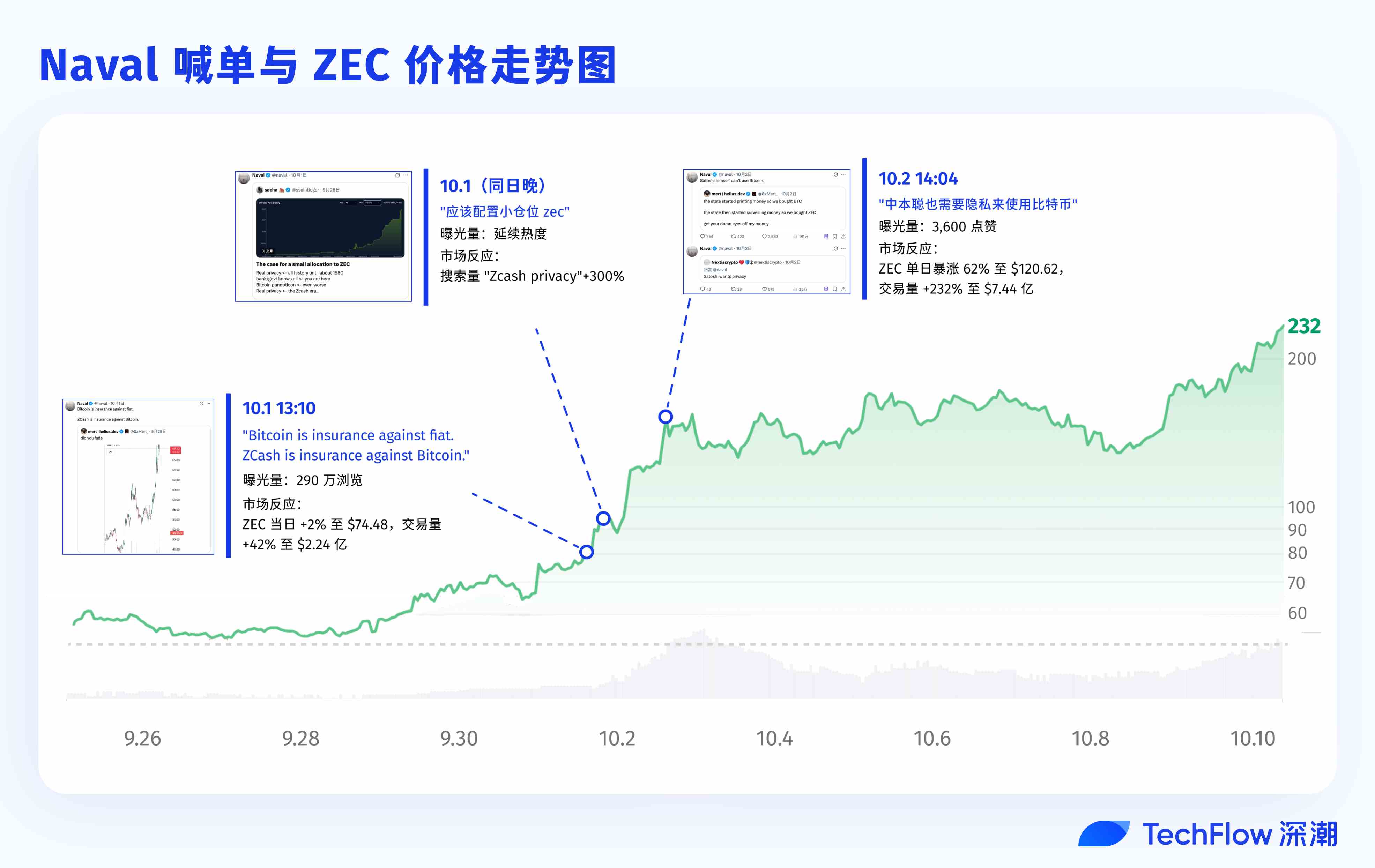
The issue is, Zcash’s advantages aren’t newly discovered—they’ve been known for years. This looks more like a prominent figure randomly reviving an old project, especially since the privacy narrative had been cold for a long time.
Looking at the timeline, Naval’s tweet closely coincides with ZEC’s sharp price increase. However, Naval may not be entirely neutral here—there’s actually an unspoken conflict of interest.
Multiple public reports reveal that as early as 2015, Naval invested $715,000 in a company called Zerocoin Electric Coin Company, which later changed its name to Electric Coin Company—the very team that developed Zcash.
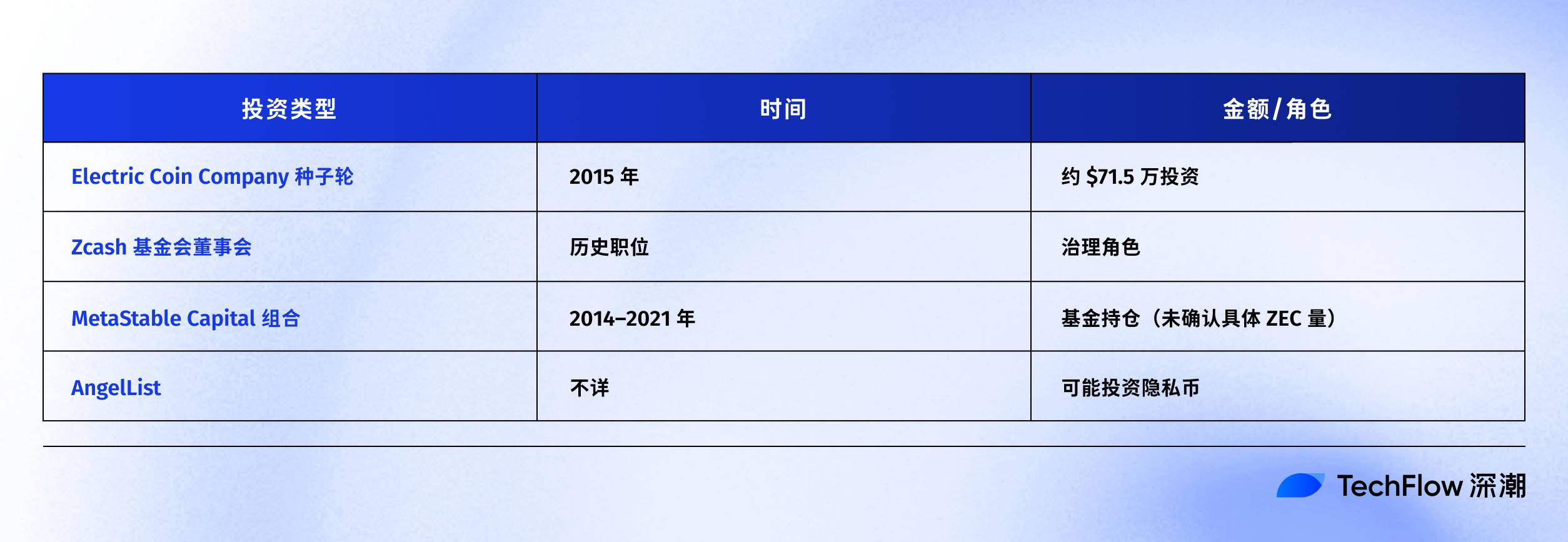
Besides, Naval previously served on the Zcash Foundation’s board, giving him some influence over governance decisions.
Thus, when an investor of his stature promotes an old coin, criticism naturally follows. Many in the community accuse him of using his influence to boost a project from his early investment portfolio, making it hard to believe this is a neutral technical discussion or investment advice.
Interestingly, Naval has remained silent on these criticisms—neither confirming nor denying them.
Regardless of controversy, Naval’s influence has clearly translated into price action. His tweet received 2.9 million views and sparked a wave of follow-up posts by KOLs. Balaji Srinivasan (former a16z CTO), Mert Mumtaz (Helius CEO), and others voiced support for privacy coins, further amplifying market sentiment.
The end result: ZEC rose from $53 at the end of September to $230—an increase of over 300% since he posted his endorsement.
Sentiment Spillover: Chain Reaction Across Privacy Sector
Naval’s endorsement didn’t just lift ZEC—it has recently spread across the entire privacy coin sector.
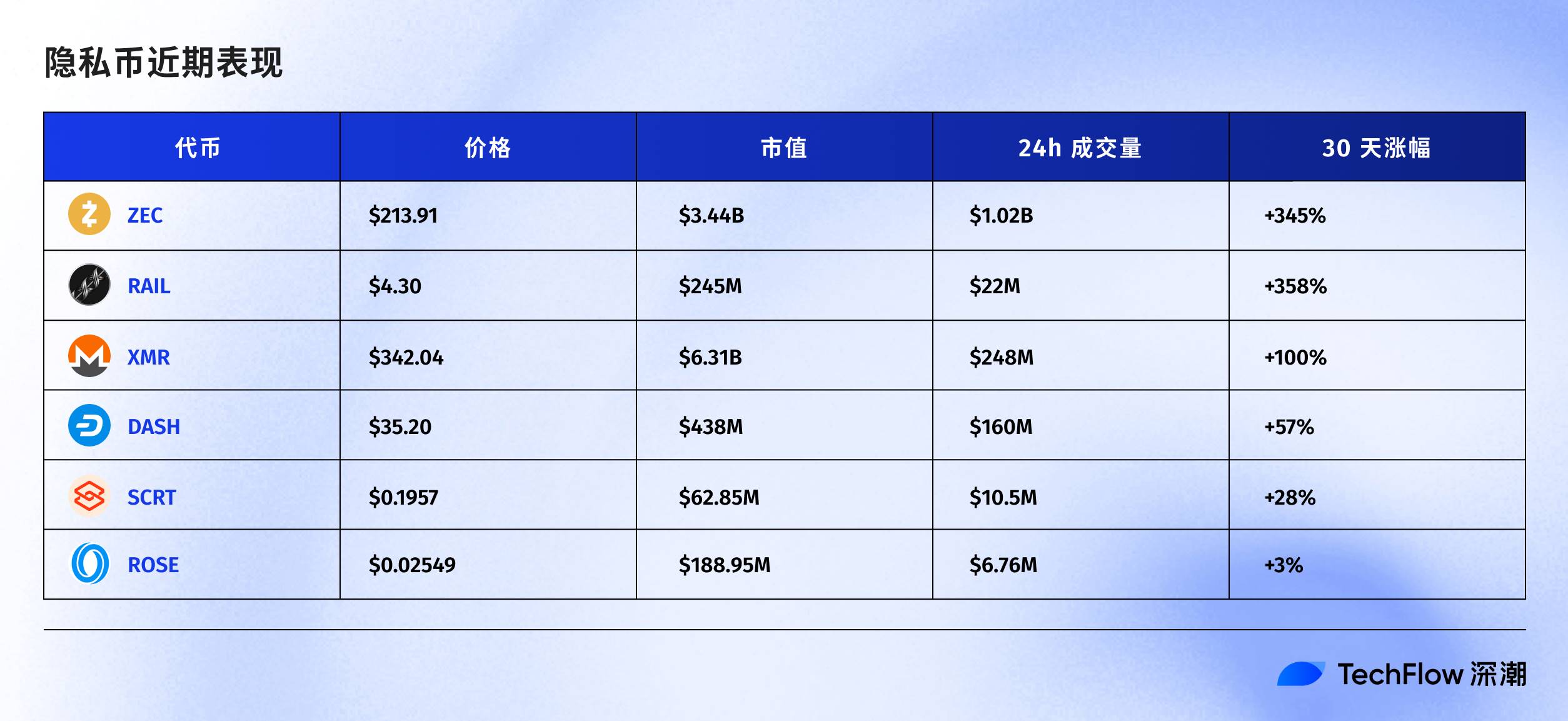
Railgun (RAIL) emerged as the biggest dark horse. This relatively niche privacy coin surged 240%, climbing from $1.79 to a high of $4.83. Its 24-hour trading volume spiked by 1270%.
Beyond ZEC-related sentiment, Railgun also benefited from other catalysts.
On October 9, the Ethereum Foundation released the Kohaku privacy roadmap, specifically mentioning integration of Railgun’s zk-multisig technology—one of the privacy features Vitalik has long favored.
Other privacy coins also posted solid gains.
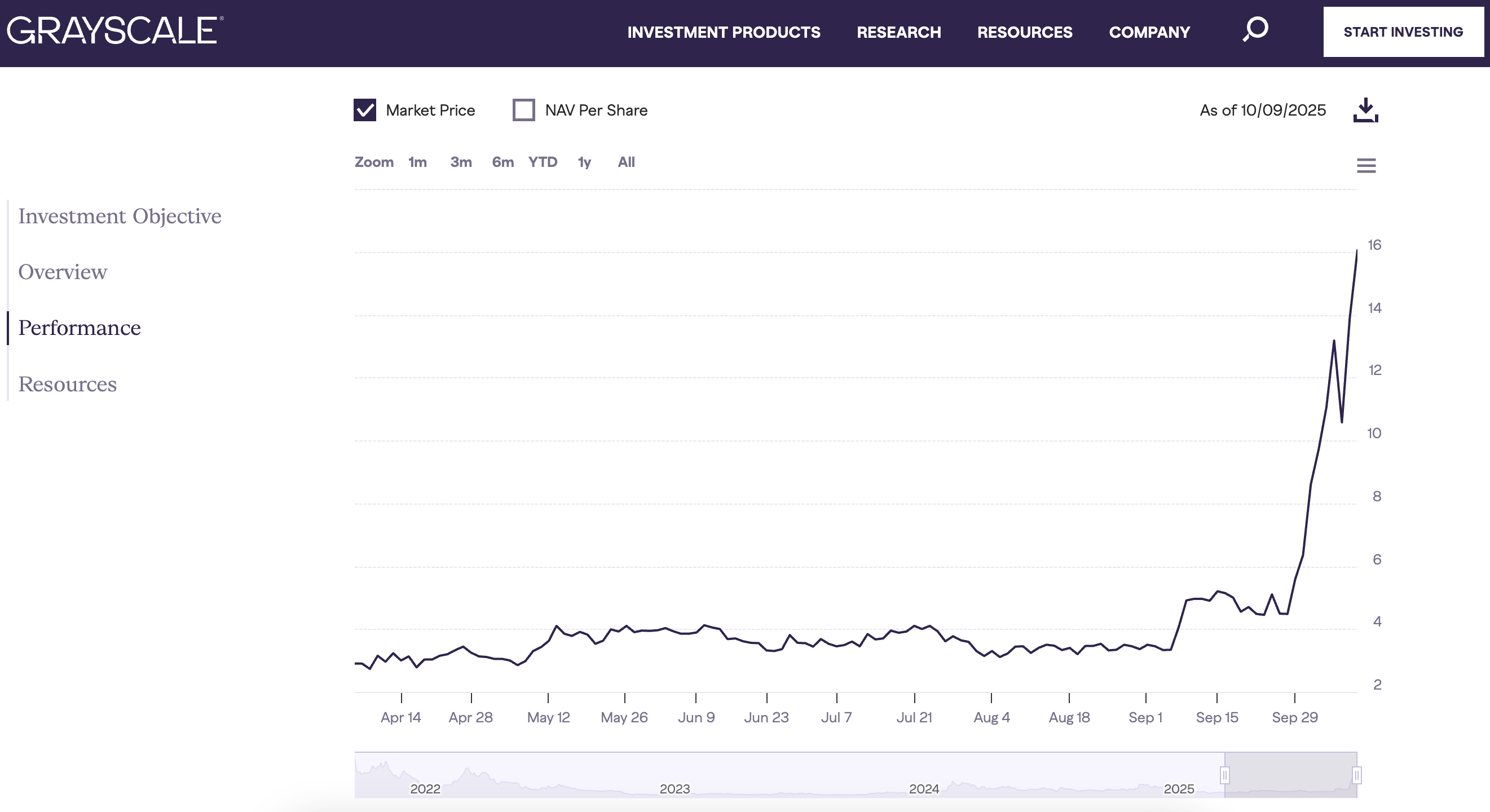
And during ZEC’s surge, Grayscale announced the reopening of private placements for its Zcash Trust.
Grayscale Trust serves as a compliant gateway for traditional capital to enter crypto. While not as popular as its Bitcoin or Ethereum trusts, it’s highly significant for ZEC and one of the few compliant ways institutions can hold ZEC.
According to official data, the Zcash Trust now manages approximately $85 million in AUM, with its share price up 340% over the past six months.
With all these developments happening simultaneously, market attention has returned to the privacy sector. While exact capital inflow data is hard to quantify, the rise in social热度 is very visible.
Beyond the tokens mentioned above, several other projects may benefit from this short-term boost in privacy-related sentiment.
-
Aster: Dark Pools and Private Trading
Aster needs no introduction, but few pay attention to its dark pool model.
As an on-chain Perp DEX, one of its highlights is the "Hidden Orders" feature, which keeps order size, price, and direction completely invisible until execution—only confirmed on-chain upon completion. This mechanism uses zero-knowledge proofs to protect traders from MEV attacks, front-running, and liquidation sniping.
Amid Binance’s Meme frenzy and renewed privacy narratives, $ASTER itself may still be worth watching.
-
Umbra: Auditable Privacy
From October 6–8, Solana privacy protocol Umbra conducted its ICO on MetaDAO’s futarchy platform. Originally aiming to raise $750k, it ended up oversubscribed by about 1100%, raising $8.8 million.
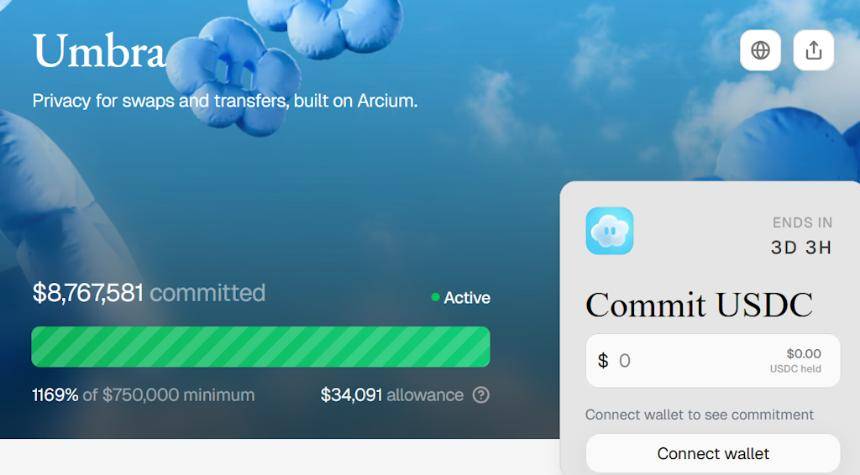
Umbra’s core value lies in offering Solana a “stealth mode”: through device-side encryption and Arcium’s multi-party computation (MPC) technology, users can make private transfers without sacrificing blockchain verifiability or speed.
Unlike fully anonymous Monero, Umbra includes a compliance framework, creating encrypted links between private and public wallets via auditor programs, disclosing information only under court order. This auditable privacy meets user demand for financial privacy while avoiding regulatory risks like those faced by Tornado Cash.
Currently, Solana’s privacy ecosystem is still in early stages compared to Ethereum’s. Known for speed and performance, Solana’s move toward privacy will inevitably require leading projects to provide support.
Public information shows Umbra plans mainnet launch in Q1 2026. If progress goes smoothly, it could attract professional traders on Solana seeking protection from front-running, users demanding bank-level confidentiality, and institutions looking for compliant privacy tools.
Notably, MetaDAO—the platform that funded Umbra—has seen its own token META gain around 191% over the past 30 days, another story tied to launchpad mechanisms, beyond the scope of this article.
-
Ethereum Foundation Kohaku Roadmap: Privacy Moving from Edge to Core
On October 8, the Ethereum Foundation officially released the Kohaku privacy roadmap—the first time in Ethereum’s history that privacy has been elevated from an "optional feature" to a "protocol-level commitment." Kohaku is a modular open-source SDK (software development kit) providing privacy primitives for wallets, enabling developers to easily integrate strong cryptographic functions. Backed personally by Vitalik Buterin, a 47-member Privacy Cluster team has been formed to coordinate cross-organizational efforts.
Key features include:
-
Light Clients: Browser-based validation to avoid leaking IP addresses through trusted RPC nodes
-
Private Transaction Flows: Integration with zk-based protocols like Railgun for confidential sending/receiving
-
Social Recovery: Tools like ZK Email and ZKpassport allow wallet recovery without exposing private keys
-
dApp Single Accounts: Isolate transaction records across different apps to prevent linkage analysis
This isn’t reinventing the wheel—it’s integrating existing mature privacy solutions (like Railgun, Elusiv) into a unified SDK to lower development barriers. Ethereum plans to showcase an initial prototype at Devcon in November 2025, and push native account abstraction (AA) in 2026, making privacy a "default option" rather than an advanced feature.
The Kohaku roadmap specifically mentions Railgun’s zk-multisig functionality. As an "officially recognized" privacy engine, Railgun stands to gain broader wallet integration via the Kohaku SDK—this was one of the key catalysts behind RAIL’s 270% surge on October 9.
More broadly, Kohaku represents a fundamental shift in Ethereum’s stance on privacy, potentially triggering a short-term rally among Ethereum-based privacy tokens.
-
Aztec Mainnet Launch Imminent: Telling the Story of L2 Privacy and Decentralization
Aztec Network is a privacy-first zero-knowledge rollup L2 built on Ethereum, raised $119.1 million (led by a16z and Paradigm), focused on "programmable privacy" allowing developers to build applications where users control their own data disclosure.
On September 17, 2025, Aztec deployed version 2.0.3, a fully functional upgrade, meaning all mechanisms required for mainnet are now in place.
Aztec’s key distinction from other privacy solutions is "computation privacy": it hides not only transaction amounts and addresses but also the entire contract execution logic—paving the way for enterprise adoption.
For example, tokenized real-world assets (RWA) can settle on-chain without revealing trading strategies, meeting KYC/AML requirements through selective disclosure.
Aztec’s roadmap indicates its mainnet Alpha will launch by end of 2025, featuring fully decentralized sequencers and validators—no transitional phase of gradual decentralization.
This contrasts with most L2s—Optimism and others initially operate with centralized sequencers, and many compromise on sequencer centralization.
While infrastructure isn’t a new narrative, and the broader crypto market may not need more L1/L2s, having a unique selling point within an established sector can still draw attention and capital.
Overall, most of these projects are still in early stages. Yet the privacy sector is indeed evolving from a niche demand into a necessary component of mainstream on-chain infrastructure, and localized opportunities may lie precisely within this quiet transformation.
Join TechFlow official community to stay tuned
Telegram:https://t.me/TechFlowDaily
X (Twitter):https://x.com/TechFlowPost
X (Twitter) EN:https://x.com/BlockFlow_News
 深潮TechFlow