








What will the next crypto cycle look like?
TechFlow Selected TechFlow Selected
What will the next crypto cycle look like?
The timing and scale of liquidity rotation, the Federal Reserve's interest rate trajectory, and institutional adoption patterns will determine the evolution path of the crypto cycle.
 Navigating Web3 tides with focused insights
Author: arndxt
Translation: Luffy, Foresight News
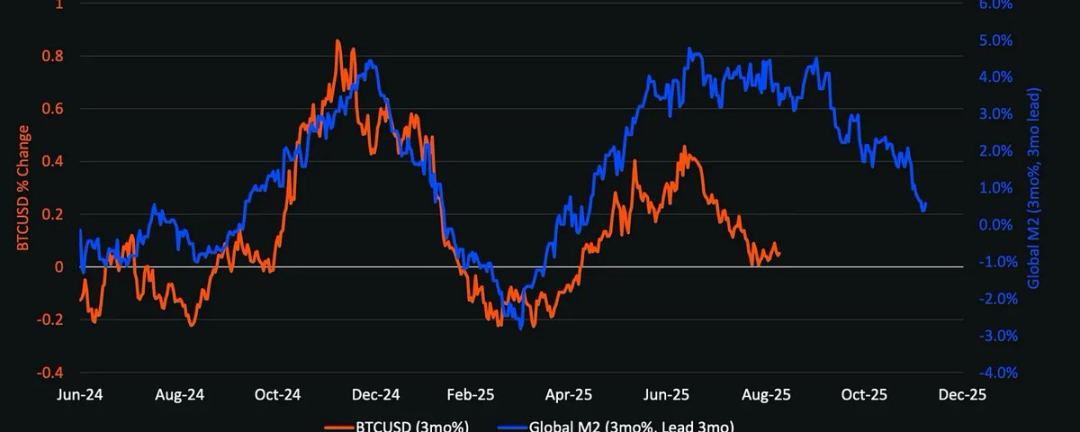
Global M2 and Bitcoin price chart
The key structural conclusion is that cryptocurrencies will not decouple from macroeconomic trends. The timing and scale of liquidity rotation, the Federal Reserve's interest rate trajectory, and institutional adoption patterns will determine the evolution of the crypto cycle.
Unlike 2021, the upcoming altcoin season—if it occurs—will be slower, more selective, and more institutionally focused.
If the Fed releases liquidity through rate cuts and bond issuance while institutional adoption continues to rise, 2026 could become the most significant risk asset cycle since 1999–2000. Cryptocurrencies are poised to benefit, but their performance will be more orderly rather than explosive.
Federal Reserve Policy Divergence and Market Liquidity
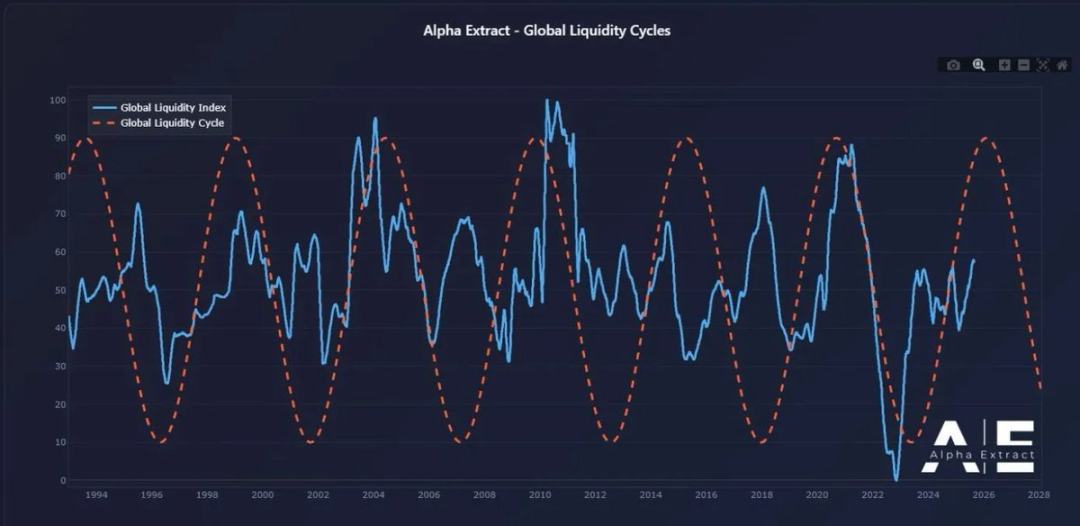
In 1999, the Federal Reserve raised rates by 175 basis points, yet equity markets continued climbing toward their 2000 peak. Today, forward market expectations are completely inverted: a projected 150 basis point rate cut by end-2026. If this materializes, markets will enter an environment of increasing rather than tightening liquidity. From a risk appetite perspective, the market backdrop in 2026 may resemble 1999–2000, but with an entirely opposite interest rate path. If so, 2026 might become a "more intense version of 1999–2000."
New Context for the Crypto Market (Compared to 2021)
Compared to the previous major cycle, the current market shows significant differences:
-
Tighter capital discipline: High interest rates and persistent inflation force investors to be more selective about risk assets;
-
No pandemic-level liquidity surge: Absent a spike in broad money supply (M2), industry growth must rely on increased adoption and capital allocation;
-
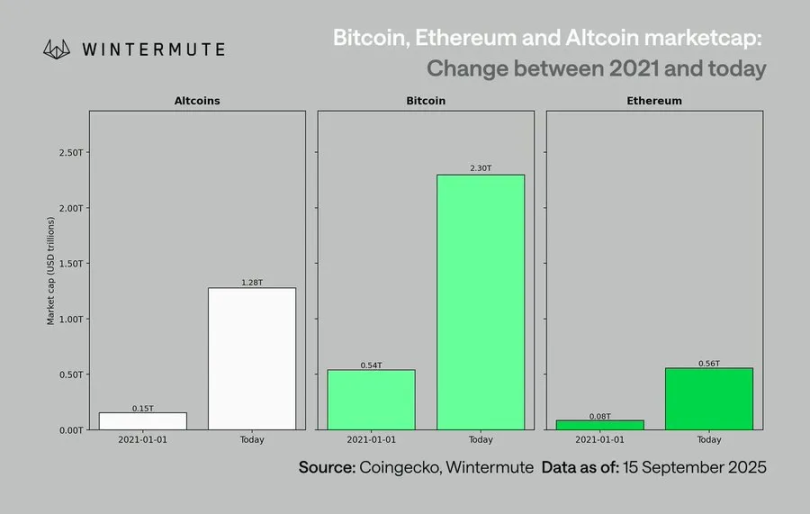
Market size expanded tenfold: A larger market cap base implies deeper liquidity, but reduces the likelihood of 50x–100x returns;
-
Institutional capital inflows: Mainstream institutional adoption is now entrenched, leading to steadier capital inflows that drive gradual market rotation and consolidation, rather than explosive asset swings.
Bitcoin’s Lag and the Liquidity Transmission Chain
Bitcoin lags behind changes in the liquidity environment because newly released liquidity remains trapped "upstream" in short-term Treasuries and money markets. As assets at the far end of the risk curve, cryptocurrencies only benefit after liquidity flows downstream.
Catalysts for strong cryptocurrency performance include:
-
Expansion in bank credit (ISM Manufacturing Index > 50);
-
Outflows from money market funds following rate cuts;
-
Long-term bond issuance by the Treasury, putting downward pressure on long-term yields;
-
Weaker dollar, easing global funding pressures.
Historically, when these conditions align, cryptocurrencies tend to rally late in the cycle, lagging behind equities and gold.
Risks to the Base Case Scenario
Despite the bullish framework provided by liquidity trends, several risks remain:
-
Rising long-term yields (triggered by geopolitical tensions);
-
A stronger dollar tightening global liquidity;
-
Weak bank credit or tightening credit conditions;
-
Liquidity remaining trapped in money market funds without flowing into risk assets.
The defining feature of the next cycle will no longer be "speculative liquidity shocks," but rather the structural integration of cryptocurrencies into global capital markets. With institutional capital inflows, disciplined risk-taking, and policy-driven liquidity shifts converging, 2026 may mark a transition for cryptocurrencies—from volatile boom-bust cycles toward systemic relevance.
Join TechFlow official community to stay tuned
Telegram:https://t.me/TechFlowDaily
X (Twitter):https://x.com/TechFlowPost
X (Twitter) EN:https://x.com/BlockFlow_News
 @arndxt_xo


