








Interview with CoinFund President: The Digital Asset Treasury (DAT) craze has only just begun
TechFlow Selected TechFlow Selected
Interview with CoinFund President: The Digital Asset Treasury (DAT) craze has only just begun
Are DATs the current trend solution, or the next cash machine for cryptocurrency?
 Navigating Web3 tides with focused insights
Curated & Translated: TechFlow
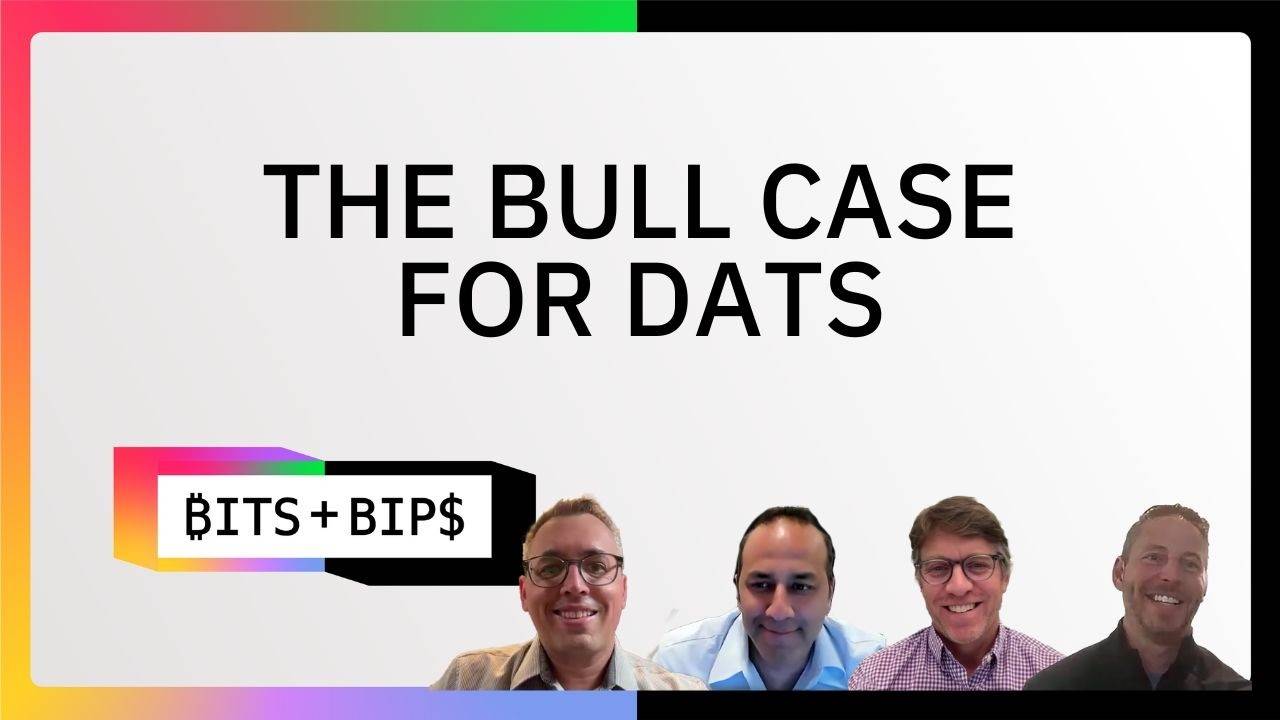
Guests: Christopher Perkins, Managing Partner and President at CoinFund; Brian Rudick, Chief Strategy Officer at Upexi
Hosts: Ram Ahluwalia, CFA, CEO and Founder of Lumida; Steve Ehrlich, Executive Editor of Unchained
Podcast Source: Unchained
Original Title: Bits + Bips: Think the DAT Trend Is Over? It May Have Only Just Begun
Air Date: September 5, 2025
Key Takeaways
Are DATs just a passing fad or the next cash-generating machine in crypto?
In this episode, Chris Perkins from CoinFund and Brian Rudick from Upexi join Ram Ahluwalia and Steven Ehrlich to dive deep into why certain DATs (Digital Asset Treasuries) might be better suited than traditional ETFs for some investors, unpack the math behind premiums that support bullish views, and explore what tools will stand out.
The discussion also covers whether we're seeing a genuine altcoin season or a false signal, the significance of Galaxy launching tokenized stocks on Solana, and a key unlock highlighted by Perkins that could reshape market dynamics.
Are DATs an alternative to traditional banking, or the best investment vehicle crypto has offered to traditional financial capital?
Highlights Summary
-
Market fundamentals are very strong right now. A rebound in crypto markets is only a matter of time, with November expected to be a pivotal turning point—investors should prepare accordingly.
-
For DATs to truly work, five key elements are required: first, the market must be ready for DATs; second, the token must have solid fundamentals; third, you need skilled advisors and bankers who know what they’re doing; fourth, you need a strong management team and excellent asset managers; and perhaps most importantly, you need a KOL who can turn data into compelling technological innovation.
-
The current advantage of DATs lies in their transparency and functionality. The goal of a DAT is not just to give investors exposure to an asset, but also access to its underlying yield through DeFi and other innovative mechanisms.
-
Personally, I believe Solana-based DATs have higher potential.
-
Very bullish on altcoins—the optimism stems largely from our observation of gradually easing regulatory risks. Particularly optimistic about tokens at the intersection of AI and crypto.
-
Many people still don’t fully believe in the value created by DATs. For me, the key is helping investors understand the value accumulation mechanisms of DATs, which have compounding effects that ETFs simply cannot replicate.
Will the Market Face Another September Slump?
Steve Ehrlich:
Ram, kick us off—give us a quick recap of the month and your take on the current market. As we know, September is typically a weak period for Bitcoin and crypto. Do you see any positive signals this time around?
Ram Ahluwalia:
In our last episode, we discussed Bitcoin’s seasonal headwinds. I think Bitcoin faces difficulty breaking above $125,000, not only due to seasonality but other factors too. Recent excitement around the stablecoin bill passing briefly lifted sentiment, but momentum seems to have faded. Also, I’ve noticed weakening “animal spirits”—high-volatility stocks favored by retail investors have underperformed recently, which typically happens during this period. So overall, this year looks similar to the past two years.
We’re also seeing some concern around Bitcoin’s four-year halving cycle. Some cycle-focused investors believe Bitcoin could peak cyclically by November this year. Others think the cycle is already over, but I personally disagree. When sentiment gets overly optimistic, I tend to get pessimistic; when it turns pessimistic, I become slightly more optimistic. Right now, the market is in a high-uncertainty phase—we can discuss this further later.
Additionally, I’m observing weakness in debt markets. Excessive debt is accumulating and forming a bubble—a topic we’ve discussed for a long time. When Wall Street aggressively pushes certain financial products, investors need to stay cautious. I still view Bitcoin, Ethereum, and Solana as leading asset classes—they’re like the dominant brands in the market. Bitcoin is “Coca-Cola,” Ethereum is “Pepsi,” but other crypto assets don’t receive nearly as much attention.
Also, some assets are trading below their intrinsic value. Michael Saylor-led MicroStrategy changed the rules on buying Bitcoin, which impacted market confidence to some extent. Bitcoin’s core feature is immutability, but changing the rules tested market sentiment.
The rule change was eventually reversed, but it didn’t boost market sentiment. The market is currently undergoing various tests, and future direction remains to be seen.
Why the Bull Case for DATs Still Holds?
Steve Ehrlich:
I think this is the first time we’ve had a DAT representative on the show. Brian, Upexi was an early player in the Solana treasury narrative—talk about recent weeks and your observations.
Brian Rudick:
Not much has changed. We’re currently focused on two main things: First, building brand awareness so more people know about us. When someone thinks, “I want to invest in Solana,” we want them to think of us first. This morning, we announced we’ll attend three traditional finance conferences later this month. If we haven’t accelerated within the next year, I’d be disappointed. So expanding our reach is a core mission. There are other initiatives, but this is one of them.
Second is equity issuance. If we can issue shares above book value, that creates shareholder value. For example, MicroStrategy sold shares at twice book value—though the stock dipped slightly afterward, it was effectively selling $1 of assets for $2, or buying Bitcoin at half price. This allowed MicroStrategy to create $26 billion worth of “free” Bitcoin over six quarters. That’s a model worth learning from.
We’re actively exploring how to break through here. We have an equity financing plan coming soon, and we’re looking for opportunities in the market. This isn’t secret fundraising—it’s an open business model. We’re doing everything possible to make it happen.
Christopher Perkins:
I think Ram is being a bit too pessimistic. From a broader perspective, this summer could be called the summer of DATs. 2021 was the summer of DeFi, and DATs debuted then as a core innovation. Many DATs benefited from gradual regulatory openings. Now we’re seeing the impact of those regulatory unlocks. While there is indeed a bubble, I believe, as Brian said, DATs will become a significant part of crypto’s market structure.
DAT innovation is substantial—they’re public-facing and backed by foundation labs. Not every project will succeed because achieving these goals is extremely difficult, but we’re very active in this space.
For DATs to work, five key elements are needed: First, the market must be ready—timing matters, and prolonged market closures hurt. Second, the token must have strong fundamentals. When moving from Bitcoin to yield-bearing assets, DATs become more attractive. Through staking and restaking, tokens achieve natural alignment with underlying value. Third, you need skilled advisors and bankers who know what they’re doing; Fourth, you need a strong management team and excellent asset managers who know how to manage these assets and generate returns; And perhaps most importantly, you need a KOL—you need someone who can tell the story, who can transform data into beautiful technological innovation. I believe they’ll endure.
The market may go through a shakeout, but the ultimate winners will be exceptional projects. We’re excited and believe we’re still in the early stages of DAT development, with many exciting projects on the horizon.
Steve Ehrlich:
Brian, when DATs first emerged, there was an interesting trend. After Michael Saylor, the first wave of companies chose to focus on Solana instead of Ethereum—your company, Sol Strategies, Defi Development Corp. Now, financial firms in the Ethereum ecosystem are raising billions, while Solana seems to have become somewhat of a follower to Ethereum.
How do you view this shift? When raising funds, do investors ask about differences between Solana and Ethereum? What tough questions do they raise, and how do you respond?
Brian Rudick:
Great question. Frankly, traditional finance still knows very little about these topics. The most common question is: “What’s the difference between Bitcoin and Solana?” Not even “Ethereum vs. Solana?” So we’ve moved past that stage.
Certainly, some investors familiar with crypto or digital assets ask deeper questions, but they don’t go as far as asking technical ones like “When will Solana implement multiple concurrent leaders?”
I think many still don’t fully believe in the value DATs create. For me, the key is helping investors understand the value accumulation mechanics of DATs, which have compounding effects. For instance, issuing shares above book value—we can achieve this in multiple ways, including ATM offerings, equity lines, even convertible notes. These notes have long maturities and high volatility in the underlying asset, so most pricing models show over 90% likelihood of conversion to equity. This allows DATs to sell equity at prices far above current market levels.
Additionally, when investing in pre-mined or PoS consensus tokens, we can earn yield through staking. For example, staking Upexi tokens yields over 8%, turning treasury assets into productive assets. We also buy locked tokens at a 15% discount, doubling the effective staking yield. Our buy-and-hold strategy means we won’t sell any Sol, making this ideal for us.
These value accumulation mechanisms can’t be replicated by native tokens or ETFs. The power of these models lies in proper token and mechanism design, and investor education is key to showcasing their potential and advantages.
Why Does Brian Believe “DATs Are Banks”?
Ram Ahluwalia:
Brian, can you elaborate on your earlier point? You said, “Banks operate like DATs—they have FDIC insurance, can rehypothecate loans, and benefit from speed in lending.” What did you mean?
Brian Rudick:
Yes, it’s a simplified analogy. Banks primarily profit from interest rate spreads—they raise money from depositors and lend it to borrowers, earning the difference between loan yields and deposit costs. Similarly, DATs profit from spreads. Investors typically discount a bank’s future spread income and include it in the bank’s asset valuation. Hence, bank stocks often trade above book value. While banks don’t frequently issue shares, historically some, like MNT, expanded and acquired through premium share issuance.
Ram Ahluwalia:
To be more precise, I’d say DATs resemble BDCs (Business Development Companies), akin to publicly traded private credit funds. They earn spreads through lending and use leverage to amplify returns. The operational model of DATs is quite similar to this structure.
Brian Rudick:
Exactly. Our DAT raises capital from capital markets and invests in Solana. Our goal is to achieve a return on Solana that exceeds our cost of capital, generating a positive spread. If the market believes Solana’s returns will sustainably exceed our cost of capital over future years, that spread gets discounted into net asset value (NAV), pushing NAV above 1. This way, we create real value for shareholders.
Christopher Perkins:
This kind of education is crucial. Now we’re seeing many traditional investors begin to look at Solana and explore its potential as a yield-bearing asset. This education not only helps investors understand how DATs work but also supports the broader development of the crypto ecosystem. I believe this is one of the biggest advantages in the ecosystem today.
Brian Rudick:
When we started, many questioned whether DATs were just a short-term arbitrage play, or even a threat to token ecosystems—like forced sell-offs during volatility. But then Ethereum’s success changed perceptions. For example, Tom Lee promoted Ethereum almost daily on CNBC, helping push its price from $2,700 to $4,700. Now, many other token ecosystems are actively promoting DATs as a tool to boost visibility, especially to attract traditional investors.
Ram Ahluwalia:
There are now many DATs in the market. I wonder—if you asked someone on Twitter, “Can you name eight DAT tickers?”—probably no one could. Of course, Chris and Brian might, but for average investors, it’s as hard as remembering eight kids’ names. MicroStrategy is an exception—they spent years building brand recognition. In crypto, investor attention is limited—you need to stand out among competitors. It’s not just product competition, it’s an attention game. Brian and Chris, you’re focused on building value creation machines, funding engines, and yield packaging systems, but attention is finite—that’s a challenge for everyone.
Steve Ehrlich:
Brian, what’s your take on this “attention game”? For example, Tom Lee and Bitmine’s MNAV (market-to-NAV) is now 1.1 and trending down. What do you think about that?
Brian Rudick:
I don’t closely follow other token ecosystems, but I think Bitcoin’s market is nearing saturation. In contrast, some company stocks trade at NAVs between 0.7 and 0.8. I believe Ethereum’s market isn’t fully saturated yet, but it’s competitive. Companies like MicroStrategy usually sell shares when NAV reaches 1.6 or 1.7, not near 1x.
I understand why others choose to sell near 1x NAV—they aim to become the largest player, as bigger players get more volume and can issue more shares.
Personally, I believe Solana’s DATs have greater potential. Their staking yield is among the highest, and buying locked tokens at a discount generates extra returns for shareholders. Therefore, Solana DATs have justification to trade at higher MNAV than other token ecosystems. So far, this strategy has worked. But we still need to improve visibility and counter attacks on Solana. These factors may affect MNAV, but currently ours stands at 1.7.
Are DATs Better Than ETFs for Investors?
Ram Ahluwalia:
Chris, what’s your take? For investors, is holding spot assets directly better than investing in a DAT? Take Ethereum—for some DATs, the mechanism forces buying, which is accumulative. But when a DAT issues shares, it causes dilution, potentially creating selling pressure. This isn’t pure buying—it’s driven by mechanical design forcing investors to acquire certain assets.
Christopher Perkins:
This is a valid question. Right now, DATs are still in early development. For example, last week we submitted a letter to the SEC and FASB about classifying LSTs (liquid staking tokens) as intangible assets—there’s still much to refine across the industry.
Many DAT projects are just starting. I see companies in our portfolio, like those in the Ethereum ecosystem, beginning to benefit from these mechanisms. ETHZilla has done some work in Ethereum’s ecosystem—DAT development is still nascent.
If we take Ethereum as an example, ETFs are more complex. Investors can choose to invest in ETFs or buy spot directly. But for many traditional investors, direct spot access isn’t allowed under their mandates. So they turn to ETFs. However, ETFs have a critical flaw: they don’t generate yield. Due to liquidity constraints—like a 13-day unlocking window—investors can’t stake directly via ETFs. While total return products may emerge, currently ETF design fails to deliver the yield investors need. This makes ETFs relatively inferior, especially for long-term investors where yield is essential.
In contrast, DATs offer ETF-like convenience. Investors can easily buy DATs through brokerage accounts while also earning yield on the underlying assets. This makes DATs a potentially superior investment tool, particularly for traditional investors who can’t access spot directly.
Of course, more transparent total return products may appear in the future, but currently DATs win on transparency and functionality. DATs aim to give investors not just asset exposure, but access to its potential yield through DeFi and other innovative mechanisms. This design isn’t just an investment case—it offers a familiar, approved wrapper.
Additionally, DATs open access to the entire U.S. equity capital market. Investors can include DATs in prime brokerage accounts, gain leverage, or use them as collateral. This brings DAT functionality closer to traditional stock investing.
Of course, Ram, the bubble issue you mentioned is real. I noted earlier that all key elements of a DAT must align for success—it’s a highly complex process. It seems Brian has found some solutions, but that’s where we stand today.
The Math Behind the Premium
Brian Rudick:
I’d like to add that I believe the market hasn’t fully grasped the powerful potential of DATs, especially how NAV compounds over time to create value.
Let me illustrate with a simple math example. Suppose I launch a DAT to invest in Solana, and similar projects in the market trade at a 5x market-to-book multiple. I raise $100 from Steve Ehrlich, issue 100 shares at $1 each. Steve owns 100% of the company, and my DAT holds $100 in cash.
Next, I invest that $100 in Solana. Since Solana trades at a 5x multiple, my investment instantly becomes worth $500. My company’s market cap is now $500, and Steve’s 100 shares are now worth $5 each.
Then I raise another $100. This time, since my shares trade at $5, I only need to issue 20 new shares to raise that amount. With this fresh capital, I again invest $100 into Solana. Solana’s value increases by another $500, bringing my company’s total market cap to $1,000.
Although Steve’s ownership is diluted to 85%, his stake’s value grows from $500 to $850. That’s the logic of accretive issuance. By leveraging market multiples and premiums, we can compound NAV continuously, driving sustained shareholder value growth.
Moreover, smaller DATs often enjoy an embedded growth premium. For example, if we issue $100 million in stock at a 2x multiple, it’s highly beneficial for us. For a giant like MicroStrategy, the same issuance has far less market impact. Thus, smaller DATs typically have greater growth potential.
At the same time, DATs supporting smaller tokens have greater upside. For instance, Solana’s market cap is just 4% of Bitcoin’s. Bitcoin is already the world’s fifth-largest asset—its chance of multiplying fivefold soon is low, whereas Solana has much more room to grow. Plus, Solana DATs can generate additional returns through staking and discounted purchases of locked tokens.
For these reasons, I believe once market conditions stabilize, other DATs should trade at premium levels exceeding MicroStrategy’s. But this is just my view on multiples and growth potential.
Christopher Perkins:
If a DAT combines strong fundamentals with meme power, it could trigger an even larger market reaction. We’ve seen such phenomena in both crypto and stock markets. It’s worth watching.
Ram Ahluwalia:
Absolutely. Making an asset a meme is important, but not all assets can achieve it. The nature of memes is like a “winner-takes-all” game—Palantir and Tesla became memes, but you can’t make every asset a meme. That’s my view.
I have another question for you. As an investor, do you prefer a high market-to-NAV ratio or a low one? I guess you’d say high, because it lets you accumulate more underlying spot through share issuance.
But interestingly, low market-to-NAV scenarios may offer more value opportunity. This reflexivity makes investment strategy more complex. I think this strategy only works when the DAT has momentum. Once momentum fades, investors should exit. Also, if market cap falls below NAV, you might become a takeover target; if market-to-NAV is too high, issuance could drive asset prices down. It’s a very complex game theory.
Brian Rudick:
It entirely depends on the future trajectory of MNAV (market-to-NAV). If one DAT trades at 2x and another at 5x, and I believe their multiples will converge, I’d pick the cheaper one. If I think multiples will remain unchanged, I’d choose the one trading at 5x, as its issuance would be more accretive.
Overall, it comes down to risk-reward tradeoffs. For example, last December, Solana Strategy’s MNAV hit 15x—different market conditions, fewer options. That shows how high MNAV can go. When DATs trade at higher MNAV, they create more accretive opportunities for shareholders. Conversely, if NAV drops below 1x, or Solana falls 50%, downside risk increases. So I see DATs as having highly asymmetric risk-reward—that’s why I’m willing to bet on them.
Is It Time for Altcoins to Explode?
Steve Ehrlich:
A chart circulating on Twitter recently shows Bitcoin’s market dominance at around 58%. During pandemic peaks, it dropped below 40%. While history doesn’t always repeat, this suggests a rotation from Bitcoin to altcoins might be underway. Brian, this could be an investor opportunity. Chris and Ram, what’s your take on the current altcoin cycle? What are your targets for the coming months?
Christopher Perkins:
I’m very bullish on alts—the optimism stems mainly from the gradual easing of regulatory risks we’re seeing. Even amid uncertainty, yesterday’s announcement of CFTC and SEC cooperation allowing spot tokens to list is significant. Clarity treating alts as commodities would be a major unlock. Here’s some inside info—I watch closely for altcoin futures listing on U.S. markets. When a token gets futures, you know it’s considered a commodity, since the SEC didn’t block it. This unlocks basis trades—buying spot, selling futures—pushing spot prices up. It also unlocks ETFs, since ETF surveillance relies on futures markets. So a key signal to watch is altcoin futures on U.S. exchanges. That’s the missing piece for many institutional buyers.
We’ve seen some initial futures, like Solana, but as regulatory clarity improves, I expect more. My conversations with regulators are very positive—this will be a huge catalyst. Also, I think we’re gradually focusing more on project fundamentals. There are good projects, bad ones, and terrible ones. I also believe education matters—explaining what Solana is, etc. As investors dig deeper, they’ll see these tokens differ and have unique value. I’m especially bullish on tokens at the AI-crypto intersection—their utility feels meaningful. So I’m very optimistic—altcoin markets still have a long runway.
Brian Rudick:
My view aligns with Ram’s. Short-term risks are rising—national debt, persistent inflation, tariff uncertainty, stretched valuations. But we’ve managed these for a while. So I think altcoin prices will face policy-driven headwinds short-term. But long-term, I’m very bullish on the altcoin market.
I’ve always believed the biggest hurdle for crypto is lack of clear rules and regulation. I think we might pass the CLEAR Act next year to fix this. Typically, big tech and financial institutions avoid crypto due to legal and regulatory risks. But once clarity arrives, they’ll enter en masse. These firms have billions of customers, built-in trust, billions in capital, and top developers. It could be as simple as Google Chrome adding a crypto wallet or Amazon accepting stablecoin payments. This opens massive user adoption potential. So I believe we may see one of the biggest altcoin booms in the medium to long term.
Christopher Perkins:
Great point. You have stablecoin inflows and structural buyers entering for the first time, like 401Ks. That’s powerful. Despite macro noise, these trends are worth watching.
Ram Ahluwalia:
I’m optimistic about the macro outlook. Lower interest rates are positive, fiscal deficits are positive, upcoming income tax cuts are positive—all tailwinds. Though tariffs cause friction, markets are digesting it—retailers importing from China are performing well. So I remain macro-optimistic. Timing matters—I agree. Also, Chris’s point about DeFi boom following stablecoin boom is spot-on. I find that theory very sound.
Ethereum spot markets are strong. Momentum drives digital assets, and momentum reflects attention. If attention follows a power law, it’s simple: What has momentum? What has attention? What benefits from regulatory clarity? What’s heavily shorted and shifting from non-consensus to momentum? The answer is Ethereum. Looking at Ethereum’s chart, you wouldn’t guess sentiment is weak. In fact, performance is solid. Overall, I’m very bullish on Chris’s DeFi thesis—Aave, a leading DeFi protocol on Ethereum, is performing exceptionally well.
Where Is the Macro Economy Headed, and What Should Investors Focus On?
Steve Ehrlich:
Ram, I want to ask about your macro outlook. I大概 know your answer, but I’d love to hear it. Given Fed turmoil and Trump attempting to fire at least one official—which may go to the Supreme Court—could this affect markets?
Ram Ahluwalia:
Long-term, asset prices are driven by earnings growth, interest rates and their direction, and inflation and its direction—these indirectly affect markets through policy. Short-term, asset prices are more influenced by positioning and news flow. For example, news about appointments—if negative sentiment hits briefly, it gets priced in fast, then markets move on. Simply put, every investor makes decisions based on existing context.
Right now, market fundamentals are very strong. Last quarter’s corporate earnings were exceptionally strong. Also, the economy is getting more stimulus, like rate cuts. Though I personally disagree with these policies, from a market view, they’re positive. I’m bullish—my portfolio includes small caps, rate-sensitive stocks, homebuilders, and consumer stocks. These benefit from strong consumer demand. Though there’s some economic divergence, the overall trend is positive.
Consumer trends are also noteworthy. Though loan stress exists, high-income earners (top third) drive most spending—about two-thirds of total consumption. Performance varies—travel, leisure, airlines all doing well. On the banking side, lending activity is rising, and gradual regulatory easing supports credit expansion. Competition among private credit firms is intensifying. I recently spoke with a bank acting like a private credit fund—but due to FDIC protection, they’re declining deals because credit availability is too high.
Of course, credit excess may pose risks down the road, but currently it’s manageable. Default risk isn’t rising significantly, and credit expansion is fueling the economic cycle. No external pressure can stop this trend now.
Why Is Galaxy Launching Tokenized Stocks on Solana Significant?
Steve Ehrlich:
Why not talk about tokenization? Big news this morning—we discussed Galaxy on Telegram. I don’t think they tokenized shares—they issued shares directly on the Solana blockchain, partnering with Superstate.
Christopher Perkins:
Fast forward to today. This is a big deal because we’ve been talking about RWA tokenization. As a banker, I hate RWA—it’s a mix of differently risk-weighted assets, which makes me anxious. So traditionally, assets go into a box, a token represents it, then it enters the ecosystem. But this time it’s different—it’s normative. We’re not locking shares in a New York bank custody account and issuing a token on top. It’s normative. It’s a proper digital asset—we actually hold the shares, and this token is their sole representation. When placed on-chain and using Superstate as transfer agent, it’s regulated. When you speak with someone like SEC Chair Atkins, he says we need to make IPOs great again, make capital markets great again, make them more accessible. What’s more accessible than a public blockchain? It’s issued on Solana. Well done—Solana has long positioned itself as a decentralized Nasdaq. This is a major step forward for the team and ecosystem. Now you have these assets. They’re not perfect, but it’s a great first step—I’d say it improves on what we’ve seen before.
I’m also excited about private equity tokenization, but this isn’t an SPV where you get a piece of an SPV. This is real stock—tokenized equity.
You can’t trade them on AMMs yet. There’s an NMS (National Market System) regulatory issue. Simply put, stocks must route to the best exchange price. If you have legacy systems, communication between them isn’t smooth. So I believe the SEC will address the NMS challenges we’re facing. But you can do peer-to-peer transfers between properly onboarded parties. This begins opening the global internet to buy stocks and similar assets.
Ram Ahluwalia:
Capital formation excites me—we need more of it. Public market registration and listing are too expensive. Companies like Securitize, doing on-chain activities via regulated ATS, are just trying to mix traditional finance with permissionless networks. It won’t work. So the direction is good.
I think Galaxy’s move is mostly symbolic. You get 24/7 trading. That’s the main unlock, but the symbolism implies more is coming. Interestingly, I took my family to the beach this weekend, brainstorming ideas as usual during holidays. I tweeted saying stocks should be tokenized on-chain. Then I saw Galaxy’s news—meaning no idea is original. A hundred people worldwide have the same idea simultaneously—execution is next. So I have no doubt we’ll see more of this. I think it’s mostly symbolic. What I really want is a way to launch a permissionless market, unlocking participation.
Other exciting things are happening too, like Credit Coup. Not sure if Chris follows them. They’re financing Rain Card, a credit card letting crypto-native users spend, leveraging on-chain digital asset wallets. You can finance on-chain, deposit, and earn 14%. It’s amazing—a bank on-chain. Deposit on-chain, get 14% coupons, fully collateralized by T+2 settlement risk. You get liquidity in two days. It’s a misaligned short-term high-yield asset. But it’s permissioned—still a step in the right direction.
Same with Galaxy. Paul Atkins specifically mentioned tokenization and super apps, Michelle Bowman talked about tokenization. Regulators are signaling to the market: if you’re compliant, we won’t interfere. So we’re moving in this direction. Around 200 fintech firms have applied for OCC charters—dozens will be approved in coming months. So I think Galaxy is symbolic, but there’s more beneath. We need more permissionless frameworks to unlock the next stage.
Steve Ehrlich:
I’d like to expand on this, as you raised a key point. Chris, you mentioned Solana is clearly a permissioned chain, and Superstate is also highly permissioned. I’ve followed tokenization for a long time—I assume you know. Can’t count how many pilot projects—though I know this isn’t a pilot—around tokenizing some credit instrument, etc. Maybe nine or ten-digit revenue potential, but no secondary market, no liquidity, because these things are static. I’m curious—what does breaking this barrier look like? Maybe we need many companies agreeing to issue on Superstate, or its obvious variants, simultaneously.
Christopher Perkins:
So what did we just do with stablecoins, right? How is this different? Stablecoins are custodied, but issuers handle KYC and AML. Then someone receives them—depending on their activity, if you send securities to North Korea, you get in trouble, because it’s behavior-based, right? That’s the stablecoin model. Yes, they have freeze and customs, but due to delays, they’re ineffective in practice.
But I think when you step back and look at what we’re seeing now, it circles back to what Brian is doing. We’re standardizing stocks as tokens. We’re turning tokens into stocks on DAs—so when will we normatively tokenize and issue your debt on-chain?
Brian Rudick:
Two thoughts. First, I fully agree with everything said about tokenization. To me, finance runs on outdated infrastructure—stablecoins are essentially tokenized dollars. They run on ECH, created 50 years ago. Even fintech is just front-end wrapping—if I send you $10 via Venmo, it uses ECH in the backend. So blockchain and tokenization reimagine the infrastructure itself.
Second, finance is full of intermediaries. That’s why DeFi is so important. It can help eliminate unnecessary middlemen we don’t need given technological progress.
We’ve announced our intent to tokenize Upexi equity via Superstate. Two main reasons for choosing them. First, as you said, issuing stock directly on-chain enables global access—not fragmented liquidity across wrappers limited to specific U.S. markets. Second, holders get the exact same legal and regulatory rights as traditional equity.
So that’s a major reason. Second, we care deeply about compliance, legal, and regulatory risk. Superstate does everything correctly—they’re rigorous on every detail, an SEC-registered transfer agent. They collaborate with the SEC on projects like Project Open for regulatory clarity. When you tokenize equity via Superstate, it strictly complies with securities laws. They have whitelists determining who can access your tokenized equity, who’s completed KYC. So we’re confident partnering with them to put Upexi equity on-chain.
Steve Ehrlich:
I get your point on regulation, but I’m waiting for companies—especially big ones—to put everything on-chain, forcing anyone wanting that stock to participate in the on-chain market. Imagine if Tesla decided to go fully on-chain—how many of us own Tesla stock, even indirectly via ETFs, would be forced to engage. So Brian, we’re waiting for your big announcement—delisting from Nasdaq, going fully on-chain.
What’s the Key Unlock for Altcoins?
Christopher Perkins:
I believe we’re entering a golden age of convergence—a pivotal moment for the entire crypto industry. Institutional investors are gradually entering, but the main barrier remains the lack of listed crypto futures in the U.S. These futures are crucial for solving liquidity issues and advancing the industry. I believe this is a key area to watch in the coming weeks.
Steve Ehrlich:
Currently, futures exist for Bitcoin, Ethereum, Solana, and XRP. What other assets should we watch?
Christopher Perkins:
All other crypto assets beyond these four need futures support. Mature futures markets unlock more functionality—driving ETFs, enabling basis trades, cementing crypto as commodities. These are critical steps toward market maturity. Yet, the U.S. market has a huge gap here, mainly because the SEC has blocked exchange applications. However, I believe this window is gradually opening—it’s an urgent industry need.
Steve Ehrlich:
Ram, what’s your take on current market conditions?
Ram Ahluwalia:
Recently I watched some traditional stock performances—like American Eagle’s earnings report. Its stock rose 24% after hours, suggesting undervalued retailers are gradually recovering. I think this trend will continue. Also, the mortgage refinancing space is worth watching—companies like Better Mortgage still have potential.
As for digital assets, I believe a market rebound is only a matter of time. We might need a few more weeks—volatility persists—but I expect November to be a key turning point. Investors should seize the opportunity and prepare.
Brian Rudick:
I’d add a point about long-term value in token markets. I believe in the long run, only three to five tokens will truly create value, and behind each token, maybe only three companies will consistently deliver compounded NAV returns to shareholders.
Historically, 95% of tokens lose 95% of their value within five years. The key to token success is underlying performance. So for short-term traders, token markets may offer decent returns, but long-term winners—like MicroStrategy’s success—will be extremely rare.
Steve Ehrlich:
My view is slightly different. I think in the current market environment, investors need to be more cautious, especially given uncertainty around Fed policy. But I’ve also noticed interesting things—last night I rewatched an episode of The Office with a discussion about money. Dwight mentions that since the U.S. left the gold standard in 1971, the authenticity of money has become blurred. This reflects the current market’s redefinition of value.
Join TechFlow official community to stay tuned
Telegram:https://t.me/TechFlowDaily
X (Twitter):https://x.com/TechFlowPost
X (Twitter) EN:https://x.com/BlockFlow_News
 深潮TechFlow


