The crypto aircraft carrier is about to set sail—Coinbase's ambitions can no longer be hidden
TechFlow Selected TechFlow Selected
The crypto aircraft carrier is about to set sail—Coinbase's ambitions can no longer be hidden
Coinbase's challenge lies in building an ecosystem that protects users' choice through healthy competition and continuous innovation, while preserving the core values of cryptocurrency.
 Navigating Web3 tides with focused insights
Author: Tiger Research
Translation: AididiaoJP, Foresight News
TL;DR
Coinbase has evolved from a centralized exchange into a full-stack cryptocurrency ecosystem built around the Base chain and Base applications.
The company continues to expand its influence in the crypto industry through acquisitions of multiple cryptocurrency startups and a robust Coinbase partner network.
Coinbase's strategic initiatives aim to drive mainstream adoption of cryptocurrency. However, they also create new centralized structures and pose challenges in balancing against decentralized values.
1. Coinbase: Ambitions to Build a Cryptocurrency Ecosystem
In April 2021, Coinbase became the first publicly listed cryptocurrency exchange, entering Nasdaq via a direct listing. This was more than just an IPO—it marked a symbolic turning point signaling the formal integration of the crypto industry into mainstream finance.

Source: Nasdaq
The company’s name itself carries symbolic weight. "Coinbase" originates from the Bitcoin "coinbase transaction," the first transaction recorded when a new block is created—representing the moment cryptocurrency enters the mainstream world. The name reflects its firm commitment to being the starting point of the crypto ecosystem.
Coinbase's symbolism extends beyond its name. Building on its exchange business, the company has continuously expanded its scope and is now constructing a vast ecosystem. It launched Base, an Ethereum-based Layer 2 chain, and introduced the Base app (TBA) during its "A New Day One" event. These developments indicate that Coinbase is assembling a full-stack cryptocurrency ecosystem spanning infrastructure to applications.
This report explores how Coinbase has grown from an exchange into an empire encompassing the entire cryptocurrency ecosystem and analyzes the implications of these changes for the industry.
2. Full-Stack Cryptocurrency: Exchange, Infrastructure, and Consumer Applications
2.1. Exchange: Coinbase’s Stable Cash Cow
Undoubtedly, Coinbase’s core business is its exchange. The company provides cryptocurrency trading services to users ranging from individuals to institutions, generating revenue primarily from trading fees. As of 2024, trading fees accounted for approximately 60% of total revenue, amounting to about $4 billion. This relatively stable income stream lays the foundation for Coinbase’s expansion into new ventures, similar to how Amazon uses AWS as a cash cow to fund diverse business expansions.
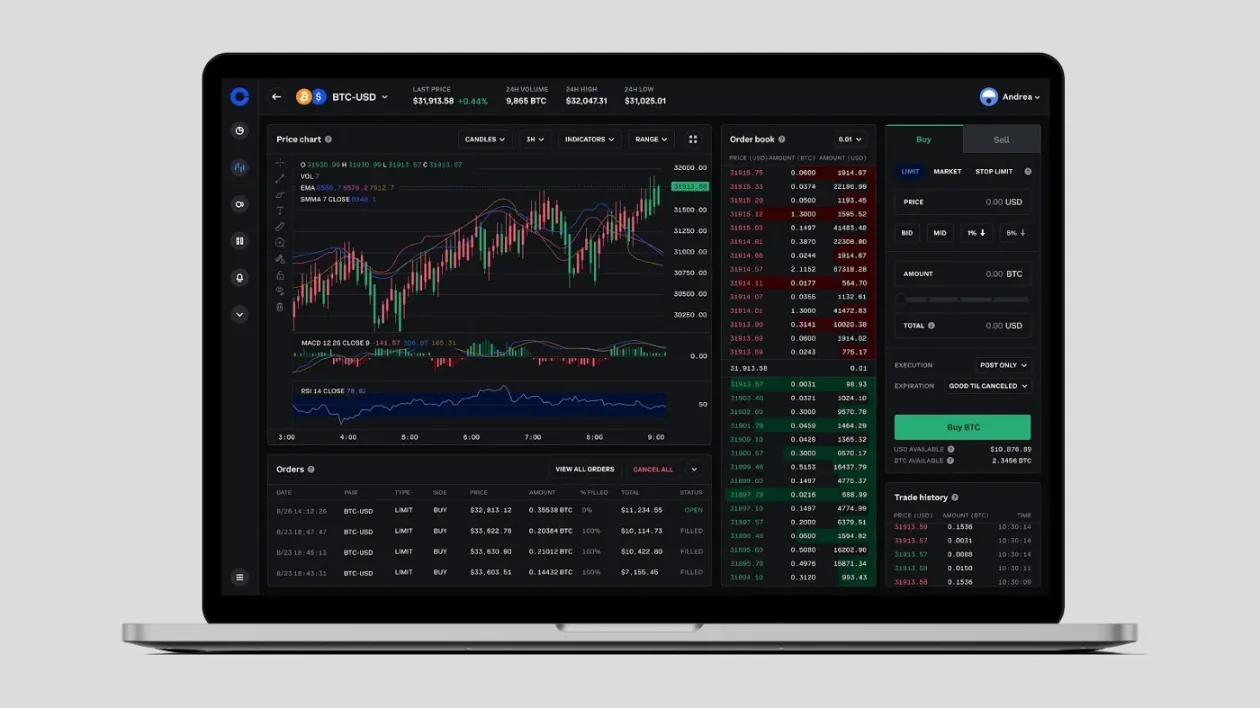
Source: Coinbase
Beyond revenue, the exchange holds strategic scalability value. As the primary gateway connecting fiat and cryptocurrencies, it boasts a massive user base and rich transaction data. This enables it to serve as a strategic hub for naturally funneling users into a broader ecosystem. The exchange thus provides both financial stability and strategic leverage, forming the cornerstone of ecosystem development.
2.2. Base Chain: From Off-Chain to On-Chain
Base is an Ethereum-based Layer 2 blockchain directly developed by Coinbase. Through this chain, Coinbase extends its reach from exchange operations into on-chain territory.

Source: Base
This expansion stems from the structural nature of the cryptocurrency ecosystem, which consists of off-chain and on-chain environments. Exchanges primarily operate off-chain, facilitating transactions between fiat and crypto assets.
However, actual cryptocurrency usage occurs on-chain—for example, collateralized lending or governance participation. A user might buy crypto on Coinbase but then transfer it elsewhere to participate in specific DeFi protocols. This creates a structural limitation where users are compelled to leave Coinbase’s ecosystem.
Base addresses this issue. Now, after purchasing and withdrawing crypto on Coinbase, users can remain within the Coinbase ecosystem. Much like Apple controlling both hardware and software, Coinbase can now manage the entire user journey from exchange to infrastructure—a highly significant shift.
2.3. TBA: The Final Piece of the Crypto Ecosystem Puzzle

Source: Base
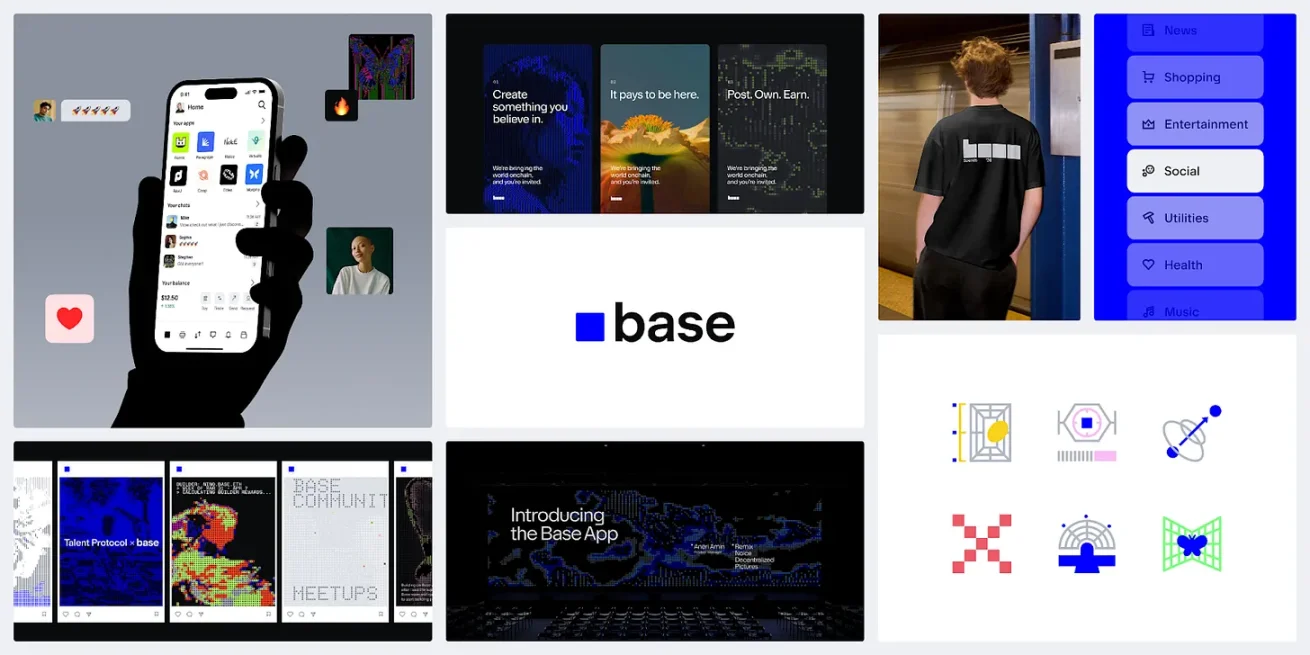
In July 2025, Coinbase announced the launch of its on-chain super app TBA, advancing toward a larger vision. This strategy goes beyond merely acquiring users through the exchange—it delivers real application-layer services via Base infrastructure. While many excellent decentralized applications (dApps) exist on Base, they are fragmented and difficult to discover collectively. No matter how high Base’s performance or how low its fees, its value diminishes if average users cannot easily access them.
Source: Base
TBA integrates the core components of the cryptocurrency ecosystem—exchange, infrastructure, and applications—into a single platform, delivering a seamless user experience. Users can make crypto payments and transfers, earn rewards through Farcaster-based social services, and immediately use those rewards for online or offline payments. These services work in concert to build a powerful on-chain economic ecosystem. As a result, the barrier to participating in the on-chain economy drops significantly. This completes the final piece of the expansive ecosystem Coinbase has been building.
3. Coinbase Builds a Crypto Empire
Coinbase is no longer just an exchange. Building upon its exchange foundation, the company has gradually developed blockchain infrastructure and consumer applications, evolving into a vast empire spanning the entire cryptocurrency ecosystem. ** Furthermore, through an aggressive acquisition strategy, Coinbase has expanded into additional domains. For instance, it acquired token management platform LiquiFi, zero-knowledge proof technology firm Iron Fish, Web3 advertising platform Spindl, and derivatives exchange Deribit, extending its reach across all corners of the Web3 industry.

Source: Tiger Research
These moves suggest Coinbase aims to dominate every service related to cryptocurrency like an aircraft carrier. Its relationship with Circle, the issuer of the stablecoin USDC, has also become increasingly interesting. Coinbase is a major shareholder in Circle and, beyond equity investment, receives a share of USDC’s interest income. There are even provisions stating that if Circle goes bankrupt or fails to meet revenue-sharing obligations, certain USDC-related rights will transfer to Coinbase. This indicates that Coinbase effectively controls nearly all critical infrastructure in the cryptocurrency ecosystem.
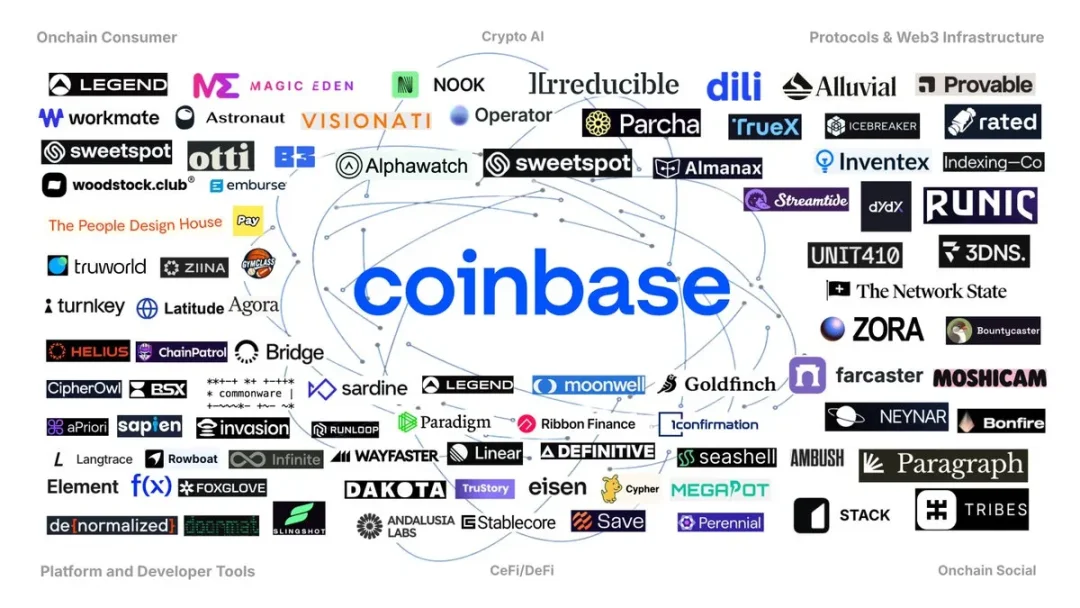
Source: Coinbase Ventures
Coinbase’s expansion strategy isn’t solely reliant on acquisitions. Another key approach is the Coinbase partner network, which amplifies its influence throughout the crypto industry—similar to the famed “PayPal Mafia.” The company has invested in over 40 Web3 startups founded by former Coinbase employees and continues to build a tightly-knit collaboration network through partnerships. For example, Olaf Carlson-Wee, Coinbase’s first employee, founded Polychain Capital, while well-known Web3 projects such as dYdX, Farcaster, Zora, and B3 were all started by ex-Coinbase staff.
We still think of Coinbase as an exchange, but its operational model increasingly resembles Google in the Web2 era. Just as Google began with search and gradually dominated the entire digital ecosystem—including advertising, cloud services, and mobile platforms—Coinbase has evolved from an exchange into a vast empire spanning every facet of the cryptocurrency ecosystem.
4. Exchange-Centric Crypto Market: Good or Bad?
Coinbase is building a massive empire. Its moves—from exchange to Base chain to TBA—are clearly strategic. Yet we must reflect on what stance this entails under such aggressive strategies.
Cryptocurrency once championed decentralization, but in pursuit of convenience, it is returning to centralization. Users voluntarily enter Coinbase’s ecosystem and have little incentive to leave. In essence, this is no different from traditional financial structures.
This shift isn’t entirely negative. Integrated platforms like TBA deliver tangible benefits. Users can access all services within a single app without complex wallet connections, platform switching, or worrying about high gas fees. From earning rewards via social activities to using them for real-world payments, the entire process flows seamlessly. Clearly, Coinbase’s model aids in mainstream crypto adoption.
Yet a crucial issue remains. The original intent of cryptocurrency was decentralization, yet in chasing convenience, new centralized structures have emerged. Users willingly stay within Coinbase’s ecosystem with no motivation to exit—essentially replicating the very centralized financial systems we sought to escape.
The market has chosen convenience. Reversing this trend seems difficult. The current challenge lies in finding balance between centralized convenience and decentralized ideals. The real test is building an ecosystem that protects user choice through healthy competition and continuous innovation while preserving the core values of cryptocurrency.
Join TechFlow official community to stay tuned
Telegram:https://t.me/TechFlowDaily
X (Twitter):https://x.com/TechFlowPost
X (Twitter) EN:https://x.com/BlockFlow_News
 @tiger_research