After Xinkangjia, No More "Wild West": How a $10 Billion Scam Reshaped the Crypto Regulatory Landscape?
TechFlow Selected TechFlow Selected
After Xinkangjia, No More "Wild West": How a $10 Billion Scam Reshaped the Crypto Regulatory Landscape?
Recently, cryptocurrency exchange OKX sparked user concerns due to a risk control upgrade. The stringent measures stem from efforts to counter external risks, including the massive "DGCX Xinkangjia" scam worth tens of billions of yuan that erupted in三四-tier cities in China.
 Navigating Web3 tides with focused insights
Author: Luke, Mars Finance
A Silent "Risk Control Upgrade"
Recently, the atmosphere in the crypto community has turned subtly tense. Many users have taken to social media to complain about unprecedentedly strict risk controls when using the OKX exchange: seemingly routine actions—such as logging in via a VPN, managing multiple family members' accounts on the same device, or even just having an address that had a faint connection with a "suspicious" entity—have triggered alerts, resulting in temporary account freezes or burdensome verification requirements.
Suddenly, anxiety spread. Was this a targeted crackdown by exchanges against specific users, or a warning sign of a new regulatory storm?
Amid widespread speculation, a series of announcements from OKX partially confirmed what users were experiencing. In these statements, OKX unusually disclosed many details of its risk control model, acknowledged the possibility of "false positives," and attempted to calm the market with data claiming only "around 1% of users receive inquiries." Yet this "technical" explanation did less to allay user concerns than serve as a disclaimer under immense pressure. It sent a clear signal: risk controls are tightening with unprecedented intensity—not by choice, but as a defensive reaction to external threats.
So the question arises: what kind of threat could compel an industry giant like OKX to erect such high walls, even at the cost of mistakenly harming legitimate users? The answer lies behind the collapse of a platform called "DGCX Xinkangjia"—a staggering fraud involving 13 billion RMB and affecting 2 million members.
Beneath the Iceberg: The Ghost of "Xinkangjia" and Frenzy in Lower-Tier Markets
While exchange risk systems sounded alarms, the real epicenter of the storm was unfolding across China’s vast third- and fourth-tier cities. A so-called investment platform named “DGCX Xinkangjia,” founded in Guizhou in 2021, vanished into thin air at the end of June this year after completing its final harvest, leaving behind approximately 2 million investors and a black hole of 13 billion RMB.
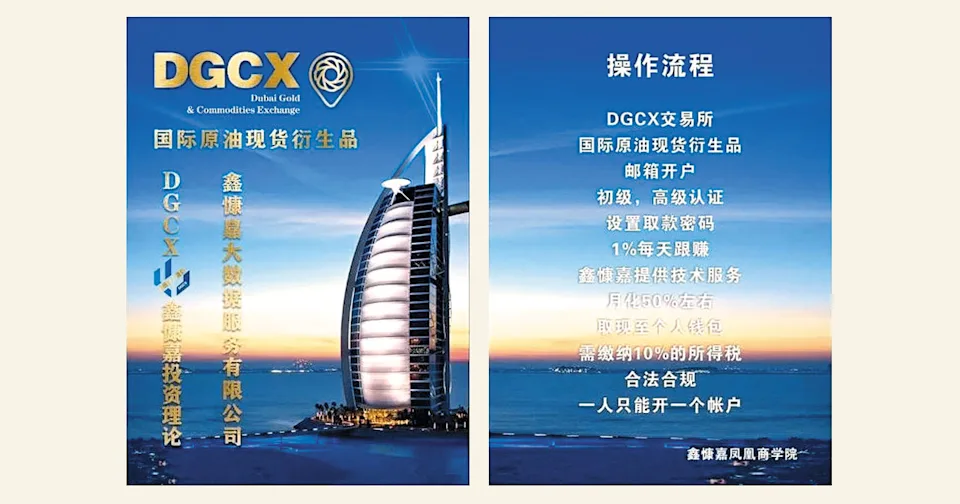
The orchestrators of this scam precisely targeted market vulnerabilities. They hijacked the name “DGCX”—originally the abbreviation for Dubai Gold & Commodities Exchange—a label that sounds authoritative and internationally credible. They marketed themselves as the “DGCX China Branch” and even falsely claimed a five-year strategic partnership with state-owned enterprise CNPC (China National Petroleum Corporation), though in reality they had merely purchased oil equipment from it. By associating themselves with reputable international institutions and SOEs, “Xinkangjia” cloaked itself in an aura of legitimacy and professionalism.
Building on this facade, they crafted a seductive narrative: using proprietary big data technology to conduct futures trading in gold, oil, and foreign exchange in the Middle East, generating high returns. How high? “Daily interest of 2%,” meaning a $100,000 investment would earn $2,000 daily. This promise defied financial logic but perfectly exploited knowledge gaps and dreams of instant wealth among their target audience.
To grow rapidly, “Xinkangjia” implemented a pyramid-style nine-tier referral system. A member who recruited nine others would be promoted to “Platoon Leader,” earning bonuses and a guaranteed monthly salary. Higher ranks included “Company Commander,” “Battalion Commander,” up to the highest rank of “Commander-in-Chief,” with referral bonuses and salaries reaching tens of thousands of dollars. Armed with three key weapons—the appearance of prestige, sky-high returns, and a viral multi-level structure—“Xinkangjia” expanded rapidly, building a massive financial empire in record time.
USDT's "Trojan Horse" and the Founder's "Thank You Note"
Yet compared to previous scams, “Xinkangjia”’s core innovation lay in its masterful use of the stablecoin USDT. All members were required to deposit and withdraw funds exclusively in USDT, and all internal accounting was done in USDT. This design was the crowning touch of the entire scheme—an elegant digital “Trojan Horse.”
First, it added a trendy gloss of “U.S. dollar investing.” Second, by forcing members to convert RMB into USDT before depositing, the operators avoided handling large-scale RMB conversions themselves, significantly reducing the risk of detection during fundraising. Most crucially, it paved the way for a clean getaway. Thanks to USDT’s free cross-border liquidity, moving the stolen fortune abroad amounted to little more than pressing a few keys on a crypto wallet.
And that is exactly what happened. Blockchain data shows that shortly before the platform collapsed at the end of June, a staggering 1.8 billion USDT (approximately 12.9 billion RMB) was transferred in 12 batches to three newly created crypto addresses. From there, the funds could easily be laundered through darknet markets or sophisticated mixing services, vanishing entirely into the digital void.
When 2 million members discovered they could no longer withdraw funds and fell into despair, founder Huang Xin left behind a farewell message in member WeChat groups—filled with mockery and arrogance:
“Hello comrades! This is Mr. Huang. I am already overseas. A person’s intelligence matches their wealth. Because your wealth does not match your intelligence, I’m helping you rebalance it. I’ve simply taken away the wealth that doesn’t belong to people of your intellectual caliber. I hope you thank me. Be grateful. Remember this lesson I’ve bestowed upon you.”
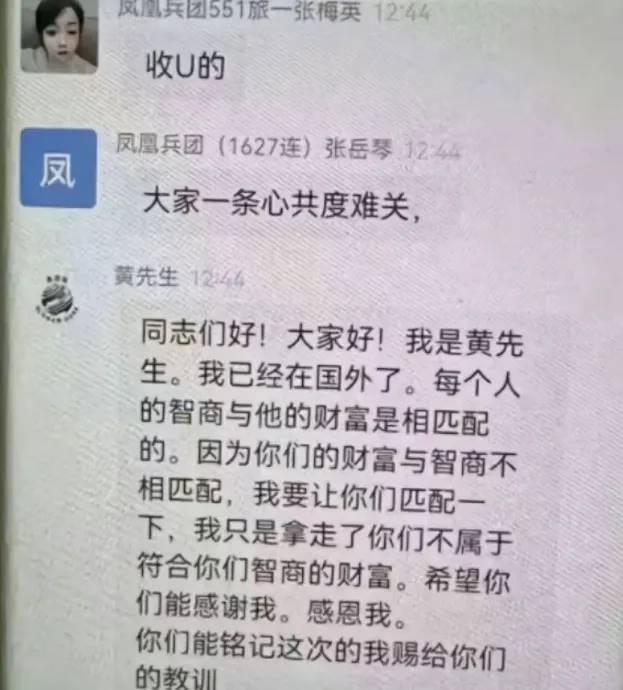
This statement laid bare the essence of the scam: not just a theft of wealth, but a precise strike—and cruel mockery—of human weakness and cognitive flaws.
The Silent War: On-Chain "All-Seeing Eye" and the Cost of Risk Control
The escape of Xinkangjia’s 13-billion-RMB illicit funds became a textbook case of digital financial crime. It forced the entire industry into an escalating arms race. On one side are criminals constantly refining money laundering techniques; on the other, blockchain analytics firms like Chainalysis and exchange risk teams acting as the “all-seeing eyes” of the chain, sifting through oceans of transaction data to identify addresses and behavioral patterns linked to criminal activity.
The risk control rules mentioned in OKX’s announcement are frontline manifestations of this war. Every flagged VPN IP, every linked “blacklisted” account, represents an alarm raised by the risk system. But war comes at a cost—and this time, ordinary users are paying part of that price.
To avoid being overwhelmed by torrents of dirty money, exchanges have been forced to make their risk models increasingly sensitive—leading inevitably to higher false positive rates. Privacy-conscious crypto enthusiasts, developers testing multi-account setups, or ordinary individuals who unknowingly transacted with a suspicious address may all get caught in the gears of this high-speed compliance machine. This is the current dilemma facing crypto users: on one hand, we enjoy the freedom and efficiency of decentralization; on the other, we live under ever-more-centralized surveillance systems resembling traditional banks.
The Xinkangjia case—a 13-billion-RMB scandal unearthed by OKX’s tightened controls—thus carries profound symbolic weight. It is not merely a financial crime, but a turning point in the industry’s evolution. It tells us that when crypto assets grow large enough to pose systemic risks, the wild, freewheeling “Wild West” era must inevitably come to an end. To gain security, compliance, and acceptance by mainstream society, the entire ecosystem—including exchanges and every user within it—must adapt to new rules of the game. This silent war is far from over, and it is profoundly reshaping the digital world we inhabit.
Join TechFlow official community to stay tuned
Telegram:https://t.me/TechFlowDaily
X (Twitter):https://x.com/TechFlowPost
X (Twitter) EN:https://x.com/BlockFlow_News