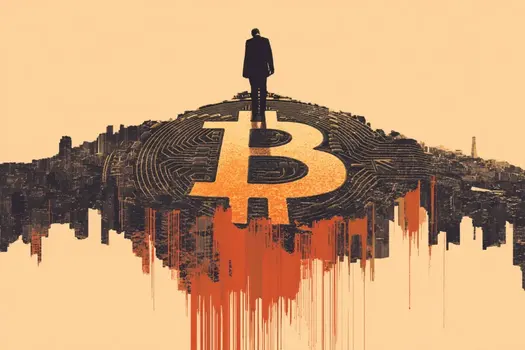
Bitcoin's biggest bomb hasn't exploded yet, but this might also be your greatest opportunity
TechFlow Selected TechFlow Selected
Bitcoin's biggest bomb hasn't exploded yet, but this might also be your greatest opportunity
It will trigger technological panic and a media tsunami, blasting out a historic bottom.
 Navigating Web3 tides with focused insights
By: Daii
From now on, you need to remember a new term: Q-Day, short for Quantum Day.
This is the crypto industry's name for the day when quantum computers become capable of practically breaking Bitcoin private keys. Not science fiction, not something distant, but a real and steadily approaching technological milestone.

Q-Day refers to the moment when the first general-purpose quantum computer capable of running Shor’s algorithm becomes operational—enough to crack ECDSA private keys—and Bitcoin’s robust exterior develops cracks. IBM estimates this will happen in 5–10 years; Google is more optimistic, claiming its "Willow" chip could be up to the task before 2030 (source: investopedia.com).
Once that day arrives, Bitcoin addresses that have ever exposed their public keys will lose security—the attacker could derive the private key within hours and steal the assets. Approximately 4 million BTC (nearly 20% of total supply) would be at risk.
This is Q-Day:
A ticking time bomb no cold wallet holder should ignore.
Yet, true crises are never just about fear—they can also mark the beginning of the next bull market.
History has already shown us that every seemingly apocalyptic technological shock often leaves floor prices for calm buyers—just like the dot-com bubble, the subprime crisis, or even the FTX collapse. Bitcoin’s quantum crisis will be no exception.
Of course, we should first confirm whether Bitcoin's quantum threat is truly real?
1. Why Is the Quantum Threat Real?
Its strength lies in public keys; its vulnerability lies there too.
Bitcoin’s quantum crisis is a crisis created by technological advancement itself. At its core is precisely the foundation upon which Bitcoin stands—public-key cryptography.
Public-key cryptography is the cornerstone of Bitcoin’s security system. Its greatest advantage is allowing you to publicly share the “lock” (public key), while only you hold the “key” (private key).
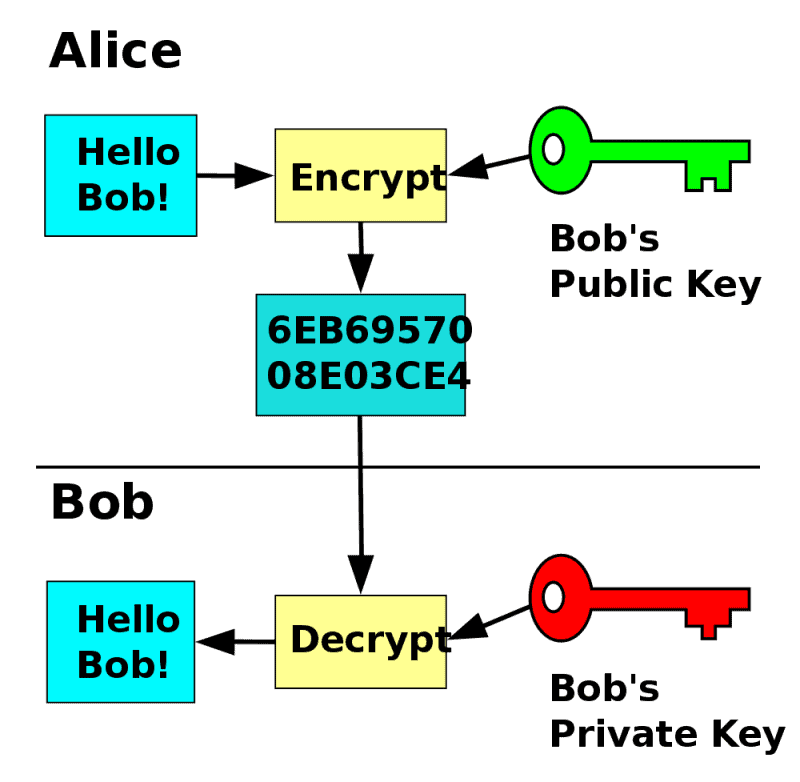
In the diagram above, Alice wants to send a message to Bob. She encrypts it using Bob’s public key, generating unreadable ciphertext. Only Bob, with his private key, can decrypt and recover the original message. This means:
Even if data is intercepted during transmission, as long as the private key remains secret, the information stays perfectly secure.
This mechanism gives Bitcoin the property that “anyone can send you money, but only you can spend it,” forming the cryptographic basis for its trustless operation.
Bitcoin uses an encryption system called Elliptic Curve Digital Signature Algorithm (ECDSA). Against classical computers, ECDSA is nearly unbreakable—deriving a private key from a public key requires roughly 2¹²⁸ operations, rendering even supercomputers useless for thousands of years.

But quantum computers are entirely different.
They aren't just faster versions of classical computers—they operate under entirely different physical principles. If you give them a quantum machine capable of running Shor’s algorithm, they can reverse-engineer private keys from public keys within hours. It’s like using a time machine to open a safe sealed for 15 years.
In other words: Bitcoin’s security isn’t threatened by hackers—it’s threatened by scientific progress.
And that’s what’s most unsettling.
This isn’t driven by any malicious actor’s intent, but rather an inevitable future outcome. No one can stop technology from advancing. When sufficiently powerful quantum computers emerge, any address that has ever exposed its public key will effectively have its private key exposed—even if it signed just once ten years ago, it will be unlocked on Q-Day.
According to Deloitte’s 2025 report, approximately 4 million BTC are vulnerable, representing around 20% of circulating supply and worth over $40 billion. Breakdown:
-
~2 million BTC in P2PK addresses, where public keys are directly exposed and thus vulnerable.
-
~2.5 million BTC in reused P2PKH addresses, whose public keys are revealed after reuse.
Making matters worse: Bitcoin is irreversible. Once a private key is stolen and funds are taken, no one will help you recover them—there’s no “account freeze” or “password reset.”
Therefore, the quantum threat is neither science fiction nor a remote hypothesis.

It is not the enemy’s weapon, but a future bomb we’ve buried ourselves—quietly lying beneath our feet, waiting for the explosion of Q-Day.
You might wonder: Can Bitcoin survive such a massive crisis?
The answer is yes—because the quantum threat doesn’t fundamentally destroy Bitcoin, but forces its historically sluggish community to accelerate self-evolution.
2. Why Can Bitcoin Survive the Quantum Crisis?
Because Bitcoin’s strength lies not only in its encryption algorithms, but in its capacity for self-evolution.
Bitcoin is not a fixed program, but a “living system” maintained by global consensus—its protocol can be upgraded, its security model adjusted, and its community can act proactively. The quantum crisis is precisely catalyzing this transformation.
2.1 Most Bitcoin Holdings Are Still Hidden
Quantum attackers cannot break all Bitcoin addresses directly.
They can only compromise addresses that have already exposed their public keys on-chain—that is, addresses that have previously signed transactions or sent funds. As of July 1, 2025, Bitcoin’s circulating supply is approximately 19.88 million (CoinMarketCap: Bitcoin Supply). Subtracting 4 million vulnerable coins leaves 15.88 million—these are not “open locks” but “puzzles.” Cracking them requires brute-forcing double hashing (SHA256 + RIPEMD160) under Grover’s algorithm. Even with idealized universal quantum computers, this would take 2⁸⁰ operations—equivalent to tens of thousands of years.
In other words:
If your coins have never been spent, they’re temporarily safe.
2.2 Quantum-Resistant Cryptographic Alternatives to ECDSA Already Exist
The global cryptography community has already developed multiple quantum-resistant signature algorithms, now part of NIST’s (National Institute of Standards and Technology) post-quantum cryptography standardization program.
The most promising ones include:

-
Dilithium (lattice-based signatures)
-
Falcon (compact and fast, suitable for embedded devices)
-
SPHINCS+ (no reliance on mathematical assumptions, hash-based signatures)
These algorithms are already being tested and experimented with in Bitcoin developer circles—including BIP-360 proposals to add multiple quantum-resistant signature templates to Taproot, and calls from developers to restore early script commands (like OP_CAT) to build more flexible quantum-safe contracts.
In short, the tools already exist—the only thing missing is community consensus on when to upgrade.
2.3 The Real-World Q-Day Won’t Arrive Suddenly
Building a general-purpose quantum computer capable of executing millions of quantum gates and possessing thousands of logical qubits won’t happen overnight. Even if IBM and Google hit critical milestones before 2030, the path from technical maturity → hacker access → successful attacks will require a significant buffer period. The entire process won’t unfold overnight.
This gives the community, wallet providers, and mining nodes several years to react. Before then, simply transferring your coins to a secure address can put you ahead of the risk.
So don’t panic.

All you need to do now is generate a new Bitcoin cold wallet address and transfer your BTC into it. Remember: once used, your cold wallet is no longer quantum-resistant—you must move to a fresh one. In the WeChat official account (Airdrop Web3), navigate to the menu item Zero-Basis Tutorial for a beginner-friendly guide to creating a Bitcoin cold wallet. Feel free to generate several—there’s no cost and no approval required.
After securing yourself, all that remains is patience as you await the arrival of the quantum threat.
Because where there is danger, there is also opportunity.
3. Why the Quantum Crisis Isn’t a Disaster—but an Opportunity
Because market panic is often the perfect entry point for smart money. And the “quantum crisis”—a Q-Day expected within the next 5–10 years—might just be the generational floor price window you’ve been waiting for.
3.1 Evidence from the Stock Market
Stock market history has repeatedly proven: real wealth isn’t built at peaks, but quietly accumulated during moments of panic.
For example, during the 2000 dot-com crash, Amazon (AMZN) dropped from $107 to $6—a 94.4% decline. Media declared “the internet is dead,” and investors fled in fear. Yet long-term holders reaped over 1000x returns two decades later.
During the 2008 subprime crisis, the S&P 500 fell over 50% from its peak. Markets collapsed globally—businesses failed, banks shut down, everyone sold off.
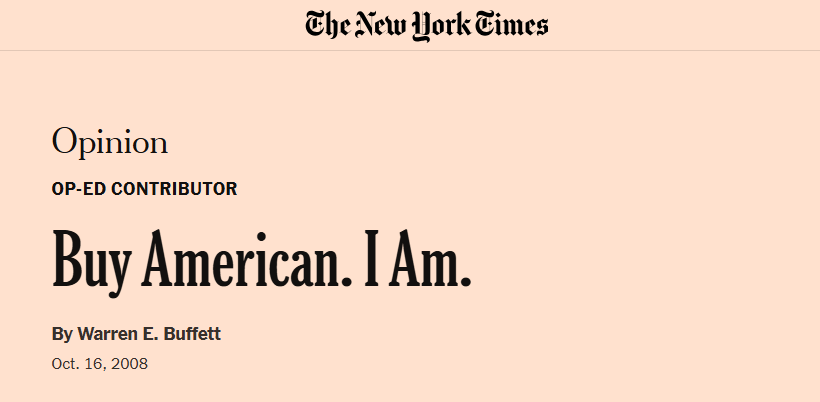
That same year, Buffett wrote in a New York Times op-ed titled *Buy American. I Am.* the now-famous line:
Be fearful when others are greedy, and be greedy when others are fearful.
3.2 Confirmation from Crypto Markets
This script keeps repeating in crypto:
In 2014, Mt. Gox collapsed, resulting in 850,000 BTC stolen. BTC plunged from $1,000 to $200—a drop exceeding 80%.

In 2022, Luna imploded and FTX collapsed. BTC briefly dipped below $16,000, sparking widespread panic and liquidations across the network. ETH was similarly halved.

But we’ve seen the results: these were not the end of crypto, but the starting points of new cycles. After Mt. Gox, Bitcoin hit $20,000 in 2017. After the FTX crisis, the market revived in 2023–2024, with Layer2 solutions, new blockchains, and AI + Crypto applications emerging rapidly.
The quantum crisis may well be another form of “black swan”—it won’t kill Bitcoin, but instead offer cognitively advanced investors a strategic, low-cost accumulation opportunity.
Imagine the scene: as Q-Day approaches, media headlines scream “Bitcoin is no longer secure”; social media influencers shout “this is crypto’s apocalypse”; perhaps a celebrity or institutional wallet gets hacked, triggering mass panic and capital flight. At the precise moment when price loses anchor and sentiment collapses—that’s when true value investors should strike.
Q-Day might just become Q-Dip: Quantum Discounted Investment Point.
3.3 The Power of Logic
More importantly, this “crisis” does not alter Bitcoin’s three fundamental pillars:
-
Bitcoin’s total supply remains capped at 21 million—unchanged and unchangeable.
-
The protocol can be upgraded. As long as the community migrates to quantum-resistant signature algorithms, Bitcoin can continue operating—perhaps even more securely.
-
Real-world supply-demand dynamics haven’t worsened: over 60% of Bitcoin supply is held by long-term holders (LTH), who rarely sell during panics.
Thus, this “technical panic” is likely just a short-term shock—similar to Mt. Gox or FTX: a localized loss of trust, not systemic collapse.

For investors holding cash or stablecoins, equipped with superior knowledge and readiness, this may be a once-in-a-decade chance to accumulate.
What you really need to prepare for isn’t predicting the exact date of Q-Day, but ensuring that when it comes, you already have your wallet ready, your understanding clear, and your patience intact.
Conclusion
Bitcoin’s 15-year history is an epic of crashes and rebirths:
Down 93% in 2011, 85% in 2014, 80% again in 2018, and 76% in 2022 amid the Luna and FTX chain reactions. Each downturn saw media declare its death; yet each bottom later became the prelude to the next bull run.
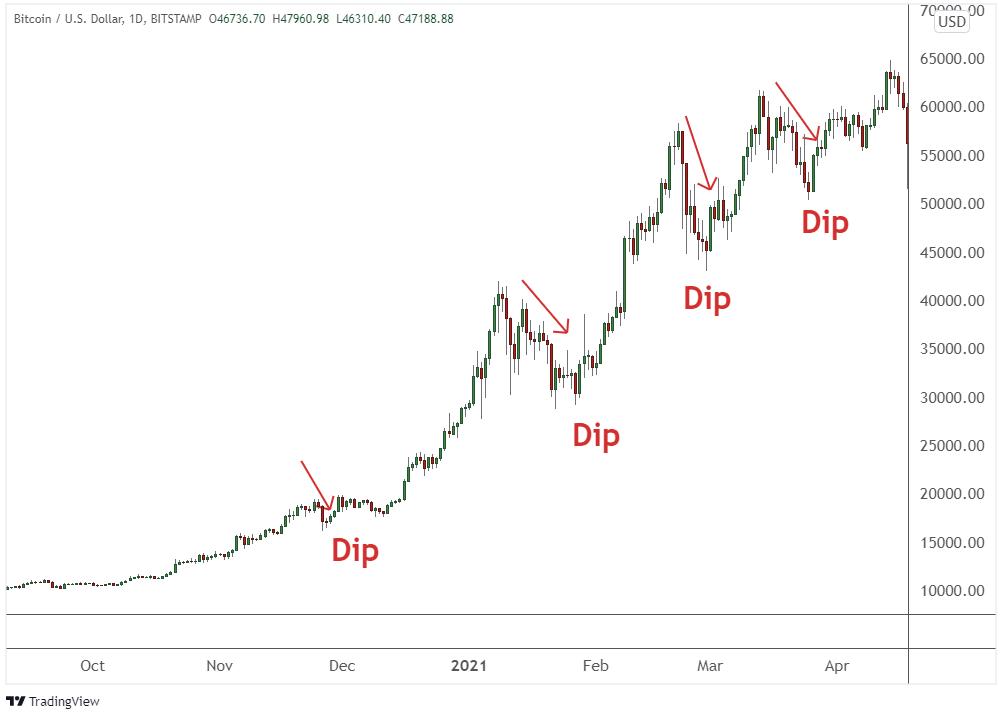
Now, the quantum crisis may be the next fuse.
It will ignite technical panic and media storms, blasting out a historic market bottom, while purging the “fragile consensus” overly reliant on centralization and excessive leverage.
But the explosion is not the end. For those prepared, it’s a flare gun, a starting pistol for buying the dip.
Remember this golden rule:
Real bull markets are never born from rallies—they’re born from crashes.
Start preparing now—check if your cold wallet address is still secure, learn how to generate quantum-resistant new addresses. In the WeChat official account (Airdrop Web3), go to the menu item Zero-Basis Tutorial for a free, beginner-friendly guide to making a Bitcoin cold wallet. Take it, no thanks needed.
Q-Day will come. The storm will rise. But you won’t be unprepared.
You can’t stop the storm—but you can build a better sail.
Join TechFlow official community to stay tuned
Telegram:https://t.me/TechFlowDaily
X (Twitter):https://x.com/TechFlowPost
X (Twitter) EN:https://x.com/BlockFlow_News
 @yzdxs8