Putting "Her" into a card
TechFlow Selected TechFlow Selected
Putting "Her" into a card
This path of human-computer interaction evolution is one that Mobvoi has never truly abandoned.
 Navigating Web3 tides with focused insights
Author: Lafeng de Geek
This year, foundational capabilities of large models have taken another leap forward. AI tools like ChatGPT, DeepSeek, and Doubao are becoming common assistants for an increasing number of white-collar workers.
These AIs are indeed powerful, but they come with a significant barrier: to get them to "work," you often need to prepare extensive materials in advance. In other words, today’s AI is more like a high-IQ consultant. But from the perspective of actual productivity gains, what we really need is a smart assistant that stays by our side, records information for us, and offers timely reminders and feedback when it matters.
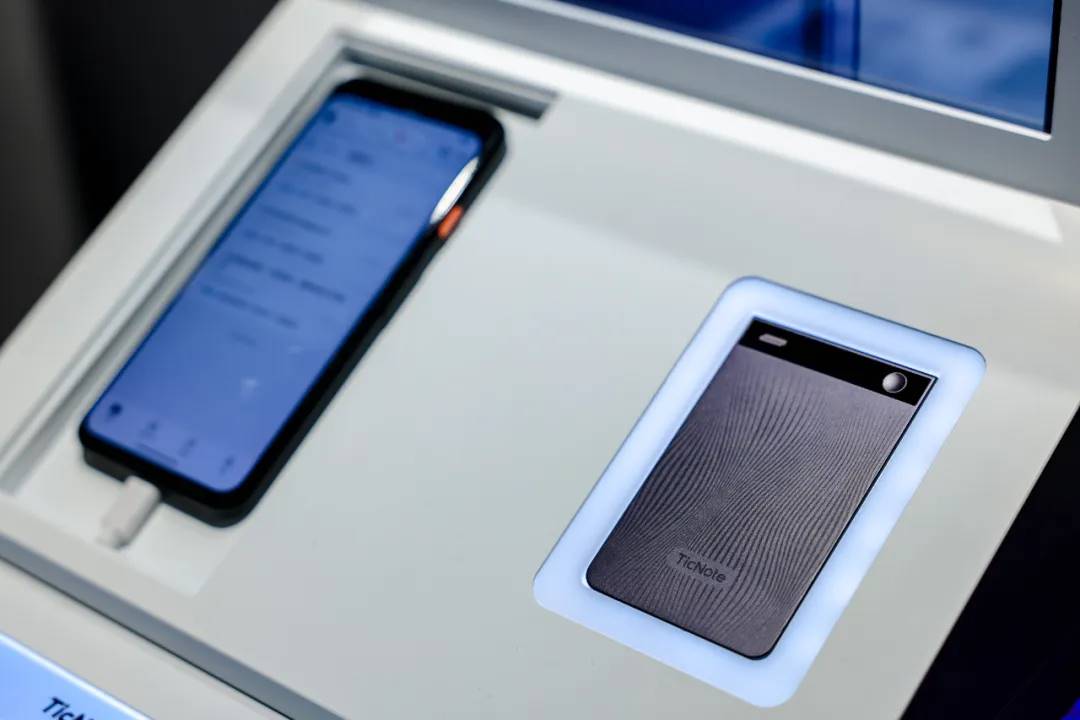
Chumenwenwen (Mobvoi) is trying to fill this gap. In April, the company unveiled TicNote, its first global Agentic AI hardware product. On June 25, the device was officially launched in China. At the launch event, Mobvoi founder Li Zhifei emphasized that this isn’t just a voice recorder, translator, or voice assistant—it’s a “personal AI thinking partner.”
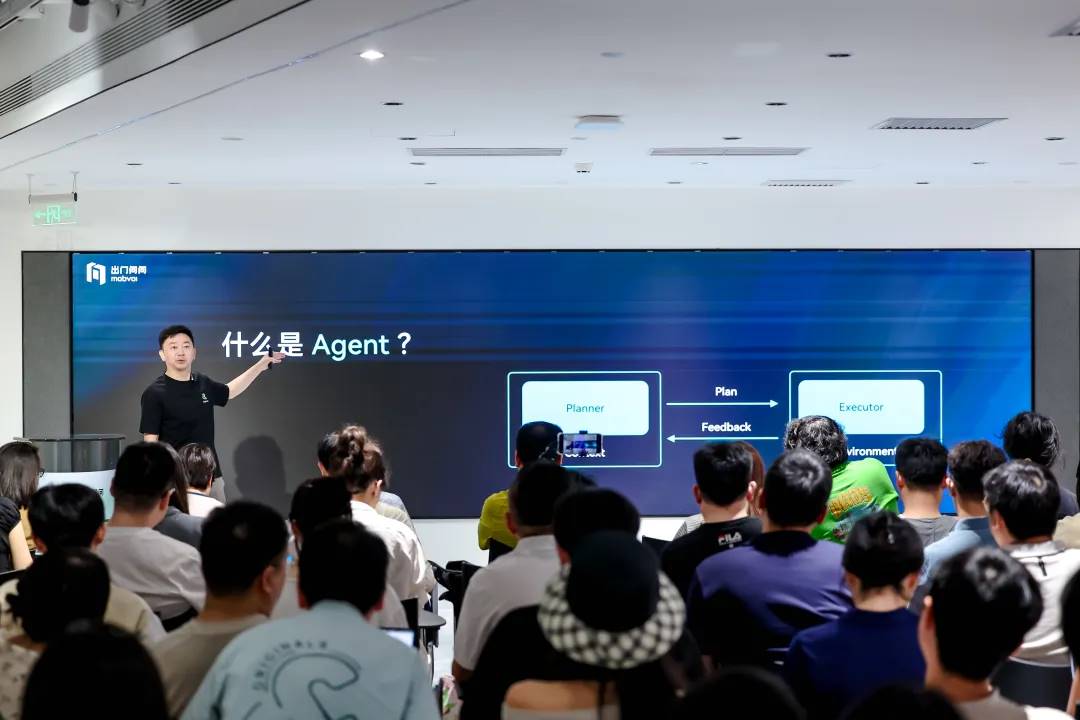
Prior to Mobvoi, some companies at home and abroad had already attempted to combine large models with recording hardware. However, most of these efforts still treat AI as a tool for audio processing—mainly for transcribing meetings or translation. While TicNote has similar capabilities, its ambition goes far beyond. By continuously capturing users’ work and life data, TicNote effectively becomes a 7×24 companion—a “super assistant” capable of offering proactive insights and inspiration based on daily conversations and the reasoning power of large models.
As a long-time collaborator of PingWest, we’ve witnessed Mobvoi’s entire journey from startup to public listing, including its strategic retreats in the large model space. Now, choosing to re-enter the large model race through hardware isn't simply chasing trends or copying others. It's the culmination of founder Li Zhifei’s years of expertise in human-computer voice interaction—seeing not only validated paths but also deeper possibilities, and aiming to build better products in this direction.
01 A Personal "AI Assistant"
TicNote looks similar to a compact magnetic power bank, about 3mm thick, designed to magnetically attach to the back of your phone all day without interfering with normal use.
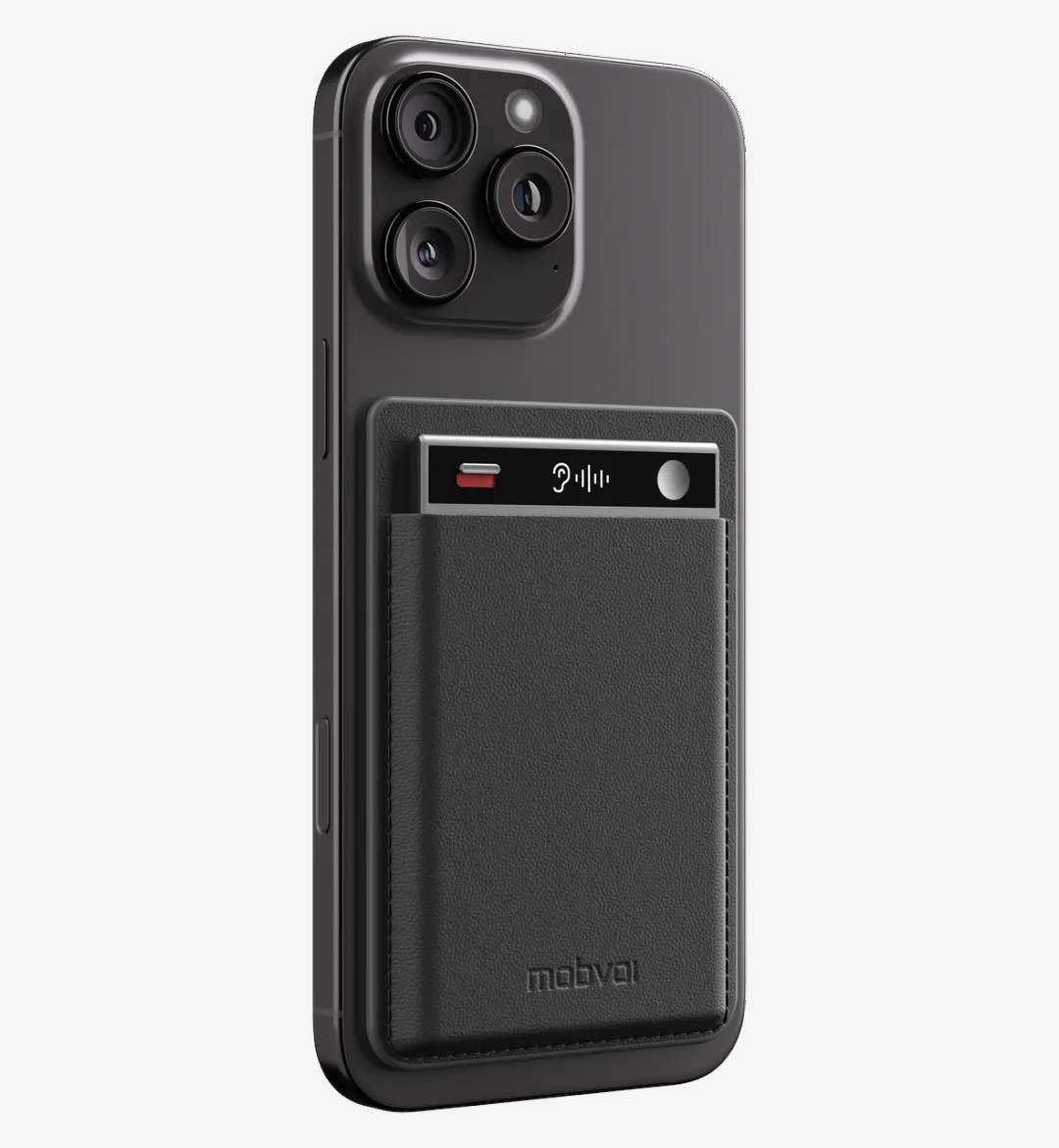
TicNote | Source: Mobvoi
Unlike traditional voice recorders, TicNote’s card-like design is built from the ground up for “all-day recording.” Users can easily control recording modes.
This hardware form factor isn’t entirely new—products like Plaud Note have adopted similar designs. The advantage lies in stable, long-duration operation in scenarios such as education, media, and creative planning that require heavy voice input, while leveraging large models to boost post-processing efficiency in transcription, translation, and summarization.
This application scenario has already seen some market validation. But Mobvoi believes combining card-style recording hardware with large models holds even greater potential beyond basic recording and processing functions.
Beyond transcription and summarization, TicNote’s biggest differentiator is its built-in AI Agent, “Shadow AI.” With capabilities in real-time dialogue, logical reasoning, knowledge integration, and writing suggestions, it deeply understands users’ content creation needs. Whether at work, during study, or while exploring ideas, it maintains ongoing conversations with users, assisting in task completion—an intelligent personal assistant in your pocket.
Yolanda is one of TicNote’s early testers. As a tech executive and mother of a middle schooler preparing for the high school entrance exam, she often struggles with fragmented time and information overload, making it hard to balance family and career. TicNote has significantly alleviated her burden.
When an important company review meeting clashed with an online parent-teacher conference, Yolanda couldn’t attend both. She used TicNote to silently record the parent-teacher meeting in full. Afterward, the system accurately transcribed and automatically distilled key points into well-structured text summaries and mind maps, allowing her to grasp everything without replaying the audio.
In addition, she had her child carry TicNote to every tutoring session. Over a semester, TicNote didn’t just capture teachers’ key lessons—it helped identify the child’s weak knowledge areas. Approaching the exam, the student used TicNote to compile a “last-minute toolkit” and “emergency methods” based on teacher explanations, forming clear revision materials tailored to their weaknesses.
From Yolanda’s experience, TicNote is no longer just a portable recording tool. Through integrated hardware-software design and large model capabilities, it’s evolving into a truly “understanding” intelligent assistant. And behind such a product lies Mobvoi’s decade-long dedication to voice technology and human-computer interaction.
02 A Company That Has Held On to Human-Computer Interaction for Ten Years
Mobvoi’s ability to launch TicNote is no accident. The “hardware-software integration + AI service” path represented by this product is a natural outcome of ten years of technological accumulation and product exploration.
Since its founding in 2012, Mobvoi has focused on human-computer voice interaction, among the earliest Chinese companies to embrace the “voice-first” philosophy. Its early self-developed voice assistant app emphasized Chinese speech recognition and natural language understanding. In subsequent years, the company kept embedding voice capabilities into hardware, launching products like the TicWatch smartwatch, TicMirror smart rearview mirror, and TicTranslator translator, constantly exploring how voice interacts with devices.
These products were ahead of their time and accumulated valuable technical experience. Yet challenges such as high usage barriers and cost prevented voice interaction from becoming mainstream. Requiring wake words and specific commands made interactions cumbersome and error-prone, limiting voice to simple tasks. As a result, Mobvoi temporarily scaled back its hardware line to focus on refining its AI capabilities.
But Mobvoi never abandoned this vision of human-computer interaction evolution. The arrival of the large model era has brought new opportunities. With improved model comprehension and generation abilities, human-AI dialogue has become more natural. More and more users now prefer conversational interfaces. Voice, being the most intuitive form of human expression, has regained value as a key interface connecting AI to the real world.
TicNote emerges precisely under these conditions. It’s not merely a recording device. Through its embedded AI Agent “Shadow AI,” it continuously organizes everything the user hears and says into structured information, building a personalized “personal knowledge base.” Based on this customized repository, large models can efficiently retrieve data, connect to external sources, and uncover higher-dimensional insights.
This product form embodies Mobvoi’s integration of expertise across speech recognition, natural language understanding, and device design. Take TicNote’s “Flash Chat” feature: users can initiate voice dialogues anytime during recording to quickly review prior content or extract key information—ideal for interviews or meetings requiring instant feedback. This “record-and-ask” interaction mode is a direct result of Mobvoi’s decade-long investment in voice technology.
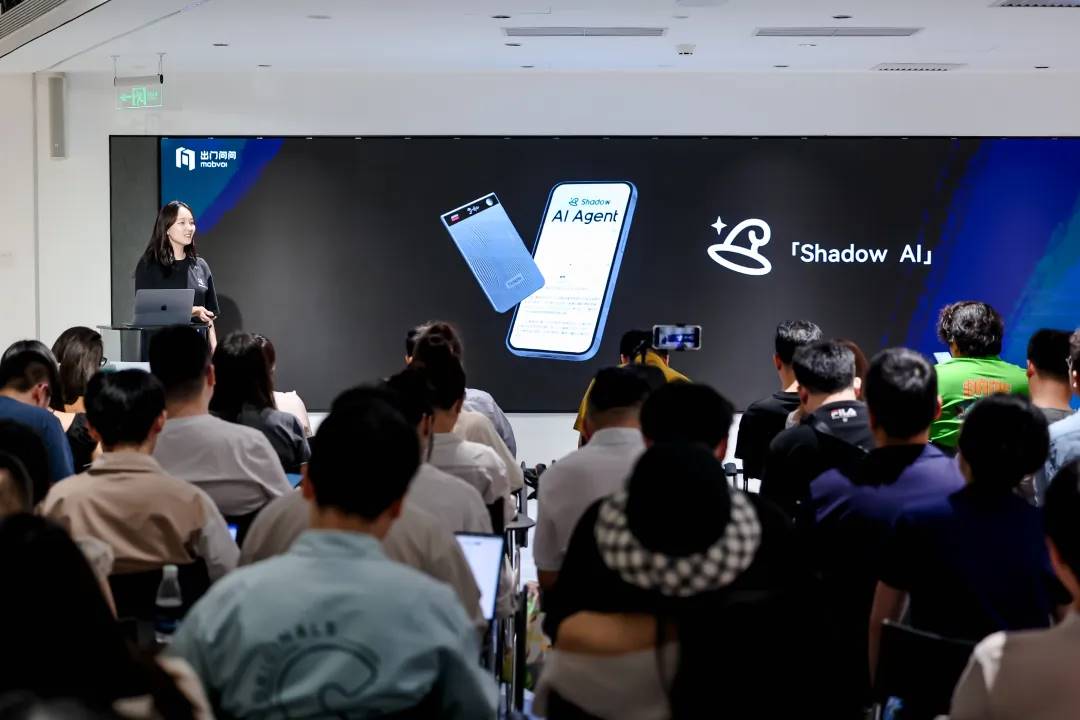
Moreover, TicNote features automated project management. Previously, even AI-powered voice recorders were limited to single-use cases—recording once, then processing that segment. TicNote’s logic treats all recordings as part of a unified, expandable knowledge base. Users can access, organize, and continue conversations across contexts and time. This intuitive approach to information organization makes TicNote accessible not just to professionals, but to everyday users too.
More importantly, this time, Mobvoi isn’t trying to use voice to “control a machine.” Instead, it leverages large models to make voice a gateway for knowledge construction and a catalyst for thinking.
In retrospect, TicNote isn’t a pivot—it’s a culmination. It brings together every step Mobvoi has taken over the past decade, consolidating experiences across human-computer interaction, hardware design, and AI services into a product perfectly suited for this moment.
03 Everyone Will Need a "High-Dimensional Memory Vault"
Today, ADHD has become a trending social topic. “Difficulty focusing” as a symptom is increasingly common. Beyond diagnosed patients, growing numbers of ordinary people feel they exhibit similar traits—even resorting to self-diagnosis.
This reflects the massive information overload we’re experiencing. Looking back, humans have never before been exposed to such vast quantities of information every day—not just flooding our eyes via smartphones, but embedded in every aspect of life. We absorb more information than ever, yet the shelf life of our thoughts grows shorter.
A common belief used to be that mental labor is easier than physical labor—that office jobs are privileges many aspire to. But now, more people engaged in information-based work report feeling exhausted or even burnt out.
We’re increasingly realizing that processing information itself is a cognitive load—one that causes mental “wear and tear.” Just as machines replaced manual labor, we now need tools to offload brainwork. Such devices must possess perception, interaction, and supportive thinking and insight capabilities—acting as our “extended senses” and “co-pilots.”
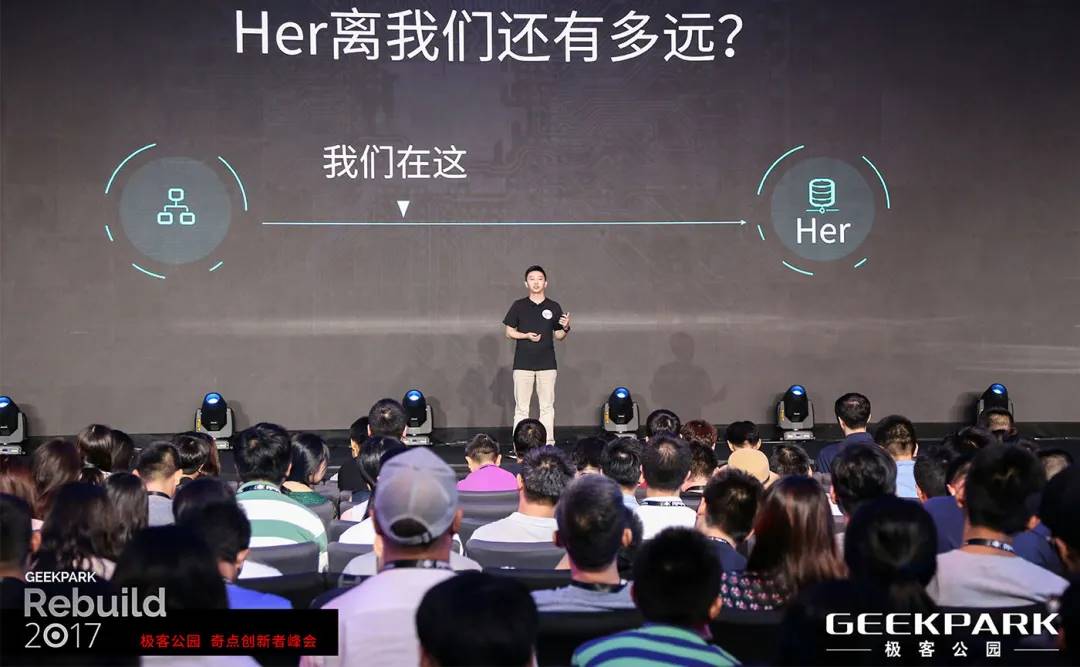
This might be TicNote’s—and Mobvoi’s—ultimate aspiration.
Most current AI products deliver fragmented, scenario-specific slices of information. But the true future of AI should lie in helping users manage memory and thought holistically—including information, knowledge, and memories. The AI industry has already introduced the concept of “lifelogging”—a recorded stream of life that essentially forms our “memory vault.” What Agentic AI can do is elevate this vault to a higher dimension, uncovering insights and reflections we ourselves may never notice, ultimately reducing our cognitive load and sparking more creativity.
In the foreseeable future, each of us will need an agent with perfect memory and thinking support—to reorganize incoming information and enrich the depth of our thinking. TicNote’s built-in “Eureka Moment” feature already offers a glimpse of this future, delivering AI-generated “insights” based on users’ stored data.
Most current AI assistants are trained on general public corpora, largely aiming for omniscience. But what users actually need is often a “personalized AI”—an Agentic AI that deeply understands their private knowledge, delivers personally relevant information, and helps craft individualized experiences.
For Mobvoi and Li Zhifei, TicNote represents both the successful realization of a 12-year technological ideal and a renewed departure toward the future of AIGC. They’ve arrived at a new era of human-computer interaction and a new era of AIGC. TicNote is far from a product “speculation”—it’s the long-overdue fulfillment of a persistent technological passion.
Last April, Mobvoi went public, becoming China’s first AIGC stock. For Li Zhifei and his team, solving the “money” problem was never the top priority. What mattered more was having the freedom to refine the technology they believe in, polish it to perfection, and bring it to the world.
Now, they’ve taken another solid step forward.
Join TechFlow official community to stay tuned
Telegram:https://t.me/TechFlowDaily
X (Twitter):https://x.com/TechFlowPost
X (Twitter) EN:https://x.com/BlockFlow_News
 极客公园
极客公园