You think Web3 is no longer hot? They're just not where you're looking.
TechFlow Selected TechFlow Selected
You think Web3 is no longer hot? They're just not where you're looking.
They're not shouting about it, but they're really using it.
 Navigating Web3 tides with focused insights
A question we’ve been hearing a lot lately: “Isn’t on-chain activity getting hotter? Then why is Twitter so quiet?”
This question is actually quite telling, as it reveals a common cognitive bias within the Web3 community: we’re too accustomed to equating “noise” with “momentum.”
Twitter feels like an endless party—loud, chatty, seemingly buzzing with energy. But those few thousand most active participants don’t represent the true breadth of the Web3 ecosystem. The vast majority of real users aren’t tweeting or posting; many don’t even realize they’re using blockchain at all.
They’re not shouting—but they are using.
So where are the real users?
Picture a college student playing a blockchain game. He doesn’t care about “on-chain assets”—he just thinks the game is fun and lets him earn a bit of extra cash.
Or consider an ordinary user posting, liking, and claiming rewards on a social app, completely unaware that it’s powered by blockchain. To him, it feels no different from using Xiaohongshu or Bilibili.
These people represent the mainstream transition from Web2. They won’t rally behind narratives or amplify your tweets, but their behavior is real, and their growth is solid.
Not “teaching users to use the chain,” but “users don’t even feel the chain”
Take the game Hotspring, for example. It already had millions of users in its Web2 phase. After integrating blockchain, it didn’t loudly announce “We’ve gone Web3!” Instead, it enabled a seamless transition—user experience unchanged, no added friction.
Or look at the social product OverHerd. This project didn’t rely on funding hype or Twitter campaigns. Yet purely through product strength, its engagement has surpassed many once-"trending" Web3 social platforms.
These projects share one thing in common: they’re built on Sei. Not because Sei has the loudest voice, but because its performance and architecture can truly support mass-market applications.
Sei itself doesn’t emphasize “chain vibes.” On the contrary, it focuses on “hiding the chain,” offering developers and users a smooth, Web2-like experience.
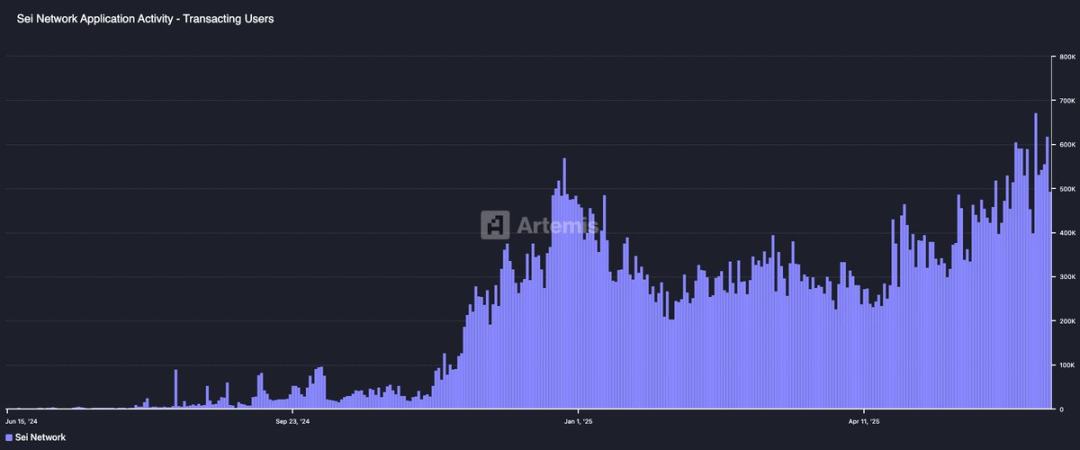
It’s not about talking more—it’s about being used more
Twitter can generate short-term visibility, but it’s not sustainable. If Web3 wants to reach hundreds of millions, even billions, of users, it can’t keep preaching only to the choir.
Web2-caliber founders understand this. They care whether users enjoy the product and whether the system runs smoothly—not how many retweets they get. They build products that anyone can use effortlessly, without first taking a “Blockchain 101” course.
Sei meets exactly this need. It’s not fighting for attention—it’s enabling real-world adoption. And that’s why it’s increasingly becoming the infrastructure of choice for user-first, mass-market applications.
If there’s a next wave of Web3 breakout success, it won’t come from the fastest-growing KOLs or the most compelling narratives. It will come from products that users don’t even realize are Web3—yet use every single day.
This is precisely the future TechFlow is building toward. Real hits don’t need to be loud.
Join TechFlow official community to stay tuned
Telegram:https://t.me/TechFlowDaily
X (Twitter):https://x.com/TechFlowPost
X (Twitter) EN:https://x.com/BlockFlow_News