








Plunge of 80%: The Binance Alpha Dilemma Behind the ZKJ and KOGE Coin Crash
TechFlow Selected TechFlow Selected
Plunge of 80%: The Binance Alpha Dilemma Behind the ZKJ and KOGE Coin Crash
Earn a little, lose a lot.
 Navigating Web3 tides with focused insights
By angelilu, Foresight News
Wake up, players — ZKJ and KOGE were poisoned tonight!
At the tail end of a quiet weekend market, the crypto space once again witnessed a heart-stopping episode. Around 20:30 on June 15, 2025, Binance Alpha's two most traded BSC-chain tokens, ZKJ and KOGE, experienced cliff-like collapses.
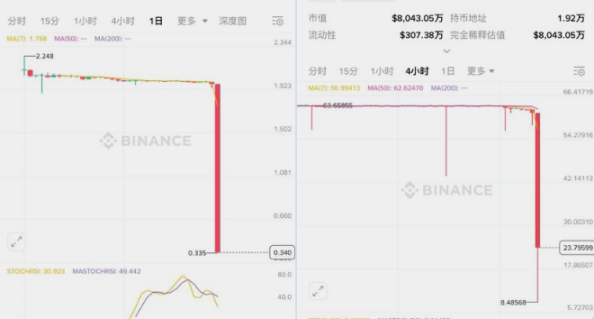
Polyhedra Network’s token ZKJ plunged from $1.946 in a waterfall drop, hitting a low of $0.3767 within just two hours — an astonishing maximum decline of 80.64%, slashing its market cap down to merely $230 million. Meanwhile, KOGE also fell sharply from $61 to as low as $8.46 within half an hour, with similarly shocking losses.
Market Impact and Chain Reaction
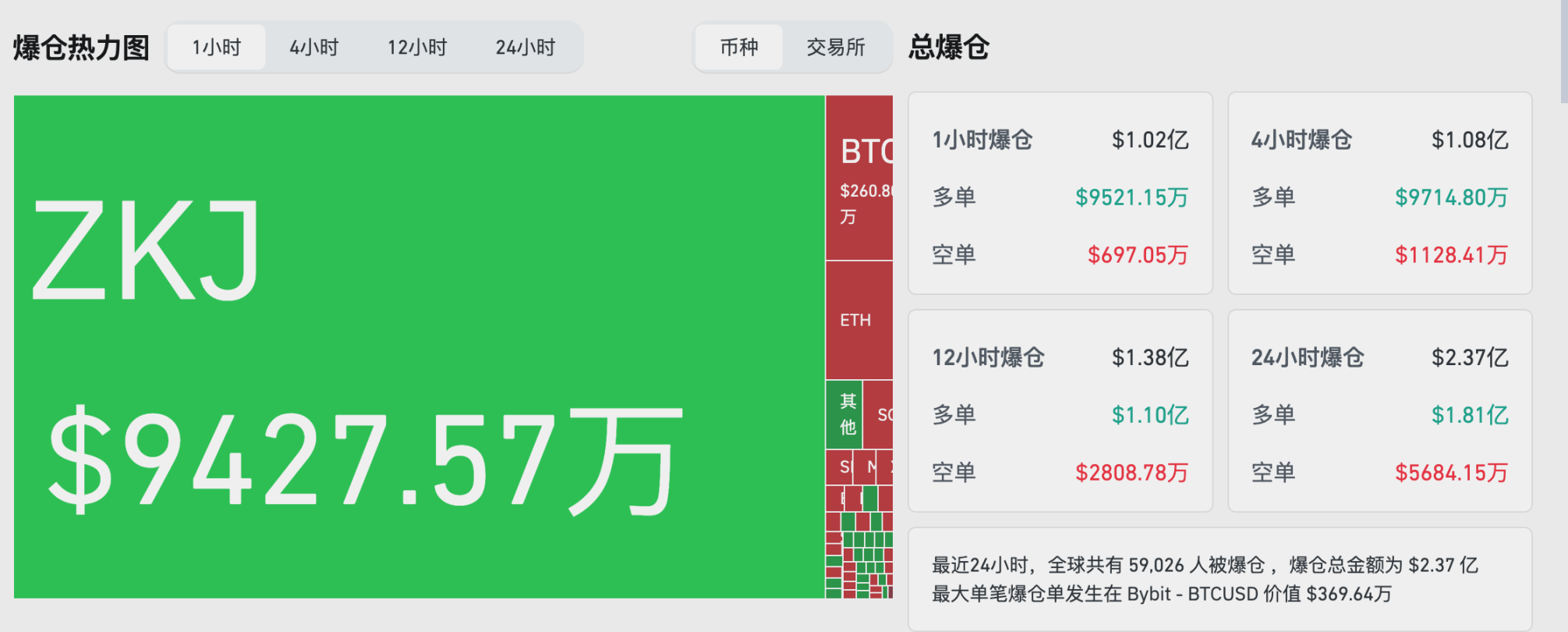
According to Coinglass data, total liquidations across the market reached $102 million between 20:00 and 22:00 that night. Of this, ZKJ alone accounted for $94.336 million in liquidation volume, including $93.6878 million in long positions wiped out — a classic long squeeze scenario.
For ordinary participants, the damage was particularly severe. Users who merely engaged in volume-pumping trades to earn Binance Alpha points suffered devastating losses. Taking a $1,000 investment as an example, panic-selling users lost approximately $800 amid ZKJ’s 80% crash — nearly equivalent to the rewards from 10 Binance Alpha airdrops. One user reported that their originally planned $5,000 small-scale trading investment dropped to less than $500 after the flash crash, resulting in a net loss of $4,500. Once again proving the adage: "Penny wise, pound foolish."
Notably, ZKJ had maintained an abnormally stable price over the previous months, consistently hovering around a $2 billion fully diluted valuation (FDV), with liquidity exceeding $20 million — behaving almost like a “stablecoin” — and long dominating the top spot in Binance Alpha积分 rankings. This unnatural stability now appears to have been the calm before the storm.
Warning Signs Before the Crash
In fact, signs of collapse emerged the day before. Both ZKJ and KOGE saw minor price fluctuations yesterday. Analysts pointed out that the initial sell-off originated from a specific address (starting with 0x364) withdrawing 1.29 million ZKJ and 8,667 KOGE worth of bilateral liquidity from OKX, followed by active dumping.
One market observer commented: "Yesterday’s 3% fluctuation in KOGE and ZKJ was already the countdown to the crash. Price volatility → fewer volume farmers → APY crashes → LPs withdraw pools → spot dumping → more withdrawals. Once the negative spiral starts, it’s like an avalanche — unrelated to the project quality itself."
More surprisingly, the 48 Club team behind KOGE posted a statement when prices first wobbled: "KOGE has been fully released since day one, with no lockups. 48Club never promised not to sell treasury holdings. Investors should do their own research and bear their own risks." Many investors later interpreted this as a veiled "crash preview."
Deep Dive: Root Causes
According to research by on-chain analyst AI Auntie analysis, the flash crashes of ZKJ and KOGE bore hallmarks of a well-planned harvesting operation. Three main addresses targeted the massive trading volume and liquidity generated by cross-trading between the two tokens under the Binance Alpha ecosystem, executing a dual blow of “large-scale liquidity withdrawal + continuous dumping,” causing both tokens to collapse sequentially:
-
The address starting with 0x1A2 withdrew approximately $3.76 million in KOGE and $532,000 in ZKJ in bilateral liquidity between 20:28 and 20:33, swapped 45,470 KOGE into ZKJ (worth $3.796 million), then sold off 1.573 million ZKJ in batches.
-
A second key address pulled about $2.07 million in KOGE and $1.38 million in ZKJ in liquidity while simultaneously dumping 1 million ZKJ.
-
A third address received 772,000 ZKJ transferred from the second address and proceeded to dump them entirely, further accelerating ZKJ’s downward spiral.
It is worth noting that within the crypto community participating in Binance Alpha airdrops, the strategy of “low-wear cross-trading between ZKJ-KOGE” was widely adopted — precisely setting the stage for this harvest attack.
AI Auntie’s deep dive on X revealed several critical insights:
Strategic Order of the Dump
The attackers chose to dump KOGE before ZKJ deliberately, not randomly. First, ZKJ supports futures trading, allowing operators to short the token on exchanges while simultaneously dumping on-chain, achieving double profits. Second, from a liquidity perspective, ZKJ had relatively deeper liquidity, requiring more capital to break — thus making it economically smarter to start with the weaker KOGE.
Mechanism Behind Delayed Price Collapse
ZKJ and KOGE were famously known in the Binance Alpha ecosystem for having “strong liquidity and stable prices,” leading most LPs (liquidity providers) to set extremely narrow price ranges. Once large-scale selling breached these tight bands, there was insufficient buy-side depth to absorb the sell orders, inevitably triggering a flash crash. Even more damagingly, when LPs see falling prices, panic-driven exits often follow, exacerbating the downward spiral. For slower-reacting LPs, the result was being left holding large quantities of severely devalued ZKJ and KOGE tokens.
Precise Timing of the Attack
AI Auntie speculated that a noticeable multi-day decline in Binance Alpha trading volume may have been the key trigger for choosing this moment to strike. For large LPs, “being the first to exit” is often the survival rule. Especially considering that few holders of ZKJ and KOGE are true long-term believers — most participants joined solely for high yields — the entire ecosystem became extremely fragile, like a building where the collapse of a single load-bearing pillar can bring down the whole structure.
Additionally, analysts pointed out that 16 days prior to the event, the two projects jointly established a ZKJ/KOGE trading pair and liquidity pool on PancakeSwap, accumulating $30 million worth of tokens. However, as altcoins within the Alpha ecosystem, the collapse of one token could easily trigger cascading sell-offs in the other, creating a “domino effect.”
Furthermore, news-wise, Polyhedra Network (ZKJ) is scheduled to unlock approximately 15.53 million tokens (~$30.3 million, or 5.04% of current circulating supply) on June 19 at 08:00 AM. This impending unlock pressure may have also acted as a catalyst for the crash. Overall, this flash crash resulted from a combination of meticulously planned technical maneuvers and objective market fundamentals — a convergence of multiple factors.
Reflections on the Binance Alpha Mechanism
This incident has also sparked profound reflection on the Binance Alpha points mechanism. Since its launch, the system has attracted massive participation in “farming” activities, but it has also created opportunities for malicious actors.
The crash coincided with two recent reforms introduced by Binance Alpha: first, launching an Alpha Wealth Management Center enabling LPs to earn points; second, adjusting the airdrop distribution mechanism to be split into two phases starting June 19 — users meeting thresholds receive points first, followed by lower-tier distributions for remaining unclaimed points. Yet in this event, holders, liquidity providers, and even those trying to farm points during the dip all suffered heavy losses.
Market Warnings and Lessons Learned
Some traders had earlier warned that so-called trading competitions are often just cover for project teams to offload bags. One user analyzed that before ZKJ listed on Binance, there was already a 100 million token position (~$200+ million) observed on BYBIT — comparable to SUI’s holdings on Binance. In this crash alone, over $600,000 worth of futures positions were liquidated.
One trader offered advice: "I strongly advise against buying such altcoins just because of Binance’s trading competition. One spike could lead to devastating losses. Gains rarely outweigh potential risks."
The sharp declines of ZKJ and KOGE serve as a wake-up call for the Binance Alpha ecosystem and the broader crypto market. In the high-risk world of cryptocurrencies — especially when dealing with opaque governance and artificially sustained liquidity in altcoin projects — investors must remain highly vigilant to avoid becoming victims of orchestrated harvests.
As both whales and retail users rush for the exits, the future direction of Binance Alpha activities and how the platform responds to such incidents will become focal points for market attention.
Join TechFlow official community to stay tuned
Telegram:https://t.me/TechFlowDaily
X (Twitter):https://x.com/TechFlowPost
X (Twitter) EN:https://x.com/BlockFlow_News
 Foresight News






