








Ukiyo-e and Web3: A Gentle Expression of Decentralization
TechFlow Selected TechFlow Selected
Ukiyo-e and Web3: A Gentle Expression of Decentralization
Not rejecting organization, but ensuring everyone who participates has the right to organize; not lacking focus, but allowing every focus to take its turn.
 Navigating Web3 tides with focused insights
Author: Bruce
Have you ever wondered how an era becomes remembered? Not through wars, nor through monuments left behind by victors, but through moments that once seemed insignificant: a blooming cherry blossom, a figure passing through an alley, a child gazing up at the sky. Ukiyo-e captures precisely these.
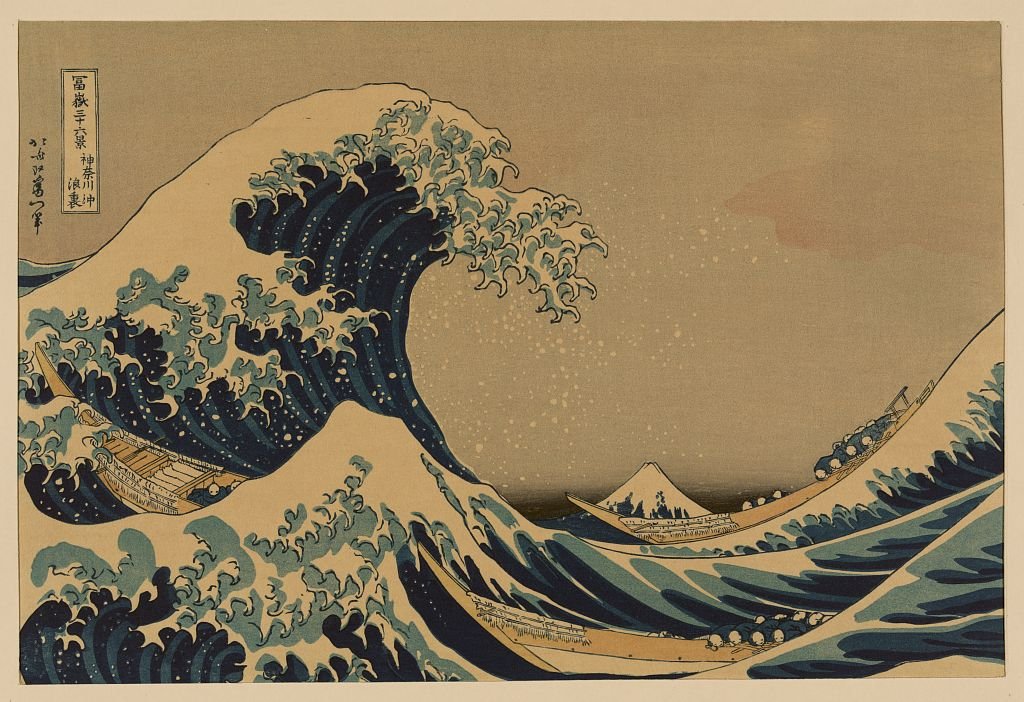
To many, ukiyo-e is merely a style, a decorative form—a series of colorful, small-scale Japanese prints from a bygone age. But in truth, it is the "mirror device" of an entire era. Take Hokusai's The Great Wave off Kanagawa: the towering wave appears to threaten the tiny boats beneath, yet if you look a little longer, you realize the wave isn't disaster—it evokes a vast, open sense of transience. It doesn't seek to conquer you; it simply wants to show you—"the enormity within a single instant."
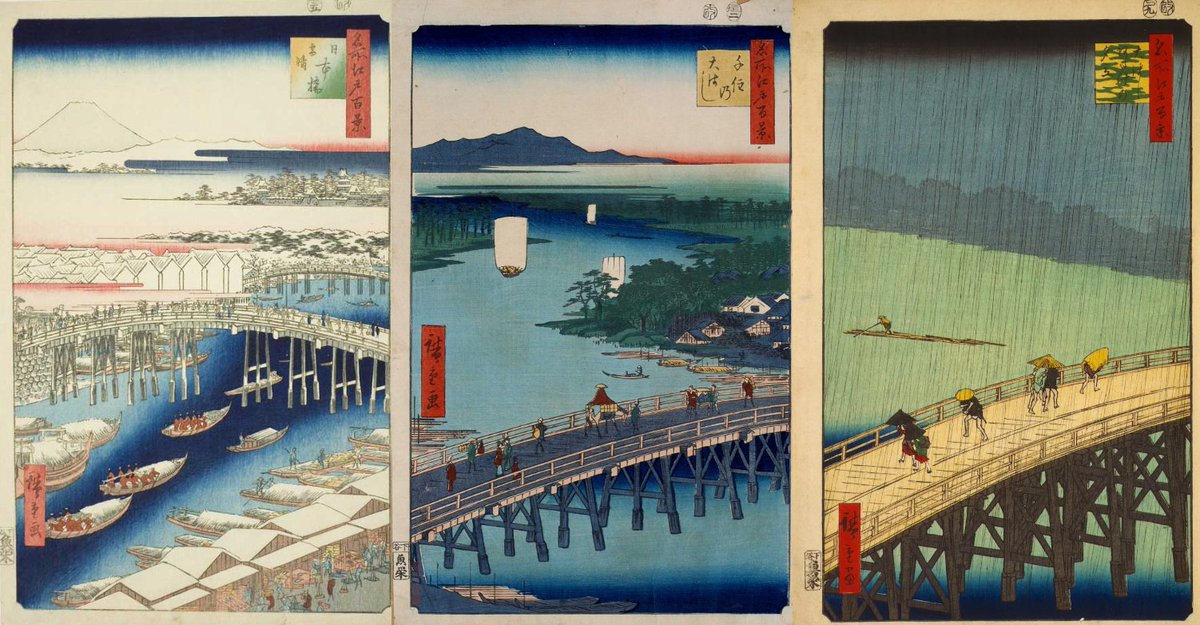
Then consider Hiroshige’s One Hundred Famous Views of Edo. No palaces, no nobility—instead, we see fishing lights by a bridge, pedestrians in the rain, a ferry landing at dusk, or carp streamers fluttering in the wind. There's a strange stillness here—not cold emptiness, not silence, but the quiet of "living truly."
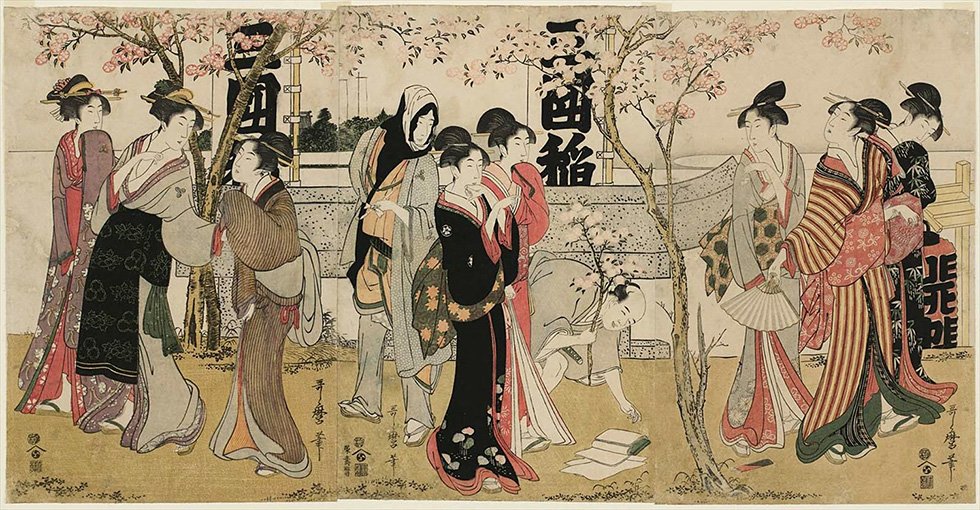
And then there are Kitagawa Utamaro’s portraits of beautiful women—never rigid statues of eternal grace, but tender, soft, fleeting presences. Like catching sight of a gentle face in a crowd, only for it to vanish the next moment.
The subjects of these works are never grand, nor crowded. They fixate on the "here and now"—on the faint glow of morning light through a window, the graceful sway of willows in a breeze, the lazy stretch of a napping cat. They cherish each moment as it is, exactly where it stands.
Contrast this with Western paintings: since the Renaissance, Western art has pursued "eternity." Compositions have focal points, lighting follows logic, figures carry symbolism—the image exists to "convey a meaning." The viewer stands outside, gazing upon a carefully arranged world. Leonardo’s The Last Supper, Raphael’s The School of Athens—every figure positioned like actors in a script, every beam of light governed by hierarchy.
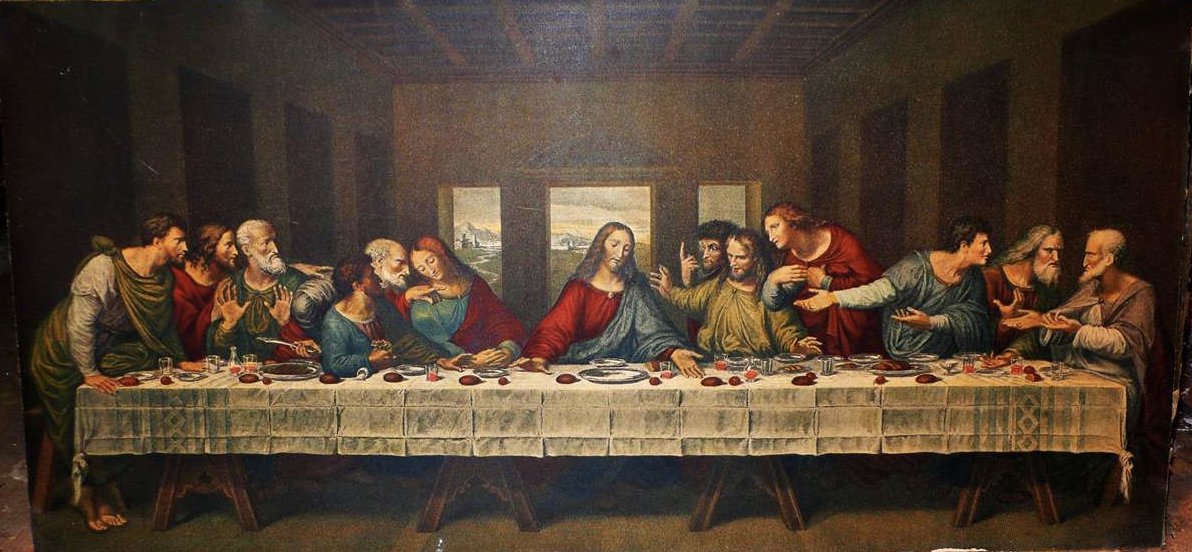
Ukiyo-e does the opposite—it doesn’t tell you where to look, assigns no protagonists, even rejects perspective. The image lies flat, every part equally significant. Wherever your eye lands, that becomes the focus.
"Ukiyo"—in ancient times, this was no compliment. A Buddhist term, it referred to this troubled, shifting world of impermanence, where joy and sorrow intertwine. But during the Edo period, it was reinterpreted. Rather than mourn transience, people began to think: since everything passes, why not seize the present moment? And so ukiyo-e flourished—an art form dedicated to capturing the everyday, an art that freezes flowing time through an egalitarian gaze.
These images have no central hero, no privileged viewpoint. You won’t find anyone standing center stage while others fade into corners. Instead, your eyes wander freely across the scene—like stepping into a city at twilight, a raw, unedited evening street.
It tells you: this world has no "absolute focal point." Every element holds its place. Every existence shines, even if just for a second.
This idea sounds like aesthetics—but it's closer to philosophy. It's an acknowledgment of "impermanence": accepting that all things fade, refusing to depict eternity, choosing instead to value the now. It's a commitment to "eye-level vision": you don’t need to climb high to be seen; standing where you are, you already matter. It's a gentle form of "decentralized composition": no one dictates where you should look, no one declares you a supporting character.
I later realized I love ukiyo-e not just because of how it paints, but because it reflects how we ought to live. Not everyone needs to stand under the spotlight. Not every act must carry "meaning." As long as you were there, at that moment, in that place—if you appeared, if you felt—then your existence is already valid. For you, that may be the greatest meaning of all. Does this piece of writing hold any practical significance? My keystrokes, your reading, algorithmic recommendations, system records—which of these truly counts as "meaning"?
Today, screens have changed, mediums have shifted—but this decentralized sensibility is being revived in the world of Web3. We’re no longer passive users, no longer mere spectators handed a script. We are nodes in a system, points in a composition, each with our own visibility, each holding a small but definite position.
No longer just observers of the painting, we now participate: signing a protocol, minting an NFT, submitting a transaction. Even if it seems trivial, it gets packed into a block, becomes part of consensus, forms a foundational brick in the construction of this vast, future-facing world.
Web3 isn’t about turning you into a "star." It’s about letting you know—"you are one brushstroke in the picture." And that is enough. Without noise, without absence, without needing to define meaning—you still deserve to remain.
The world keeps flowing. We keep changing. But right now, we stand here—named, active, located—like a clear, bright dot gently recorded within the fibers of time. At that moment, at that coordinate, in the instant when that gas fee was burned, you were acknowledged: you contributed a piece of on-chain data. You were truly present.
The structure of the world’s canvas is shifting. From looking up to seeing eye-to-eye, from being organized to self-organizing, from a single center illuminating everything, to every stroke glowing on its own. You don’t need to become someone who "changes the system." You only need to be one who chooses to participate. Even the smallest action is a form of "being there."
If you see every interaction as a brushstroke, you’ll realize: Web3 isn’t a narrative with a "main plot." It’s more like an endlessly unfolding scroll. Each person is a point in the composition—no two points the same.
This is a deeply human structure. It doesn’t ask who you are, but rather: what kind of stroke do you want to be?
Perhaps this is the gentlest expression of "decentralization." Not rejecting organization, but giving every participant the right to organize. Not lacking focus, but allowing every point to take its turn in the spotlight.
We are all here. Not standing outside the painting, but living within it. Even if you appeared for only a second, you’ve already become part of it. And that—this very fact—is the most beautiful proof that you once existed in this era.
What kind of stroke do you think you are in the Web3 scroll?
Join TechFlow official community to stay tuned
Telegram:https://t.me/TechFlowDaily
X (Twitter):https://x.com/TechFlowPost
X (Twitter) EN:https://x.com/BlockFlow_News
 @zbreezea






