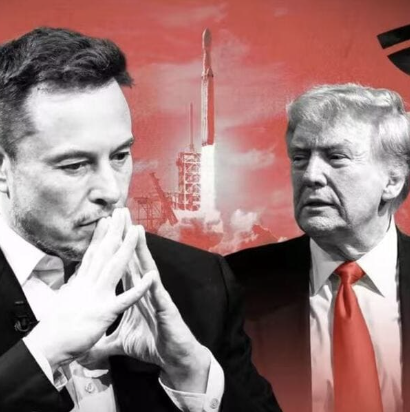
Morgan Stanley's Take on the 'Trump-Musk' Feud: Musk's Calculated Move, Market Underestimates His Influence
TechFlow Selected TechFlow Selected
Morgan Stanley's Take on the 'Trump-Musk' Feud: Musk's Calculated Move, Market Underestimates His Influence
There will be many trading opportunities ahead.
 Navigating Web3 tides with focused insights
By Long Yue, Wall Street Insights
When the world's richest man and the U.S. president clash on social media, capital markets pick up unusual signals.
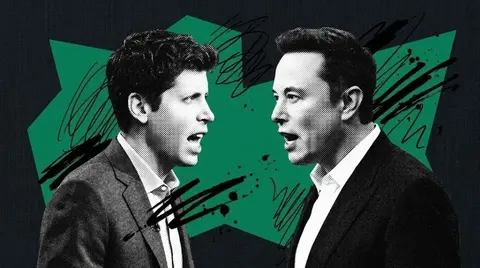
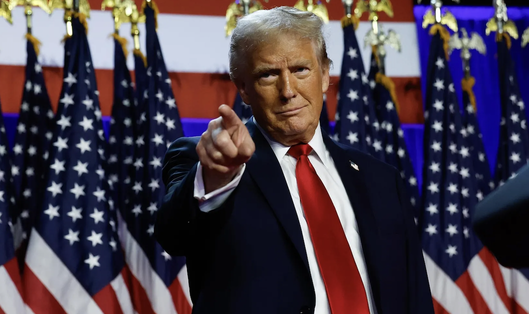
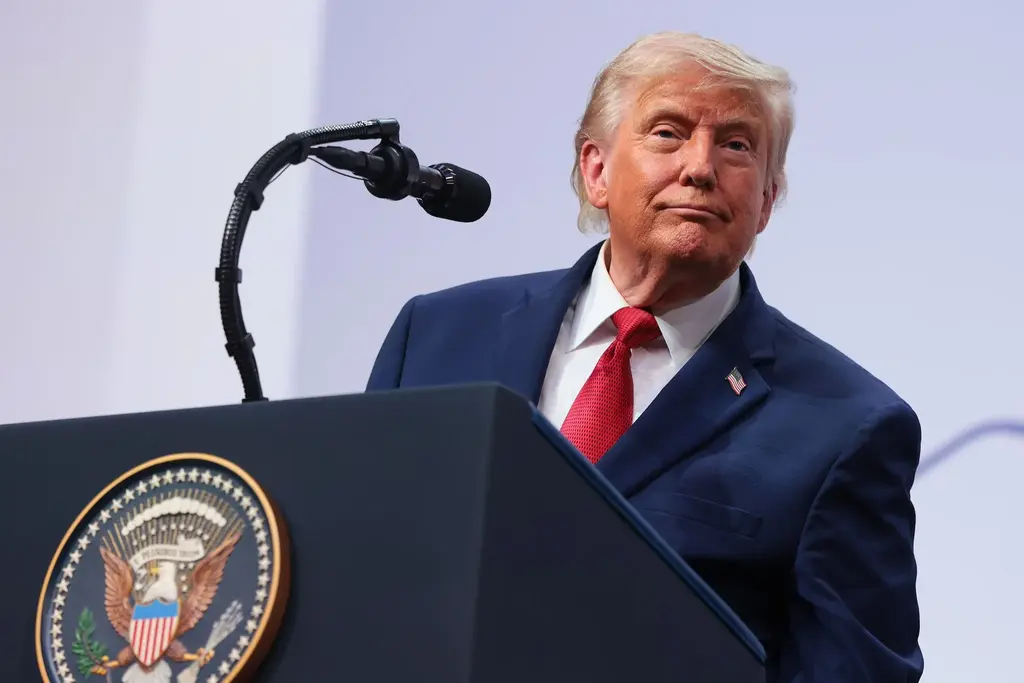
According to TradingWind, a recent Morgan Stanley report reveals that the seemingly spontaneous "Trump-Musk feud" was in fact a carefully crafted strategy by Musk aimed at achieving specific goals and drawing public attention. Musk believes corporate fates are ultimately tied to the nation’s overall fiscal strength. Markets have clearly underestimated Musk’s determination and his capacity to withstand negative impacts. Any decline in Tesla’s stock price may be just a temporary "sacrifice."
The Wall Street giant warned investors that if tensions between Musk and the president continue escalating, Tesla shares could face even greater volatility—yet this would simultaneously create abundant trading opportunities. Analysts maintain Tesla as their top pick within the U.S. auto sector, with a $410 price target, citing strong long-term prospects in physical AI.
Musk’s Strategic Calculations
In a report dated June 10, Morgan Stanley’s automotive team unusually incorporated Musk’s political actions into its investment framework for analyzing Tesla.
Analyst Adam Jonas noted that Musk’s recent comments on America’s “twin deficits” (budget deficit and national debt) were far from impulsive. Last week’s confrontation with Trump was likely a deliberate move designed to leverage Musk’s influence and place key issues at the forefront of public discourse.
The analysts interpret this as signaling that U.S. credit outlook and fiscal conditions—including budget deficits and national debt—have now become top priorities for the Tesla CEO. Morgan Stanley believes Musk is convinced that no matter how successful companies like Tesla or SpaceX are at the individual level, their ultimate fate remains closely linked to the country’s overall fiscal health.
Musk has likened U.S. sovereign credit to a “ship at sea,” emphasizing that national fiscal health is the ultimate anchor for corporate growth.
A $300 Billion “Arsenal”: Influence Underestimated
Morgan Stanley highlighted a critical factor often overlooked by markets: Musk controls an estimated $300–350 billion in assets (public and private). Even deploying a tiny fraction of this wealth enables him to drive national policy debates. The bank posed a provocative question:
How much attention and support could $5 or $10 billion generate for issues Musk deems important?
This immense financial backing gives every public statement Musk makes far greater impact and staying power than those of ordinary entrepreneurs.
Analysts argue history shows investors may once again be underestimating Musk’s resolve and resilience in enduring criticism and financial losses. In the report, Jonas urges investors to reflect:
Remember the widespread market skepticism when Musk acquired a social media platform (Twitter) years ago? Recall the frustration when he began visibly shifting resources toward political engagement?
According to Morgan Stanley, any negative fallout from Musk’s political involvement on Tesla’s products and brand represents a short-term “sacrifice”—one that won’t catch company leadership off guard.
Trading Opportunities Amid Volatility
Morgan Stanley warns that continued escalation in the Musk-Trump standoff will further amplify Tesla stock volatility. Yet such turbulence also opens the door to a “series of trading opportunities.”
Notably, Musk currently oversees five companies (Tesla, SpaceX, The Boring Company, Neuralink, and xAI), controlling four privately held firms, while holding only 13% of the sole publicly traded entity—Tesla (excluding the contested compensation package).
Morgan Stanley asserts Tesla’s expertise in manufacturing, data collection, robotics/physical AI, energy, supply chains, and infrastructure is now more crucial than ever for ensuring the U.S. remains competitive in embodied AI.
Maintaining “Top Pick” Rating
Despite political risks, Morgan Stanley maintains Tesla as its top pick in the U.S. auto sector, with a $410 price target (offering 33% upside from the June 9 closing price of $308.58).
The firm’s overweight rating and price target reflect confidence in Tesla’s capabilities across key domains of physical AI—including autonomous vehicles, humanoid robots, and other form factors—spanning data, robotics, energy storage, computing, manufacturing, and space/communications/networking/infrastructure. These growth and profit opportunities go well beyond traditional EV businesses.
As each business expands, Morgan Stanley anticipates increasing strategic synergies across entities: Grok integrated into cars, SpaceX payloads aboard Cybertrucks, Optimus prosthetics used for Neuralink patients, xAI training models within Optimus and Cybercab—the possibilities are vast.
Join TechFlow official community to stay tuned
Telegram:https://t.me/TechFlowDaily
X (Twitter):https://x.com/TechFlowPost
X (Twitter) EN:https://x.com/BlockFlow_News