Ethereum countdown to $3,000: with $40 billion in open interest, $1.8 billion in short positions are lining up for liquidation
TechFlow Selected TechFlow Selected
Ethereum countdown to $3,000: with $40 billion in open interest, $1.8 billion in short positions are lining up for liquidation
Technical indicators intertwine with macro variables, placing the market at a critical juncture of potential breakout or pullback.
 Navigating Web3 tides with focused insights
Author: White55, Mars Finance
Prologue: Price Breakout and Whale Maneuvers
On June 10, 2025, Ethereum's price surged past $2,827 in a sharp rally, marking a 15-week high. Behind this figure, a liquidation storm involving $1.8 billion in short positions was brewing. Within this seemingly random market move, the trading trail of a mysterious whale has become a key indicator of market sentiment.
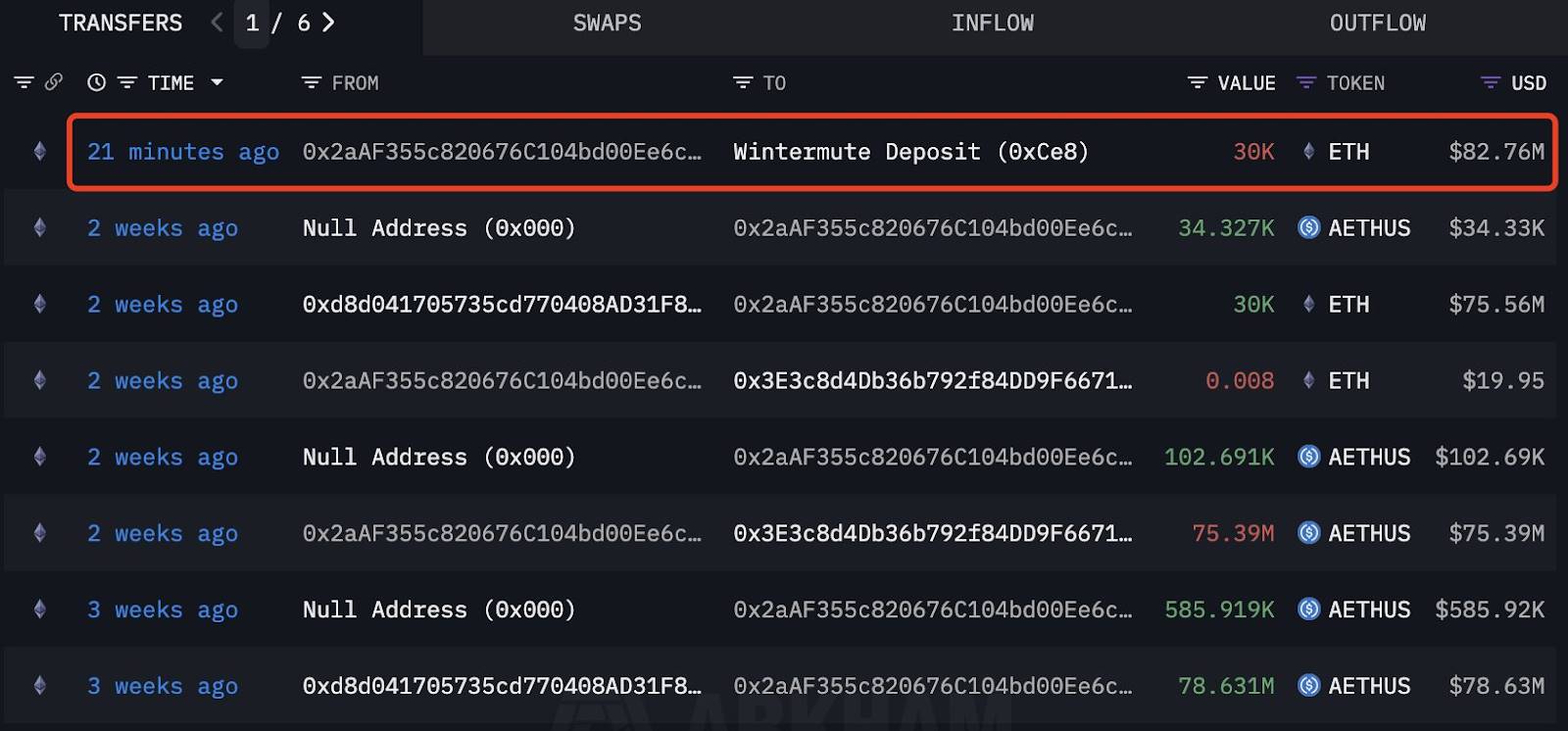
ETH whale transaction activity. Source: Lookonchain/X
According to on-chain tracking platform Lookonchain, an anonymous address executed two precise moves within 44 days:
-
First Round (April 27): Accumulated 30,000 ETH via Wintermute OTC at an average price of $1,830, spending $54.9 million;
-
Second Round (May 27): Sold the same amount at $2,621, realizing a profit of $23.73 million—a 43% return;
-
Final Harvest (June 10): Again sold 30,000 ETH off-exchange for $82.76 million, locking in a $7.3 million profit, bringing total gains to $31 million.
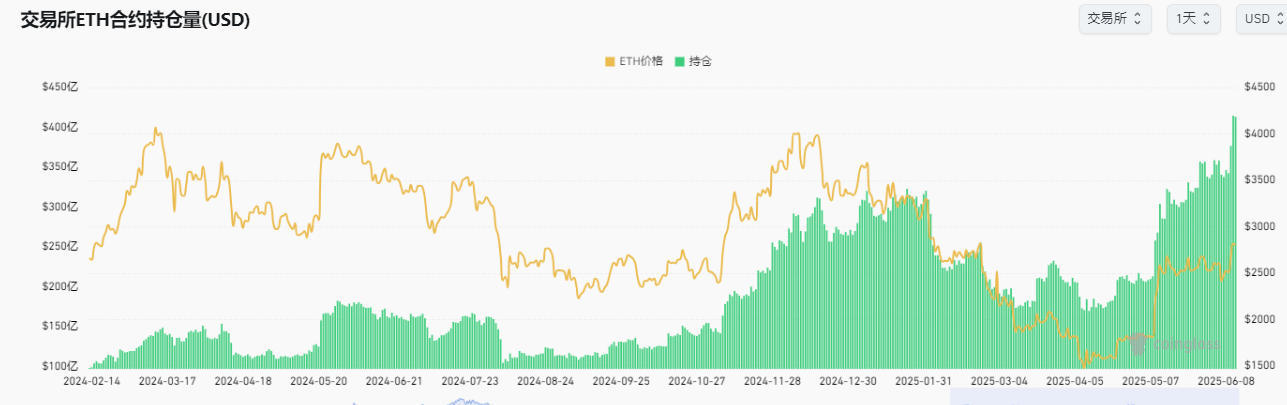
This is not an isolated case. Data from CoinGlass shows that Ethereum futures open interest (OI) has surpassed $40 billion for the first time, indicating leverage levels nearing a critical threshold. The current liquidity landscape reflects a delicate balance: around $2 billion in long positions face liquidation risk near $2,600, while $1.8 billion in short positions are poised above $2,900. This standoff mirrors the CDO market depicted in *The Big Short*—a breakout in either direction could trigger a chain reaction.
Chapter Two: Ecosystem Expansion and Value Cracks
Beneath the price euphoria, Ethereum’s ecosystem is undergoing structural transformation.
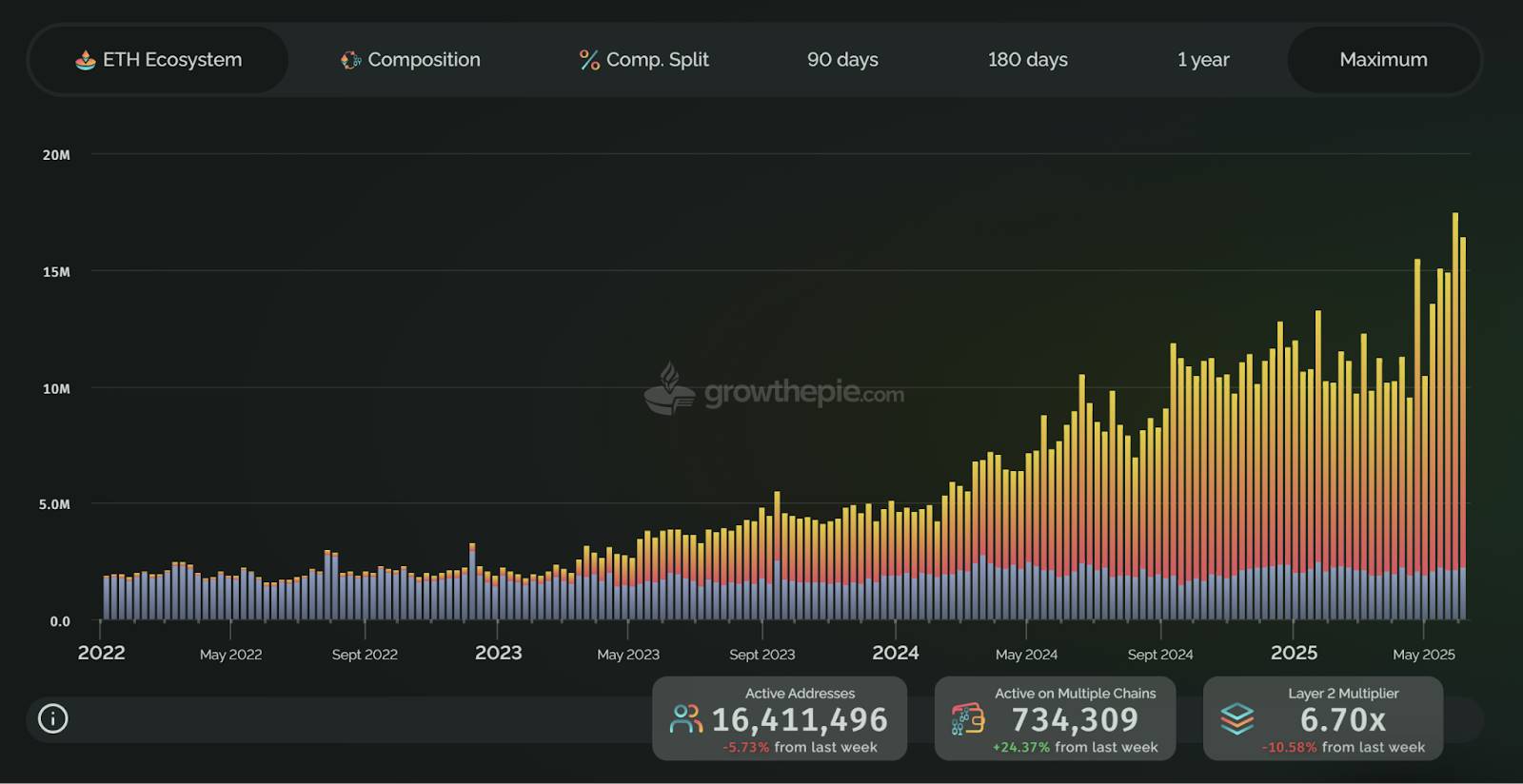
Ethereum weekly active address participation chart. Source: growthepie
Data from growthepie reveals that independent active addresses surged by 70% in Q2, peaking at 16.4 million on June 10. Among them, Base network accounted for 72.81% (11.29 million addresses), becoming the primary growth engine, far exceeding Ethereum’s mainnet share of 14.8% (2.23 million addresses). This "satellite chains feeding back to the mainnet" model differs sharply from the DeFi Summer narrative of 2020.
Despite maintaining dominance with $66 billion TVL—61% of the DeFi market—Ethereum’s core revenue model faces growing concerns:
-
Fee collapse: Network transaction fees totaled only $43.3 million over the past 30 days, down 90% from pre-Cancun upgrade levels;
-
Staking yield dilemma: While blob technology reduces Layer2 costs, stakers’ annual yields remain stagnant at 3.12%, significantly trailing competitors like Solana;
-
Regulatory constraints: SEC scrutiny over ETH staking has led to eight consecutive days of net outflows totaling $369 million from spot ETFs, shaking institutional confidence.
This contradiction materializes in Glassnode’s on-chain data: the proportion of “diamond hands” (addresses holding ETH for over one year) dropped sharply from 63% to 55%, while short-term holder sell-offs increased by 47%. When technological upgrades fail to translate into holder returns, ecosystem growth paradoxically becomes a force of value dilution.
Chapter Three: The Blood-Red Compass of Derivatives Markets
Dark currents stir in the futures market as ETH open interest (OI) historically surpassed $400 billion, signaling elevated market leverage. A sharp rise in open interest foreshadows heightened volatility.
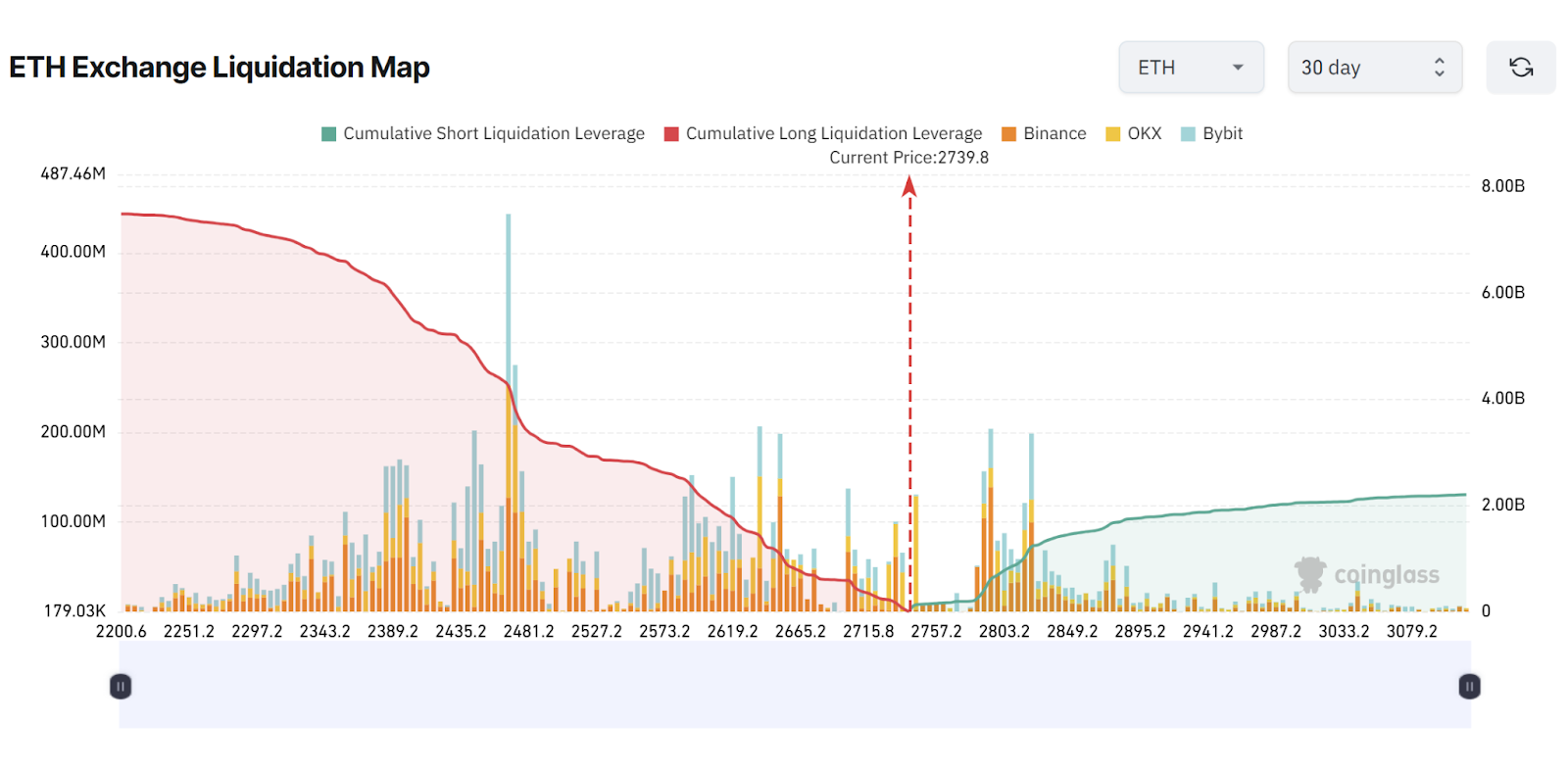
Ethereum liquidation heatmap. Source: CoinGlass
CoinGlass liquidation heatmaps reveal the brutal logic of capital warfare:
-
Long minefield: $2 billion in forced liquidations loom between $2,600–$2,665, coinciding with the 50% Fibonacci retracement level of the 2024 bull run;
-
Short graveyard: Over $1.8 billion in short positions hang by a thread above $2,900, aligning with the historical low ETH/BTC exchange rate of 0.019;
-
Institutional duality: CME Ethereum futures account for 9% of total OI, a stark contrast to Bitcoin’s 24%, suggesting traditional capital remains cautious and观望.
The distorted prosperity in derivatives markets is actually a manifestation of a liquidity trap. With perpetual contract funding rates persistently negative and taker buy/sell ratios falling below 1, the market has entered an "extreme bearish" state. Under such conditions, whales cashing out via OTC resemble signals of exit before a final狂欢—after all, historical data shows that after record-high OI, there’s a 68% chance of a black swan event within three months.
Chapter Four: Technical Codes and Macro Variables
From a technical perspective, the current price action holds hidden clues:
-
Volatility squeeze: Daily Bollinger Bands have narrowed to 5%, the tightest since February 2024, suggesting an imminent breakout;
-
Weekly paradox: Price holds above both the 50-week and 100-week EMAs, yet MACD histogram shows bearish divergence, while RSI at 42 indicates weakening upward momentum;
-
Fibonacci threshold: A daily close above $2,800 will become a pivotal line between bulls and bears; a breakout could open theoretical targets of $3,200–$3,500, whereas failure may lead to a retest of $2,500 for support.
On the macro front, U.S.-Russia geopolitical talks and expectations of Fed rate cuts create dual uncertainties. CME interest rate futures indicate a 79% probability priced in for 2–3 rate cuts in 2025. Any deviation from this path would hit crypto markets hardest. Meanwhile, Standard Chartered warns that if the RWA (real-world assets) narrative fails to deliver in Q3, Ethereum could face a $100 billion market cap erosion.
Epilogue: On the Eve of a Paradigm Shift
Ethereum stands at a historic crossroads:
-
Staking economy redesign: EIP-7251 proposes raising validator deposit caps to 2,048 ETH and improving withdrawal mechanisms to ease liquidity strain;
-
Layer2 value feedback: Mandating networks like Arbitrum to allocate a portion of their fee revenue back to the mainnet, resolving the “thriving ecosystem, anemic mainnet” paradox;
-
Regulatory breakthrough: If the SEC approves 21Shares’ staking ETF in Q3, it could drive a 15–20% short-term rally and lock up 8% of circulating supply.
As Peter Brandt noted, breaking above the congested $2,800 zone may propel Ethereum into a “moonshot” rally toward $5,232. Yet caution is warranted—the essence of this capital game remains a leveraged hunt for liquidity. When $1.8 billion in short positions ignite as fuel, the market will ultimately reveal: who is truly riding the trend, and who is swimming naked.
Join TechFlow official community to stay tuned
Telegram:https://t.me/TechFlowDaily
X (Twitter):https://x.com/TechFlowPost
X (Twitter) EN:https://x.com/BlockFlow_News