Bitcoin's "Compliant Subject Problem" and "Citizen Dividend"
TechFlow Selected TechFlow Selected
Bitcoin's "Compliant Subject Problem" and "Citizen Dividend"
Action begins by becoming a "citizen" who actively strives to claim dividends.
 Navigating Web3 tides with focused insights
By: Daii
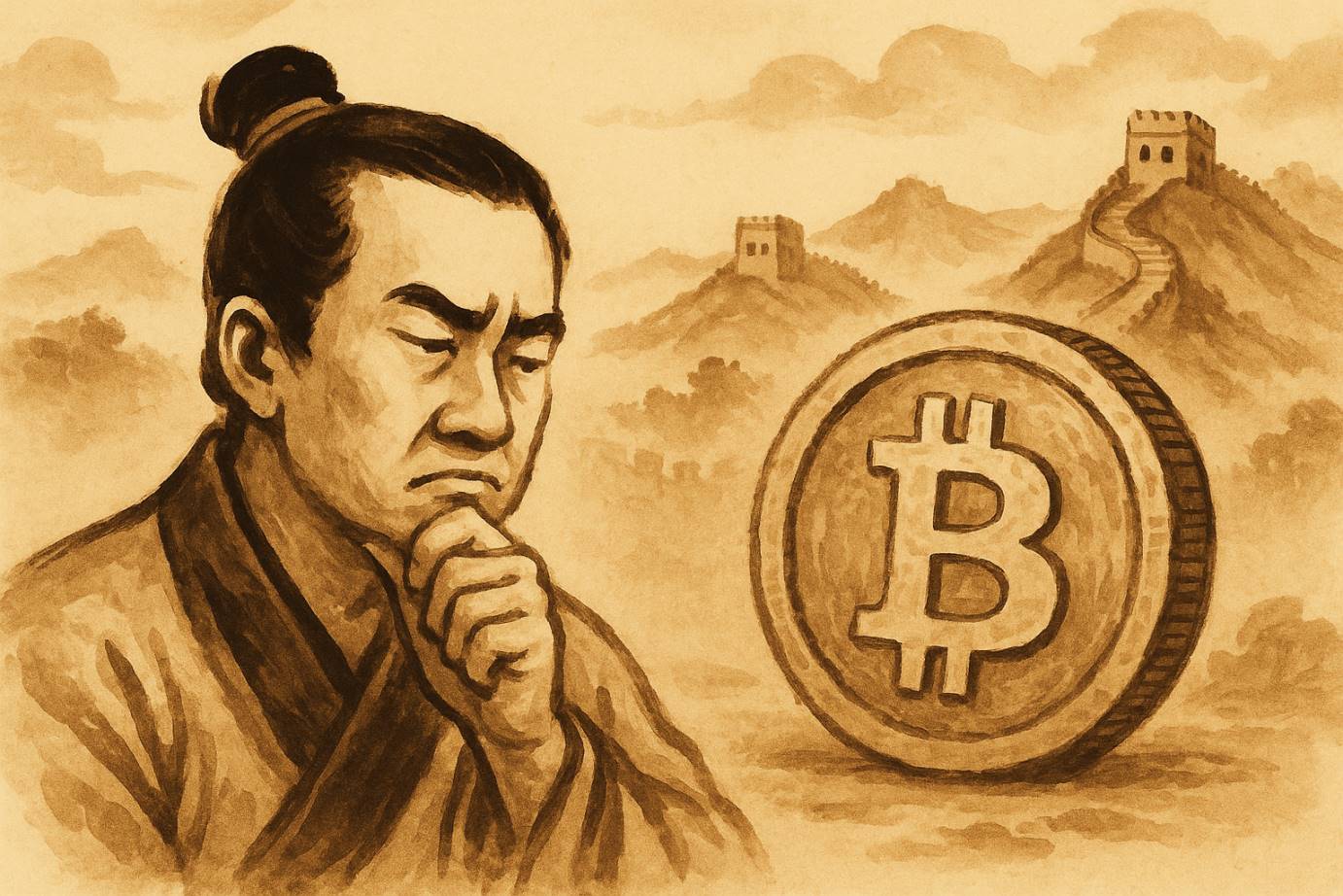
When people repeatedly ask, "Is Bitcoin legal?" what truly troubles them may not be the legal statutes themselves, but a deeply ingrained mental habit—we are accustomed to being "obedient citizens," conditioned to wait for permission from authority rather than proactively exercising freedoms that law does not explicitly prohibit.
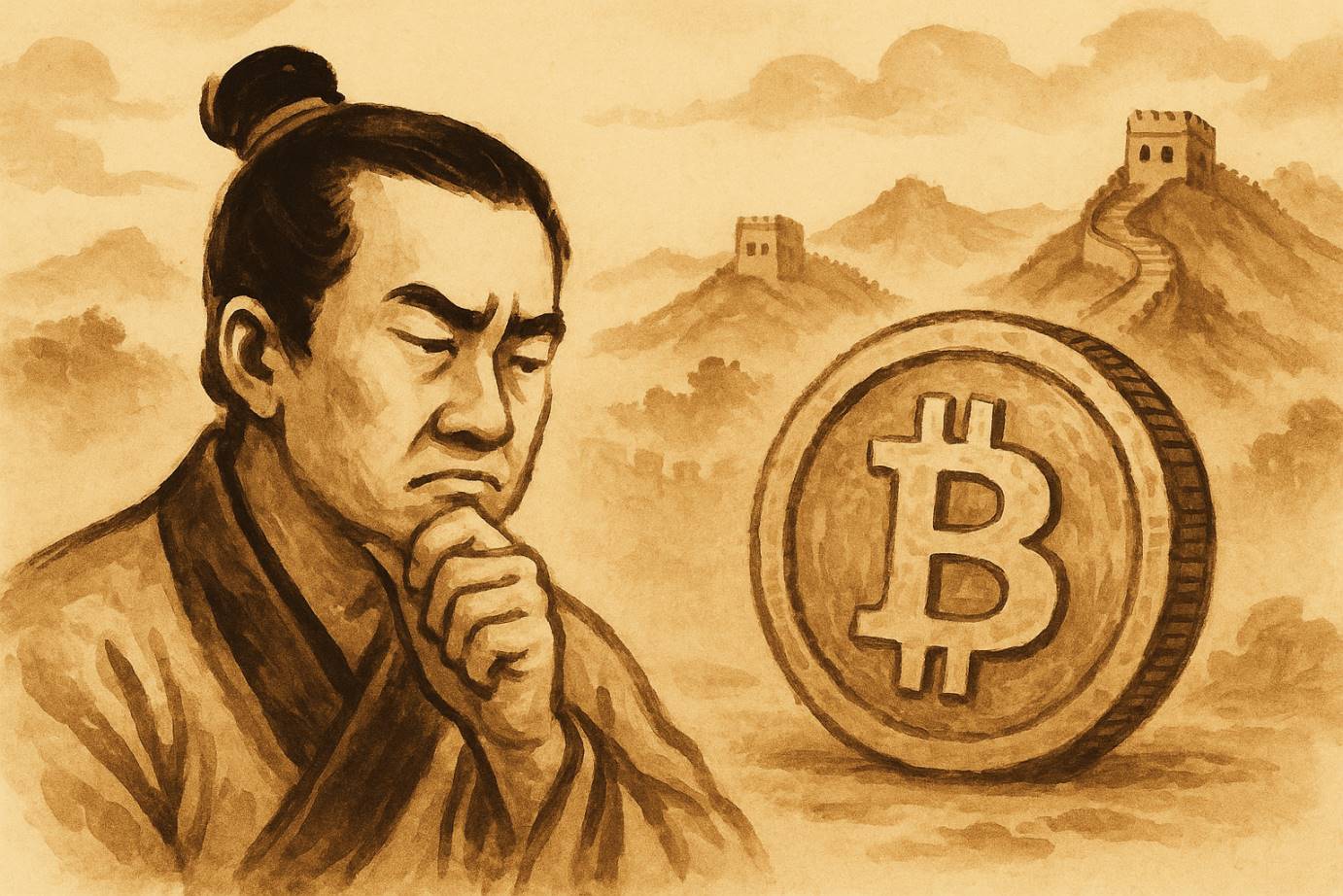
This question, framed within a Chinese context, reflects not only the complex relationship between regulation and freedom, innovation and stability, but also exposes our identity confusion in an era of transition: Should we remain obedient subjects, or become proactive citizens embracing new technologies and capturing the benefits of this new age?
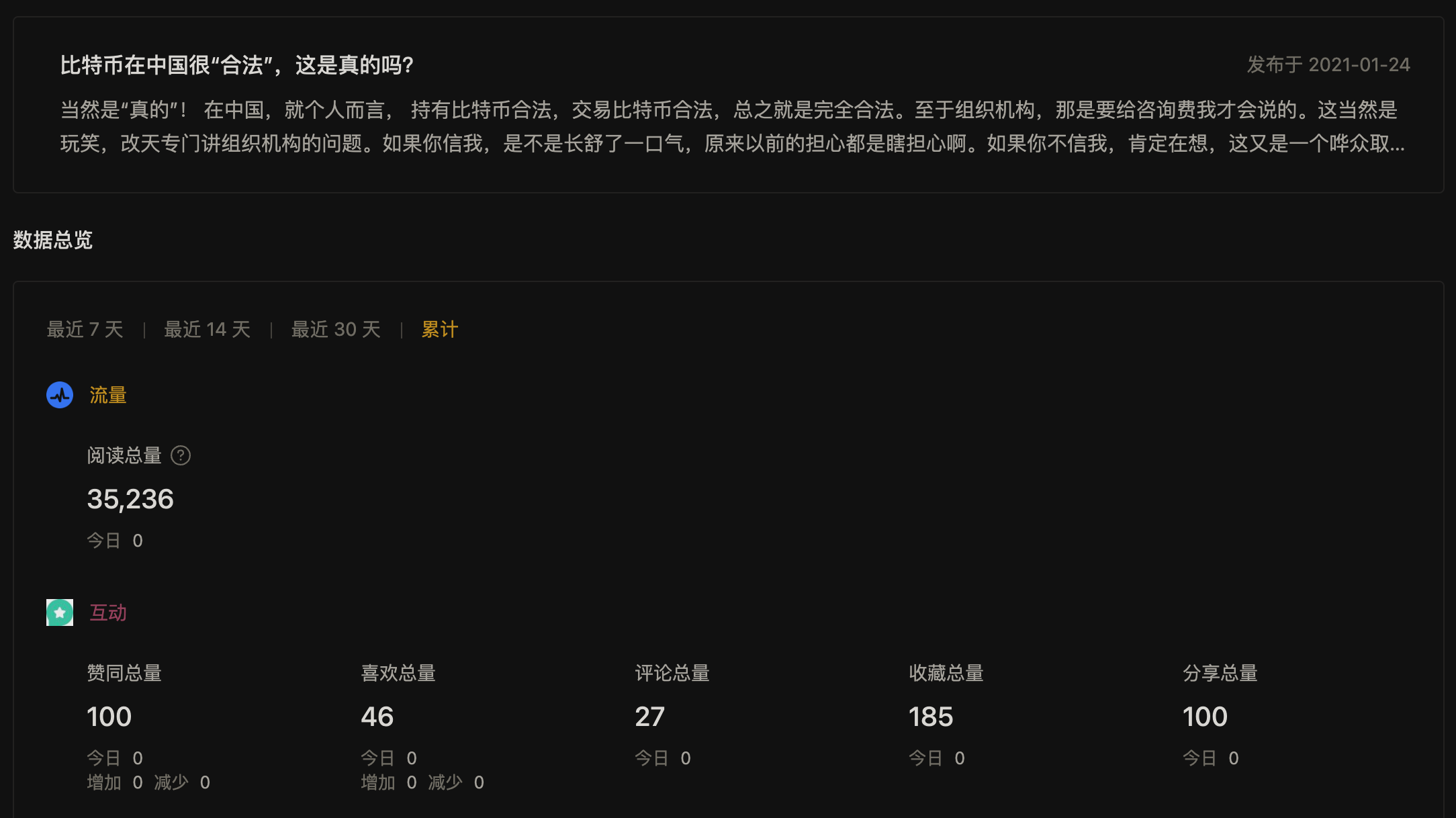
In January 2021, I published an article on Zhihu titled “Bitcoin Is Very ‘Legal’ in China—Is That True?” It received over 35,000 views, 100 likes, hundreds of shares, and nearly 200 bookmarks. Behind these numbers lies the persistent reality of this "obedient citizen" mindset.
Three years later, I want to revisit this topic. Because Bitcoin isn’t just about legality—it reveals a hidden, globally significant “citizen dividend” waiting to be claimed.
1. The Question
To be legally precise: Bitcoin has always been legal in China.
As I clearly stated in my 2021 article, China’s legal system follows the principle of legality in criminal matters—only laws enacted by the National People's Congress and its Standing Committee can restrict personal freedom.
To date, no law defines holding or trading Bitcoin as illegal or criminal, nor is there any provision for criminal penalties related to such activities.
It is precisely this clear legal framework that keeps individual ownership and trading of Bitcoin within the bounds of legality.
Yet many Chinese individuals, when confronted with new technologies, instinctively ask not “Is it prohibited?” but rather “Is it permitted?” This cognitive reflex isn’t rational choice—it’s a collective unconscious shaped by two thousand years of feudal rule:
We are trained to be “obedient citizens,” doing only what is explicitly allowed, rather than modern-day “citizens” under the rule of law—who enjoy the freedom to do anything not expressly forbidden.
This deep cultural path dependency is the real reason why the question “Is Bitcoin legal?” keeps resurfacing.
Naturally, many still harbor doubts—and the root cause lies in practical difficulties created by regulatory measures.
While owning and trading Bitcoin is legal, the practical challenges stem from strict regulations.
My 2021 article detailed this, particularly the “9/4 Event” in 2017, when seven Chinese government agencies jointly issued a notice on preventing risks associated with token offerings, leading directly to the shutdown of all domestic Bitcoin exchanges.
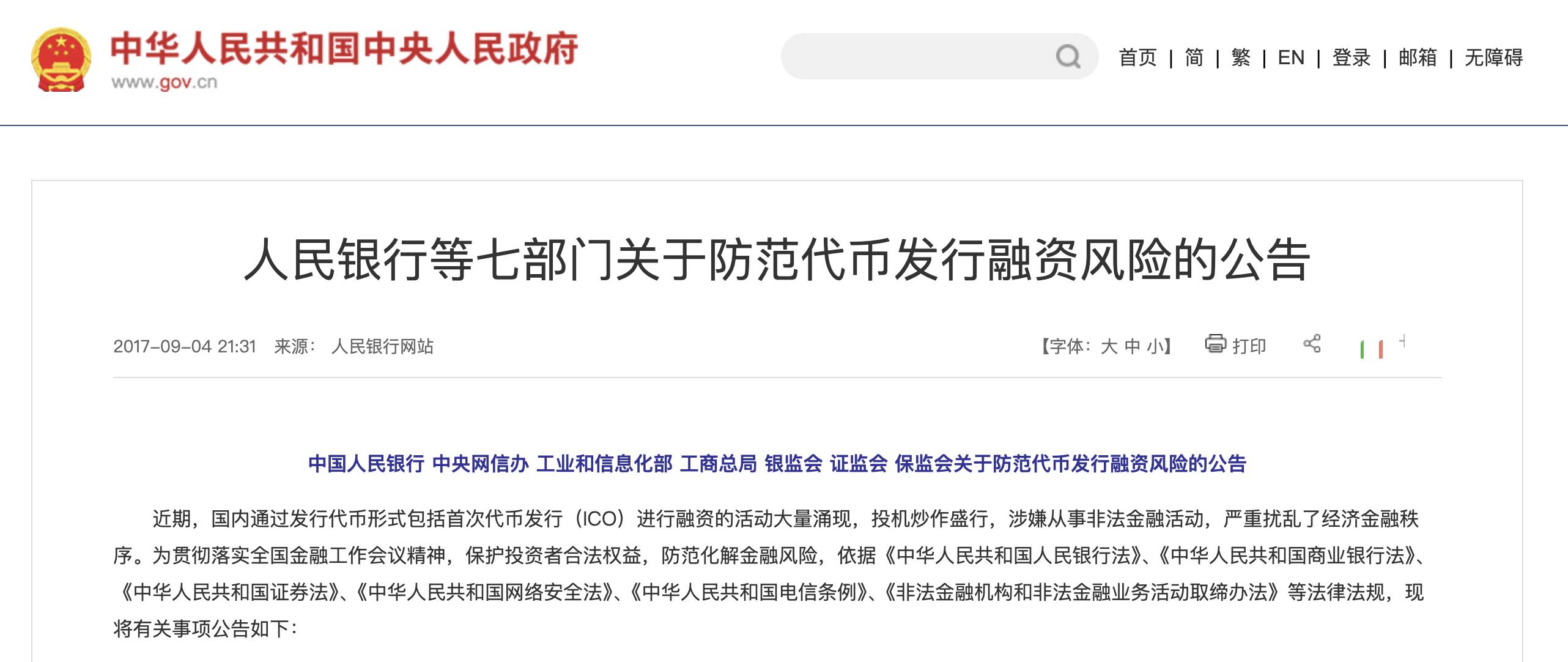
This regulatory action was not aimed at Bitcoin per se, but driven by concerns over financial stability and risk prevention.
Looking back, we better understand the regulators’ logic: At the time, ICOs were sweeping the nation, exposing serious financial risks. To prevent broader instability, authorities opted for a blanket ban.
The cost was high, but in outcome, China’s financial system remained stable.
2. The World
After domestic exchanges shut down, Chinese traders turned to overseas markets, reshaping global Bitcoin trading dynamics.
In 2021, I noted that among the world’s top ten economies, only China barred banks and payment institutions from participating in Bitcoin transactions. Today, that remains largely unchanged. Major economies like the U.S., Japan, Germany, the UK, and South Korea continue to allow free and legal Bitcoin trading.
Since 2022, global economic turbulence, coupled with aggressive Fed rate hikes, has triggered capital outflows from emerging markets back to the U.S., placing significant pressure on China’s economy.
Especially since Trump’s return to power, U.S. crypto regulation has undergone a pivotal shift—from containment to integration.
In 2024, Trump signed the “Bitcoin Reserve Act,” officially recognizing Bitcoin as a strategic reserve asset eligible for inclusion in government balance sheets. Meanwhile, the Senate recently passed the GENIUS Act (on stablecoins), establishing clear compliance pathways for USD-backed tokens like USDC and USDT. These moves are not mere technical updates—they mark the front lines of monetary sovereignty competition.
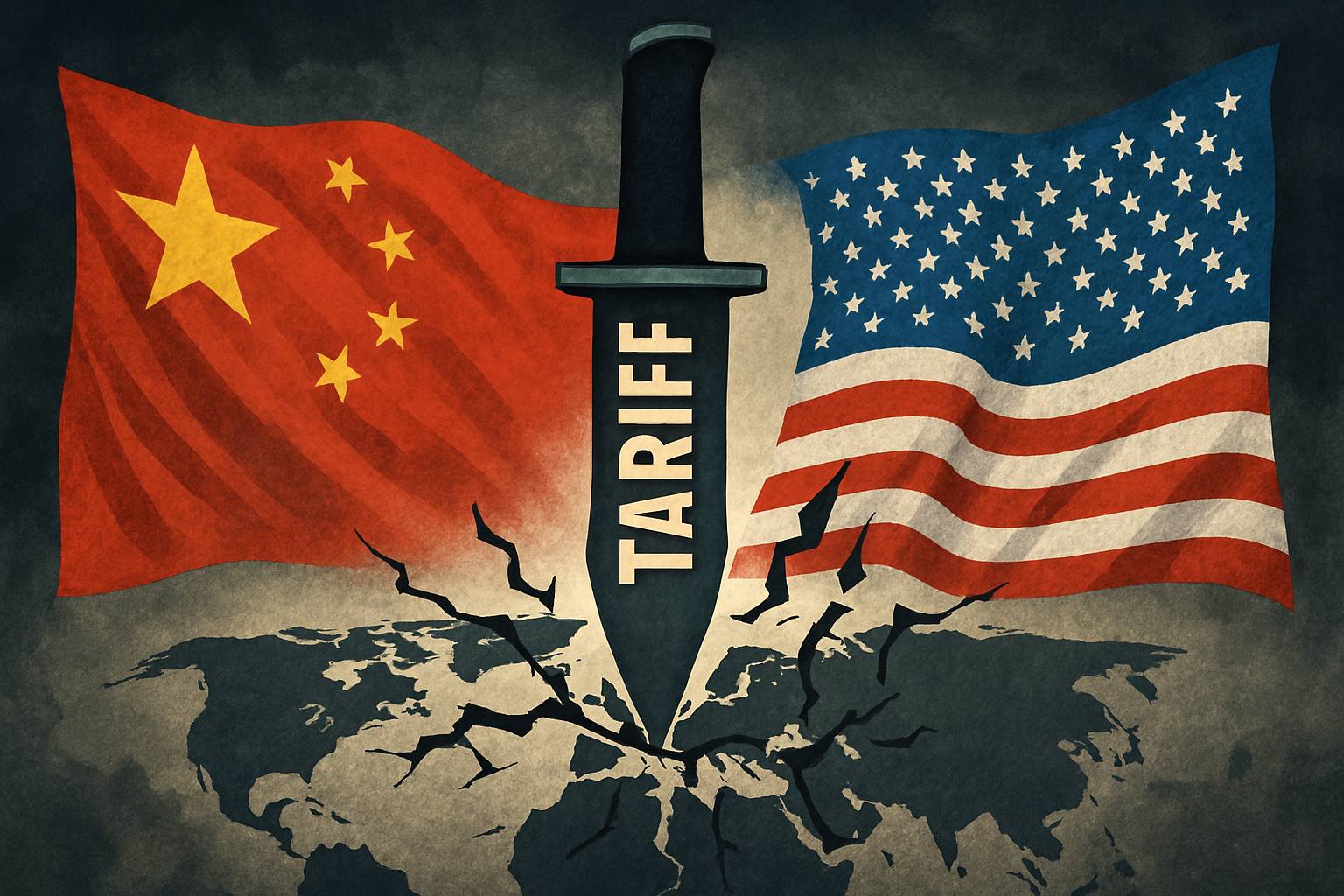
Compared to America’s strategic use of Bitcoin to combat inflation and preserve dollar dominance, China prioritizes industrial stability, exports, and employment. With its manufacturing base still strong, China’s financial policy focuses not on seizing global asset pricing power, but on cushioning domestic structural adjustments.
Facing Trump’s Trade War 2.0—revived tariffs, supply chain encirclement, intensified chip restrictions—China needs a highly “stable” financial environment to absorb external shocks. That stability requires distance from highly volatile assets, even innovative ones.
Bitcoin’s inherent volatility and speculative nature pose risks; if linked to social financing systems, they could trigger cascading speculative contagion.
Thus, tight regulation isn’t about denying Bitcoin’s value—it’s about creating a buffer zone to delay systemic shocks. Seen in this light, the banking and fund transfer issues you face become understandable.
3. The “Enemy”
Bitcoin’s original mission was to build a decentralized, borderless financial system to escape dollar hegemony—a goal that aligns surprisingly well with China’s long-standing desire to challenge dollar supremacy.
In fact, Zhou Xiaochuan, former governor of the People’s Bank of China, proposed a super-sovereign international reserve currency (SDR) as early as 2009. This vision, similar in spirit to Bitcoin, has remained one of the PBOC’s strategic aspirations. Hence, Zhou’s famous 2014 “stamp analogy,” defining Bitcoin as a commodity to sidestep direct monetary regulation.
When I referenced this metaphor in 2021, it resonated deeply—precisely because it captured the subtle dance between regulation and legality.
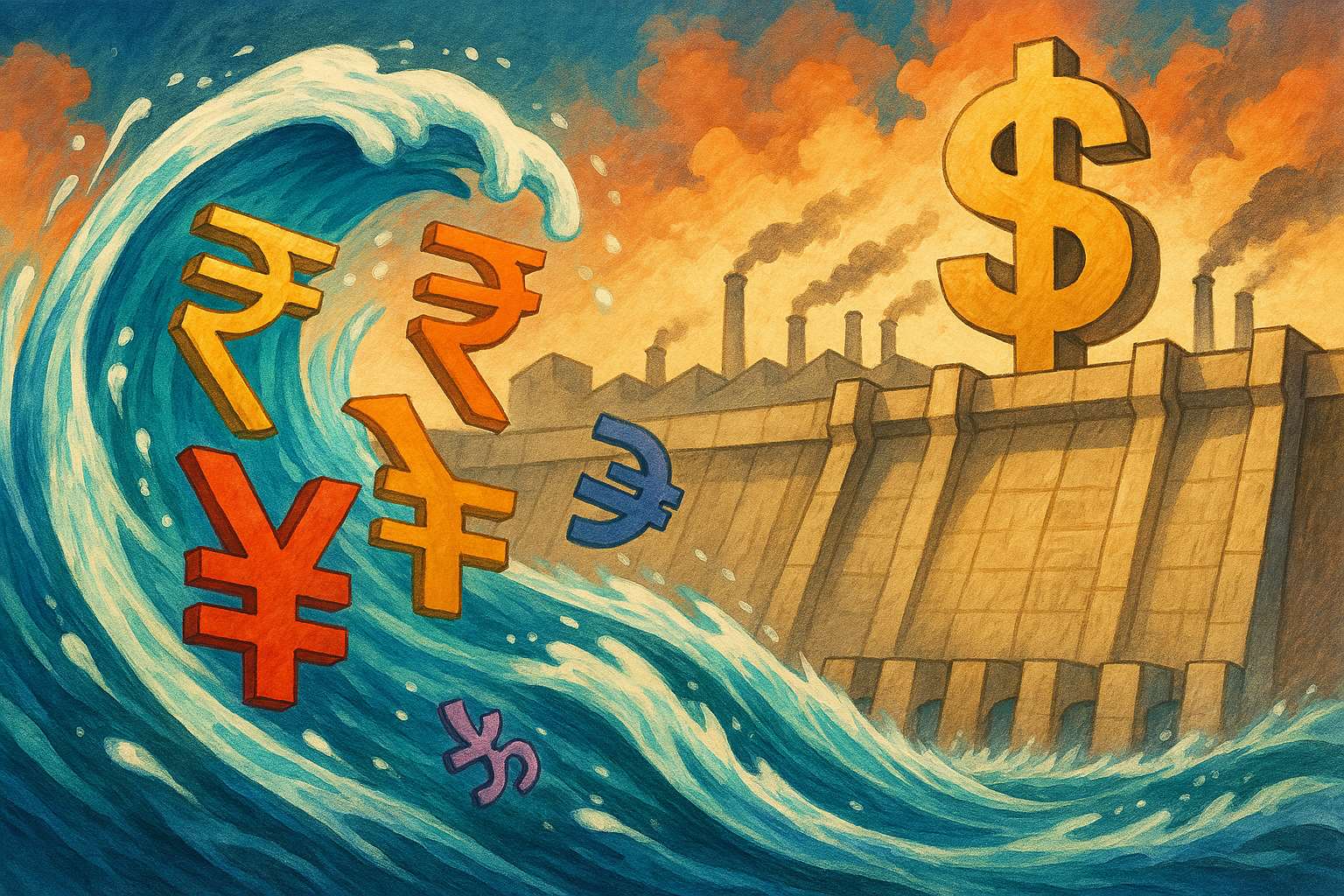
Interestingly, decentralized stablecoins may now serve as China’s “gray weapon” in this battle against dollar dominance. I explored this idea in depth in my article “Tariffs Are Swords, Money Is Shield: An Opportunity for Dollar Hegemony Breakdown and Stablecoin Rise.”
The key lies in what backs these decentralized stablecoins—not dollars, but BTC, ETH, and other decentralized assets. This means they cannot be frozen or accessed by U.S. judicial authorities.
This grants China unprecedented strategic flexibility: achieving quasi-disconnection from the U.S. clearing system without directly confronting dollar hegemony or rupturing geopolitical monetary ties.
In this sense, China’s decision to stabilize the RMB exchange rate and control cross-border capital flows, while leaving a “controllable” exit on-chain, represents a clever balancing act.
Decentralized stablecoins function like underground tunnels, offering maneuvering space amid intense geo-financial blockades. As the global monetary system evolves from centralized settlement to protocol-based clearing, Bitcoin—as a core collateral asset behind decentralized stablecoins—is transforming from a民间 hedge into a shadow player in state-level financial games.
4. The Dividend
In recent years, despite strict regulations, Bitcoin’s price has repeatedly hit record highs. Global acceptance continues to rise.
As the world’s second-largest economy, China’s stance on Bitcoin significantly impacts global markets. Any shift in its regulatory posture will inevitably trigger massive market movements.
This is the so-called “regulatory dividend.”
The essence is simple: A long-suppressed market, once regulatory pressure eases, will experience rapid capital inflows and explosive demand growth. This pattern isn’t new—it has played out before in China’s stock market, real estate, and fintech sectors. And Bitcoin is no exception.
Recall that before the 2017 “9/4 Event,” Chinese markets accounted for nearly 90% of global Bitcoin trading volume. After the crackdown, it plummeted to less than 1%. Such massive suppressed demand means that any future policy relaxation or opening window could unleash overwhelming buying power overnight.
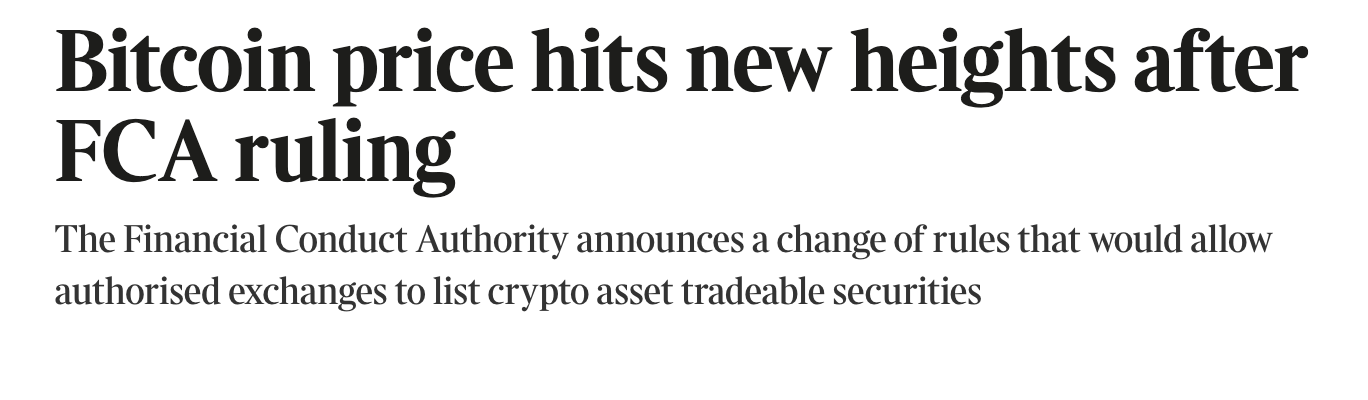
A telling example: In March 2024, the UK’s Financial Conduct Authority (FCA) approved institutional trading of Bitcoin-backed securities. This policy shift sent Bitcoin soaring past $72,000—an all-time high—and positively influenced global investors, highlighting how profoundly regulation shapes crypto markets.
More importantly, the regulatory dividend comes with structural shifts. Chinese institutional investors, once cautious toward crypto, are now actively monitoring overseas developments and allocating assets via offshore funds and compliant channels. For instance, China Asset Management’s “Huabao Overseas Technology C (QDII-FOF-LOF)” fund advertised on Alipay in December 2024, emphasizing indirect exposure to Coinbase and ARK 21Shares Bitcoin ETFs. The fund allows daily investments up to 1,000 RMB, with a minimum of just 10 RMB. This shows that even under China’s cautious stance, compliant pathways enable indirect participation in global crypto markets.
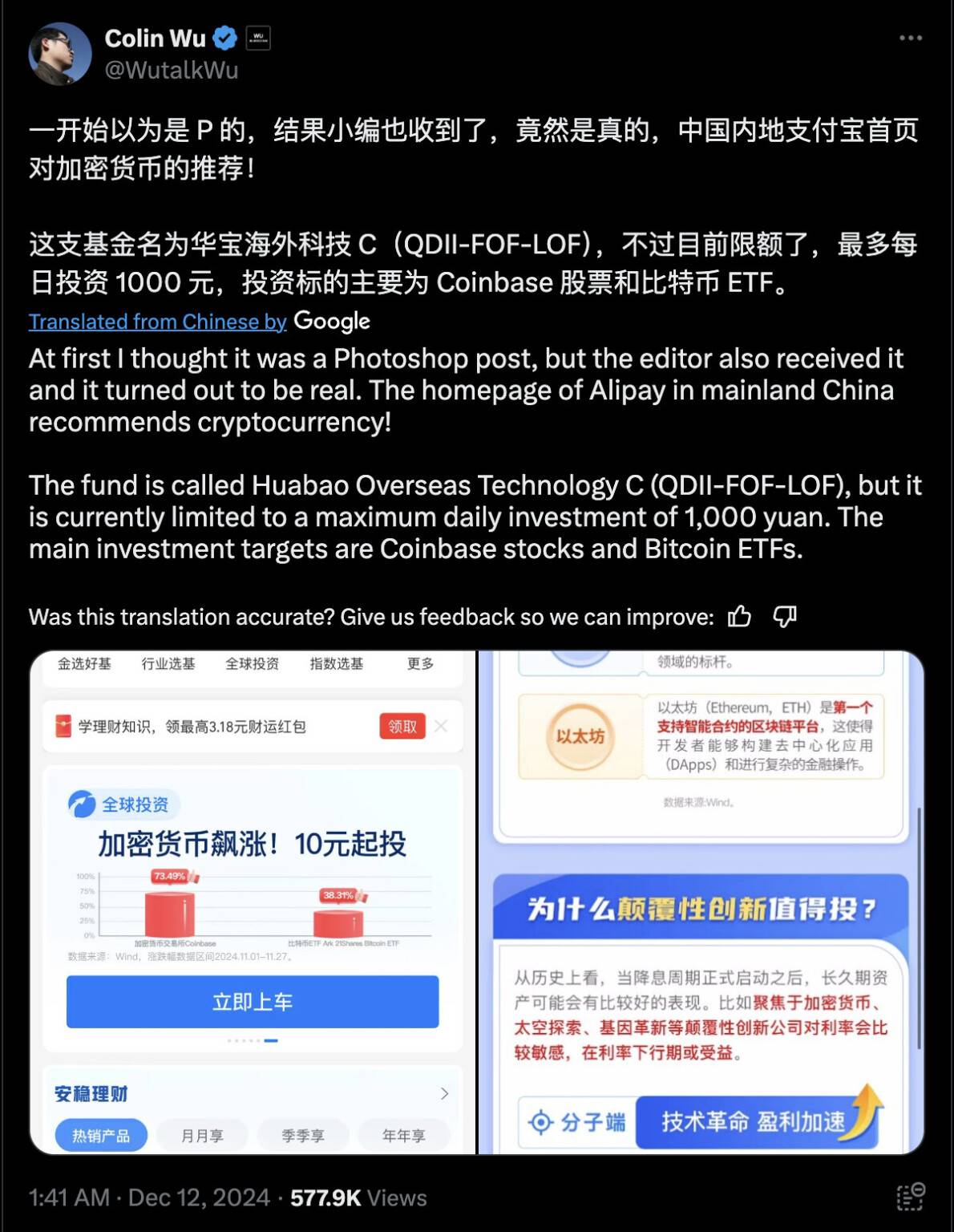
In the long run, the regulatory dividend isn’t merely about price appreciation—it signals a fundamental reshaping of global capital allocation. When China re-engages with the global Bitcoin ecosystem, international capital will flood into this long-underestimated market. Bitcoin’s decentralized nature and global liquidity make it one of the fastest, most responsive conduits for cross-border capital flows.
Therefore, the true allure of the regulatory dividend lies not just in rising prices, but in China’s potential re-entry into global financial architecture—with greater initiative, agility, and competitiveness in the global monetary game. For today’s investors, this opportunity is only beginning to take shape.
Conclusion
True legitimacy has never been defined solely by legal texts—it reflects a consensus of the times.
When we keep asking “Is Bitcoin legal?”, what we’re really questioning is our identity: Will we remain passive, waiting subjects—or become active citizens seizing the “citizen dividend” offered by this era?
The debate over Bitcoin’s legality won’t end with a single legal clarification, but the trend toward decentralization is already irreversible.
Dollar hegemony will eventually erode under historical currents. Decentralized money and financial order are only just emerging.
Bitcoin should not be seen merely as another fluctuating asset in capital markets, but as a catalyst for civic awakening and capturing the benefits of our time.
We now stand at a pivotal moment—from “subject thinking” to “citizen consciousness.” Bitcoin’s true value lies not just in the asset itself, but in the trends and ideas it embodies.
Remember the wisdom of this era:
In the rise of a new order, the real risk isn’t volatility—it’s missing out.
If you don’t want to miss the “citizen dividend” this era offers, please read these two articles carefully:
-
Bitcoin: The Ultimate Hedging Tool for Long-Term Thinkers?
-
Asymmetry: The Underlying Nature of Bitcoin Through the Lens of Value Investing
Action begins with becoming a proactive citizen claiming the dividend.
Join TechFlow official community to stay tuned
Telegram:https://t.me/TechFlowDaily
X (Twitter):https://x.com/TechFlowPost
X (Twitter) EN:https://x.com/BlockFlow_News
 @yzdxs8