South Korea's New President Lee Jae-myung Plans Three Moves in the Crypto Space
TechFlow Selected TechFlow Selected
South Korea's New President Lee Jae-myung Plans Three Moves in the Crypto Space
Another pro-crypto president has stepped onto the political stage.
 Navigating Web3 tides with focused insights
By Jaleel, BlockBeats
South Korea, one of the world's most vibrant cryptocurrency markets, has chosen Lee Jae-myung—a president who will push forward won-pegged stablecoins and crypto ETFs.
As a central figure in the Democratic Party, Lee narrowly lost to Yoon Suk-yeol in the 2022 presidential election. Back then, he already positioned cryptocurrency policy as a key platform plank, aiming to win support from younger voters and retail investors. However, after two consecutive electoral defeats, he was once labeled the "perpetual candidate."
Then came that day. In December 2024, South Korea’s political landscape shifted dramatically. President Yoon Suk-yeol attempted to declare martial law, triggering a constitutional crisis. Under intense public and legislative pressure, he was swiftly impeached. This crisis not only left the presidency vacant two years early but also shattered the existing power balance—unexpectedly creating an opening for Lee Jae-myung, the resilient yet repeatedly defeated politician.

As the political structure collapsed and the National Assembly descended into chaos, Lee seized the moment. He rallied lawmakers into the parliamentary chamber, initiated live streams, and climbed over barriers into Congress with public support.
From that day on, Lee emerged as the more suitable choice for president in the eyes of many Koreans. "I must quickly inform as many citizens as possible about this situation," he urged during his livestream, calling on the public to witness firsthand the legislature overturning the martial law decree.
Ultimately, in last night’s special presidential election, Lee won with 49.2% of the vote, defeating Kim Moon-soo (36.8%), and became South Korea’s 21st president. For his supporters, it was a victory at all costs—an overdue vindication after three attempts.

For South Korea’s crypto industry, however, Lee’s victory may carry even deeper implications: He is not just a political winner—he is one of the most steadfast advocates for pro-crypto regulation. His election signals a fundamental institutional shift in how digital assets will be regulated in South Korea.
Lee Jae-myung’s Commitment to Korean Crypto
Even before taking office, Lee laid out clear digital asset policy proposals during his campaign.
He positioned virtual assets as a critical component of national financial reform, incorporating them into presidential-level commitments for the first time. His goal is to reshape the legitimacy and security of the crypto market through top-down institutional design.
Lee’s core promises to South Korea’s “crypto industry” include:
-
Legalizing spot cryptocurrency ETFs;
-
Guiding South Korea’s massive national pension fund (approximately $884 billion) to allocate investments into crypto assets;
-
Establishing a won-anchored stablecoin system as a strategic tool to prevent capital flight and strengthen domestic monetary sovereignty.
The most notable aspect of his platform is his strong advocacy for a Korean won stablecoin. In a YouTube livestream, Lee stated publicly: "To prevent national wealth from flowing overseas, we need to build a stable currency market based on the Korean won." This statement reflects not only his keen understanding of the global digital asset competition landscape but also directly addresses regulators’ concerns about the rising dominance of dollar-pegged stablecoins like Tether (USDT) and USD Coin (USDC) in domestic transactions.
According to data from the Bank of Korea, in Q1 2025 alone, transaction volumes involving dollar-pegged stablecoins reached 57 trillion won—over half of total stablecoin trading volume.
To achieve these goals, Lee plans to “lead market restructuring through government action, reduce fees, and establish a comprehensive regulatory system,” including pushing for the creation of a dedicated “Digital Asset Regulatory Agency.” The central idea is simple: through official oversight, provide ordinary investors with a safer trading environment and transition cryptocurrencies from speculative instruments to legitimate asset allocation options.
This isn’t the first time Lee has spoken out on digital finance. As early as 2021, he advocated delaying the implementation of a proposed virtual asset income tax originally scheduled for 2022, emphasizing “regulation first, taxation later.” He also proposed raising the taxable threshold from 2.5 million won to 50 million won—the same level as stock investments—and allowing loss offsets to ease the burden on retail investors and improve policy fairness.
Now, this policy roadmap centered on ETFs, stablecoins, and regulatory frameworks is no longer just campaign rhetoric. With Lee in power, it is gradually being transformed into concrete legislative proposals. For South Korea’s crypto sector, this could mark an entirely new phase of development—one moving from the financial system’s periphery into its institutional core.
Once Burned by Luna, A Decade of Stablecoin Fear?
Yet, Lee Jae-myung’s aggressive push for a won-based stablecoin is not without controversy.
Shortly after he proposed building a domestic won stablecoin market, Lee Jun-seok, presidential candidate of the New Reform Party, launched fierce criticism on social media. He wrote: “Candidate Lee Jae-myung’s economic views are always risky and overly experimental. He casually promotes untested ideas, clearly misunderstanding the market—repeating nothing but empty slogans.”
Lee Jun-seok specifically referenced the globally shocking Terra/Luna collapse—an algorithmic “stablecoin” project that claimed to be pegged to the Korean won but failed catastrophically, wiping out hundreds of thousands of investors. That event cast a long shadow over the term “stablecoin” in the Korean public consciousness and has since become a primary attack point for conservative critics accusing Lee Jae-myung of repeating past mistakes. Lee Jun-seok accused him of “retracing old steps” and “endorsing illusory structures with national credibility.”
In response, the Democratic Party quickly pushed back. Former lawmaker Kim Byung-wook stated publicly: “To reject won-based stablecoins entirely based on the Terra and Luna incident runs counter to global regulatory trends.” He explained: “Major regulatory bodies in the U.S., Europe, and Japan have explicitly excluded algorithmic stablecoins (like Terra/Luna) from compliant categories, recognizing their high volatility and unreliability as value stores.”
Kim emphasized that true compliant stablecoins should follow a “1:1 full collateralization” model—fully backed by cash or short-term government bonds, with real-time reserve disclosures and immediate redemption obligations. He noted that mainstream stablecoins like Tether (USDT) operate under such principles. In contrast, Lee Jun-seok’s blanket rejection of all stablecoins reveals a fundamental misunderstanding of the global crypto regulatory framework.
Another Democratic Party lawmaker, Min Byung-deuk, offered a more sarcastic rebuttal: “It would be absurd to abandon printing technology just because one photocopier broke.” Comparing stablecoins to a stage in financial technological evolution, he stressed that proper institutional regulation—not outright bans due to isolated failures—should guide their development.
Korean Crypto Ecosystem Enters a 'Nationalized' New Era
Amid Lee Jae-myung’s victory, South Korea’s crypto industry is quietly entering a new, policy-driven cycle.
Unlike the earlier wild-west era marked by fragmented platforms and organic growth, today’s market resembles a strategic reordering around anticipated “institutional dividends.”
South Korea has long been one of the most active cryptocurrency markets globally. According to the Financial Intelligence Unit (FIU), by the end of 2024, the number of verified crypto investors reached 9.7 million—an increase of 25% year-on-year. Notably, investor growth among those aged 30 to 50 was particularly significant. Among high-net-worth individuals holding over 100 million won in crypto, those over 40 accounted for approximately 78%. This demographic shift indicates that digital assets are shedding their image as mere speculative tools for youth and becoming part of wealth management strategies for middle- and upper-income groups.
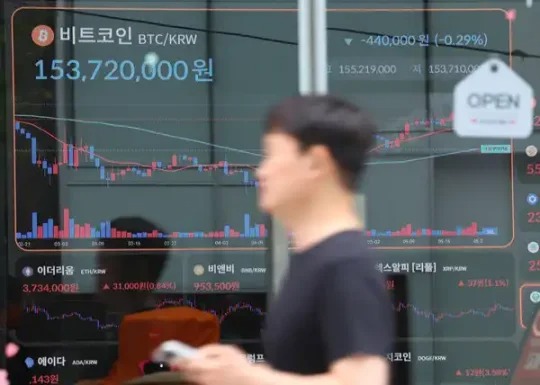
Meanwhile, South Korea’s crypto trading market exploded in 2025, with total trading value surpassing 100 trillion won—briefly exceeding the trading volume of the domestic stock market. This surge was driven both by expectations of looser domestic policies and broader global geopolitical and economic dynamics. Particularly amid rising risk-off sentiment toward dollar-denominated assets following Donald Trump’s re-election as U.S. president, local investors poured into won-denominated virtual asset markets, sparking a regional capital repatriation trend.
In response to this growing activity, regulation has steadily advanced. The government announced a delay of the virtual asset transfer income tax—from 2025 to 2027—citing “immature technical infrastructure” and “incomplete investor protection mechanisms.” This move effectively calmed market nerves and gave Lee Jae-myung’s new regulatory framework crucial breathing room.
However, postponing taxation does not mean deregulation. The Virtual Asset User Protection Act (VAUPA), enacted in 2024, has officially taken effect, imposing stricter compliance requirements on exchanges—including custodial arrangements, insider trading prevention, and segregated user asset management. The government’s intent is clear: to prevent another Terra/Luna-style crisis of confidence and lay the foundation for the formalization of the crypto market.
These policy signals send a coherent message: South Korea is actively integrating digital assets into its national financial governance system, transitioning the market from laissez-faire to a “nationalized” institutional embedding. This is precisely the vision Lee Jae-myung has articulated—a digitally native market guided by the state, protected by rules, and driven by innovation.
The road ahead for crypto policy in South Korea won’t be smooth. Debates over stablecoins, tax implementation, and international regulatory coordination remain unresolved. But one thing is certain: during Lee Jae-myung’s tenure, cryptocurrencies will no longer be a taboo gray area—they are now part of the presidential agenda and a national strategy. For South Korea’s crypto industry, this marks the long-awaited beginning of institutionalization.
Join TechFlow official community to stay tuned
Telegram:https://t.me/TechFlowDaily
X (Twitter):https://x.com/TechFlowPost
X (Twitter) EN:https://x.com/BlockFlow_News
 BlockBeats