HTX Research: Bitcoin Outlook Amid Macro Shifts, Huobi HTX Launches Multiple Compliant Stablecoins to Shape New Crypto Landscape
TechFlow Selected TechFlow Selected
HTX Research: Bitcoin Outlook Amid Macro Shifts, Huobi HTX Launches Multiple Compliant Stablecoins to Shape New Crypto Landscape
In the medium term (3-12 months), liquidity will gradually improve, but market risk appetite faces significant uncertainty, presenting both opportunities and challenges for the Bitcoin market.
 Navigating Web3 tides with focused insights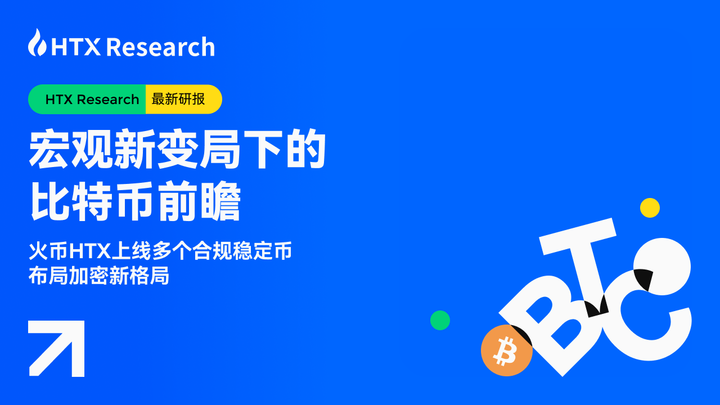
The global macroeconomic environment is undergoing profound adjustments, and the cryptocurrency market—particularly Bitcoin price volatility—is increasingly influenced by complex macro factors.
Recently, HTX Research, the research arm of Huobi HTX, released a new report titled "New Macro Shifts and Bitcoin Outlook: A Deep Dive into Liquidity, Risk Appetite, Policy Dynamics, and Investment Strategies", comprehensively analyzing how the global macro environment impacts the Bitcoin market and offering investors clear market outlooks and strategic guidance.
Bitcoin Market Outlook Under the Macro Environment: Liquidity and Market Risk Appetite
The current global macro landscape is complex and dynamic. Cooling expectations for Federal Reserve rate cuts, ongoing quantitative tightening (QT), U.S. Treasury General Account (TGA) replenishment, and expectations of Bank of Japan rate hikes have collectively tightened short-term liquidity. Fed Chair Powell maintains a "data-dependent" stance. Strong U.S. labor data (April's 177,000 nonfarm payrolls added, unemployment at 4.2%) and potential inflationary pressures from tariffs (Q3 CPI possibly exceeding 3%) have reduced the number of expected rate cuts this year from three to two (September and December). This liquidity pressure limits upside potential for risk assets like Bitcoin. Additionally, Bank of Japan rate hikes and unwinding of yen carry trades further tighten global liquidity. In the short term (next 1–3 months), liquidity conditions are likely to remain tight, constraining gains in risk assets such as Bitcoin. However, optimistic sentiment in terms of risk appetite may persist, though investors should remain vigilant against technical pullbacks and volatility triggered by unexpected news.
Looking ahead (3–12 months), liquidity is expected to gradually improve, but market risk appetite faces significant uncertainty, with both opportunities and challenges for the Bitcoin market. If the Fed begins rate cuts and ends QT in the second half of 2025, coupled with coordinated easing by global central banks, liquidity could see marginal improvement, creating a rebound window for Bitcoin. Progress in U.S.-China tariff negotiations after the 90-day grace period, de-escalation of geopolitical tensions such as Russia-Ukraine and India-Pakistan, continued institutional adoption (global listed companies now hold over 688,000 BTC, or 3.28% of total supply), and U.S. federal and state-level exploration of "strategic Bitcoin reserves" could all boost market risk appetite and support Bitcoin prices. However, if inflation exceeds expectations or geopolitical risks escalate, safe-haven demand could weigh on markets. Investors should closely monitor Fed policy, macro data, trade negotiations, and regulatory developments, adjusting strategies accordingly.
Positive Signals Emerge Amid Policy Dynamics: Could Stablecoins Enter a Period of Regulatory Leniency?
Policy dynamics are profoundly shaping the crypto market. On May 21, Hong Kong’s Legislative Council passed the Draft Stablecoin Ordinance, establishing a licensing regime for fiat-backed stablecoin issuers and enhancing the regulatory framework for virtual asset activities.
Even more significant and complex policy developments are unfolding in the United States. The Trump administration’s proposed “Big Beautiful Tax Plan,” aiming for $5 trillion in tax cuts over ten years, has provided a short-term boost to market sentiment. However, widening fiscal deficits and debt ceiling debates could trigger liquidity fluctuations. On the regulatory front, the U.S. Senate is advancing stablecoin legislation—the GENIUS Act—where negotiations have reached 90% consensus. The bill proposes a regulatory framework requiring 100% backing by high-quality assets, providing clearer guidelines for the stablecoin market. Meanwhile, tokenization of U.S. equities is accelerating, with the Securities and Exchange Commission (SEC) and traditional financial institutions (such as JPMorgan) actively involved. Real-world asset tokenization is projected to reach $18.9 trillion by 2030, opening new use cases for digital assets. Legislative efforts at both federal and state levels to establish “strategic Bitcoin reserves” (e.g., New Hampshire’s H.B. 302 bill) further elevate Bitcoin’s strategic status and provide policy support for institutional participation.
Seizing the Momentum: HTX Launches Multiple Compliant Stablecoins with Zero-Fee Exchange Services
Under growing expectations for global policy easing and increasing regulatory clarity, stablecoins—as foundational liquidity and value anchors in the crypto market—are gaining prominence. Seizing this opportunity, HTX recently launched several compliant stablecoins, including USD1 (World Liberty Financial USD), USDQ (Quantoz), EURQ (Quantoz), USDR (StablR), and EURR (StablR), meeting diverse investment needs and improving capital efficiency. To celebrate the debut listing of USD1 and lower user entry barriers, HTX is offering zero-fee exchange services: until December 31, 2025, 23:59 (GMT+8), the USD1/USDT spot trading pair will enjoy 0% trading fees. Users incur no additional costs during conversion, maximizing capital efficiency. HTX remains committed to delivering secure, efficient, and high-quality crypto financial services globally.
In addition, from an investment strategy perspective, the HTX Research report analyzes multiple stablecoin-based wealth management products, including approximately 4.94% annual yield on Backpack’s USD lending, up to 15% annual yield on Resolv’s USR, around 10% annual yield from Aave + Pendle combination strategies, over 10% annual yield on Falcon’s USDf, and about 10% annual yield on Coinshift’s csUSDL.
The report concludes that while the Bitcoin market should remain cautious about near-term liquidity pressures and volatility, it holds rebound potential in the medium to long term driven by clearer policies and sustained institutional inflows. HTX will continue to track market and policy trends, helping users seize opportunities and achieve steady growth amid the volatile crypto landscape.
To read the full report, visit: https://square.htx.com/htx-research-zui-xin-yan-bao/
About HTX Research
HTX Research is the dedicated research division of HTX Group, conducting in-depth analysis across cryptocurrencies, blockchain technology, and emerging market trends. It produces comprehensive reports and expert assessments, aiming to deliver data-driven insights and strategic foresight. HTX Research plays a key role in shaping industry perspectives and supporting informed decision-making in the digital asset space. With rigorous research methodologies and cutting-edge data analytics, HTX Research remains at the forefront of innovation, leading thought leadership and fostering deeper understanding of evolving market dynamics.
For inquiries, please contact [email protected]
Join TechFlow official community to stay tuned
Telegram:https://t.me/TechFlowDaily
X (Twitter):https://x.com/TechFlowPost
X (Twitter) EN:https://x.com/BlockFlow_News
 HTX Research