








New York Times: Cryptocurrency is launching a financial "coup"
TechFlow Selected TechFlow Selected
New York Times: Cryptocurrency is launching a financial "coup"
The profound impact stablecoins could have on the U.S. mainstream financial system.
 Navigating Web3 tides with focused insights
By Dan Davies, Henry J. Farrell
Translated by BitpushNews Yanan
It’s been a big week for the U.S. crypto lobby. The Genius Act passed in the Senate, officially legitimizing a category of cryptocurrency known as “stablecoins.” Even more strikingly, President Trump hosted a private dinner on Thursday for the top 220 investors holding the $Trump memecoin. Yet for the United States as a whole, this was far from a week to celebrate.
Stablecoins are crypto assets backed by traditional assets like the U.S. dollar. A prime example is USD1, a stablecoin issued by World Liberty Financial, a company linked to the Trump family. While their use in political influence-peddling is already concerning, an even greater threat lies in their potential to inflict deep structural damage on America’s mainstream financial system—risks that are more hidden, and ultimately more destructive.
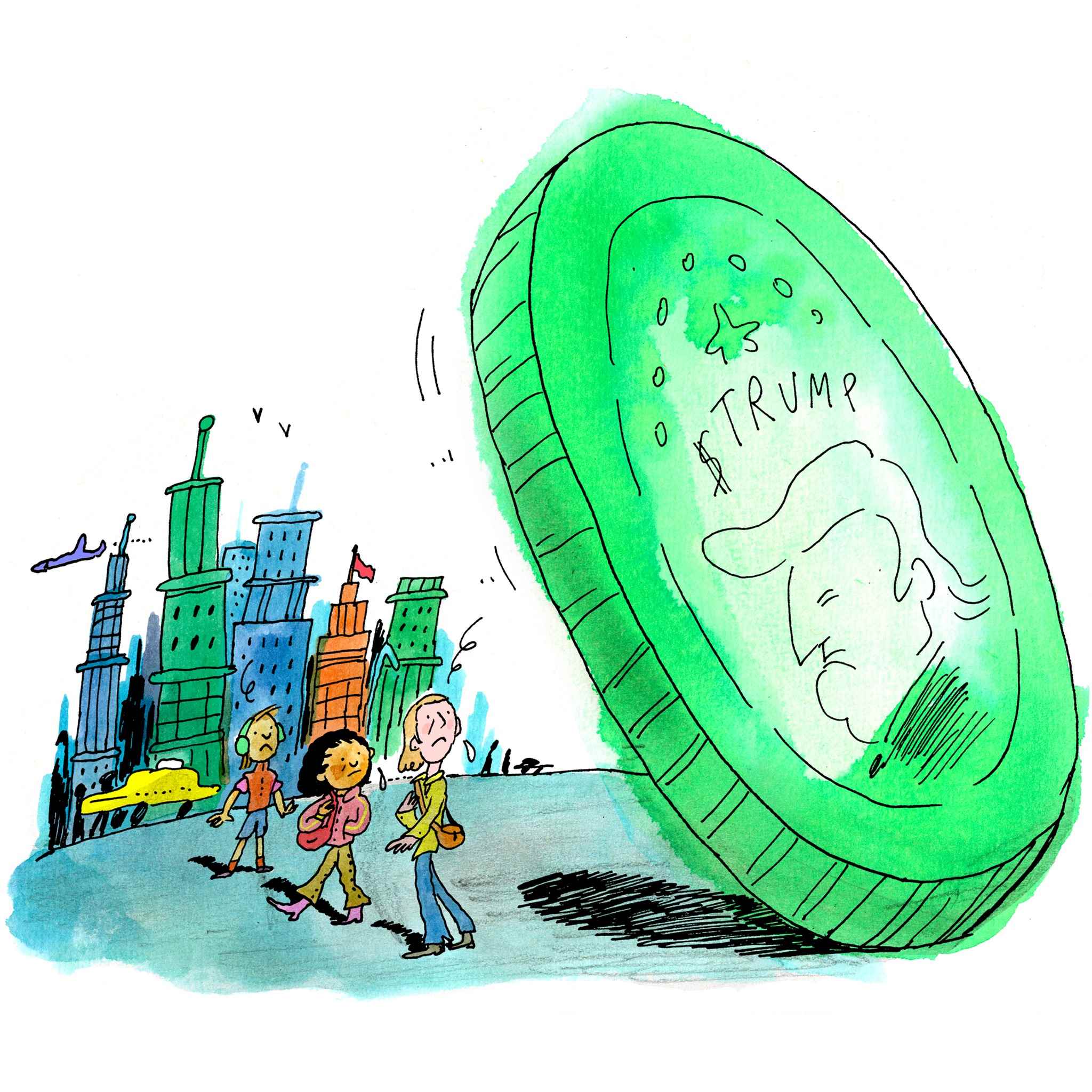
Proponents claim stablecoins will reinforce American financial hegemony—Trump himself declared they would “further extend the global dominance of the dollar.”
The reality may be precisely the opposite. These digital currencies could not only weaken the dollar’s international standing but also facilitate financial fraud, sanctions evasion, and systemic risk. More alarmingly, they might open the door for another currency to replace the dollar as the primary instrument for global trade settlement.
World Liberty Financial claims its stablecoin will be backed by short-term U.S. Treasuries, dollar deposits, and other cash equivalents. Much like the dollar’s foundational role in the global financial system, stablecoins aim to provide a value anchor for the crypto market—offering a way to avoid the costs of converting into real dollars through regulated bank accounts while bypassing many constraints of the traditional financial system.
The crypto lobby is trying to integrate stablecoins into America’s mainstream financial architecture, blurring the boundary between crypto markets and traditional finance. This strategy allows them to operate freely across two distinct realms: one being the highly volatile crypto casino, where people speculate wildly on internet meme coins, and the other being the tightly regulated traditional financial markets, where assets and bank accounts are protected by institutions like the SEC and FDIC.
With Trump’s return to the White House, the crypto industry has gained new momentum—but it’s not solely due to Trump. Crypto’s bipartisan support stems both from massive spending by political action committees (PACs) and the electoral defeats of skeptical politicians. (In 2024, the crypto industry spent $40 million to successfully block the re-election campaign of Ohio Senator Sherrod Brown, a prominent critic.)
Supporters argue that crypto growth will strengthen the dollar’s global position. Kirsten Gillibrand, a Democratic senator from New York and co-sponsor of the Genius Act, warned that the U.S. risks “falling behind in the race for digital currencies.” She noted, “We’re watching Europe and China make strategic moves in digital currency, while the Trump administration blocks the Fed’s plans for a digital dollar—putting us further at risk.”
Gillibrand contends that because most stablecoins are pegged to the dollar, regulating and promoting these digital currencies could actually reinforce the dollar’s global dominance. There is some merit to this view—the dollar’s supremacy rests on the stability of the U.S. economy and political system, along with its established international payment networks. This privileged status enables the U.S. to turn control of the global financial core into a strategic weapon: via economic sanctions, it forces international financial institutions to choose between serving clients unwelcome in the U.S. or accessing the dollar-dominated financial system.
The crypto industry believes legalizing stablecoins will formally integrate today’s chaotic crypto ecosystem—whose dominant players, notably many crypto projects and exchanges, were originally created to circumvent or even replace dollar hegemony and government-issued fiat—into the mainstream financial system.
This is clearly a major win for the crypto sector, but poses serious threats to global financial stability. Consider the bold claims once made by crypto enthusiasts: David Sacks, appointed by Trump as “czar” for AI and crypto, openly hoped cryptocurrencies like Bitcoin would become the “new world money,” replacing American financial dominance with unregulated private-sector competition.
The chaos that could ensue if crypto becomes a mainstream financial tool is deeply troubling. Democratic staff on the Senate Banking Committee point out that the Genius Act would allow U.S. exchanges to list stablecoins issued by offshore firms beyond domestic regulatory reach. Critics highlight that Tether, currently the dominant stablecoin operated outside U.S. jurisdiction, has already been proven to serve as a conduit for criminals and sanctions evaders. More alarmingly, certain “mixer” services designed to obscure transaction trails have been accused of helping North Korean hackers launder hundreds of millions of dollars.
Even with robust regulatory frameworks, enforcement remains key. Recent policies from the U.S. Department of Justice are baffling—while acknowledging that terrorist groups like Hamas and ISIS use crypto platforms to hide financial flows and evade detection, the DOJ has simultaneously announced it will refrain from prosecuting certain platforms. Meanwhile, the likelihood of legal consequences for notorious memecoin scams—where issuers collect public funds and then vanish—is nearly zero, especially when the sitting president treats such tokens as personal profit vehicles.
Yet the most fundamental concern about stablecoins may lie in the systemic financial risks they pose. Existing on the fringes of the traditional financial system, they present unprecedented regulatory challenges. While drafters of the Genius Act propose regular assessments of stablecoins’ impact on financial stability, they deliberately sidestep a critical question: Will the U.S. government offer credit backing for dollar-pegged stablecoins?
The crux of the issue is this: When a stablecoin collapses or is exposed as fraudulent, will the government step in to rescue it? If yes, taxpayers could end up bearing massive liabilities—precisely why “too big to fail” traditional financial institutions are subject to strict oversight.
If not, however, new systemic risks emerge for the international dollar system. When markets cannot predict which institutions might collapse due to contagion or gauge their exposure levels, bank-run-style crises can erupt, potentially triggering a liquidity freeze across the entire financial system. This is exactly why regulators demand high transparency from major participants in the global dollar market.
Take Tether, for instance. Its CEO has candidly described a warning scenario: due to large banks refusing cooperation, European stablecoin issuers must deposit funds in smaller regional banks. But if market confidence in those stablecoins falters and just 20% of holders attempt redemption simultaneously, these smaller banks could face immediate runs akin to traditional bank collapses.
In such a scenario, who would stop the panic from spreading across the banking system? That role requires an institution with sufficient capacity to intervene—and it must deploy real dollars, not ambiguous cryptocurrencies.
This explains why the question of whether the U.S. should back dollar-pegged stablecoins is so difficult to answer. It’s no surprise, then, that reports indicate multiple countries are actively seeking to reduce their banks’ reliance on dollar funding.
The international community views America’s push for stablecoin legalization as a potential threat. Should stablecoins become a new financial instrument under U.S. control, Washington could leverage them to further penetrate foreign financial systems. More troubling still, the novel linkage between the dollar and cryptocurrencies could enable illicit financial flows on an unprecedented scale.
Philip Lane, Chief Economist at the European Central Bank, warns that dependence on stablecoins could shift financial activity from the euro-based system to privately issued, dollar-backed crypto assets—leaving Europe more vulnerable to U.S. economic pressure.
As part of the EU’s “strategic autonomy” agenda aimed at reducing reliance on the U.S., the ECB is accelerating its digital euro initiative. This publicly led digital currency would not only provide a full alternative payment network but also include built-in privacy protections and security mechanisms—setting it sharply apart from private stablecoins.
The current situation shows that rather than reinforcing dollar dominance by “helping America catch up,” stablecoins are instead prompting nations to accelerate efforts to escape the dollar system. Europe is not only building its own financial firewall but also planning an entirely new global alternative—one that increasingly sees the U.S.-led system, now losing credibility, as facing unprecedented challenges.
The head of the ECB’s digital euro project has begun discussing its “international applicability,” aiming to create a new payment system that “respects national sovereignty, reduces systemic risk, and unlocks new opportunities.”
Ironically, stablecoins were meant to bring order to the chaotic crypto market by leveraging the dollar’s credibility. Instead, they may end up transmitting the very chaos of crypto—amplified by the Trump administration’s unique policy direction—back into the dollar-based traditional financial system. This reverse infiltration is creating deeper, more dangerous systemic risks.
Join TechFlow official community to stay tuned
Telegram:https://t.me/TechFlowDaily
X (Twitter):https://x.com/TechFlowPost
X (Twitter) EN:https://x.com/BlockFlow_News
 @nytimes






