Decoding MIRAI: The Web3 Virtual Human Ecosystem Backed by Top Virtual Influencer Imma
TechFlow Selected TechFlow Selected
Decoding MIRAI: The Web3 Virtual Human Ecosystem Backed by Top Virtual Influencer Imma
Is MIRAI, packed with "hot topics," just hype or genuine innovation—and how far can it really go?
 Navigating Web3 tides with focused insights
Author: Zen, PANews
A网红 virtual idol + AI + Web3—this fusion of three trending sectors has created the MIRAI phenomenon. It first raised over 76,000 SOL (approximately $12.9 million) in just one week, setting a fundraising record for Japanese Web3 projects, then launched on Binance Alpha on May 16, further boosting its visibility. Additionally, to expand community influence, the MIRAI team actively engaged with popular meme coin communities, interacting with PNUT, MOODENG, and NEIRO.
"MIRAI" is jointly launched by Aww Inc. and Holoworld, an AI platform within the Solana ecosystem. The project positions itself as a Web3 experiment in virtual personas, introducing an unprecedented narrative concept combining virtual humans with Web3. In simple terms, it aims to put CGI virtual characters "on-chain." According to official information, the MIRAI project integrates Aww Inc.'s expertise in CG modeling and character design with Holoworld’s blockchain infrastructure and AI technology, aiming to create a virtual character with autonomy and intelligent agent capabilities.
Is MIRAI genuine innovation or just hype? How far can this buzz-heavy project go?
Aww: Building Global Top Virtual Influencer imma, Partnering with NVIDIA
Founded in 2019 and headquartered in Tokyo, Aww Inc. is Asia's first company dedicated to "virtual human" technology, integrating 3DCG, artificial intelligence, and real-time streaming to develop highly realistic digital characters for brand marketing, content creation, and metaverse applications. The company states that its team not only provides virtual human technology licensing but also promotes "global IP co-creation based on real-time streaming, content, and AI." Aww claims to have pioneered the concept of "virtual humans" in Asia and has already launched dozens of such virtual figures.
In terms of commercialization, Aww Inc. achieves diversified revenue through global licensing and brand collaborations. The most representative example is the virtual model imma, who debuted in 2018. By the end of 2024, her Instagram followers exceeded 400,000, and she had amassed over 480,000 TikTok followers. Known for her "distinctive pink short hair and refined CG modeling," imma has become a leading "virtual influencer" in fashion and commerce, highly sought after by top global brands. She has served as a digital ambassador for major fashion labels such as Burberry, COACH, BAPE, and Doublet, and previously acted as the global brand ambassador for Lenovo's "Yoga" series of laptops.
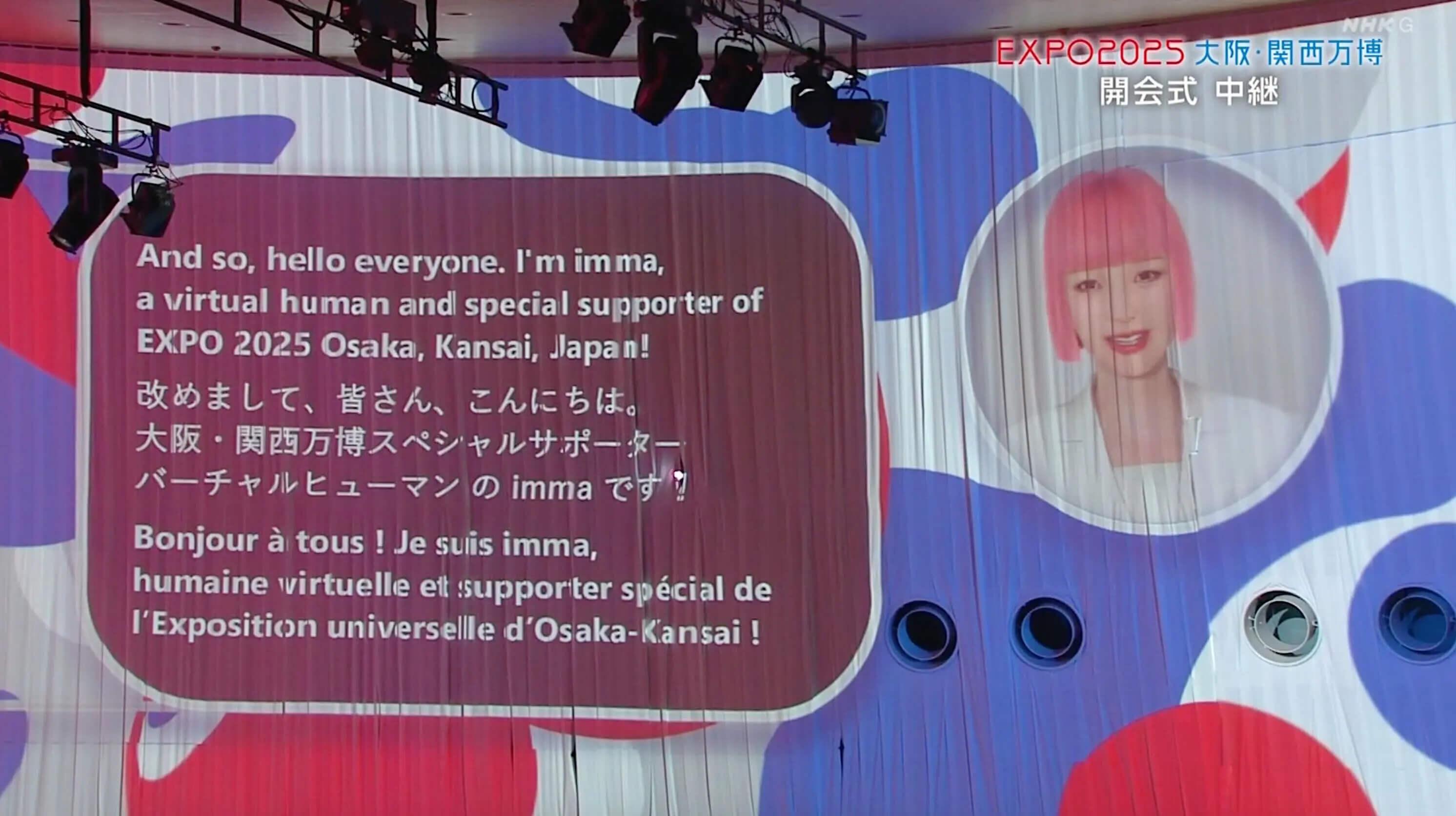
Imma's presence extends into sports and culture as well. At the closing ceremony of the 2021 Tokyo Paralympics, Imma participated as a digital avatar, becoming the first virtual human to appear in a Paralympic event. Forbes Poland included Imma in its "Women of the Year" list in 2020, recognizing her impact in "breaking boundaries between reality and virtuality and empowering digital creativity." On April 12 this year, during the opening ceremony of the Osaka-Kansai World Expo, Imma served as the host in her role as "Special Support Ambassador," introducing VIP guests and guiding the event proceedings.
On the technical front, Aww Inc. has established a strategic partnership with semiconductor giant NVIDIA. In June 2024, Aww announced that this collaboration would integrate NVIDIA’s AI audio-driven technology (Audio2Face) and GPU acceleration capabilities to enhance real-time emotional interaction and speech-to-lip synchronization for virtual characters, marking a step into the "AI-powered Virtual Human 2.0 era." Moving forward, Aww plans to expand its IP portfolio and, leveraging both NVIDIA and proprietary AI tools, offer comprehensive virtual human solutions across industries—from advertising endorsements to immersive metaverse experiences.
Thus, thanks to early market positioning, well-known virtual IPs, and technological strength, Aww Inc. has already built a certain level of brand influence in the Web2 world. Meanwhile, IPs like IMMA have gained broad fanbases and commercial value among younger demographics—advantages that now serve as key resources for the MIRAI project's push into Web3.
Entering Web3: From Imma to $MIRAI
Three years ago, Aww Inc.'s co-founder Takayuki Moritani stated: "I'm researching and developing businesses around artificial intelligence, virtual reality, and various other platforms, but I'm also focusing on cultivating community culture built on blockchain—a culture that will shape individuals' futures. Within such a community culture, virtual humans and their related intellectual property will become extremely important."
Today, Moritani's vision has materialized—the MIRAI project, jointly developed with Holoworld AI, a Solana-based AI platform, aims to build the first "virtual idol + Web3 autonomous co-creation" ecosystem. Notably, the name Imma comes from the Japanese word "ima," meaning "now," while "MIRAI" means "future" in Japanese. This new project name may reflect Aww's aspiration: entering the Web3 domain signifies stepping into the future.
In terms of project empowerment, Aww Inc. provides core support through its extensive experience in IP and community management in the Web2 space. In its official X account announcement launching the presale, Aww explicitly noted that this collaboration leverages the appeal and fanbase of its virtual idols like Imma to provide a stable community traffic entry point for the MIRAI presale. Across all platforms, Imma currently boasts over 1.5 million followers and has engaged in deep collaborations with internationally renowned brands, establishing an integrated online-offline high-engagement marketing model that lends credibility to the project's mature commercialization pathway.

Meanwhile, Holoworld AI injects the project with "agent + decentralization" momentum through its underlying technology and on-chain infrastructure. Holoworld announced on Twitter that its strategic partnership with Aww Inc. aims to build the "first consumer-friendly on-chain AI virtual human infrastructure," using Hololaunch as the launchpad to help the MIRAI project complete its initial offering in a fair and transparent manner. Furthermore, Holoworld will roll out several core tools and services tailored for MIRAI, including a next-generation Launchpad, Agent Studio V2 (providing video and image APIs along with a reputation-based pricing system), Agent Livestreaming, and multi-chain deployment support (Open MCP). These features are scheduled to be gradually released over the coming quarters, providing full-stack technical support for virtual human content creation, interactive experiences, and ecosystem expansion.
According to the project roadmap, MIRAI will release Agent Studio V2 in Q3, enabling creators to generate high-quality multimodal content with one click; in Q4, the first Agent Livestreaming event is expected, allowing the MIRAI character to interact in real time with audiences and support live voting; finally, in early 2026, a full DAO governance platform will launch, enabling community members to propose and vote on major decisions such as IP spin-offs and ecosystem fund allocation.
Understanding MIRAI: Hype or Innovation?
Leveraging high-fidelity CGI and deep learning technologies for appearance and behavior, MIRAI envisions an AI-driven virtual character tied to a blockchain identity system. This model allows the virtual character to make autonomous decisions, interact with the community, and receive incentives via token economics—an emerging paradigm of "AI agent + on-chain identity." The project enables the community to act as co-creators and co-governors, collectively shaping storyline development and IP derivatives. Token holders can participate in governance, use the character’s image for derivative creations, and share in revenue—breaking away from the traditional one-way creation model of virtual IPs. This mechanism resembles "content-as-mining," incentivizing users to generate economic value through creativity and effort.
However, innovation comes with significant risks. In terms of tokenomics, the total supply of MIRAI tokens is 1 billion, with 25% allocated to the team and partners. The top 100 addresses in the presale phase already control over 60% of the tokens, and the overall number of holding addresses is decreasing, indicating increasing concentration among large holders. This could lead to highly centralized governance, rendering community decision-making largely symbolic. Moreover, the 25% liquidity pool is released in stages; if a large volume enters the market early, prices could experience severe volatility.

On the community management side, while decentralized co-creation can boost engagement, it also introduces operational challenges: user-generated content varies widely in quality, and without effective moderation and incentive mechanisms, it could result in "narrative drift" or copyright disputes. Frequent character spin-offs and collaborations might also dilute the core IP’s consistency and recognizability. The success of virtual idols like Imma relies on continuous high-quality content and trending topics; once innovative content slows or attention wanes, these characters risk falling into rapid decline or losing relevance.
More importantly, we must remain cautious: only after the hype subsides will we realize whether blockchain truly adds new value to virtual idols—or if "decentralization" is merely used as a commercial gimmick. If project operations fall short and community engagement fails to meet expectations, the token could enter a "priced but illiquid" state, exposing investors to high risk.
Overall, MIRAI holds pioneering significance in merging AI-powered virtual idols with blockchain, injecting fresh ideas into Web3 content creation and IP economies. However, whether it can truly fulfill its ambitious vision depends on sound tokenomic design, robust community governance mechanisms, and the sustained innovation and value preservation of the virtual character. Only when both technology and systems mature can MIRAI genuinely become a model for the "virtual human + decentralized economy" paradigm.
Join TechFlow official community to stay tuned
Telegram:https://t.me/TechFlowDaily
X (Twitter):https://x.com/TechFlowPost
X (Twitter) EN:https://x.com/BlockFlow_News
 PANews