With continuous macro-level利好 stimulating the market, is Ethereum finally ready to "step up"?
TechFlow Selected TechFlow Selected
With continuous macro-level利好 stimulating the market, is Ethereum finally ready to "step up"?
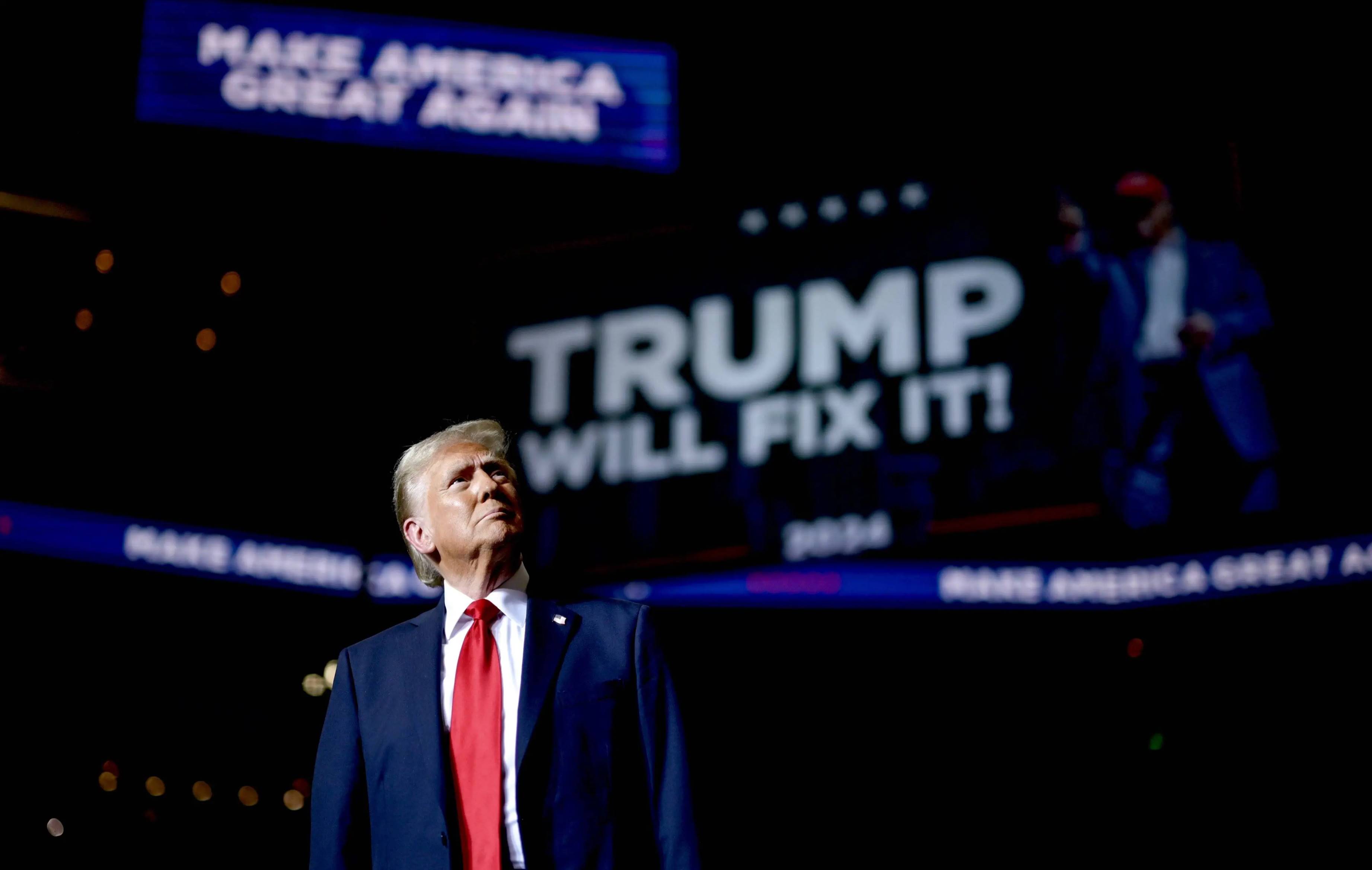
Trump: It's wonderful to see the market going up. It will continue to rise, much higher.
 Navigating Web3 tides with focused insights
Author: Bright, Foresight News
On the morning of May 14, cryptocurrency markets rebounded, with secondary markets following BTC’s recovery as many altcoins hit short-term highs. BTC steadily rose from its low of $100,733 on the 13th to $104,986, gaining over 4.22%. At the time of writing, Bitcoin was trading at $103,720.
After brief consolidation, ETH continued its strong upward momentum, recovering from a low of $2,407.09 to break through to $2,738.83, marking a recent high and a gain of over 13.7%. SOL rebounded from $166.14, rising as high as $184.90, up 11.29%.
The total market capitalization of cryptocurrencies increased by more than 2%, approaching $3.4 trillion. As altcoins surged collectively, Bitcoin's market dominance dropped to 61.60%, the Altcoin Season Index rose to 29, and the Fear & Greed Index climbed to 74, indicating greed. Meanwhile, the S&P 500 erased its year-to-date losses, while the Nasdaq gained over 1%. U.S. crypto-related stocks rose in tandem; boosted by inclusion in the S&P 500, Coinbase surged over 24%, with its share price surpassing $257.90; MicroStrategy gained over 4.13%, closing at $421.60.
In terms of liquidation data, Coinglass reported that over the past 24 hours, more than 133,700 positions were liquidated, totaling $397 million in liquidations—$245 million in short liquidations and $149 million in long liquidations, with shorts being primarily liquidated. The largest single liquidation on CEX was ETH-USDT on Binance, valued at $12.2041 million.
The gentle curve of April's CPI and the pause on China-U.S. tariffs reshaped liquidity expectations for risk assets. Bitcoin, supported by institutional buying and retail chasing, reclaimed $105,000. Ethereum’s 13.7% daily gain made the revival of "alt season" increasingly promising.
Tariff Easing Adds Further Evidence, Risk Appetite Reawakens
Following the May 9 Geneva talks between China and the U.S., where both sides reached consensus on mutual tariff reductions, the Trump administration delivered another positive signal on the 13th by announcing the revocation of export restrictions on AI chips imposed during Biden's term. Chipmakers such as Nvidia and AMD saw pre-market gains exceeding 5%, indirectly driving valuation recovery in the crypto market. "This is the most constructive policy combination since the G20 in 2024," said Matt Hougan, Chief Investment Officer at Bitwise. "Improved expectations for cross-border capital flows have led the market to reprice Bitcoin’s 'digital neutrality'."
At the same time, the White House announced that the U.S. and Saudi Arabia had reached their largest-ever bilateral commercial agreement, including $80 billion in cutting-edge technology investments from companies like Google, DataVolt, and Oracle; $20 billion from DataVolt for AI data centers and energy infrastructure; $4.8 billion in Boeing aircraft purchases; and nearly $142 billion in arms sales—the highest in history. The Saudi Crown Prince stated that Saudi Arabia aims to raise its investment in the U.S. to $1 trillion.
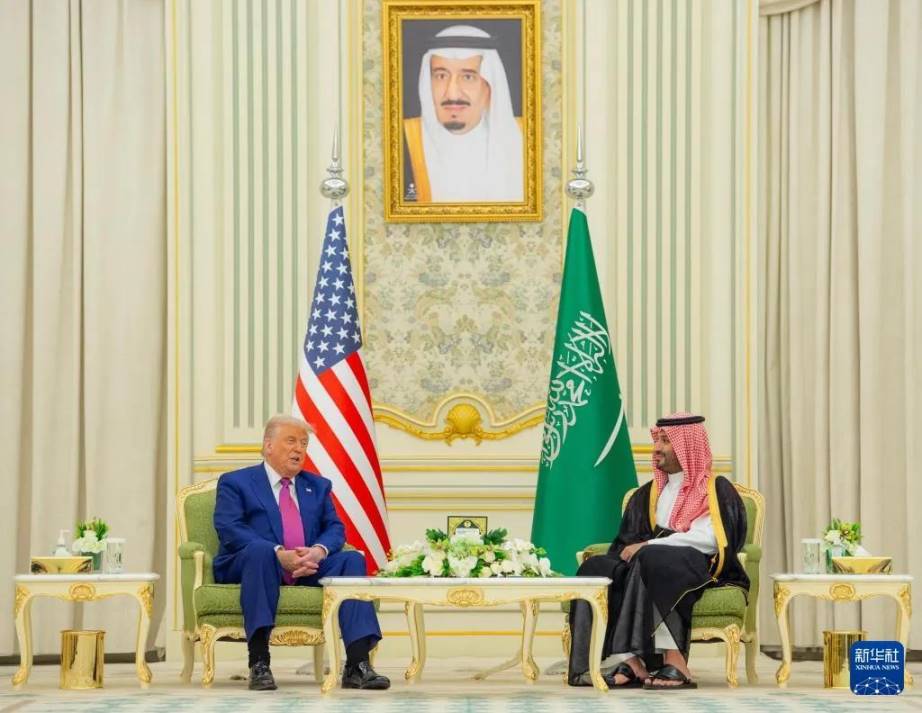
In fact, since taking office in January, the Trump administration has consistently sought to attract investment for the U.S. in the Middle East. This massive U.S.-Saudi commercial deal further reveals the administration’s shift away from aggressive use of the "tariff stick," reshaping global capital flow expectations once again.
"Perfect" CPI vs. Tariff "Lagging Bomb", Fed Faces Dilemma
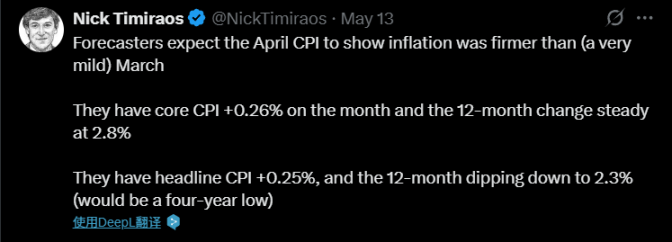
U.S. April CPI came in at 2.3% year-on-year, below expectations, while core CPI rose just 0.2% month-on-month—the lowest level since February 2021. Market probability of a 25-basis-point rate cut by the Fed in June rose to 72%.
On the same day, citing the weaker-than-expected inflation report released earlier, Trump once again pressured Federal Reserve Chair Powell via social media, demanding rate cuts: "The Fed must cut rates like Europe. What does Powell mean by 'too late'? The Fed's strategy is unfair to America." He also claimed that potential tax legislation could boost the U.S. economy.
However, "the new Fed whisperer" Nick Timiraos poured cold water, stating: "April’s data represents the 'last calm' before tariffs take effect—import prices for furniture and auto parts are already showing signs of sharp increases, and the Fed may wait until July to act."
In summary, as written in reports co-authored by Timiraos: "For the Fed, April's inflation data will be seen as enjoying clear skies before an approaching storm, though the amount of rainfall remains highly uncertain."
Trump's Rally Cry Returns—How Much Impact?
President Trump, speaking at the U.S.-Saudi Investment Forum in Riyadh, said: "A month ago, companies were unhappy with me, but as the market rises, their attitude has changed. It's wonderful how the market goes up. And it will keep going up, even higher."
This time, however, neither cryptocurrencies nor U.S. stocks rallied sharply during trading following Trump’s remarks, as they had previously. Instead, in the short term, the S&P 500 pared gains to 0.8%, the Dow fell 148 points (down 0.4%), and the Nasdaq rose less than 290 points, narrowing its gain to nearly 1.5%.
Looking back at crypto and U.S. stock performance since early April, Trump’s statements have had a significant impact on markets. After Trump declared on April 9 that "now is a good time to buy," he announced hours later a suspension of certain tariffs. That month, BTC rose nearly 25% and U.S. stocks rebounded over 16%.
Trump’s "buy signal" didn’t stop there: On May 8, he reiterated that if trade deals and tax cuts deliver results, "you better go out and buy stocks now." Subsequently, according to the joint statement from the China-U.S. Geneva economic and trade talks, both countries announced temporary tariff reductions. This triggered a broad rally in U.S. stocks, with the S&P 500 surging 3.3% and the Nasdaq 100 jumping 4%. The rally extended into Tuesday, with the S&P 500 regaining all its year-to-date losses during the session.
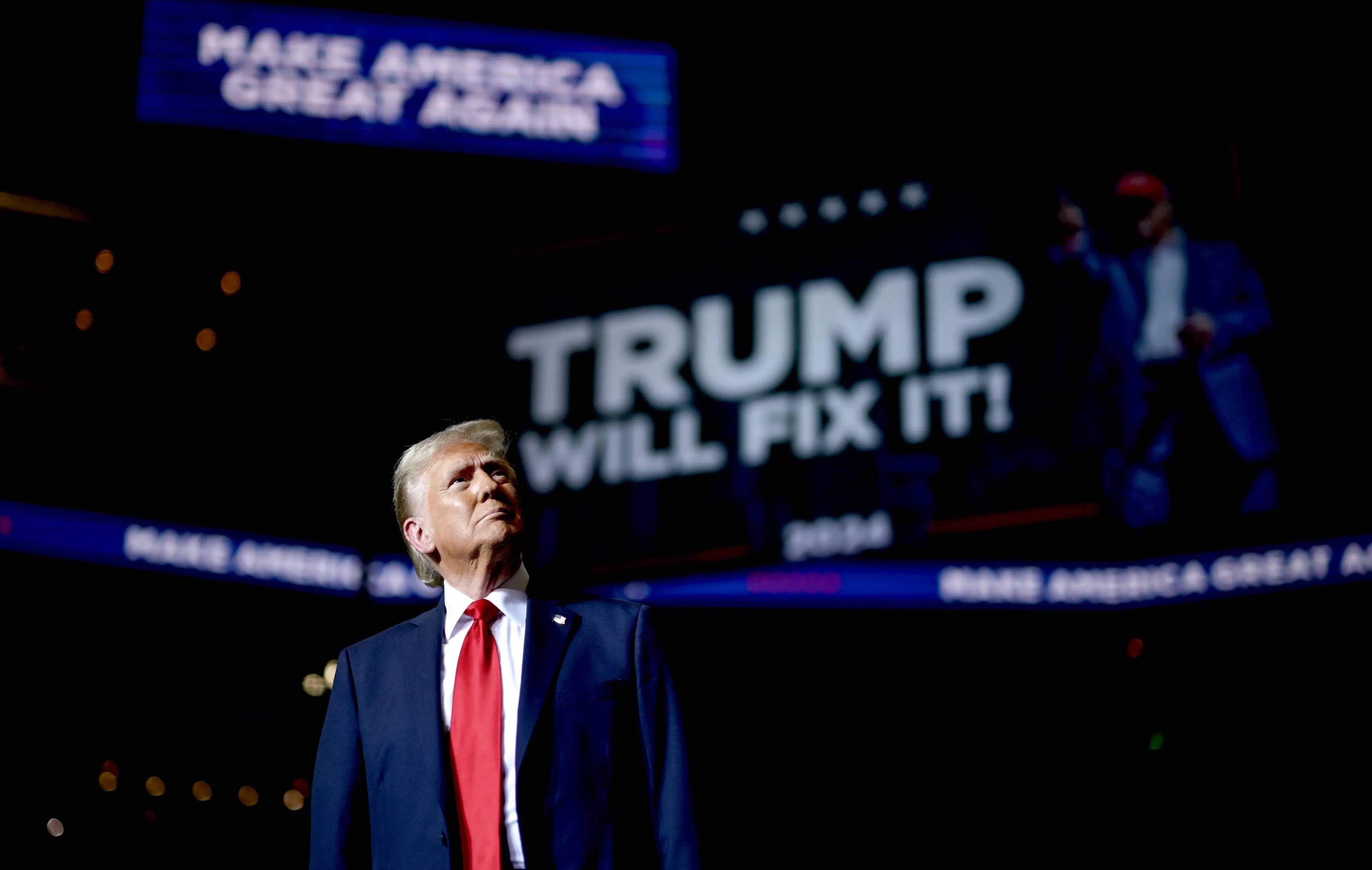
Yet, any rally based on policy compromise warrants caution against black swans from deal breakdowns. Ahead of the Fed’s June meeting and the July arrival of tariff impact data, maintaining respect for "Trump-style policy shocks" may prove wiser than chasing intraday highs. After all, Wall Street analysts’ speed in revising economic and market forecasts pales in comparison to the Trump administration’s "Sichuan opera face-changing" pace.
Join TechFlow official community to stay tuned
Telegram:https://t.me/TechFlowDaily
X (Twitter):https://x.com/TechFlowPost
X (Twitter) EN:https://x.com/BlockFlow_News
 Foresight News