Three-Minute Guide to Acurast's Upcoming Public Sale on CoinList
TechFlow Selected TechFlow Selected
Three-Minute Guide to Acurast's Upcoming Public Sale on CoinList
Acurast is a decentralized verifiable computing network.
 Navigating Web3 tides with focused insights
By: 1912212.eth, Foresight News
CoinList recently announced the token sale for Acurast (ACU), starting at 1:00 AM Beijing time on May 16 and ending on May 23 at 1:00 AM. 100% of tokens will be unlocked at TGE. The public sale FDV is $90 million. Each token is priced at $0.09, with 60 million tokens available for purchase (6% of total supply). The minimum purchase amount is $100, and the maximum is $2 million.
Although CoinList's wealth effect has diminished this cycle, it still holds influence. Projects it has hosted, such as Ondo Finance, Nillion, and WalletConnect, have delivered relatively solid returns so far.
What exactly is Acurast, and what makes it unique?
1. A Decentralized Compute Network Powered by Smartphones
Acurast is a decentralized, verifiable compute network designed to build a secure, scalable, and data-center-free computing infrastructure by leveraging idle computing power from smartphones. Unlike traditional cloud giants (e.g., AWS, Google Cloud) that rely on centralized servers, Acurast provides decentralized computing resources through smartphones' Trusted Execution Environments (TEEs), balancing privacy and efficiency.
Acurast liberates computing power from a few tech giants and empowers everyday users and developers with greater control. Its core features include:
-
Decentralization and Verifiability: Acurast leverages TEE technology in smartphones to ensure the security and verifiability of computations. TEEs authenticate hardware and protect data privacy without requiring trust in device owners, thus enabling a highly secure computing environment.
-
High Scalability: The testnet has processed over 240 million transactions, connected more than 65,000 compute units (smartphones), and spans over 120 countries globally.
-
Cross-Ecosystem Compatibility: Acurast supports multiple development environments including JavaScript, TypeScript, Node.js, and WASM, and integrates with major blockchain ecosystems such as Bitcoin, Ethereum, Polkadot, and TON.
-
AI and Web3 Application Support: Acurast is particularly suitable for high-security and privacy-sensitive use cases, such as decentralized AI model training, Web3 infrastructure, and high-security workloads.
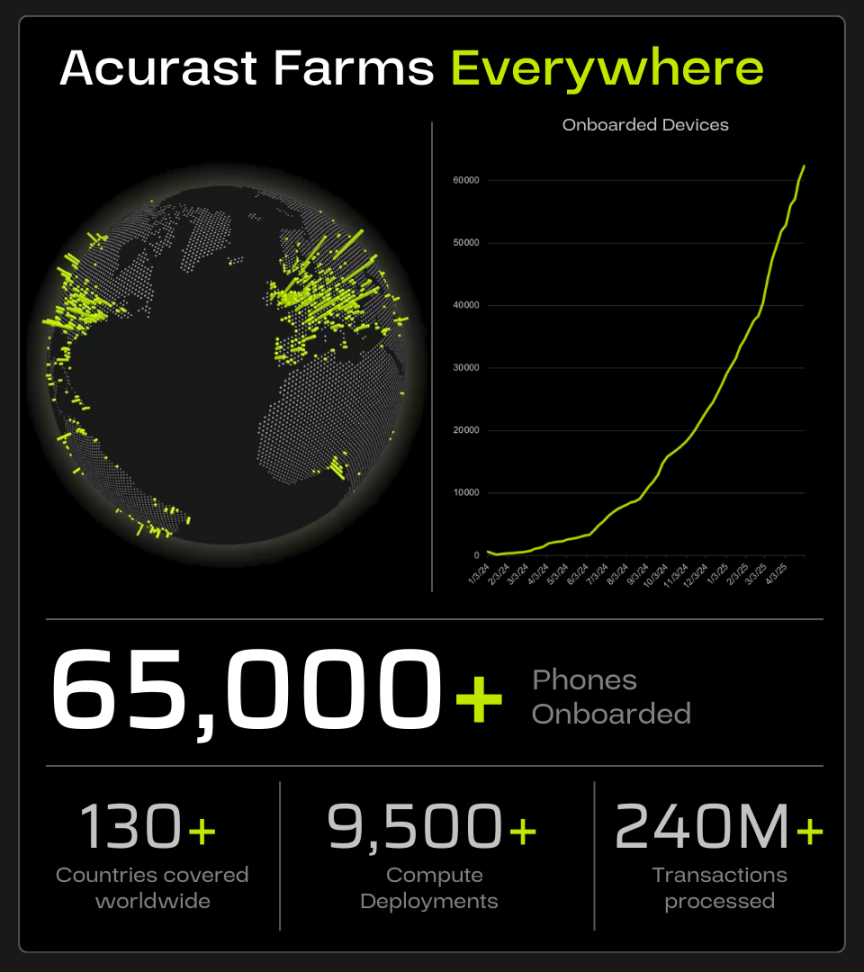
By transforming smartphones into compute nodes, Acurast not only reduces computing costs but also enables users to earn rewards by contributing idle computing power. This "everyone can participate" model sets it apart within the DePIN sector.
2. Decentralized Computing Based on NPoS
Acurast’s operational logic revolves around its core protocol architecture, combining the Nominated Proof of Stake (NPoS) consensus mechanism with a reputation engine to ensure network efficiency and security. The ecosystem primarily consists of the following roles and mechanisms:
-
Developers: Deploy applications via Acurast’s command-line interface (CLI), utilizing the network’s computing resources to run JavaScript, TypeScript, or WASM workloads. Developers pay fees (in $ACU or other tokens) for computing services.
-
Compute Providers (Processors): Smartphone users who contribute idle computing power by installing the Acurast Processor app and earn ACU token rewards. Each phone earns a fixed 250 cACU monthly (testnet points, redeemable for ACU in the future).
-
Validators and Nominators: Under the NPoS consensus, validators secure the network while nominators support trusted validators by staking ACU, collectively ensuring decentralization and economic security.
-
End Users: Use decentralized applications built on Acurast to enjoy low-cost, high-privacy computing services.
Acurast uses the NPoS algorithm, where an Orchestrator matches developers’ computing demands with available compute providers. A reputation engine dynamically updates reputation scores based on processor (smartphone) performance, incentivizing honest behavior and penalizing malicious nodes. Developers submit computing tasks to the Acurast network; the root orchestrator assigns tasks to suitable smartphones based on task requirements and processor reputation. Processors complete the computation, return results, and use TEEs to ensure result privacy and verifiability.
Developers pay fees, processors receive ACU rewards, and validators and nominators share network fees. This operational model aligns incentives among developers, compute providers, and network maintainers through economic rewards and reputation systems, creating a sustainable decentralized computing ecosystem.
3. Tokenomics
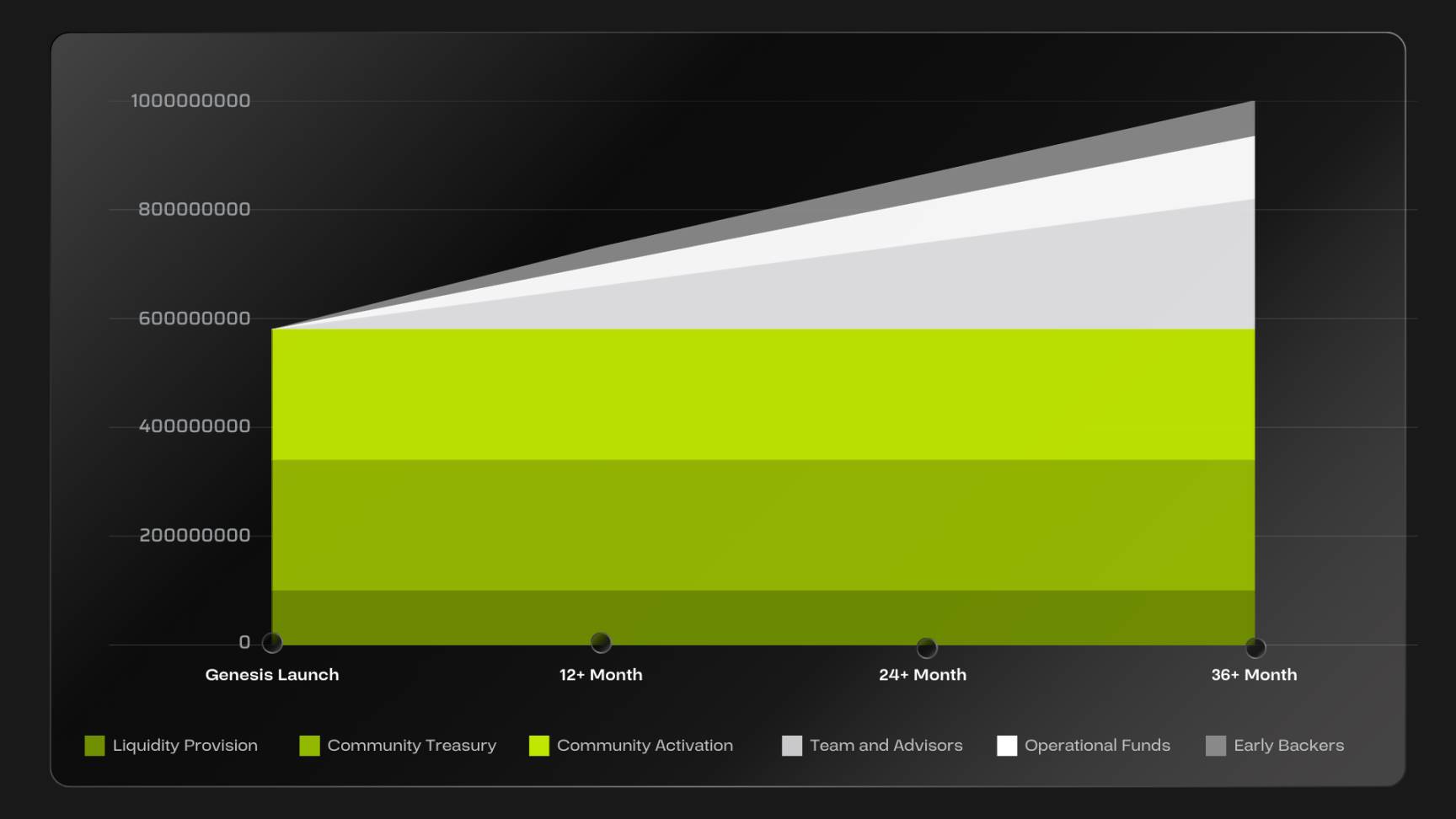
The total supply of Acurast’s ACU token is one billion, with TGE expected in Q3 2025.
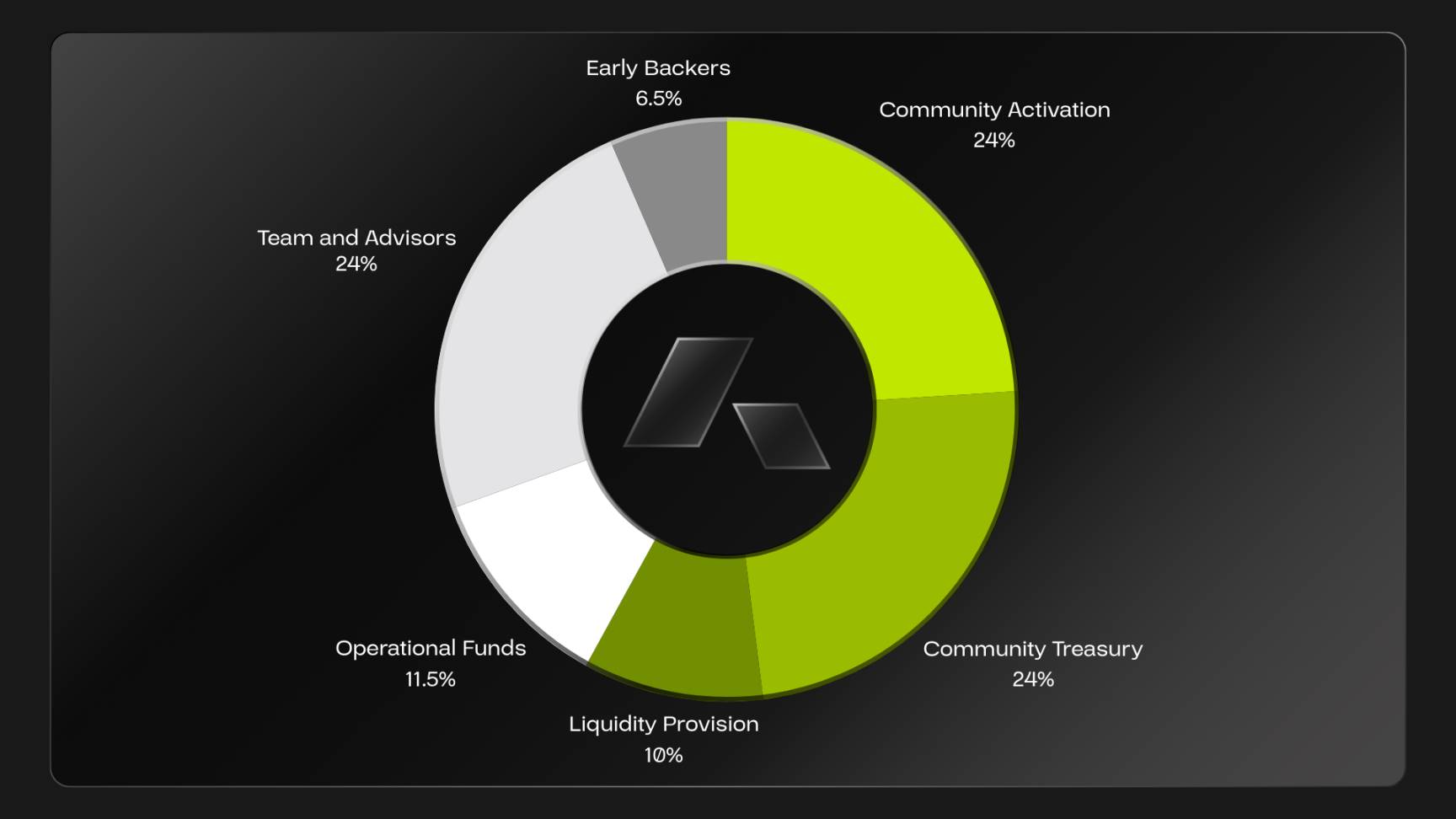
Community (69.5%): Includes the community treasury, TGE community activation (e.g., airdrops, Launchpad participation), operating funds, and liquidity provision. These tokens unlock at TGE, prioritizing early users and contributors. Early Investors (6.5%): Allocated a smaller portion to support the project’s funding needs from testnet to mainnet, with a minimum 24-month lock-up and gradual release to ensure fairness. Team and Advisors (24%): Tokens for core contributors, advisors, and future team members come with the longest lock-up period (minimum 24 months).
The ACU token serves multiple purposes within the Acurast ecosystem:
-
Network Fees: Used to pay transaction fees, which are then burned to reduce circulating supply and enhance token scarcity.
-
Staking: Participants provide economic security to the network by staking ACU and earn fee rewards in return.
-
Settlement: Acts as a unified settlement token to measure processor reputation and service quality, enabling abstraction for multi-token payments.
-
Governance: Holders can participate in on-chain governance and vote on the protocol’s future direction.
Despite its well-designed token economy, ACU still faces potential risks. For example, imbalances in incentive mechanisms—such as overly high or low rewards—could affect user engagement or cause token price volatility. Market competition requires Acurast to compete with traditional cloud giants like AWS and Google Cloud, as well as other DePIN projects. Additionally, smartphone hardware performance, network bandwidth, and battery life may lead to fluctuations in computing resources.
4. Raised Millions in Seed and Strategic Funding Rounds
Acurast has not publicly disclosed specific team member names, but their background and achievements can be inferred from project progress and partnerships. The team has deep expertise in decentralized computing, TEE technology, and the NPoS consensus mechanism, successfully driving the testnet to process 240 million transactions and connect 65,000 devices. In terms of ecosystem collaboration, Acurast has established deep integrations with blockchain ecosystems including Bitcoin, Ethereum, Polkadot, and TON.
In terms of funding, Acurast received a $1.5 million grant in 2023, followed by a $2 million seed round and strategic financing rounds, supported by multiple foundations (including Polkadot-related foundations). Notable participants include Dr. Gavin Wood (co-founder of Ethereum, founder of Polkadot), Leonard Dorlöchter (founder of PEQ), Michael van de Poppe (founder of MN Capital), Ogle (founder of GlueNet, CoinDesk Influencer), and Vineel Budki (CEO of Sigma Capital).
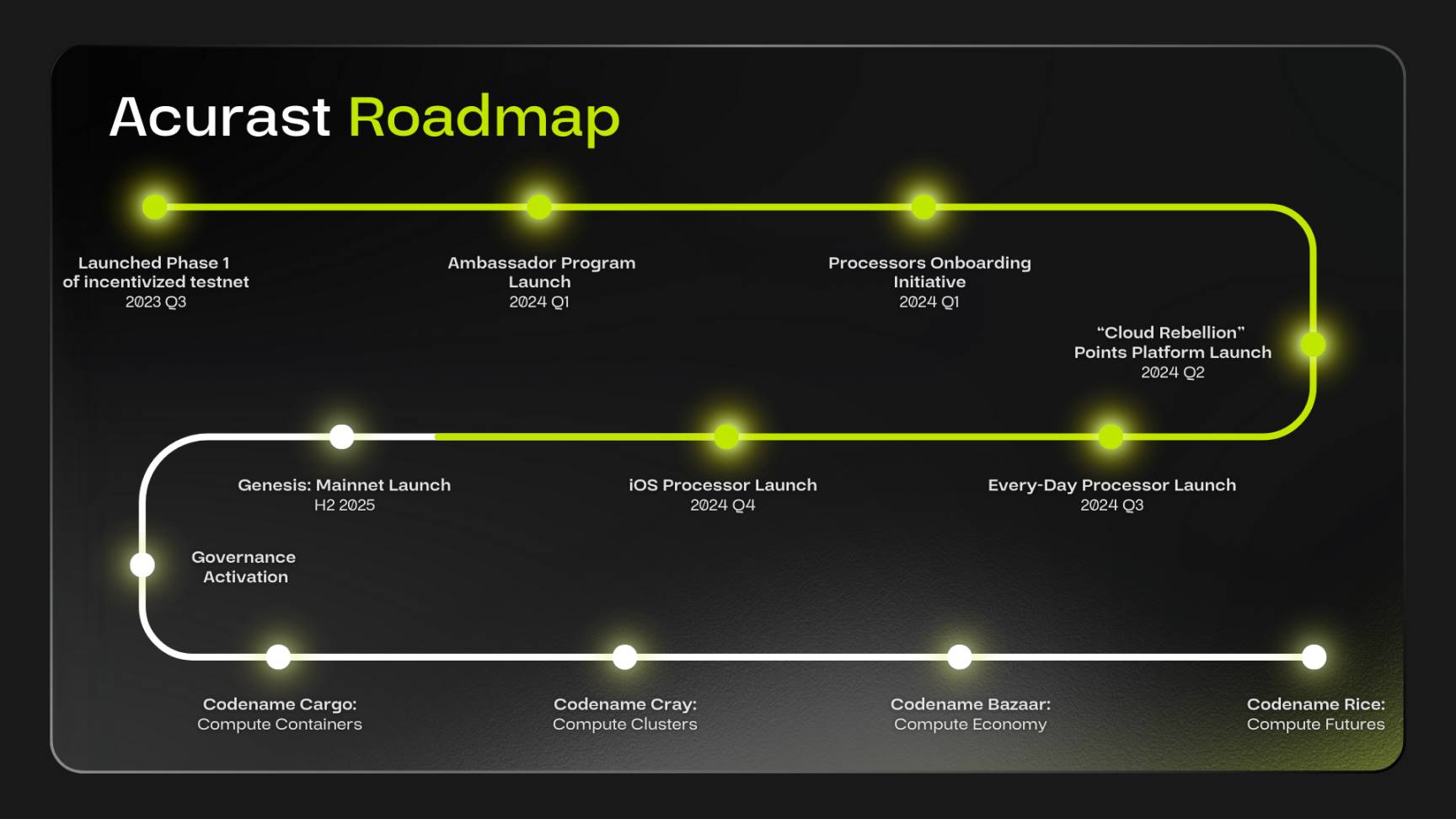
The official roadmap indicates that the mainnet will officially launch in the second half of this year.
Join TechFlow official community to stay tuned
Telegram:https://t.me/TechFlowDaily
X (Twitter):https://x.com/TechFlowPost
X (Twitter) EN:https://x.com/BlockFlow_News
 Foresight News