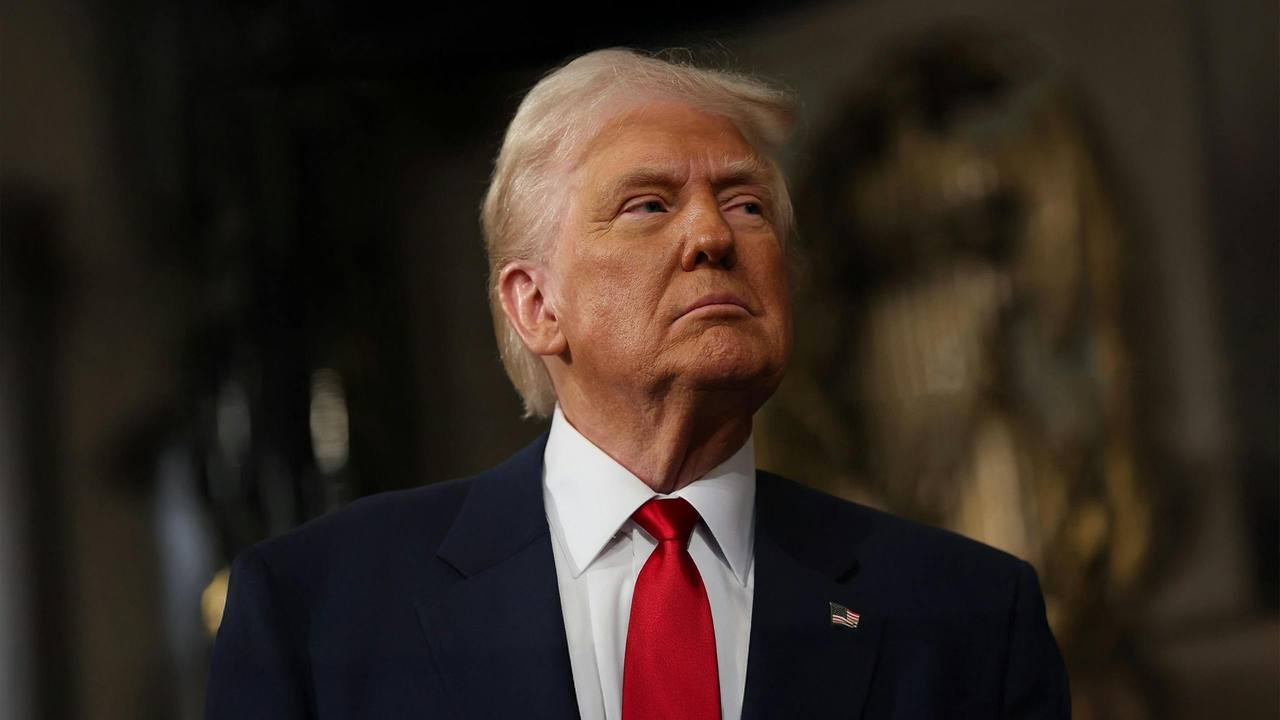
Trump's "Golden Book" Strategy: The Political Calculations Behind Cryptocurrency
TechFlow Selected TechFlow Selected
Trump's "Golden Book" Strategy: The Political Calculations Behind Cryptocurrency
Trump's WLFI is breaking the boundaries between private enterprise and government policy in ways unprecedented in modern American history.
 Navigating Web3 tides with focused insights
By Eric Lipton, David Yaffe-Bellany and Ben Protess, The New York Times
Translation: J1N, Techub News
Days before President Trump’s inauguration, promotions for “ZMoney” appeared on the encrypted messaging app Signal.
“ZMoney” refers to Zachary Folkman, an entrepreneur who previously ran a dating app called Date Hotter Girls and currently serves as a representative for WLFI. At the time, Zachary Folkman was emailing a Cayman Islands-based cryptocurrency startup, proposing a “partnership” in which both sides would buy each other’s digital currencies—a transaction that would boost the startup’s public profile.
But The New York Times found there was a hidden clause. To gain the privilege of partnering with the Trump family, the startup would actually have to secretly pay millions of dollars to WLFI.
Zachary Folkman wrote: “Everything we do gets massive exposure and credibility,” claiming other business partners had pledged donations of $10 million to $30 million to WLFI.
Executives at WLFI said the Cayman Islands startup rejected the proposal, as did several other companies that received similar overtures from WLFI. They viewed the deal as unethical, believing WLFI was essentially selling traffic derived from its political endorsement while concealing this from the public.
Yet WLFI executives insist they’ve done nothing improper—and their efforts haven’t been deterred. They successfully pitched similar deals to other firms and sold WLFI tokens to buyers worldwide, ultimately generating more than $550 million in sales, with a significant portion of the proceeds going to the president’s family.
Trump’s return to the White House has opened new avenues for him to profit from power—whether through his social media company or new overseas real estate ventures. But none of the Trump family’s other business activities come close to matching the conflict of interest inherent in creating WLFI and the web of transactions surrounding it.
Primarily held by Trump family business entities, WLFI breaks centuries-old norms about presidential conduct, erasing the boundary between private enterprise and government policy in a way unprecedented in modern American history.
Trump is now not only a major player in cryptocurrency trading but also the industry’s top policymaker. So far during his second term, Trump has used his presidential authority to benefit the sector. Despite having long mocked cryptocurrencies as havens for drug dealers and scammers, he continues to profit personally through his own crypto ventures.
Trump’s administration includes sympathizers of the cryptocurrency cause, such as appointing a cryptocurrency industry advisor as chair of the U.S. Securities and Exchange Commission (SEC). Additionally, the Justice Department recently disbanded a cryptocurrency crime task force, continuing a broad rollback of Biden-era scrutiny of the industry.
The New York Times’ investigation into WLFI’s rapid rise from startup to international force—and Trump’s transformation from crypto skeptic to staunch industry backer—highlights a series of conflicts of interest:
-
WLFI directly benefits from actions taken by the Trump administration, such as his announcement to establish a federal cryptocurrency reserve including digital assets invested in by WLFI. The president’s statement caused the value of WLFI-held assets to temporarily surge.
-
According to interviews and data obtained by The Times, WLFI has sold its cryptocurrency to overseas investors including those from Israel and Hong Kong, opening a new channel for foreign businesses to curry favor with Trump.
-
Several investors in the cryptocurrency management firm under WLFI have faced federal allegations of misconduct. This includes one executive whose fraud case was suspended after investing millions into WLFI. Other investors and business partners are seeking regulatory approvals needed to expand operations under the Trump administration.
-
WLFI proposed cryptocurrency deals with at least five startups, often demanding high fees in Trump’s name. These proposals raised red flags among seasoned executives.
Andre Cronje, founder of Sonic Labs, said, “It’s a stain on our industry. Anyone engaging with this project clearly expects to profit because it’s officially endorsed by Trump.”
David Wachsman, a spokesperson for WLFI, denied any of the company’s transactions constituted “payments for unilateral services.” But he acknowledged the company engaged in “co-investment deals,” saying these facilitated “thoughtful, strategic exchanges between parties, mutually beneficial.”
David Wachsman also said the idea that investment in or partnership with WLFI amounts to political quid pro quo is “false, absurd, and dangerous.” He stated, “No investor or partner has ever requested political favoritism, nor would we ever consider it.”
Nonetheless, the deals struck by WLFI have benefited the president and his family. According to WLFI’s website, a business entity owned by Trump holds 60% of WLFI and is entitled to 75% of revenue from token sales, which can be converted into cash.
Eric Frederick Trump, the president’s son who oversees the family business, said in an interview this month at the Trump Doral golf course in Florida, “This is one of the most successful things we’ve ever done.”
He and his brother Donald John Trump are actively involved in WLFI, though they rely on three partners to manage day-to-day operations. Two of them, Zachary Folkman and Chase Herro, have mixed records in the cryptocurrency world. The third is Zach Witkoff, son of Steve Witkoff, a Middle East envoy in Trump’s circle and a co-founder of WLFI.
In recent days, Zach Witkoff, Zachary Folkman, and Chase Herro met with Pakistan’s Prime Minister Muhammad Shehbaz Sharif and other senior government officials to discuss the WLFI project. The trip included luxury cars, dance performances, and police escorts—blending the president’s commercial interests seamlessly with the formalities of a state visit.
President Trump notes that conflict-of-interest laws do not apply to him, and that official actions he takes as president enjoy broad immunity.
A spokesperson for President Trump stated in a release that his “assets are managed by a trust run by his children,” thus “no conflict of interest exists.”
Supporters of WLFI don’t care about potential conflicts. Konstantin Kuznetsov, a Russian citizen living in Miami, said in an interview, “Trump wants to make big money in crypto.” His Gibraltar-based company purchased $1 million worth of World Liberty cryptocurrency. “We can ride this wave.”
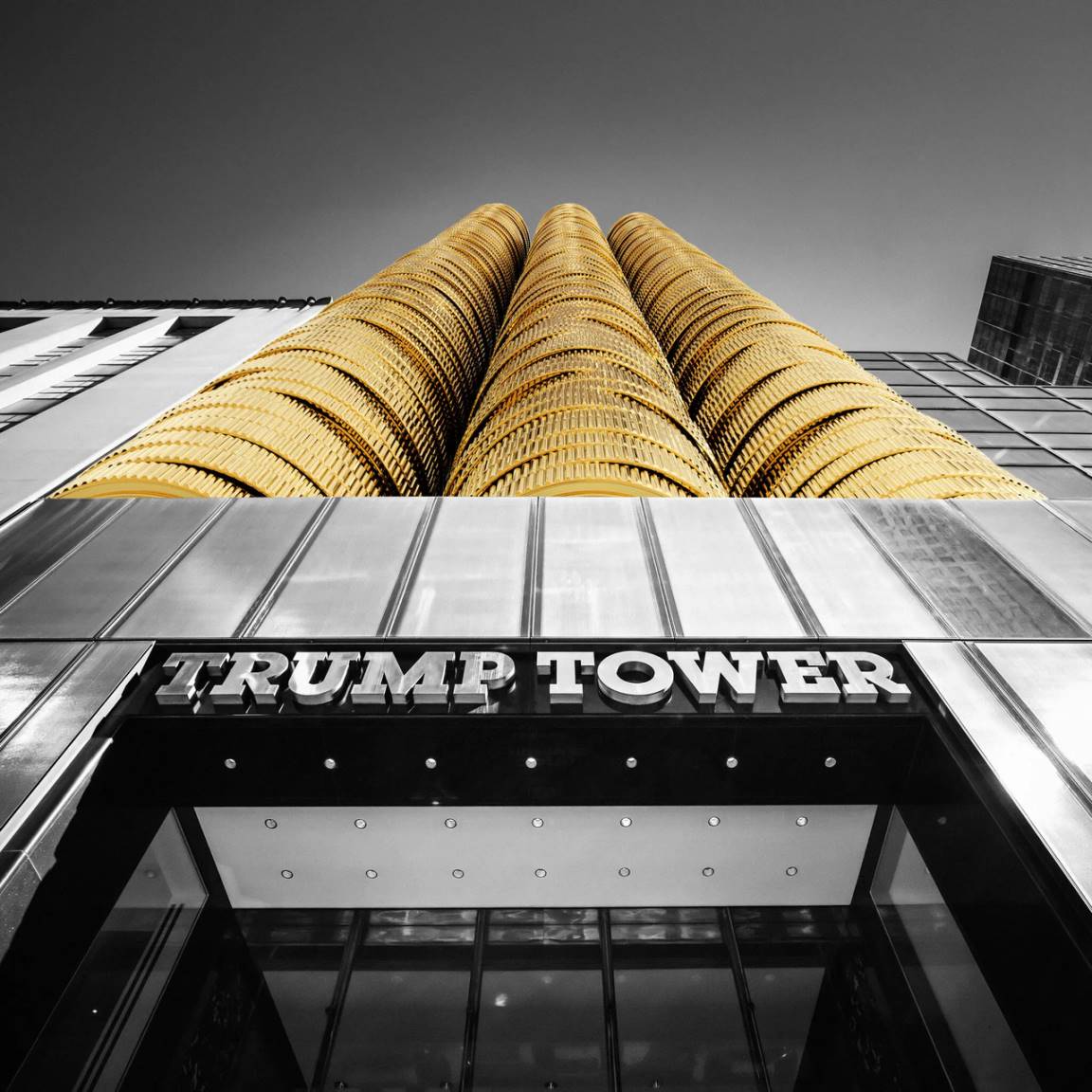
Chief Crypto Advocate
A businessman famous for real estate, Trump never sought to build a digital currency empire. In fact, toward the end of his first term, Trump expressed disdain for cryptocurrencies via social media. He warned they were “not money,” calling them “extremely volatile and totally baseless.” By last year, his views began shifting.
After the January 6 Capitol riot and the family business being pushed out of mainstream financial systems, his elder sons became fervent supporters of cryptocurrency.
“We build, sell, and permanently hold real estate. For a long time, I could reach everyone in the world,” Donald John Trump explained last month via video at a cryptocurrency conference in Washington. “Suddenly, it became very hard. I quickly realized how much discrimination exists in conventional finance.”
Meanwhile, millions in campaign contributions from the cryptocurrency industry poured into Trump’s re-election effort. During the Biden administration, the sector faced nearly 100 enforcement actions by the SEC, prompting executives to seek a leader in Washington who would protect their interests.
During the campaign, Trump’s skepticism about crypto seemed to vanish. At a Bitcoin conference in July, he vowed to make the U.S. the “global capital of cryptocurrency.”
Two months later, Trump completed his ideological shift, announcing he and his sons would enter the cryptocurrency market by launching World Liberty Financial.
Trump announced the news live from Mar-a-Lago in Florida, where he was joined by Eric Frederick Trump, Donald John Trump, Zachary Folkman, Chase Herro, and Zach Witkoff. “Cryptocurrency is something we have to do,” Trump said. “Whether we like it or not, I have to do it.” Choosing Chase Herro and Zach Witkoff as partners for the presidency was, he said, “a rare opportunity.”
Zachary Folkman, with short curly hair and tattoos, ran a company in his twenties offering dating advice to men. On multiple podcast appearances, Chase Herro recounted his redemption story, describing a wild youth during which he was charged with marijuana possession and spent weeks in a Wisconsin jail.
The two have collaborated for years, selling everything from colon cleansers to get-rich-quick schemes, eventually moving into cryptocurrency—with inconsistent results.
In 2022, Chase Herro encouraged crypto enthusiasts to invest in TerraUSD, calling it “one of the coolest assets in history.” A month later, TerraUSD collapsed, wiping out billions in wealth. Their most recent joint cryptocurrency platform, Dough Finance, was hacked in July, losing $2 million.
It remains unclear how the two earned the trust of the Trump family. But Steve Witkoff said last year he met them through his son and introduced them to the Trumps.
During the livestream introducing World Liberty, Donald John Trump praised them as elite financial talent.
“You could put them in a Goldman Sachs boardroom and they’d blow everyone away,” he said.
In October, Chase Herro and Zachary Folkman launched the company’s first initiative: selling WLFI tokens, with a target of $300 million in sales.
Unlike the Memecoin TRUMP, WLFI—at least according to its marketing—is structured so that anyone buying WLFI tokens can vote on business decisions like shareholders in a traditional company. It aims to eventually operate as a new kind of internet bank, allowing customers to borrow and lend using various digital currencies.
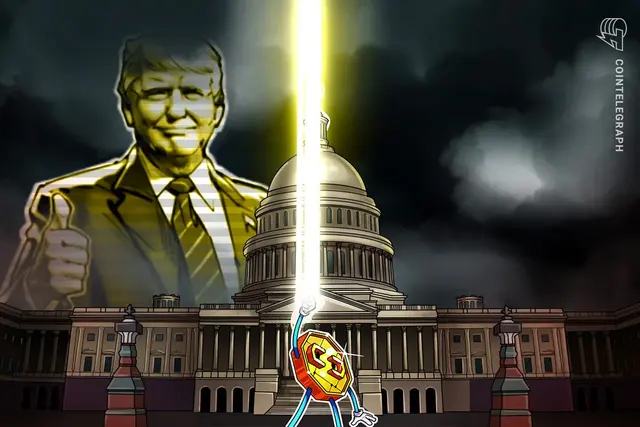
Trump is central to the promotion. The company released a 13-page “golden book” outlining its mission and leadership team. The cover features Trump’s portrait, artistically splashed with gold paint.
The document names him the company’s “Chief Crypto Advocate.”
When WLFI launched, the Trump family and affiliated entities received 22.5 billion WLFI tokens, with a paper value of at least $1.1 billion today.
Under company rules, the Trump family and other WLFI investors cannot sell their coins on public markets, though the company says restrictions may eventually be lifted if other token holders agree.
Initially, buyers were scarce. By the end of October last year, WLFI had sold only $2.7 million worth of tokens—far short of its goal.
Election Day changed everything.
Investors Flood In
As voting concluded across much of the U.S. and Trump’s victory became clear, WLFI’s X account posted a celebratory message on November 5: “Something big is coming.”
Soon, massive investments poured into World Liberty’s cryptocurrency.
Most cryptocurrency transactions are recorded on a public ledger called the blockchain, with buyers and sellers largely anonymous. But World Liberty says it conducted full due diligence on its investors and knows their identities.
An analysis by Nansen, a blockchain data analytics firm, prepared for The Times using industry data, showed many investors were based overseas—in places like Singapore, South Korea, Hong Kong, and the United Arab Emirates.
Federal law prohibits foreigners from donating to presidential campaigns or inauguration funds, but the sale of WLFI tokens offered a new, legal way to support Trump.
“The main reason for buying this token is to support Trump’s inauguration, since he’s the first U.S. president friendly to crypto,” said Keer Lau, chief strategy officer at Hong Kong’s Orbiter Finance.
Some investors, both domestic and foreign, lead companies that violated U.S. regulations. One is Israeli Yoni Assia, founder of online trading platform eToro, whose U.S. subsidiary reached a $1.5 million settlement with the SEC last year over crypto-related violations. Puerto Rican investor Troy Murray also bought World Liberty’s cryptocurrency. Previously, he helped create BarnBridge, which agreed in late 2023 to pay the SEC $1.7 million to settle its own crypto-related charges.
Since Trump took office, some World Liberty investors have urged the government for regulatory approval or prepared to interact with officials as they attempt to build or expand operations in the U.S.
In March, Assia’s company notified the SEC of plans to launch in the U.S. DWF Labs, a UAE-based cryptocurrency firm, announced this month it had acquired $25 million worth of WLFI and would open an office in New York.
Andrei Grachev, managing partner at DWF Labs, said in an interview: “This deal raises our visibility in the U.S. We want direct dialogue with policymakers.”
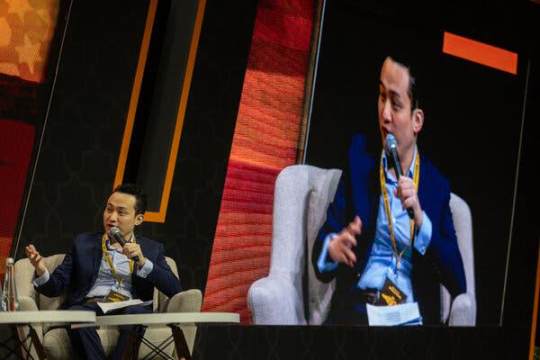
Last year, Sun Yucheng drew global attention when he bought a banana taped to a wall for $620,000 at an art auction. Soon after, Sun made another headline-grabbing move: spending $75 million on WLFI tokens.
The investment drew widespread criticism in the community, as Sun clearly appeared to be currying favor with the Trump administration. During the Biden era, the SEC sued Sun, alleging he fraudulently inflated the price of Tron (TRX).
Sun denied the SEC’s allegations and told The New York Times in a text message last year that his investment in WLFI was simply a vote of confidence in the Trump family’s “excellent project.”
At the end of February, the SEC asked a federal judge to pause proceedings in Sun’s case, citing ongoing exploration of a “potential resolution.” The judge granted the request.
Stars Align
Sun Yucheng gave World Liberty a huge boost. But Trump’s company wanted more. More.
So executives at World Liberty quickly announced what they called a “transformative initiative”: partnering with and investing in other cryptocurrency firms. Executives said in February the strategy would leverage World Liberty’s growing influence to help lesser-known partners.
“It’s like looking out for your brother in space,” Chase Herro said that month at a crypto event in New York.
But according to executives at several cryptocurrency startups, World Liberty’s public statements overlooked a key aspect they privately pitched to multiple firms: World Liberty wanted to sell its own cryptocurrency—not just invest in others’. It proposed currency swaps.
According to executives at three crypto companies approached by WLFI, the deal worked like this: the startups would spend $10 million to $30 million buying large amounts of World Liberty’s cryptocurrency. In return, World Liberty would buy small quantities of each startup’s own crypto. The rest of the funds would go to World Liberty—with premiums as high as 20%.
World Liberty’s purchases would signal to the market that Trump’s company believed these startups were worthy investments. But the market wouldn’t know World Liberty was paid for this endorsement. Industry news outlet Blockworks previously reported some details of similar promotional tactics by World Liberty.
“They kept telling us we’d feel really close to Trump,” said Mike Silagadze, CEO of Ether.Fi, a crypto startup contacted by World Liberty.
“We immediately rejected it,” said Dominik Schiener, founder of the Berlin-based IOTA Foundation, which also received the offer. “It’s a very dishonest practice.”

Dominik Schiener, founder of the IOTA Foundation
Wachsman, spokesperson for World Liberty, said in a statement that The Times’ reporting reflected a “fundamental misunderstanding of standard industry practices,” adding that the company’s arrangements were “not only common in the blockchain industry but essential for building lasting economic alliances in business.”
He added: “These arrangements align incentives among all parties.”
The Times found the benefits of collaboration were sufficient to attract at least five cryptocurrency companies into other deals with World Liberty—without disclosing financial terms.
In one deal, the U.S.-based Sui Foundation announced that World Liberty would purchase an unspecified amount of its cryptocurrency, causing Sui’s price to rise over 10%. Two people familiar with the matter said the foundation would receive World Liberty’s cryptocurrency in return. Due to the private nature of negotiations, both sources requested anonymity.
Other World Liberty partnerships illustrate how Trump blends his public office with commercial activity. In December last year, the company announced it would use technology developed by Lisbon-based startup Ethena Labs. It also bought over $5 million worth of Ethena cryptocurrency.
One of Ethena’s investors is crypto entrepreneur Arthur Hayes, who pleaded guilty in 2022 to violating the Bank Secrecy Act and was sentenced to six months of home confinement. Last month, Trump pardoned Arthur Hayes. (Spokespeople for Ethena and Hayes declined to comment.)
Another World Liberty partner is Ondo Finance, a New York-based startup backed by Founders Fund, the venture capital firm of conservative billionaire Peter Thiel.
World Liberty first bought Ondo tokens in December, acquiring more than 130,000. The purchase briefly boosted Ondo’s token price and made headlines across major crypto news sites praising World Liberty’s bet.
In January, Ondo donated $1 million to Trump’s inauguration, securing an invitation to a candlelit dinner at the National Building Museum in Washington attended by several of Trump’s cabinet nominees. Ondo also sponsored an inaugural event called the “Crypto Ball.” Shortly afterward, Donald John Trump and the World Liberty management team headlined a conference in New York.
“We weren’t sure this moment would ever come,” said Ian De Bode, Ondo’s chief strategy officer, speaking on stage. “But sometimes, things just fall into place.”
“Thank Me Later”
In February, Eric Trump sent a message to his followers on X with some investment advice: “In my opinion, now is a good time to buy Ethereum.”
This referred to the ticker symbol for the digital currency Ethereum. “Thank me later,” he added—before deleting the post.
His advice turned out to be remarkably prescient.
The following month, Trump announced the creation of a “U.S. Cryptocurrency Reserve Center”—a Fort Knox-style vault for digital assets aimed at supporting the industry.
Trump’s statement listed the cryptocurrencies to be included in the reserve. Alongside Bitcoin, he named Ethereum, declaring it would “become a core part” of the reserve.
Ethereum’s price surged over 13%.
The biggest beneficiary? World Liberty. According to crypto data firm Arkham, the company had purchased $240 million worth of Ethereum over the prior months.
On the day Trump announced the crypto reserve, assuming World Liberty hadn’t sold any of its Ethereum holdings, their value increased by $33 million. However, as Ethereum’s value later declined, those gains evaporated.
The same pattern repeated in March: Trump issued policy statements or posted messages overlapping with World Liberty’s commercial interests.
In a video address at a New York cryptocurrency conference, Trump called on Congress to pass legislation regulating stablecoins—cryptocurrencies designed to maintain a $1 value.
Bills were introduced in both the Senate and House to make it easier for stablecoin issuers to operate in the U.S. In a speech last month, Trump said the rise of stablecoins would “expand the dominance of the dollar.”
A week later, World Liberty announced the launch of its own stablecoin, USD1. “The future is here, bright and bold!” Zach Witkoff wrote on X.
Jordi Alexander, a cryptocurrency executive who helped World Liberty plan its stablecoin launch, said in an interview the company already had commitments of at least $1 billion from investors who would buy once the coin launches.
The new company will only deepen World Liberty’s ethical conflicts. It plans to issue the stablecoin on a platform developed by Binance. This week, Zachary Folkman, Chase Herro, and Zach Witkoff met in Abu Dhabi with Binance founder and former CEO Changpeng Zhao.

Eric Trump
According to people familiar with the matter, Zhao, who served four months in federal prison for money laundering, has been seeking a pardon from the Trump administration. Due to the sensitivity of the topic, the individuals spoke anonymously.
The overlap between Trump’s policy announcements and his commercial interests has alarmed congressional Democrats, who recently moved to amend pending stablecoin legislation to bar the Trump family from issuing stablecoin rules.
The amendment failed to pass, but no concerns over World Liberty have slowed its momentum.
Join TechFlow official community to stay tuned
Telegram:https://t.me/TechFlowDaily
X (Twitter):https://x.com/TechFlowPost
X (Twitter) EN:https://x.com/BlockFlow_News
 @nytimes