Why is Euler currently the best lending product in DeFi?
TechFlow Selected TechFlow Selected
Why is Euler currently the best lending product in DeFi?
Euler addressed some of the most pressing issues in DeFi lending, such as MEV, high gas fees, and the risks associated with traditional liquidation mechanisms.
 Navigating Web3 tides with focused insights
Author: Tommy.eth
Translation: Alex Liu, Foresight News
Euler Finance has been on a remarkable upward trajectory since October 2024, marking one of the most impressive turnarounds in DeFi history. Despite suffering a major setback—the 2023 hack that forced the protocol to temporarily shut down—the Euler team has tirelessly worked to rebuild and regain user trust.
The numbers speak for themselves:
-
$1 billion in total deposits (a 1000% increase over 4 months)
-
$430 million in borrowings
-
Over $100 million TVL on Sonic
-
Deployed across 8 chains
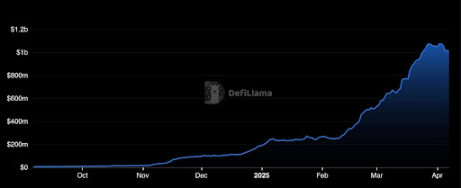
Euler Finance total deposits, source: DeFiLlama
The significant rise in deposits reflects Euler's growing appeal within the DeFi space.
But why should users consider using Euler for lending and borrowing now? To understand what sets Euler apart, let’s first examine some of the problems with existing lending products in the market—and how Euler solves them.
Liquidations and MEV Issues
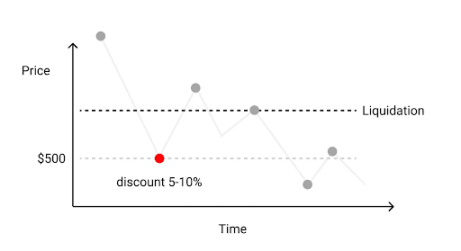
One of the main challenges with DeFi lending protocols is how liquidations are handled. In traditional lending markets, central institutions like banks may liquidate bad debt. However, in the decentralized world, this process relies on third parties—liquidators—who act as arbitrageurs. These users deploy bots to automatically liquidate undercollateralized positions. In return, they receive a discount on the collateral, and competition to execute these liquidations is fierce.

This competition drives up gas fees, especially on networks like Ethereum, where the first liquidator to act receives the reward. As a result, gas wars can escalate, making it difficult for regular users to interact with the blockchain during spikes in gas prices. This phenomenon is known as MEV, a major challenge facing the DeFi ecosystem.
How Other Protocols Handle Liquidations
Leading DeFi platforms such as Aave, Compound, and Curve all have liquidation systems. When a borrower’s position falls below the collateral threshold, liquidators race to seize the collateral at a discount. However, this process often causes the price of the collateral to drop rapidly, exacerbating liquidation cascades and driving up gas costs.
These protocols incentivize arbitrageurs to perform liquidations, but intense competition frequently leads to unfair outcomes and high transaction costs for ordinary users.
Euler’s Innovative Approach to Liquidations
Euler Finance takes a fundamentally different approach to liquidations, directly addressing these issues.
Dutch Auction Liquidations
Unlike Compound or Aave, which apply fixed discount rates during liquidations, Euler uses a Dutch auction mechanism. This means that as a borrower’s position becomes increasingly undercollateralized, the liquidation discount gradually increases over time. Liquidators can choose their optimal entry point based on their own risk and return preferences.
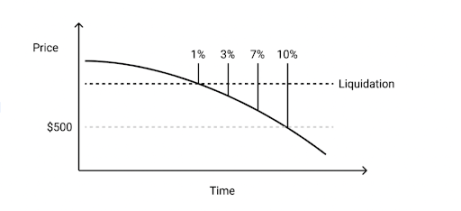
Liquidation discount increases over time
This mechanism reduces congestion and competition that lead to MEV, helping stabilize gas prices. By turning liquidations into auctions, Euler creates a more controlled environment that benefits all participants.
Soft Liquidations
One of Euler’s standout features is its soft liquidation mechanism, designed to protect borrowers from the fear of full liquidation. Under soft liquidation, when a borrower’s collateral value drops or debt increases, only a portion of the collateral is liquidated. If the collateral price recovers, the borrower can reclaim the previously liquidated portion.
This gives borrowers more time to recover from market volatility without immediately losing their entire position. Soft liquidations allow users to retain control over their assets, enabling them to withstand temporary price dips and minimize losses.
Euler’s innovative liquidation mechanisms have had a direct and positive impact on its key metrics:
Active Borrowing Activity
Compared to other protocols like Aave (0.38) and Compound (0.3), Euler has the highest borrowing-to-TVL ratio at 0.45. This indicates that borrowers are drawn to Euler due to its unique features, such as more favorable liquidation terms and the ability to leverage capital with lower risk.
Attractive Fees and Yields
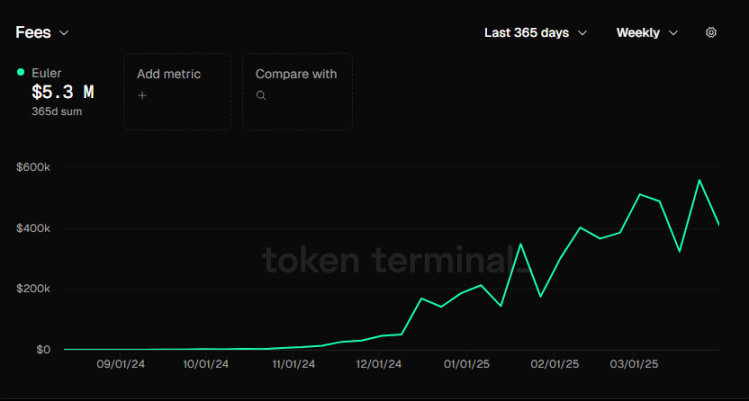
Weekly fees generated by Euler, source: Token Terminal
Euler’s user-centric design delivers highly competitive fee generation (up to $557,000 weekly) while offering strong returns for depositors. By minimizing the negative impacts of liquidations on users, the protocol ensures both borrowers and lenders benefit from a smoother, more efficient process.
Loan-to-Value (LTV) Ratios
Euler’s average loan-to-value ratio reaches as high as 90%, significantly surpassing most other DeFi platforms. This is made possible by its soft liquidation mechanism, which provides borrowers with greater safety and flexibility when managing positions. Borrowers can use higher leverage while reducing the likelihood of losing all their collateral during a liquidation event.
Conclusion
Euler’s innovative features—such as Dutch auction liquidations and soft liquidations—address some of the most pressing issues in DeFi lending, including MEV, high gas fees, and the risks associated with traditional liquidation mechanisms. The protocol’s strong recovery and growth, along with its compelling metrics, demonstrate that Euler is not only reliable but also one of the most user-friendly and secure options in today’s DeFi landscape. Whether you’re a borrower seeking favorable terms or a lender looking for stable returns, Euler offers a compelling solution that sets it apart in the field.
Join TechFlow official community to stay tuned
Telegram:https://t.me/TechFlowDaily
X (Twitter):https://x.com/TechFlowPost
X (Twitter) EN:https://x.com/BlockFlow_News
 @Defi_Gangsterr