








The Web3 Influence Rule: How to Leverage Content Value to Unlock Opportunities and Achieve a 100x Life Leap?
TechFlow Selected TechFlow Selected
The Web3 Influence Rule: How to Leverage Content Value to Unlock Opportunities and Achieve a 100x Life Leap?
Personal branding is the most underestimated asset.
 Navigating Web3 tides with focused insights
Author: Ronin
Translation: Luffy, Foresight News
Personal branding isn't about follower count—it's about your reputation and the trust others have in collaborating with you. It empowers you in countless ways: accessing information Google can't find, landing ambassador roles, or even increasing income.
It changed my life. I was once a nobody with nothing, not taken seriously despite having better skills than most. Everything shifted when I started creating content and sharing ideas. My work spread widely because it was genuinely useful. Now, I truly value each of you and only want to create the most valuable things possible—especially in today’s market.
Like all my previous articles, this one took considerable time—but it delivers value and gives me feedback in return. This isn’t because I’m special; it’s because I don’t do things just for the sake of doing them. I prioritize quality, care about your perspective, and above all, whether this content can truly help people transform their lives.
This article will not only guide you in building a personal brand but also clarify how to grow at any audience size, monetize effectively, and stay ahead of the curve.
Why is personal branding an underrated asset?
In Web3, everyone chases quick money and the next trend. Riding waves might lead to "success," but only a few actually pull it off. Most people—even early entrants—fail to adapt quickly enough as the industry evolves.
In a few months, your skills or knowledge may become obsolete or even a liability. Your brain starts thinking: “Wait, this used to work…”
Only months later do you realize the truth: you simply didn’t adapt fast enough, while change moved too quickly.
But personal branding is different: it works under any circumstances and grows stronger over time because you’re accumulating reputation.
Even during bear markets, your reputation remains valid. Ironically, those so-called “dead market phases” are golden opportunities—most successful projects are born in bear markets. You can choose to be a builder, or spend a year waiting for the market to recover, only to realize you’ve wasted time and energy.
As I always say: “A brand isn’t about follower count.” It’s when people come to you with collaboration offers, when projects invite you onboard, when people pay not for your output but simply because “you are you.”
Most importantly, it’s about creating something useful. While most in the industry blindly follow trends, you focus on delivering value. The internet amplifies this value, enabling you to help thousands—not just friends nearby. That’s priceless.
This value reveals who you really are and supports you regardless of market conditions. In this space, personal branding is the most stable asset—everything else is temporary.
How to get started?
Most people lack a personal brand not because they’re unintelligent or bad writers, but because they don’t know what they want to talk about or why. Without clarity on where to begin, you either stay silent or dump everything at once. Even if what you share is useful, it becomes noise.
The foundation of personal branding rests on three pillars:
-
Intrinsic motivation: What genuinely excites you
-
Niche: The area you want to explore or already possess knowledge in
-
Unique perspective: Your distinct way of seeing things, your vision and goals
These are questions everyone should ask before building a personal brand—because your brand should serve others, not just occupy their time.
You don’t need to be an expert—you can share your journey or document growth publicly—but you must know your direction.
When I started, I had no real research skills or writing experience—I was just interested and set a clear goal. Honestly, that helped immensely and kept me from quitting. I didn’t care about “500 followers”; I wanted to build a community.
Most people chasing numbers drown in noise because if money is the sole goal, true value cannot be created.
How did I find my focus?
I asked myself five questions—they helped tremendously. These can help you choose your niche and stay principled throughout the process.
Five questions to clarify your direction:
-
What truly excites you? What do you enjoy? This is where most people self-deceive. Don’t choose based on “what’s trending,” or you’ll burn out quickly, produce low-quality content, and achieve nothing.
-
What skills or knowledge do you already have—or want to learn? You need a clear growth path. A personal brand can grow with you, and people respect authentic journeys.
-
Who do you want to help? Define your audience: beginners, or those deep in the space needing efficient content?
-
What don’t you want to post? This matters more than you think—especially when marketing deals come in. If something feels wrong, it dilutes your core message. Say “no” early and stay focused.
-
Imagine you’re already “successful”—what will people remember you for? This is your core value. Once you know the value you aim to deliver, go all-in and never stop.
How to launch effectively?
Yes, as I said, follower count doesn’t matter—but if you have fewer than 1,000 followers, launching is much harder. No one knows you, you’ve never interacted with anyone, and typically no one reads content from an unknown person. They first need to discover that you’re interesting.
I developed my “1K-follower growth plan”—now I’m sharing it with you:
-
First, identify your niche and create a list of top influencers in that field on Twitter;
-
Unfollow all influencers who don’t provide value. Only follow high-impact accounts, frequent engagers, or those with quality content. This makes your X feed cleaner and more valuable.
-
Design your profile. Ensure your avatar and cover image match stylistically, with the cover reflecting your account’s core. Your bio should answer three questions: “Who are you?” “What value do you offer?” “What is this account about?”
-
Engage with other KOLs. Reply to around 30–100 posts daily. Avoid meaningless replies like “GM (good morning).” Only comment on posts useful to the audience, sparking interest so authors notice you, follow back, and start conversations. This is the best way to boost visibility.
-
Create valuable content that encourages KOLs to engage. Teaming up with 10 small brands is easier than relying solely on algorithms to reach 500+ new followers.
How to present information correctly?
Even if you write a highly valuable article, poor readability or disorganized structure may cause readers to skip it entirely. Make your content easy to read and engaging.
Seven techniques for clear communication:
1. Write simply and clearly
-
Use language understandable to beginners—at least let them grasp key points;
-
Use short sentences of 10–15 words to make information structured and digestible;
-
Avoid jargon unless your entire audience consists of experts.
2. Eliminate noise, get straight to the point
-
Abstract introductions and lengthy explanations prevent readers from quickly accessing core insights;
-
Don’t make readers wait: state your main point first, then expand gradually;
-
Delete all valueless or repetitive sentences. When re-reading, ask: How can I make this more efficient and readable?
3. Use examples and analogies effectively
-
Complex ideas are hard to explain with text alone—examples or analogies simplify understanding;
-
Use relatable slang, or compare ideas to personal experiences or everyday life;
-
Ensure analogies resonate with your audience so everyone clearly understands your point.
4. Write like you speak—stay authentic
-
Many KOLs try to appear smarter or more experienced than they are—readers instantly detect insincerity;
-
Express thoughts genuinely, convey unique style and natural humor, giving content personality instead of generic clichés.
5. One idea per sentence
-
This doesn’t mean explaining everything at once, but breaking content into clear, focused segments;
-
Avoid packing too many topics into one post or thread. Split into multiple parts rather than compressing—over-compression often ruins quality.
6. Emphasize facts
-
Avoid excessive theorizing—boost practicality. For example, instead of broad overviews, list concrete actionable steps.
7. Stay original, avoid copying
-
This may be the most important point. While expressing ideas, you might borrow from others—but this often leads to homogenization;
-
Effective communication isn’t repeating others’ words, but clearly presenting truths in your unique voice—creating content people genuinely want to read.
How to attract an audience: The importance of hook lines
The hook line is the most critical element in your content—it determines whether readers will continue reading and invest their time.
We live in the era of “cheap dopamine,” where capturing attention instantly is crucial. Most people unconsciously scroll through feeds—only compelling lines make them pause.
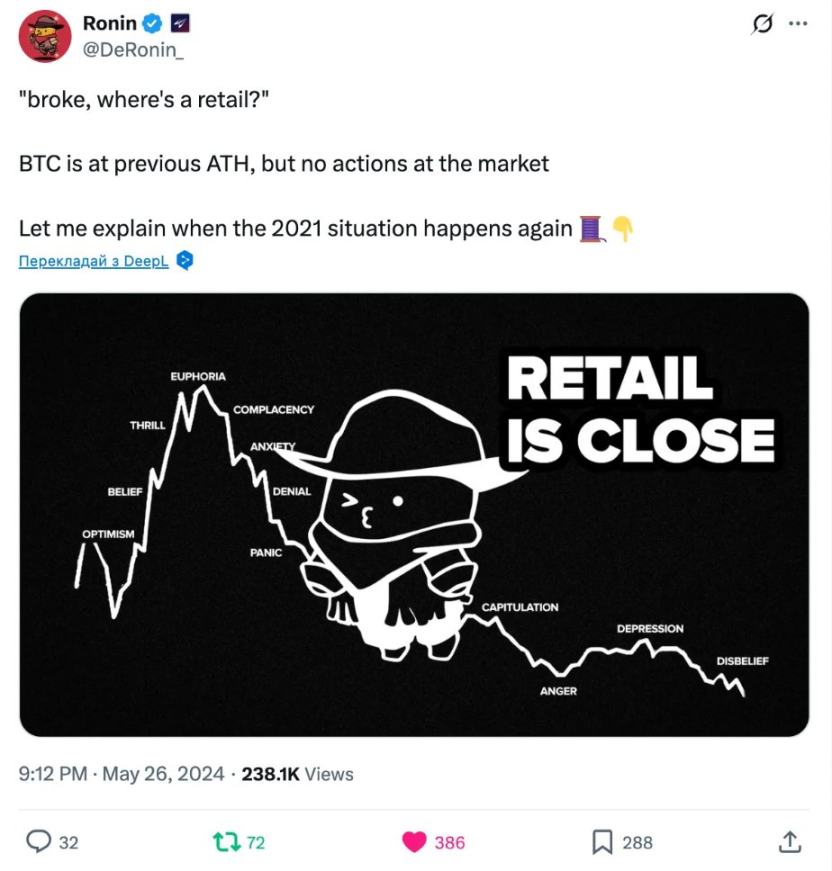
How to write powerful hook lines?
1. Simple, clear, and direct
-
Use the simplest words and keep it short. As shown in the screenshot, limit each sentence to 3–10 words;
-
The simpler the hook line, the higher the chance of grabbing attention.
2. Promise immediate value
-
Tell readers directly what they’ll gain by continuing. For example, when explaining market conditions, I use the last sentence to clearly convey value, while the first two hit audience pain points.
3. Visual support
-
Images should match the topic and ideally highlight pain points. For instance, minimalist black-and-white visuals emphasize “the market is at a critical stage,” attracting attention without extra details—visuals themselves can outperform text.
4. Hook line pitfalls to avoid
-
No empty promises: Content must deliver on the hook’s promise. Even eye-catching headlines lose impact if readers feel deceived—they won’t follow you;
-
Avoid abstract generalizations: Add personal flair and uniqueness, steer clear of clichés;
-
Highlight uniqueness: Emphasize specific pain points and clearly state you have solutions.
Powerful hook lines are always clear, emotionally resonant, and promise immediate value.
How to structure a topic so readers finish it? (Complete thread structure)
If the hook grabs attention, you’re halfway there. Now, maintain that attention so readers finish the entire piece. In my view, threads have an optimal structure:
-
Second hook (clarify the topic). Briefly and clearly state what the thread covers and its core point—don’t repeat the first hook, reinforce it to spark further interest. For example: First hook highlights pain points, second explains specifically how to solve them.
-
Create a detailed outline. You don’t need to explicitly list it in the thread (unless over 10 points), but mentally map key points. Each tweet must have clear meaning and unfold logically, typically: Problem → Importance → Solution → Case Study → Actionable Steps → Call-to-Follow
-
Filling in valuable content (the “core” of the thread). Every tweet must be independently interesting and valuable—pay attention to every sentence, ensure every word counts. Add videos, screenshots, or visuals to reinforce messages and sustain interest. Quality content example: Quick tip → Explanation → Real case; Common mistake → How to avoid → Correct method.
-
Call-to-follow. At the thread’s end, include links to Telegram, Discord, Substack, etc., guiding audiences to other platforms for more value. E.g.: “Click the link to access my Telegram channel for exclusive analysis and results.”
-
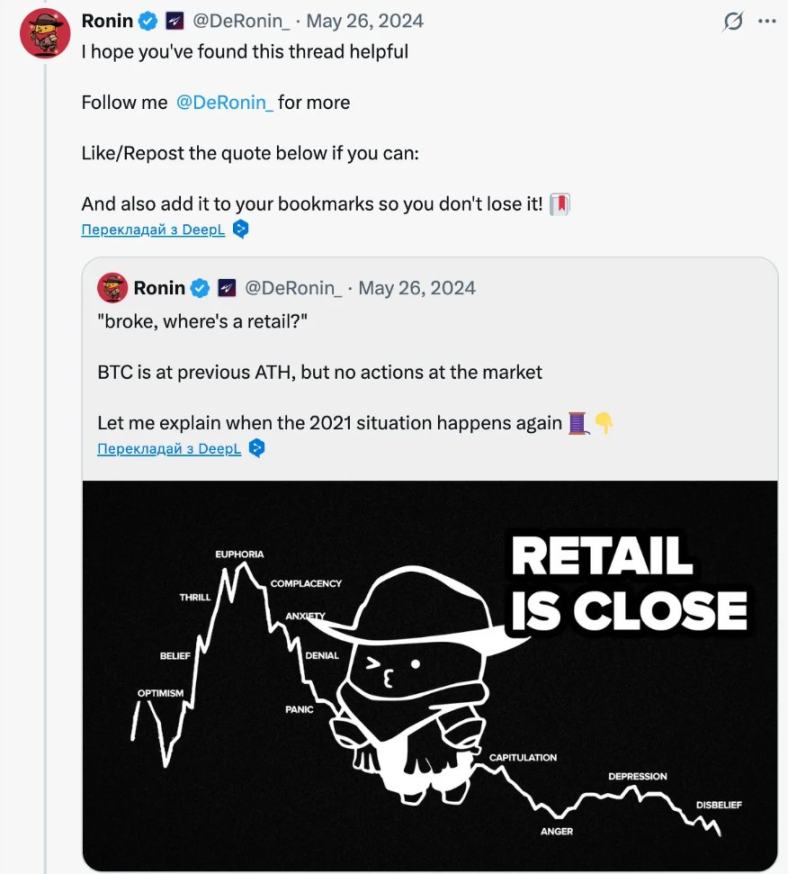
Summary. After posting the thread, click “Add post” to create a “summary” tweet linking back to the original hook. Encourage readers to return to the beginning, like, retweet, and comment—this boosts engagement and virality.
How to balance content formats? (Threads, short tweets, long-form)
Content shouldn’t be monotonous. Posting only threads or endless low-value updates quickly bores your audience. Balancing formats reaches diverse fan groups, maintains high engagement, and showcases your versatility as a creator.
My content mix:
1. Threads: Primary growth driver
-
Showcase expertise, earn retweets, and often trigger algorithmic reach;
-
2–4 threads per week is ideal for steady growth.
2. Short tweets (1–2-line insights)
-
Easy to share, showcase your viewpoints;
-
Can be posted daily: opinions, insights, pain points, mini干货 (useful nuggets).
3. Long-form posts (Longreads)
-
Write like extended tweets—don’t be afraid;
-
Long-form ≠ 30-minute essays. Can be 500–800 words of dense, high-value content—no need to split into threads;
-
As long as the first line clearly shows value, people will read. Can be posted frequently.
4. Articles
-
Best for deep dives or driving traffic to external platforms like Telegram, Substack, or blogs;
-
Especially suitable as follow-ups to viral threads.
The power of consistent creation: Why daily updates matter?
The biggest mistake is inconsistency. Even if you publish an excellent thread or article, it doesn’t guarantee thousands or tens of thousands of views overnight. The value of content lies in compounding effects—over time, you accumulate increasing returns.
If you post a great thread with little response and then disappear for a week, you’re not just killed by the algorithm—you signal to your audience that you’re not serious.
Content creation requires rhythm. Winners aren’t the smartest—they’re the most consistent. If you produce 10–100x more content than the “genius” who posts twice a month, your chances of success are far greater.
Why does consistency fuel growth?
-
Maintain momentum: It’s not just about “visibility,” but staying active, exploring trends, continuously learning—your knowledge compounds faster than others’;
-
Improve writing: Each day is +1 to your writing skill. After 30 days, your ability improves significantly;
-
Build trust: Audiences follow creators who update regularly. Stick to monthly publishing and your reputation grows naturally;
-
Increase virality odds: No one knows what’ll trend tomorrow. The more you publish, the more spins on the “luck wheel”—higher opportunity.
Don’t chase perfection—it kills motivation. Posting a “pretty good” thread today beats a “perfect” one a year from now. In fact, if you don’t start with “pretty good,” the “perfect” one will never happen.
No action means no learning—every skill is built through practice. Maybe you don’t know how to write well now, but if you don’t practice, you’ll never learn. Theory is often taught by those who never practiced. Daily posting isn’t about complexity—it’s about discipline. In Web3, if you want to grow, this is your first asset.
How to monetize your personal brand in Web3?
People often think personal branding is only about fame, but in Web3, it also means wealth opportunities.
If you consistently create high-quality content, main monetization paths include:
1. Promotions & advertising
-
Paid tweets, reposts, or threads: Projects pay you to review or mention them;
-
Paid Spaces: Earn fees hosting or participating in AMAs (ask-me-anything sessions) as an industry authority.
2. Direct audience engagement
-
Paid chats or communities: Fans pay for private discussions, exclusive content, or personal insights;
-
Consulting or services: Offer marketing, account growth coaching, or content support using your expertise.
3. Reputation-based opportunities
-
Whitelists and allocations: Top-tier projects may offer private sale spots or whitelists if they notice your consistent activity;
-
Ambassador programs: Official representatives earn stable income;
-
Job opportunities: Projects prefer hiring those with strong personal brands and audience trust.
4. Long-term opportunities
-
Launch your own product or project: With an audience, launching your own venture is easier because people already trust you;
-
Easier fundraising: VCs and funds often track public figures involved in projects;
-
Build connections with other KOLs: More network = more value exchange.
5. Monetize via third-party platforms or X
-
Several platforms now reward creators—e.g., Kaito: Earn Yaps by posting useful content;
-
X itself is rolling out monetization tools for creators, which will soon become a viable supplementary income source.
Networking in Web3: How to build connections and strengthen your personal brand?
Networking is one of the strongest growth levers in Web3. Most opportunities don’t come from creating the best content, but because people know you. Prioritize connection-building and maintain active communication—it strengthens your personal brand.
Effective strategies:
-
Join conversations actively: Reply to other creators, participate in discussions—don’t just post, engage;
-
Support other KOLs: If a post resonates, @ the author, like, and share—you’ll eventually be noticed;
-
Join private group chats: Participate in small working groups or communities—often leads to new opportunities and collaborations;
-
Collaborative engagement: Co-tweets or mentions—even small interactions can evolve into long-term relationships.
Always remember: Networking isn’t about “benefit,” but about trust—and trust takes time to build.
What if your content underperforms?
Everyone faces this—it’s normal. What matters is not stopping.
-
Evaluate content value. If lacking clarity, examples, or purpose, people won’t read. Ask: “What will readers gain?”
-
Change format. Maybe your idea fits better as a long-form post than a thread, or works better as a question vs. statement.
-
Optimize visuals. Poor preview images, mismatched graphics, or hard-to-read layouts reduce clicks.
-
Revisit old topics. If the theme is solid, rewrite or restructure. Many viral pieces succeed only on second attempts.
-
Keep publishing. Algorithms may miss one post, but if you post daily, you won’t be fully ignored.
Summary
No TL;DR—every point above matters, and all covered topics were listed upfront.
I just want to share how content creation truly transformed my life:
Four years ago, I was an ordinary Web3 worker—no network, empty pockets.
It’s been a long journey: I actually worked 10–14 hours daily, 7 days a week, 50 weeks a year.
Under this intense schedule, after a year and a half of effort, my highest monthly income was only $2,000.
But once I started building a personal brand and exploring new directions, I maximized income by saving massive amounts of time. People became interested in me because they could understand my thinking through my profile—no need to verify credibility.
I am a real-life case of “creating value from nothing.”
The opportunities that came with building a personal brand permanently changed my life. In two and a half years, my personal brand increased my net worth 100x.
This is my real story—verifiable anytime. Choosing this path is never wrong: you’ll gain real experience, connections, and access to the wealthiest people in the industry.
Hope this article expands your thinking and freely provides enough insight usually reserved for paid content. Now, only one thing remains: take action.
Join TechFlow official community to stay tuned
Telegram:https://t.me/TechFlowDaily
X (Twitter):https://x.com/TechFlowPost
X (Twitter) EN:https://x.com/BlockFlow_News
 @DeRonin_











