What Made Trump Back Down Behind the "Second 180-Degree Turn"?
TechFlow Selected TechFlow Selected
What Made Trump Back Down Behind the "Second 180-Degree Turn"?
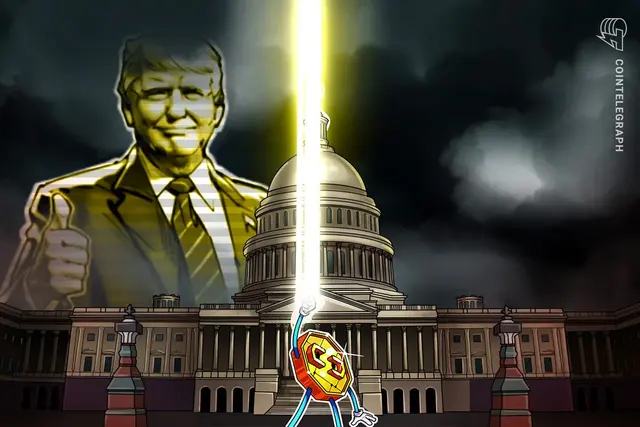
Behind Trump's "backing down" lies multiple pressures, including financial market turmoil,劝阻 from business leaders, and frequent warning signals from economic data.
 Navigating Web3 tides with focused insights
By Zhao Ying, Wall Street Insights
Overnight, U.S. stocks, bonds, and the dollar rallied across the board, signaling a clear rebound in risk sentiment. The three major U.S. equity indices rose over 1%, the dollar index gained nearly 100 points, and the yield on the 10-year Treasury note declined during trading.
Behind this sudden market rally, two key concerns that have weighed on markets in recent weeks appear to be easing—Trump has softened his stance on tariff policy and changed his tone toward Powell.
According to China Central Television (CCTV) reporting on Wednesday, Trump stated on the 22nd local time that he would "substantially reduce" high tariffs on China. As reported by The Guardian, Trump's remarks came in response to comments earlier that day by U.S. Treasury Secretary Bessent, who said high tariffs are unsustainable.
On Tuesday, Trump also backtracked, saying he has no intention of firing Powell and that now is an ideal time for rate cuts.
Behind Trump’s apparent retreat lies mounting pressure from financial market volatility, pushback from business leaders, and frequent warning signals from economic data.
Pushback from Business Leaders, Collapse in Corporate Confidence
Media reports on Thursday, citing informed sources, said that the day after meeting with executives from Walmart, Home Depot, and Target, Trump dropped his hardline rhetoric on tariffs. These executives warned that import taxes could disrupt supply chains and drive up consumer prices. One source noted that Trump appeared responsive to warnings that store shelves might be empty within weeks.
In addition, when asked whom the president consults on tariff and trade policies, Bessent said Trump “continuously seeks input from business leaders,” mentioning visits from major retailers and revealing that “Germany’s three major automakers will visit this Friday.”
Notably, corporate reactions have been stark: U.S. CEO pessimism has reached levels seen during the financial crisis, with nearly every company cutting its outlook. Data also show that 27% of S&P 500 companies have already lowered their 2025 earnings forecasts, while only 9% have raised them.
The collective action by business leaders suggests active lobbying efforts are influencing policy direction. However, as everyone knows, Trump is prone to changing his mind, and his current posture may shift again.
Frequent Data Warning Signals: Rising Risk of Hard Landing, Markedly Higher Inflation Expectations
Amid uncertainty caused by Trump’s tariff policies, Americans’ economic outlook has deteriorated. Survey data show inflation expectations spiking sharply. Many analysts remain bearish on the U.S. economic outlook.
Data from the Institute for Supply Management (ISM) show U.S. manufacturing activity contracted last month. The Richmond Fed’s April manufacturing survey showed overall business conditions plummeting to -30, while the Philadelphia Fed’s non-manufacturing index crashed to -42.7 in April. New York Fed data indicate that New York manufacturing activity shrank for the second consecutive month in April.
Survey data reveal surging inflation expectations. Powell previously stated that the announced tariff hikes exceeded expectations and could lead to at least a temporary rise in inflation. He and other Fed officials have indicated they are willing to hold interest rates steady until the impact of tariffs on the economy becomes clearer.
Wall Street analysts have swiftly revised their economic forecasts. Major banks including Goldman Sachs, Morgan Stanley, and JPMorgan Chase have downgraded U.S. GDP growth projections while raising inflation forecasts. The consensus view is that aggressive tariff policies will reduce U.S. economic growth by at least 0.3–0.5 percentage points and increase core inflation by 0.4–0.6 percentage points.
How Markets Predict Policy Direction: Watch These Key Indicators
For investors, predicting policy direction hinges on monitoring several core indicators. A recent Goldman Sachs study found that initial jobless claims, the Philadelphia Fed Manufacturing Index, the ISM Services Index, and the unemployment rate are the best early warning indicators for economic slowdowns. These indicators typically signal a downturn just one month after it begins, whereas hard data like GDP take about four months to clearly reflect weakness.
These metrics outperform others due to their high frequency, minimal revisions, and timely release. Initial jobless claims are published every Thursday, and unemployment rate data will be released next week.
Traders should also closely monitor Trump’s meetings with business leaders. Historical data suggest such meetings often precede subtle shifts in policy tone. All these developments may offer crucial clues about future policy direction.
A key question dominating market discussions is: Is this a genuine policy pivot, or merely a short-term tactical adjustment? Regardless of the answer, one thing is clear: investors must prepare for a 2025 that will be more volatile than expected.
Join TechFlow official community to stay tuned
Telegram:https://t.me/TechFlowDaily
X (Twitter):https://x.com/TechFlowPost
X (Twitter) EN:https://x.com/BlockFlow_News