ETH, amid continuous declines, needs a new narrative
TechFlow Selected TechFlow Selected
ETH, amid continuous declines, needs a new narrative
Ethereum has the most economic activity of any blockchain.
 Navigating Web3 tides with focused insights
Author: Richard Chen
Translation: TechFlow
Last week, Ethereum (ETH) prices fell back to 2017 initial coin offering (ICO) levels. Back then, Ethereum was just a whitepaper and tokens—compared to today’s ecosystem filled with real applications, the market seems indifferent to over seven and a half years of progress in Ethereum's developer ecosystem.
The bigger issue is that ETH needs a new narrative—a clear reason for people to buy the token. Let’s examine common existing narratives around ETH and explore why they no longer hold.
1. “ETH is leveraged beta to Bitcoin (BTC).”
This was true in past bull cycles. Altcoins generally outperformed BTC, and blue-chip altcoins acted as leveraged beta. Whenever BTC performed well, investors increased risk exposure, leading to stronger returns in altcoins.
This time is different. The launch of Bitcoin ETFs in January 2024 brought a paradigm shift. Nearly $100 billion has flowed into Bitcoin ETFs, which now collectively hold 5.7% of the BTC supply. In contrast, Ethereum ETFs have attracted only $5 billion in inflows. Unlike previous cycles, where large inflows into crypto—especially from major institutions—would eventually spill over into the broader market, this time capital flows are concentrating solely in BTC and not spreading elsewhere. BTC will always have natural demand from new capital seeking crypto exposure, but it's unclear whether other assets enjoy the same advantage.
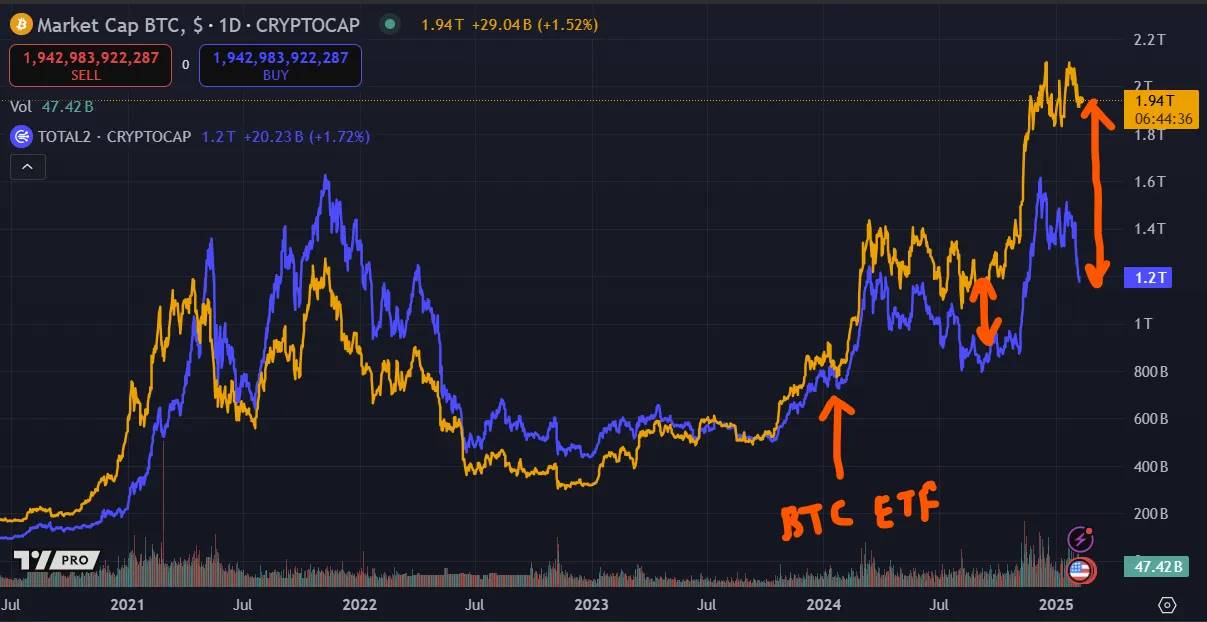
Bitcoin (BTC) stands in a league of its own, decoupling from the rest of the market.
A second-order effect of new capital not entering altcoins is that we now face a zero-sum pool of speculative funds rotating between different “casinos.” This rotation was evident in price action during the months following the election, as speculation shifted from Solana-based AI agent meme coins to Hyperliquid, then back to $TRUMP and $MELANIA. Without economic growth, competitive zero-sum attention dynamics accelerate tribalism in crypto. Another second-order impact is on venture capital. For token generation events (TGEs), the best-case scenario now is multi-billion dollar funding caps for infrastructure projects, implying even smaller total addressable markets (TAM) for other categories. With capital supply still exceeding founder availability, private round valuations haven’t dropped meaningfully. As a result, returns in crypto venture investing are being compressed.
2. “ETH is ultrasonic money.”
This is no longer valid. In April 2024, ETH supply reversed course and began increasing again. By February 2025, ETH became inflationary post-Merge. Therefore, the argument that ETH is a harder monetary asset than BTC no longer holds.
The ultrasonic money thesis also suffers from being too niche. Newcomers to crypto readily accept the scarcity narrative of “BTC as digital gold,” without delving into technical details like EIP-1559 or comparing deflationary characteristics between BTC and ETH.
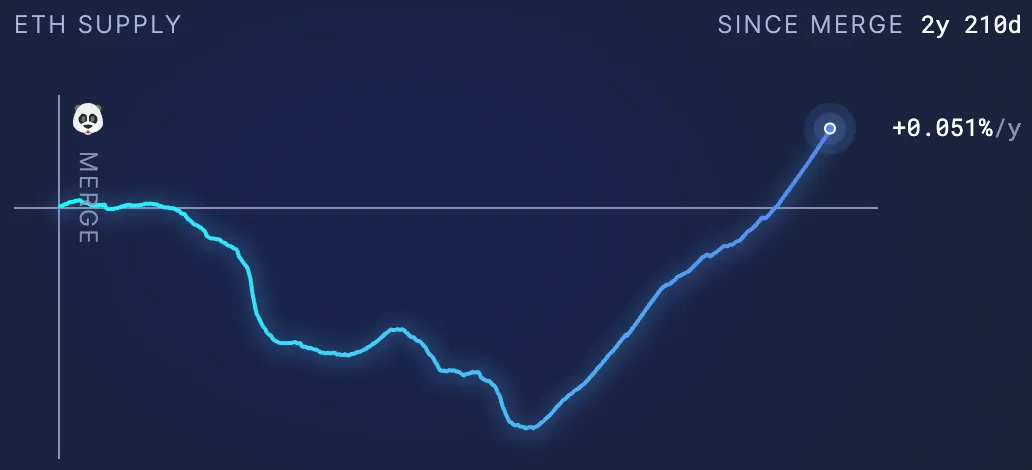
Source: ultrasound.money
3. “ETH is digital oil.”
The problem with this framing is that ETH would then trade like a commodity—flat and range-bound. Commodities derive value from supply and demand dynamics, not as long-term growth assets meant to be held. To illustrate, below are two charts comparing oil and the S&P 500 over the past decade.
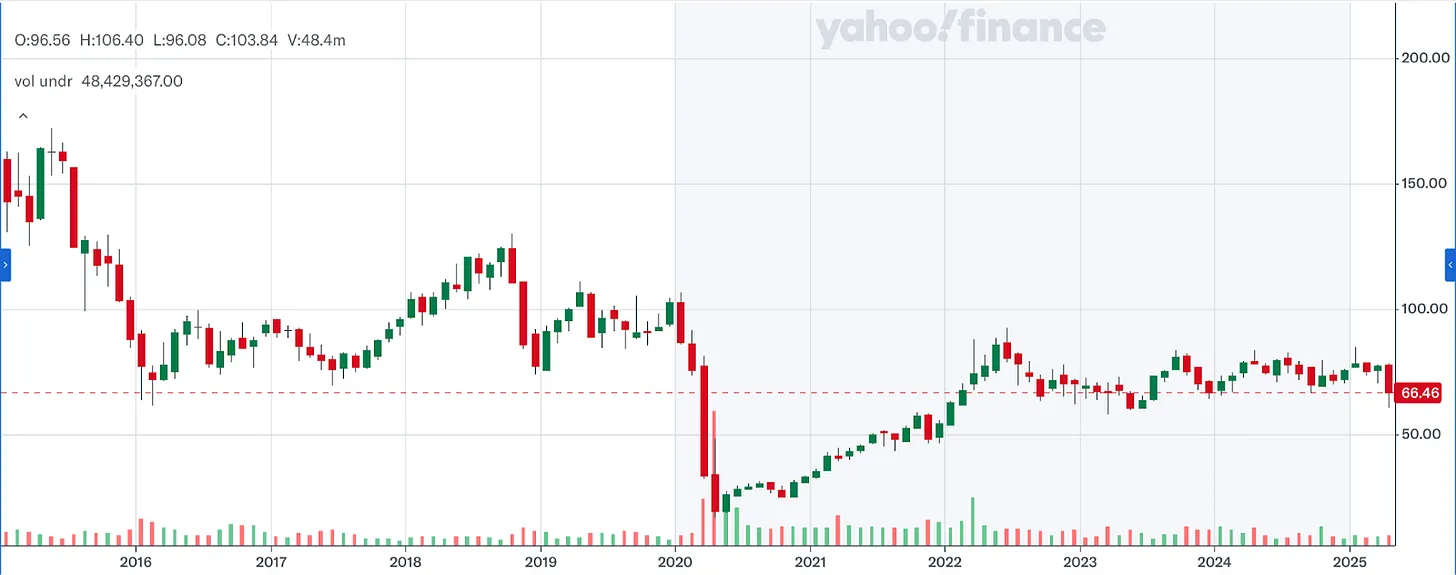
USO
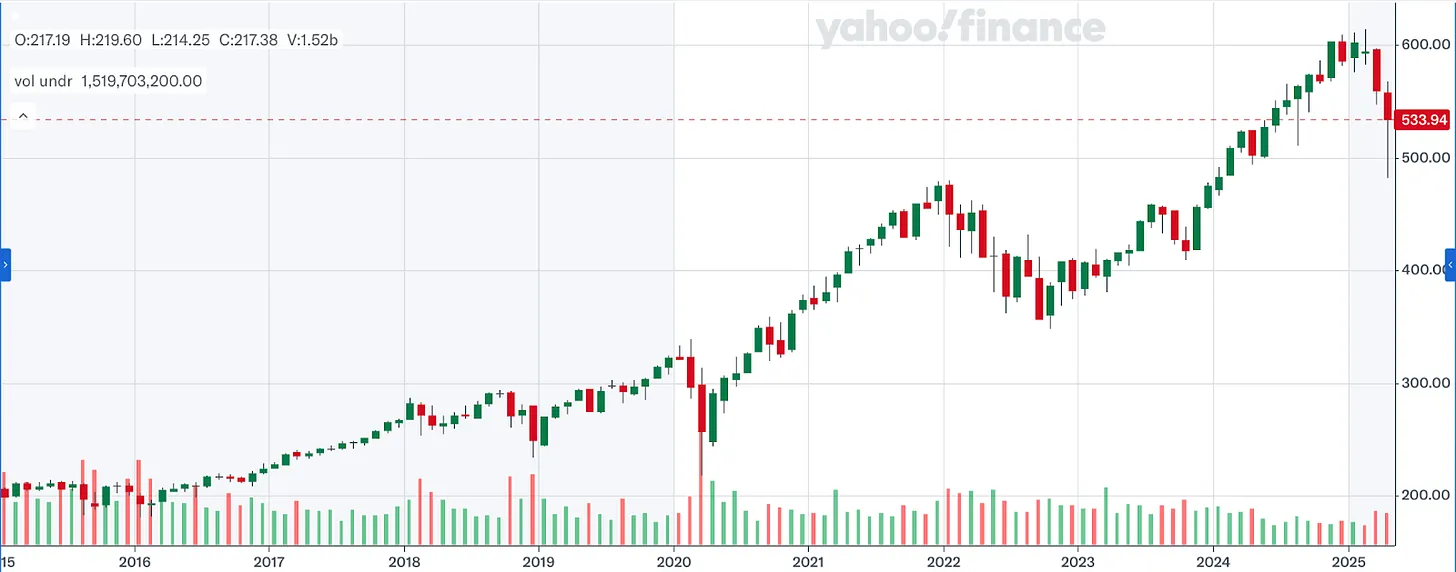
SPY
Over the past decade, oil traded mostly within ranges, with only two exceptions: 1) early 2015, when U.S. oil supply surged due to advances in fracking technology; 2) the early 2020 COVID crash.
Under the “digital oil” framework, if ETH re-enters the market as inflationary and lacks marginal buying demand, prices will fall.
4. “ETH is the global settlement layer.”
Ethereum’s long-term scaling roadmap contains an inherent contradiction between two goals: 1) scaling will be pushed to Layer 2 (L2), making Ethereum the settlement layer; 2) L2 economic activity will accrue value to ETH. When EIP-4844 drastically reduced the cost of posting transaction data to Layer 1 (L1), it improved L2 scalability—but also reduced Ethereum’s revenue.
A larger issue arises when L2s launch their own tokens: they become somewhat “parasitic” on ETH. L2s have strong economic incentives to accumulate value in their native tokens rather than in ETH. As a result, apart from technical differences in consensus mechanisms, L2s behave almost like competing Layer 1 chains.
This leads to a decoupling between EVM (Ethereum Virtual Machine) adoption and ETH value accrual. Ethereum’s greatest historical moat has been its developer tooling ecosystem around the EVM—debuggers, fuzzing tools, boilerplate contracts, etc.—built over years of open-source development. For new developers, building on EVM remains far easier than on non-EVM chains lacking robust tooling. But as EVM and ETH decouple, EVM adoption can continue growing as new L2s like MegaETH and new L1s like Berachain and Monad leverage the EVM ecosystem, while value accrues to their native tokens instead of ETH.
5. “ETH has the most economic activity of any chain.”
A future scenario could see stablecoin total value locked (TVL) hit all-time highs, decentralized exchange (DEX) volume reach record levels, and other economic metrics peak on Ethereum—yet ETH price fails to make new highs due to shrinking price-to-earnings (P/E) multiples. In such a case, ETH would trade more like a tech stock—e.g., Tesla (TSLA, 97x forward P/E) or NVIDIA (NVDA, 24x forward P/E).
At current annualized profits, ETH would need a 300x P/E multiple to retest its all-time high without any monetary premium. Thus, significant downside risk remains from P/E compression.
What happens next for ETH?
Perhaps ETH will rise due to mean reversion—or continue underperforming for the reasons outlined above.
But until then, ETH needs a new narrative.
Join TechFlow official community to stay tuned
Telegram:https://t.me/TechFlowDaily
X (Twitter):https://x.com/TechFlowPost
X (Twitter) EN:https://x.com/BlockFlow_News
 @richardchen39