Summer's "Black Swan": After May, Will Trump Have the Power to Fire Powell and Subdue the Fed?
TechFlow Selected TechFlow Selected
Summer's "Black Swan": After May, Will Trump Have the Power to Fire Powell and Subdue the Fed?
In May, a ruling by the U.S. Supreme Court could change the entire market.
 Navigating Web3 tides with focused insights
By Li Xiaoyin, TechFlow
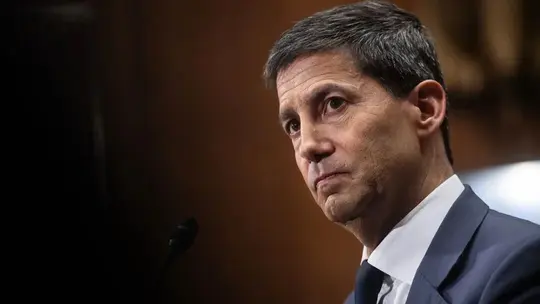
Whispers of a leadership shake-up at the Federal Reserve are emerging from the White House, while a Supreme Court ruling could further undermine Chair Powell’s position—could global financial markets be bracing for another storm?
On Monday, U.S. Treasury Secretary Scott Bessent said in an interview that he and President Trump have been “actively considering” candidates for the next Federal Reserve chair, with plans to begin interviewing potential nominees this fall.
Public records show that current Fed Chair Jerome Powell’s term ends in May 2026, but Bessent’s comments have already ignited market speculation over a possible early leadership change.
Meanwhile, the Trump administration is targeting independent agencies by petitioning the Supreme Court to allow the president to dismiss certain officials—a move analysts say could open a legal pathway for Trump to remove Powell, challenging long-standing norms of Fed independence.
In May, Watch This Key Supreme Court Ruling
According to media reports, the Trump administration has urgently requested the U.S. Supreme Court grant the president authority to fire senior officials from two independent federal agencies—the National Labor Relations Board’s Gwynne Wilcox and the Merit Systems Protection Board’s Cathy Harris.
The move aims to overturn precedent set by the 1935 case *Humphrey’s Executor v. United States*, which limits the president’s power to remove heads of independent agencies, thereby safeguarding their operational autonomy.
As compiled by media sources, the Trump administration argues these restrictions violate Article II of the Constitution, which vests executive power in the president, and insists that any agency wielding significant executive authority must be fully accountable to presidential oversight.
Trump has asked the Supreme Court to allow him to immediately dismiss these two officials—bypassing lower court appeals and enabling immediate, full judicial review. The administration has urged the Court to hold a special session in May, aiming to resolve the matter within the current judicial term (which typically runs from October through June or July).
Analysts note the ruling could serve as a test case for whether Trump holds the power to fire Fed Chair Powell. Although the *Federal Reserve Act* currently requires “cause” to remove a Fed chair, overturning the *Humphrey’s Executor* precedent would significantly weaken this protection, opening the door for presidential interference in the Fed’s operations.
Powell’s “One Step Behind” Irritates Trump
In fact, Trump has long expressed dissatisfaction with Powell’s monetary policy, particularly on interest rate decisions.
Under Powell’s leadership, U.S. inflation has been cooling, but those gains now face renewed threat from Trump’s trade war policies. Markets are closely watching whether Powell will maintain a hawkish stance to prevent inflation from rebounding—or yield to political pressure and start cutting rates earlier than expected.
The White House has continued to pressure Powell. Media reports indicate Trump has repeatedly criticized the Fed’s rate policy under Powell and pushed aggressively for deep rate cuts. He previously posted on social media urging Powell to cut rates:
“He’s always one step behind, but now has a chance to turn it around—move fast.”
Despite recent tariff shocks, the Fed has held rates steady. Earlier this month, Powell pushed back, stating that the scale of new tariffs exceeded expectations and could trigger “persistent” inflation beyond short-term price spikes.
A Potential Lever? Dollar Swap Lines Could Influence U.S.-Europe Negotiations
The erosion of Fed independence carries implications far beyond the future path of monetary policy.
Some analysts argue this potential shift in power could even impact international relations—particularly in trade negotiations with Europe.
This view holds that if Trump ultimately secures the power to fire the Fed chair and appoint a loyalist, European policymakers may need to worry: the dollar swap lines, a critical bargaining chip, could be withdrawn or used as leverage.
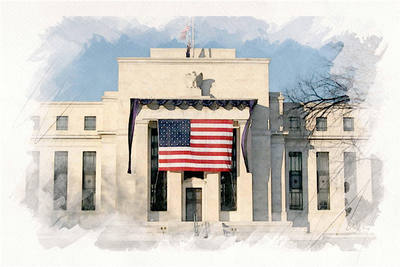
The Federal Reserve-centered network of currency swaps has increasingly become a key tool for the U.S. to uphold the dollar’s global dominance, serving as a vital liquidity safety net for the global financial system.
The Fed defines currency swaps officially as temporary central bank liquidity arrangements established with foreign central banks to address severe stress in global short-term dollar funding markets. These allow foreign central banks to provide dollar liquidity to financial institutions within their jurisdictions.
If Trump gains the power to dismiss the Fed chair, the administration could influence swap operations through personnel appointments and informal pressure. Should this mechanism be selectively deployed for geopolitical purposes, the very foundation of the global financial system could be shaken.
Take Europe as an example. Data shows the eurozone banking system faces a persistent dollar funding gap. Losing access to swap lines could trigger liquidity collapse among European financial institutions, potentially sparking a Lehman-style chain reaction. If the Fed weaponizes the withdrawal of swap lines, Europe might be forced to concede on trade and energy policies—and even make compromises in U.S.-Europe tariff talks.
A Dollar “Nuclear Option” Stronger Than Tariffs
TechFlow previously reported that Deutsche Bank analysts described the Fed’s dollar swap mechanism as a “nuclear weapon” more powerful than tariffs.
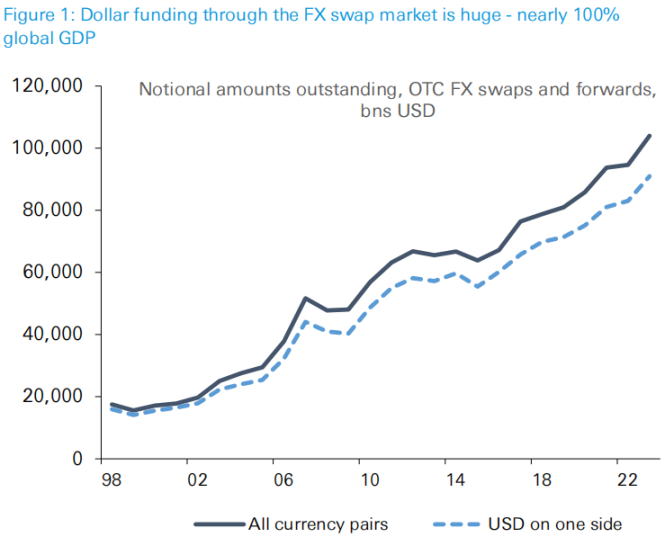
Deutsche Bank noted the Fed’s dollar swap lines effectively control a foreign exchange swap market valued at approximately $97 trillion—roughly equivalent to global GDP—and serve as a lifeline for non-U.S. institutions to access dollar liquidity during crises.
If Trump targets the Fed’s swap mechanism—the proverbial “nuclear button”—a U.S. refusal to provide dollar liquidity at a critical moment could trigger a severe global financial crisis.
Join TechFlow official community to stay tuned
Telegram:https://t.me/TechFlowDaily
X (Twitter):https://x.com/TechFlowPost
X (Twitter) EN:https://x.com/BlockFlow_News