Lunchtime Chat: HashKey Chain and Taiping Hong Kong Explore the Path to RWA Tokenization
TechFlow Selected TechFlow Selected
Lunchtime Chat: HashKey Chain and Taiping Hong Kong Explore the Path to RWA Tokenization
Institutional adoption of Web3 is not something that can be achieved overnight; it requires finding viable pathways within existing regulatory frameworks and striking a balance between innovation and stability.
 Navigating Web3 tides with focused insights
On April 6, at the WEB3 Festival, a fireside chat titled "When Financial Institutions Meet Web3" attracted significant attention.
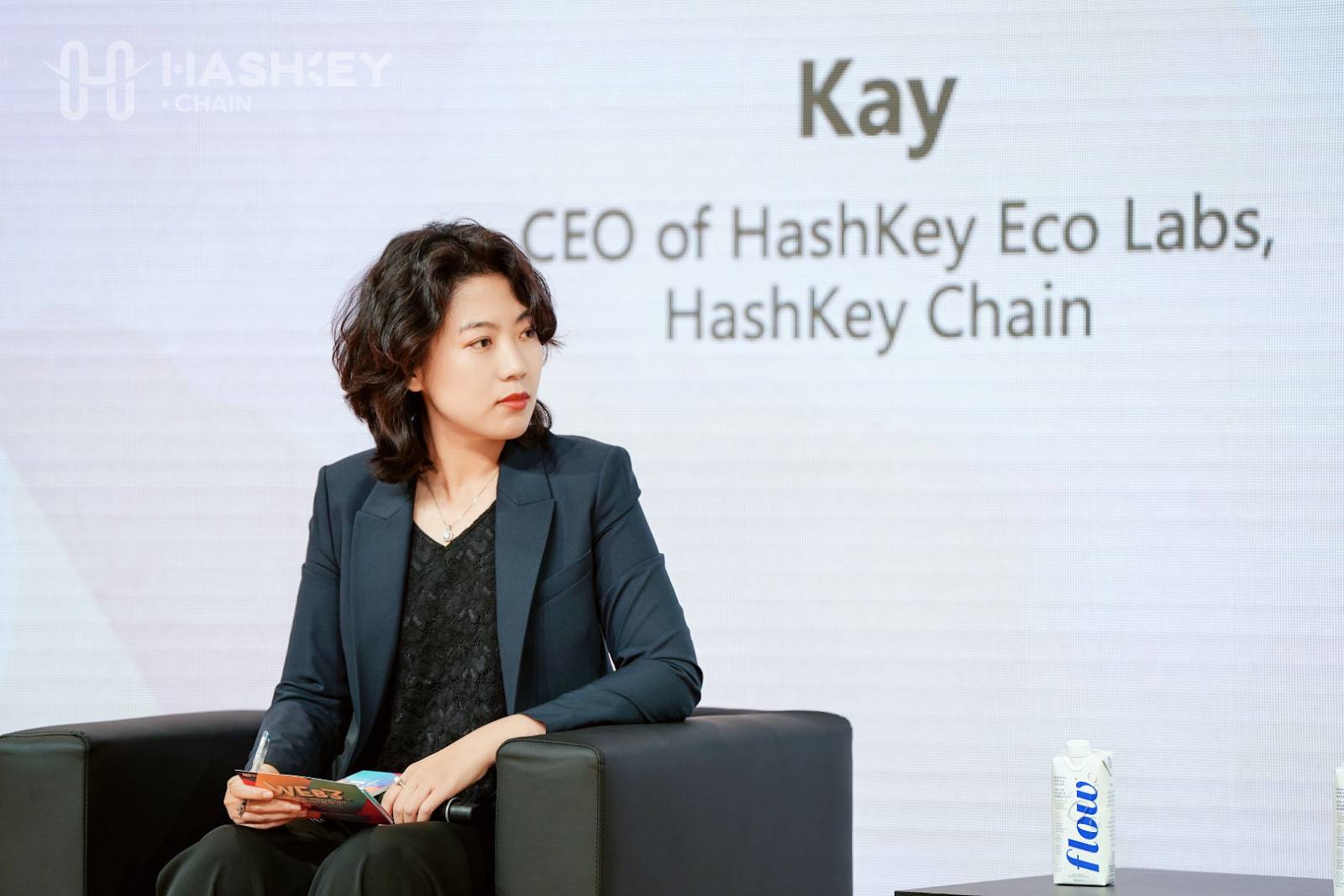
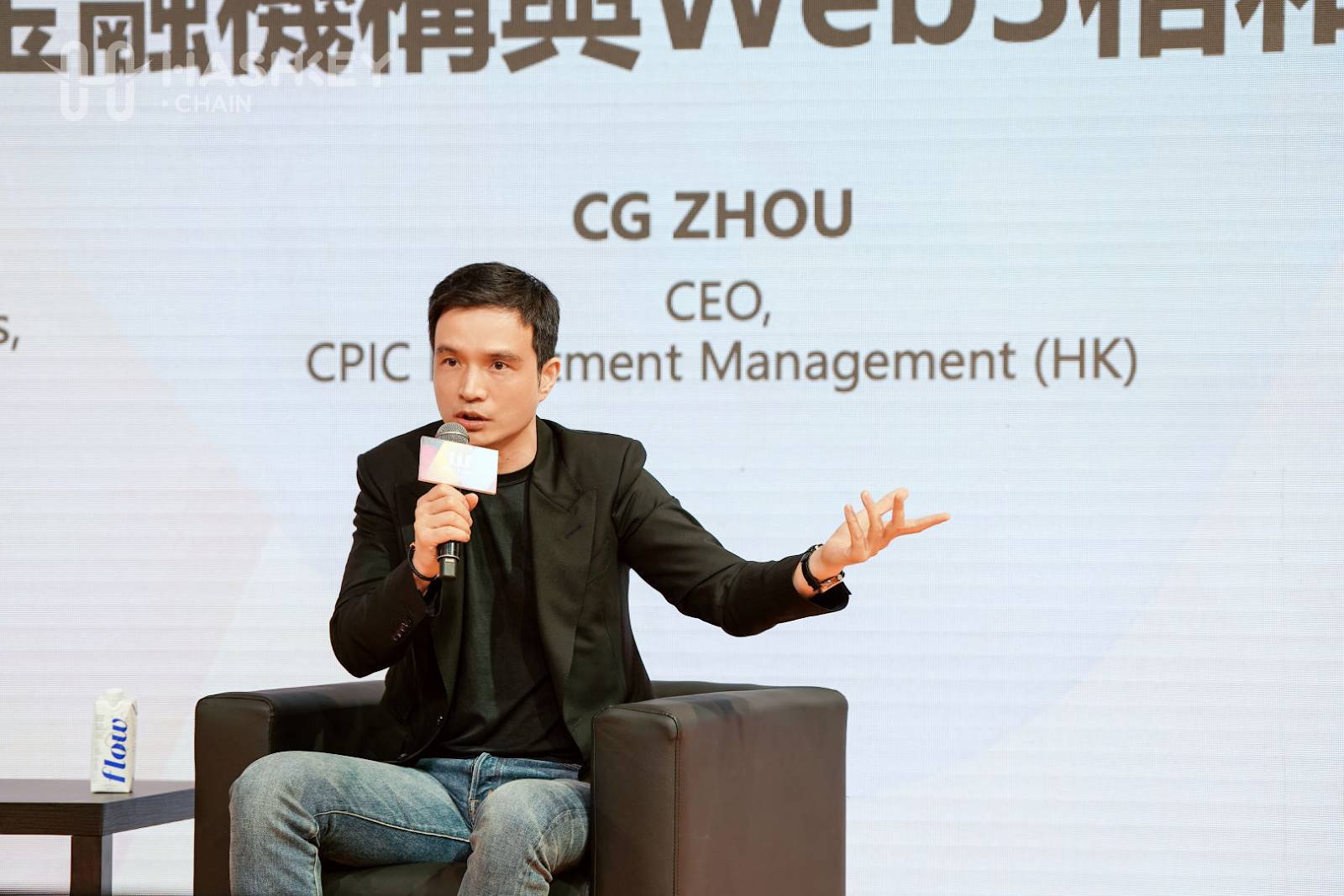
Kay, CEO of HashKey Eco Labs, engaged in an in-depth discussion with Mr. CG Zhou, Founder and CEO of CPIC Investment Management (Hong Kong), on blockchain technology, digital assets, and the future trends of RWA. Below is the full transcript:

Kay: Just now, we noticed at the back of the venue that this panel has been one of the most popular sessions throughout the entire event—completely packed, which clearly reflects how much attention the RWA sector is receiving from both Web2 and Web3 practitioners. The advancement of RWA cannot happen without participation and support from traditional financial institutions, nor can it succeed without the integration of Web3 technologies and philosophies. Today, we’ll dive deep into the theme of “the convergence between Web3 and traditional finance.”
I’m Kay, and I’m honored to moderate today’s panel. We’re also joined by a distinguished guest—Mr. CG, Founder and CEO of CPIC Investment Management (Hong Kong). Welcome! Please say hello to our audience and introduce yourself.
CG: Thank you, Kay. Good afternoon, everyone. I’m CG from CPIC Asset Management Hong Kong. I walked around the venue earlier and indeed found that our session drew tremendous foot traffic—arguably the liveliest one today. Thanks so much for your interest and support.
1. The Motivation and Timing Behind Traditional Financial Institutions Entering Web3
Kay: In recent years, blockchain technology has gradually moved from concept validation to real-world application. Particularly in traditional finance, more and more institutions are beginning to focus on tokenization, transparency, and efficient asset transfer. CPIC Hong Kong has taken a major step forward by launching a tokenized USD money market fund—CPIC Estable MMF—using HashKey Chain as its underlying blockchain infrastructure. On its first day of subscription, it reached $100 million in inflows. This isn’t just a product innovation; it's also a strong signal for industry development.
Today, we want to explore: Why are long-established financial institutions like CPIC starting to pay attention to Web3? From an institutional perspective, what value does blockchain offer? And what opportunities lie ahead?
As someone from the Web3 ecosystem, I’d like to ask Mr. Zhou: Web3 was initially driven by tech-savvy developers and native players, but in recent years, traditional institutions have rapidly increased their engagement. Blockchain has evolved from a “geek toy” into a critical piece of financial infrastructure—all within less than a decade. As the leader of CPIC Hong Kong, how do you view this rapid transformation?
CG: From our standpoint, entering RWA or asset tokenization felt very natural—almost inevitable. We obtained relevant licenses from the Hong Kong Securities and Futures Commission (SFC) two years ago and have since launched four crypto funds. Over a year ago, we were already considering moving into tokenization or RWA. Interestingly, at that time, the term “RWA” wasn’t widely used yet, if at all. For us, we’ve always been RWA managers—we manage stocks, bonds, and other real-world financial assets, not pure cryptocurrencies. So stepping into this space was a logical extension of our existing work.
When we began preparing RWA projects over a year ago, we didn’t anticipate that discussions at events like today’s WEB3 Festival would center so heavily on RWA. We certainly didn’t expect it to become such a hot topic. Our original motivation was quite simple: yield-generating models on-chain seemed limited to just two main sources—trading fees and lending interest. Beyond that, many so-called “yield” streams were essentially based on issuing speculative tokens, which we viewed with skepticism.
Given that we manage real-world assets with stable, sustainable returns, we wanted to tokenize these assets and bring them onto the chain—to provide Web3 ecosystems with products backed by genuine underlying yields. This fills a market gap and helps challenge misconceptions within traditional finance about Web3 being merely a “closed-loop” system without substance. Through initiatives like ours, we hope to lay a stronger value foundation for Web3 and promote healthier industry growth.
2. Practical Challenges Facing Institutional Transformation
Kay: Thank you, Mr. Zhou, for that insightful sharing. It reminds us of an important truth: great innovations often stem from consistent, incremental efforts. It is precisely because of your deep understanding and long-term experience in finance that CPIC Hong Kong has been able to set a benchmark case in the Web3 space.
But let me pose a more concrete question. We often describe traditional institutions entering Web3 as “an elephant turning around”—large in scale, complex in process, facing numerous practical obstacles. Institutional participation also brings higher expectations regarding security, compliance, and liquidity. Mr. Zhou, what specific challenges did CPIC Hong Kong encounter during your exploration of Web3? How did you gradually adapt, resolve issues, and ultimately bring your project to life?
CG: That’s an excellent question. Two years ago, when we obtained our SFC license and started setting up crypto funds, we reviewed many similar funds in the market. What we found was concerning—many lacked robust internal controls, and some didn’t even have proper middle- or back-office operations. Such shortcomings would be unacceptable in traditional finance.
So when people in the Web3 community asked us, “What are you here for?” or “What can you bring?” my answer was straightforward: we aim to bring decades of mature practices and standardized processes from traditional finance into Web3 asset management—especially in areas like security, risk control, and compliance—so we can establish standards comparable to those of traditional funds.
Of course, we must also face reality. Current Web3 infrastructure is still far from mature. The most obvious issue is custody. In traditional asset management, custodial services are well-established and secure. But in Web3, everything—from custody and banking interfaces to fund administration—is still being figured out.
Right now, we operate at about 70%–80% of the standard expected in traditional funds—an already high bar within the industry. We remain honest and transparent, and we believe that as infrastructure continues to improve, we’ll be able to raise this level further, achieving true integration between traditional finance and Web3.
3. Choosing the Right Path for Asset Tokenization
Kay: Thank you, Mr. Zhou, for this candid and enlightening response—it answers a long-standing question for many of us: why haven’t more traditional asset managers progressed faster in going on-chain? The truth is, current Web3 infrastructure still falls short of meeting the rigorous standards long established in traditional finance.
This is exactly where HashKey, as a licensed entity in Hong Kong, adds value. Rooted in Hong Kong, we offer comprehensive compliant services across public chains, exchanges, custody, and more—providing full-stack infrastructure support for asset tokenization. We look forward to deeper collaboration with CPIC Asset Management in the future.
RWA is one of the hottest topics in Web3. Especially in recent years, whenever RWA comes up, people tend to focus on bonds, real estate, and similar assets. However, insurance asset managers hold much broader portfolios. In your view, which types of assets are best suited for early-stage tokenization? Could we eventually see CPIC bringing policies, infrastructure investments, or other core “anchor” assets onto the blockchain?
CG: This is a key question. Internally, we’ve had extensive discussions, and at this stage, we’re focusing exclusively on tokenizing financial assets—not physical ones.
Why? Because the essence of tokenization is issuing a token on-chain that represents a real-world asset. Ensuring a strong, verifiable link between the token and the underlying asset is both foundational and extremely challenging. Take a physical item like a bottle of Moutai liquor—how do you prove that the actual bottle exists? If it gets consumed, damaged, or turns out to be counterfeit, the trust connection between the token and the asset breaks down completely.
In contrast, financial assets—especially standardized ones like fund shares—can be legally structured to ensure clear binding between the token and the underlying asset, making them easier to regulate and custody. That’s why we currently only pursue tokenization of financial assets under the RWA umbrella.
Another critical point: Why tokenize at all? This shouldn’t be a decision driven by trend-chasing, but one grounded in solid financial logic and tangible benefits. We see two core values in RWA:
First, lowering barriers and expanding access. Certain high-threshold asset classes were previously accessible only to institutions. Tokenization enables retail investors to own fractional shares of these assets.
Second, improving efficiency—easier trading, lower costs, faster settlement. If tokenization doesn’t significantly enhance liquidity, efficiency, or security, then it lacks purpose. For example, tokenizing a bottle of Moutai doesn’t create meaningful added value—it only introduces unnecessary complexity and cost.
Take real estate: while there are already mature securitization mechanisms like REITs, whether further tokenization is needed depends on a careful analysis of its value proposition. If it doesn’t unlock new financial advantages, doing it just for the sake of being “on-chain” is unsustainable.
To sum up, with RWA, the first question must always be “why?”—only then should we address “what” and “how.” Only tokenizations that deliver real value are worth pursuing.
4. Advice for Traditional Financial Institutions Entering Web3
Kay: This is truly valuable insight for every practitioner here. Mr. Zhou’s perspective serves as a powerful reminder to dig into the fundamental questions—especially for those exploring RWA issuance. Building on that, may I ask: do you have any practical advice for traditional financial institutions still observing from the sidelines? For institutions hesitating on whether to enter, what foundational capabilities should they build? Any recommendations on organizational structure, talent strategy, or technology selection?
CG: First, I firmly believe RWA is a highly certain, trend-driven direction. As a traditional finance professional, I’ve seen many “hype cycles” in Web3 over the past few years—whether in technology, ecosystems, or applications. Many projects emerge quickly but fade just as fast, and their sustainability is hard to assess. Among all Web3 directions, however, RWA is closest to traditional financial logic and holds the greatest potential for scalable adoption. It connects real-world assets with on-chain infrastructure—a linkage we can understand, evaluate, and trust.
Therefore, RWA is a worthwhile investment for traditional financial institutions. My suggestion: establish dedicated innovation teams or Web3 business units within your organization. Build talent pools with hybrid expertise—people who understand both finance and blockchain mechanics. Technically, you don’t need to build everything in-house, but you must choose reliable, secure, and compliant platforms—like HashKey, which we’re happy to collaborate with in this journey.
We look forward to seeing more traditional institutions join us in building and maturing the RWA ecosystem.
5. Closing Remarks
Kay: Institutional entry into Web3 is never instantaneous. It requires finding viable pathways within existing regulatory frameworks and striking a balance between innovation and prudence. The collaboration between CPIC and HashKey Chain is just the beginning. In the near future, we expect to see more traditional financial assets flowing efficiently via blockchain, and more institutions genuinely entering Web3—transitioning the industry from exploration to true maturity.
Today’s conversation reminded me of a quote: “History doesn't repeat itself, but it often rhymes.” From CPIC Hong Kong’s journey, we hear the harmonious resonance between traditional finance and Web3—a combination grounded in compliance, yet bold in innovation.
Thank you, Mr. Zhou, for such an authentic and thoughtful discussion. And thank you all for being here. May we soon see more Chinese institutions shaping the future of on-chain finance. Until next time!
Join TechFlow official community to stay tuned
Telegram:https://t.me/TechFlowDaily
X (Twitter):https://x.com/TechFlowPost
X (Twitter) EN:https://x.com/BlockFlow_News