









Promising not to lose next time, yet still losing: How does the market make us repeat the same mistakes?
TechFlow Selected TechFlow Selected
Promising not to lose next time, yet still losing: How does the market make us repeat the same mistakes?
Over time, you might learn to reduce your losses, but you'll still end up losing.
 Navigating Web3 tides with focused insights
Author: hitesh.eth
Compiled by: TechFlow
When I truly grasped Bitcoin’s potential in early 2017, it felt like discovering fire in the digital age. This wasn’t just another asset—it was a paradigm shift, a technology capable of redefining the very nature of money.
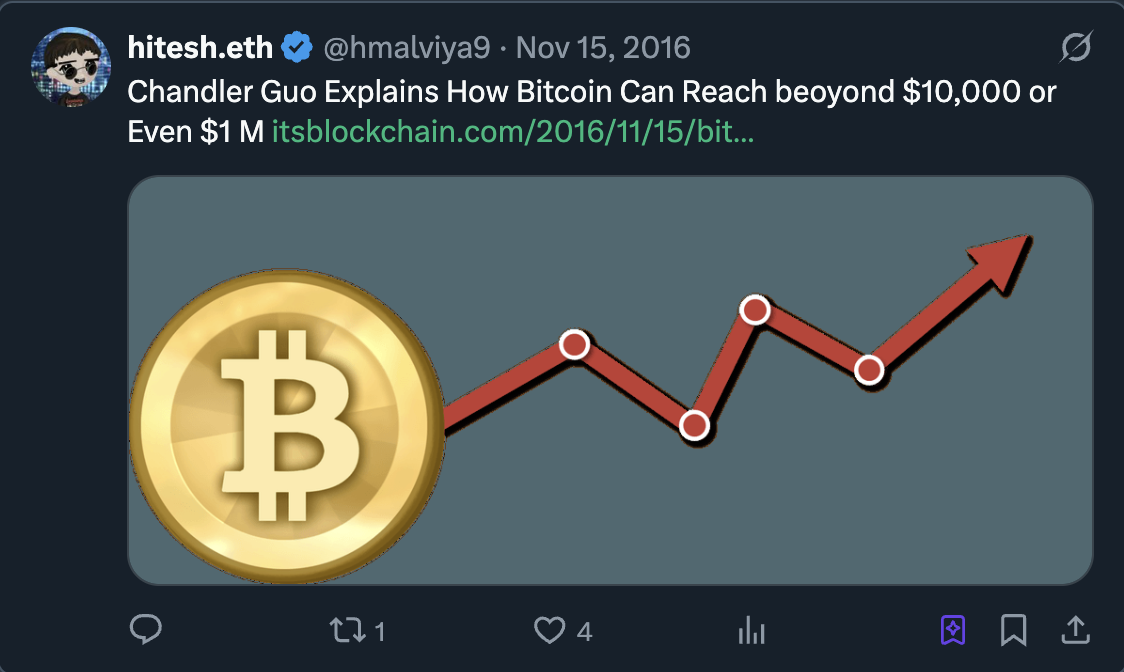
A decentralized system, free from governments and central banks, offering financial sovereignty to those who chose to participate. This wasn’t merely an investment; it was a revolution. And I wanted everyone around me to see what I saw.
I drafted a long message and sent it to 100 WhatsApp contacts, advising each person to buy Bitcoin and sharing a consulting service that could potentially help them grow their Bitcoin holdings. At the time, I had achieved some early success in alternative investments, so I thought doubling everyone’s Bitcoin position within months should be relatively straightforward. However, my understanding of the market was still in its infancy, and I didn’t fully grasp how narratives and sentiment could influence price movements in a market still so young.
I formed my perception based on the limited data available at the time. Most altcoins launched between 2015 and 2017 didn’t have long trading histories. Their price charts looked like endless upward trends, with occasional small pullbacks appearing merely as brief pauses before the next leg up.
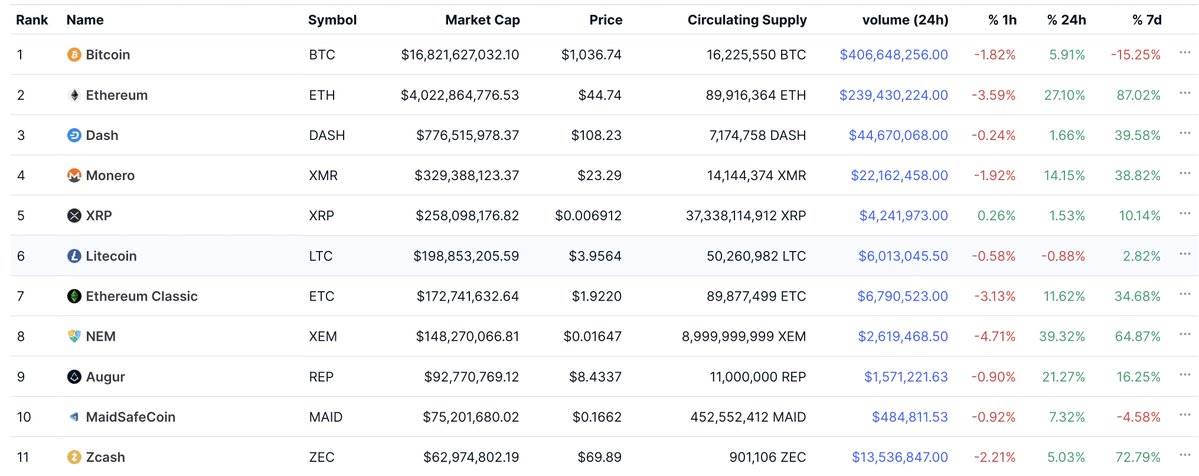
The pattern was intoxicating—buy, hold, wait, and watch your portfolio grow. The idea that the crypto market was “destined” to keep rising took root in my mind. Volatility didn’t scare me then; I saw it simply as part of the process.
In theory, I believed I could easily ride out those pullbacks, but the first major correction in Q2 2017 shattered that illusion. The market didn’t just correct—it collapsed. Most major coins from Q1 plunged to new lows, dropping 70%-80%. The floor beneath our feet vanished.
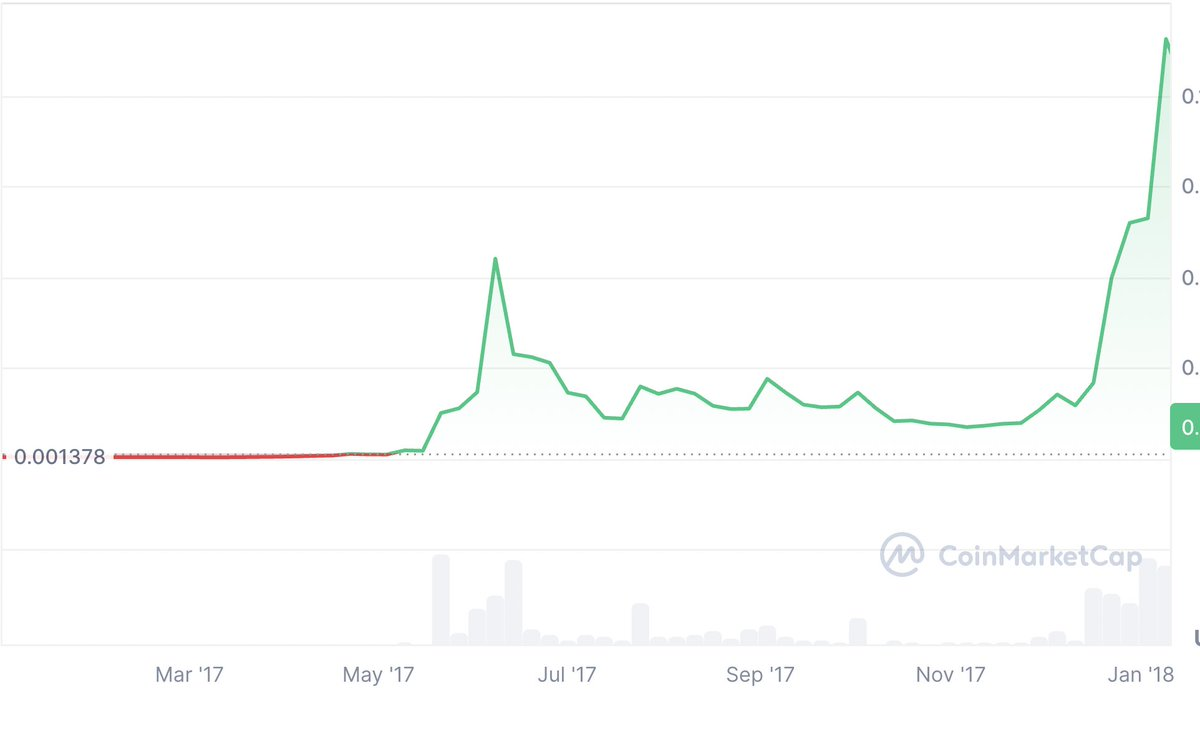
Watching your portfolio shrink day after day, excitement turned into panic, optimism into doubt. Still, I held on, believing this was just a phase before the next inevitable surge. In the end, rather than doubling anyone’s Bitcoin holdings, I lost 70%-80% of my own, returning to square one.
Uncertainty began piling up. Bitcoin surged from $10,000 to $20,000, while altcoins struggled to recover. Sentiment around Bitcoin became wildly chaotic—one day hailed as the future of money, the next declared “dead” across headlines. China’s bans, regulatory crackdowns, hacks—every negative headline sent shockwaves through the market. My initial conviction started to waver. Were we truly on the brink of a financial revolution, or was this just a speculative bubble bound to burst?
Then came January 2018—a month that completely reshaped my view of the market. Altcoins weren’t just recovering—they exploded. TRX surged 100x in weeks. Countless projects once deemed hopeless roared back, some gaining 10x or more. It was pure euphoria. Everyone felt like a genius.
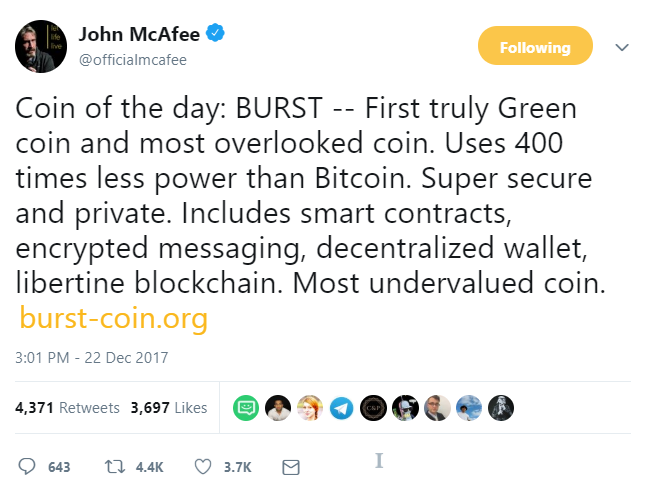
Months of anxiety vanished in a single green candle. Just like that, a new mental model formed in my mind—perhaps this is how the market behaves. Even after devastating drawdowns, it always returns stronger.
It was precisely this belief that created a layer of self-deception. We convinced ourselves this was the new normal. Every dip was merely setup for the next wild rally. We waited for that green month to return, believing patience would eventually pay off. But it never came. The market kept bleeding, and what once felt like an exciting game turned into a slow, painful awakening: we were trapped by our own expectations. The cycle had played its trick on us.
Each cycle brings moments of extreme euphoria, and in the last cycle, we saw the same phenomenon in NFTs. Certain NFT collections achieved 100x gains over three separate one-month periods. It felt like 2018 all over again. Hype, the belief that this was just the beginning, fear of missing out (FOMO)—it all unfolded in the same way. Because the cycle continued even after two corrections, we assumed “maybe this is just how the market works,” and kept holding (HODLing). Once again, we lost everything. I suffered heavy losses in NFTs, just as before.
They say learning from past mistakes makes you smarter, but the market always finds a way to make you forget. Your brain tricks you into believing this time is different. “Now I understand the rules. I won’t repeat the same errors.” But the deception is always there. That illusion of being in control, of having cracked the market’s code, keeps you in the game longer than you should.
And in the end, the market always wins. Over time, you might learn to reduce your losses, but you still lose.
We’re seeing it again now. This time, it’s agents’ turn. Public launches are delivering 100x returns overnight. ICOS are suddenly making a comeback. It’s all happening again—just repackaged. Once more, we believe this cycle might extend for a few more weeks or months.
And right then, we repeat the same mistakes—knowing full well what we’re doing, yet unable to stop. You can hardly control your emotions.
Perhaps right now, you’re thinking emotionally—that it’s all over, and only a few tokens will keep rising. But the market always moves against consensus, and it will play the same card again. You may be forced to either stay in the market or exit entirely—and that might be the only outcome for most retail investors.
The only way to truly win in this game is to maximize your gains when you’re in the market, and minimize missed opportunities when you’re out. Easier said than done.
Join TechFlow official community to stay tuned
Telegram:https://t.me/TechFlowDaily
X (Twitter):https://x.com/TechFlowPost
X (Twitter) EN:https://x.com/BlockFlow_News
 hitesh.eth










