








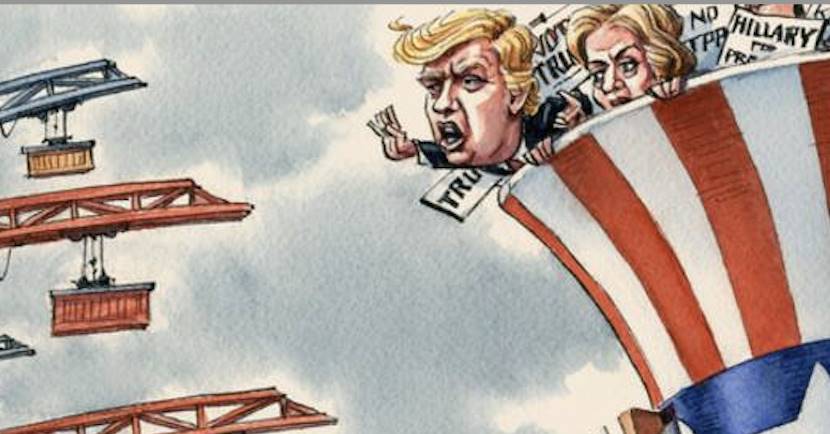
Trump Launches Global Tariff War: 10% Base Rate + "Sledgehammer" on 60 Countries/Regions, Besent Urgently Seeks to Prevent Retaliatory Battle
TechFlow Selected TechFlow Selected
Trump Launches Global Tariff War: 10% Base Rate + "Sledgehammer" on 60 Countries/Regions, Besent Urgently Seeks to Prevent Retaliatory Battle
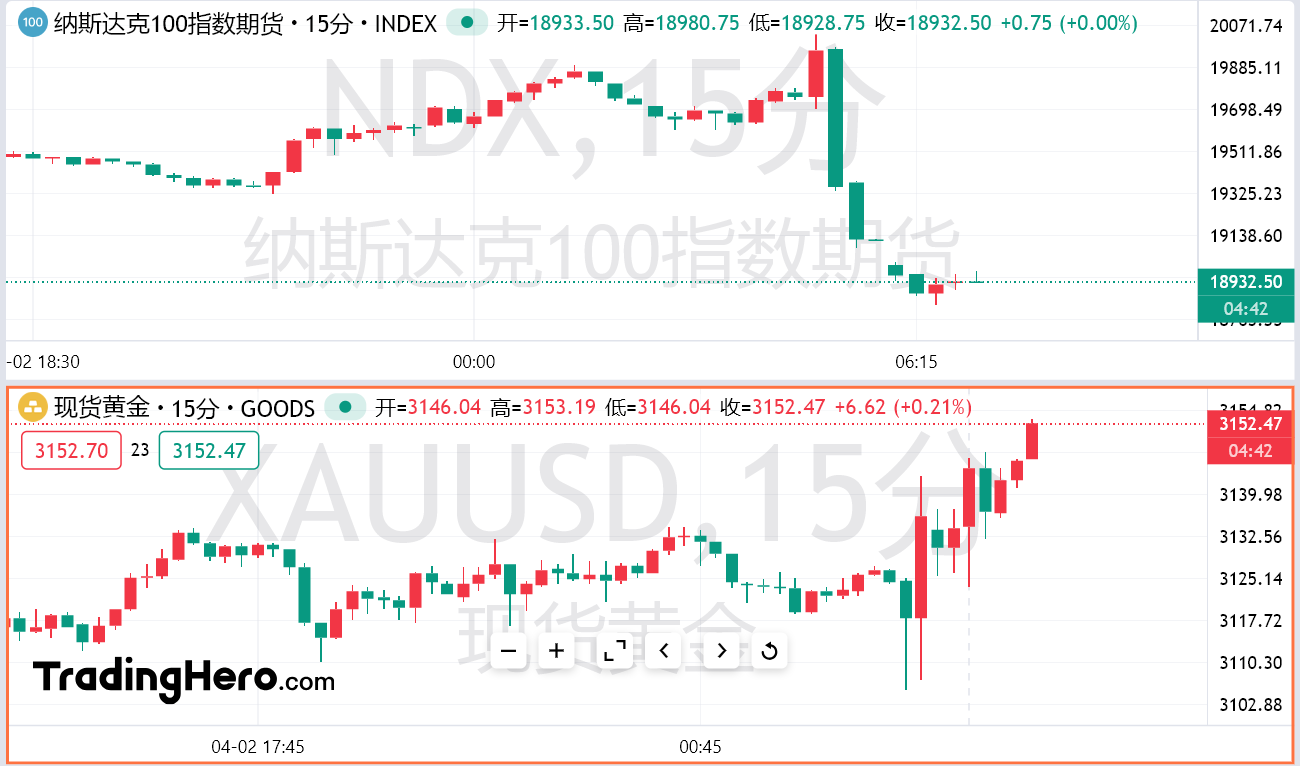
Besent urges countries to avoid retaliatory actions, Wall Street shocked as spot gold breaks 3150 to reach a new high.
 Navigating Web3 tides with focused insights
By Xiao Yanyan
Early Thursday morning, around 4 a.m. Beijing time, U.S. President Trump delivered a speech in the White House Rose Garden. He announced that he will impose a minimum 10% tariff on all exporters to the United States and additional tariffs on approximately 60 countries and regions with the largest trade imbalances with the U.S.—his most aggressive move yet against the global economic system he has long criticized as unfair.
"For years, hardworking American citizens have been forced to stand by while other nations grew rich and powerful—many at our expense," Trump said. "But now it's our turn to prosper."
The higher "reciprocal" rates targeted at nations deemed the worst offenders by the Trump administration are based on U.S. government calculations of those countries' tariffs and non-tariff barriers on American goods. Under Trump’s plan, countries facing higher, customized rates would be charged half of the calculated reciprocal amount.
"Today is 'Liberation Day'," Trump declared. "Shortly, I will sign an executive order on reciprocal tariffs. Jobs and factories will return to America. Prices for consumers will be lower. For countries treating us unfairly, we will calculate the total—including non-monetary barriers. The retaliatory rate will be half their tariff rate—it won't be fully reciprocal. We will impose 20% retaliatory tariffs on the EU country-by-country. We will impose 24% tariffs on goods imported from Japan."
According to senior White House officials, the baseline tariff rate (10%) will take effect early Saturday, April 5, while the reciprocal tariffs will go into effect early Wednesday, April 9. Trump plans to impose separate industry-specific tariffs on semiconductors, pharmaceuticals, and potentially critical minerals—items not covered under the new tariff regime. Trump will respond to retaliation from other countries to ensure emergency orders remain intact. Canada and Mexico already face 25% tariffs linked to drug trafficking and illegal immigration; these tariffs will remain in place, and as long as those separate tariffs apply, America's two largest trading partners will be excluded from the new tariff system. Exemptions for goods from Mexico and Canada compliant with USMCA will continue.
"This is not full reciprocity. It is goodwill reciprocity," Trump said. Trump's tariff order excludes gold.
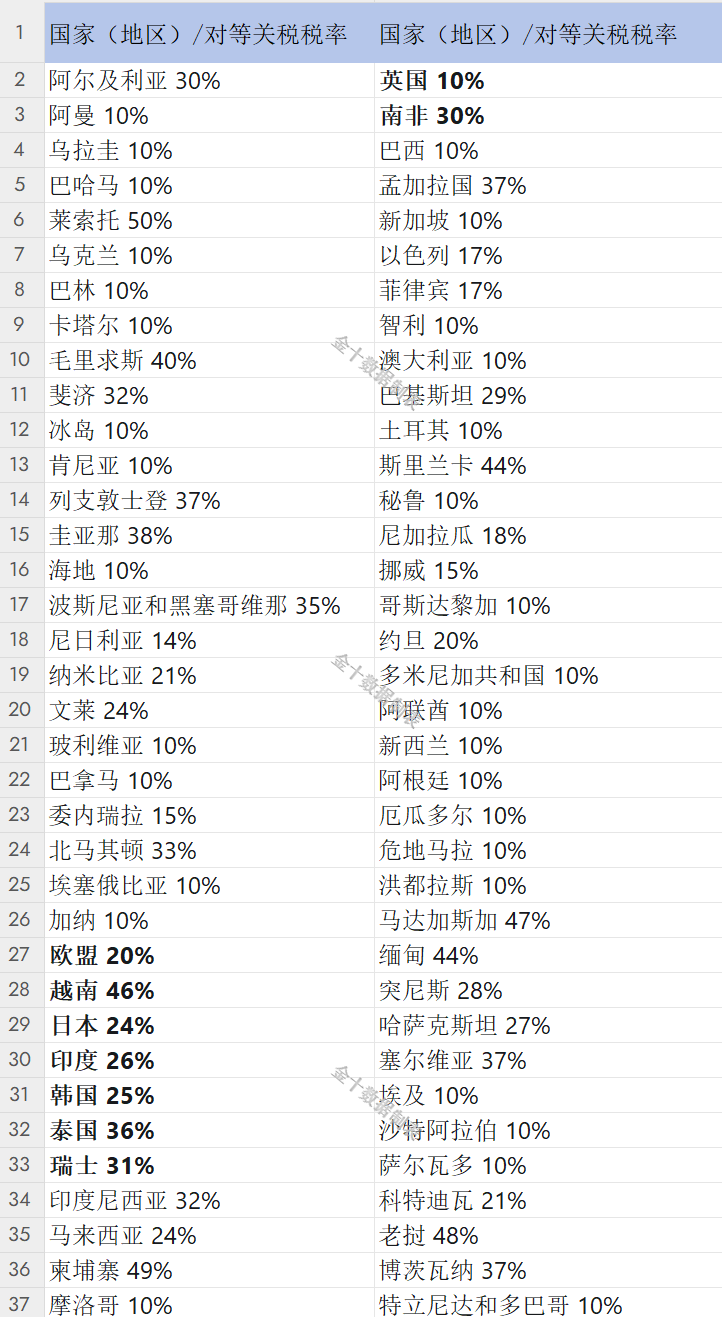
Selected U.S. Reciprocal Tariff Rates
White House documents show certain products will be exempt from reciprocal tariffs, including: steel/aluminum and automotive/auto parts already subject to Section 232 tariffs; copper, pharmaceuticals, semiconductors, and wood products; all items potentially subject to future Section 232 tariffs; gold; and energy and certain minerals unavailable to the U.S.
A Reuters analysis of tariffs listed in the Federal Register shows that Trump’s 25% auto tariffs will extend to nearly $600 billion worth of auto parts, covering vehicles, light trucks, engines, transmissions, lithium-ion batteries, and smaller components such as tires, shock absorbers, and spark plug wires. The auto-related tariffs will also cover all computer imports—including laptops and desktops—with $138.5 billion in imports recorded in 2024.
Mary Lovely, a senior fellow at the Peterson Institute for International Economics, said the tariffs announced by Trump on Wednesday were "worse than we feared." She noted that the exact implementation remains unclear and that the move “has massive implications for the reconfiguration of global trade routes.”
Trump stated he would consider lowering rates if other countries eliminate trade barriers on U.S. exports. "I say, terminate your own tariffs, abandon your barriers, don’t manipulate your currencies," Trump said.
Trump declared a national emergency related to the U.S. trade deficit, which exceeded $918 billion in goods and services in 2024—enabling him to unilaterally impose the broadest array of tariffs in generations under the International Emergency Economic Powers Act (IEEPA). The administration aims to revitalize American manufacturing through protectionist shifts and generate hundreds of billions in revenue from new taxes to replenish the U.S. Treasury.
This move represents a historic gamble, expected to raise the cost of hundreds of billions of dollars’ worth of goods shipped annually from other countries to the U.S. It could also trigger a global trade war marked by tit-for-tat measures, destabilize supply chains, fuel inflation, embolden U.S. economic rivals, and encourage foreign powers to form new alliances excluding the United States.
This posture presents Trump with a political dilemma: the economic costs of tariffs may arrive quickly, while any benefits in the form of structural adjustments to the U.S. economy could take years—or longer—to materialize.
U.S. Treasury Secretary Bessent said: "I urge all countries not to retaliate. We can see whether there might be different floor rates compared to the published numbers. Trump’s mindset may be to stabilize things temporarily. I haven’t been involved in negotiations—we’ll see if any talks emerge before April 9 (the effective date for reciprocal tariffs)."
Market Reaction
Risk assets initially strengthened after Trump’s announcement of a 10% blanket tariff—lower than expected—but soon reversed course. Nasdaq futures deepened losses to 4% Thursday morning, while S&P 500 futures dropped over 3%. The dollar index briefly fell 50 points before rebounding; Bitcoin surged more than $1,500 before retreating, now trading around $83,000 per coin. Spot gold dipped initially but then rose to a record high above $3,150 per ounce, while New York Comex gold futures touched $3,200 per ounce for the first time.
Wall Street traders were stunned. Strategists and fund managers are now closely analyzing the specific terms of the incoming import duties. With U.S. economic data already deteriorating and future trade negotiations expected to drag on, the bearish case for risk assets remains valid in the near term.
An alternative view holds that greater clarity in commercial policy could encourage bargain hunters to rebuild risk exposure in battered corners of equity and credit markets.
Brian Jacobsen, chief economist at Annex Wealth Management, said the situation could have been worse. Framing the tariffs as "reciprocal" might prompt officials to negotiate swiftly rather than retaliate. But tariffs still carry a cost—either through higher consumer prices or shrinking profits. Neither outcome is good for investors. "The market reaction is justified," Jacobsen said. "Now the key question is how long these tariffs will last."
Michael O'Rourke, chief market strategist at JonesTrading Institutional Services, said, "This looks worse than the 20% plan. Given how many U.S. products are manufactured across Asia, tariffs ranging from 20% to 34% are extremely high. This will slow trade, raise prices, and squeeze margins. It will further decelerate an already slowing economy by creating friction and distortions in global trade. I expect retaliation—and likely further escalation."
Matt Maley, chief market strategist at Miller Tabak + Co., said: "There hasn’t been any last-minute softening that some investors had hoped for. It appears the Trump administration isn’t concerned about the short-term market impact of these tariff policies. That means focus on earnings guidance over the coming weeks will be intense. If earnings expectations continue to decline, it will create even greater headwinds for stocks."
Chris Zaccarelli, chief investment officer at Northlight Asset Management, said: "If there’s a silver lining—and that remains to be seen—it’s the hope that these tariff rates are just the starting point for negotiations that ultimately lead to lower rates across the board."
Steve Chiavarone, portfolio manager and head of the multi-asset group at Federated Hermes, said: "If today’s announcement marks the peak of tariff severity—and the news flow from here centers on how countries negotiate lower rates—that could be positive for markets. This kind of sell-off over the next day or so might even create a buying opportunity. Today’s best-case scenario is low rates with de-escalation; worst-case is high rates with continued escalation. At this point, I’d rather face high rates with a path to de-escalation."
Priya Misra, portfolio manager at JPMorgan Asset Management, said: "We’ve been preparing for 'Liberation Day' by holding quality credit and buying intermediate-duration bonds as a hedge against slowing hard data. We’ll maintain this stance ahead of Friday’s nonfarm payrolls report. Tariffs introduce a stagflationary impulse, putting the Fed behind the curve. The economy and markets face multiple crosscurrents, with growth downside risks from: 1) tariffs (a tax on consumers and/or businesses); 2) government spending cuts via DOGE; and 3) uncertainty. My biggest concern is uncertainty—it’s affecting both businesses and consumers. If the next few months or quarters are consumed by trade negotiations, this uncertainty will persist. I worry some damage has already been done, and I’m concerned about the impact on economic growth."
Ed Al-Hussainy, interest rate strategist at Columbia Threadneedle, said: "Clearly, this is a concrete negative shock to the economy. The key point is that we must price in this negative impact upfront. Ultimately, it’s a tax—the question is who bears the burden. But regardless, you can’t view this as pro-growth. In the short term, it’s negative growth and positive inflation."
Dan Ives, managing director of global technology research at Wedbush Securities, said Trump’s sweeping tariff measures unveiled Wednesday are worse for markets than anticipated. "We characterize this package as ‘worse than the worst-case scenario feared by the market.’" He added that tech stocks will face ‘significant’ pressure due to tariffs, as investors grow anxious about demand destruction and supply chain disruptions. For Nvidia (NVDA.O) and other chipmakers with major supply chain exposure, concerns will center on pricing power, margin erosion, and what this means for the future of global supply chains. Apple (AAPL.O) also warrants attention, given that most iPhone production occurs overseas.
Join TechFlow official community to stay tuned
Telegram:https://t.me/TechFlowDaily
X (Twitter):https://x.com/TechFlowPost
X (Twitter) EN:https://x.com/BlockFlow_News






