Crypto Investment Frenzy: Why South Korea Has Become One of the Hottest Markets Globally?
TechFlow Selected TechFlow Selected
Crypto Investment Frenzy: Why South Korea Has Become One of the Hottest Markets Globally?
When wealth anxiety, materialistic values, and high risk tolerance intersect, this cryptocurrency investment frenzy—engaging nearly ten million people—has become a mirror reflecting South Korea's socioeconomic structure.
 Navigating Web3 tides with focused insights
Author: Zen, PANews
Looking at the global cryptocurrency market, few can match South Korean investors in terms of sheer intensity. They have repeatedly driven up prices on domestic exchanges, even creating a unique phenomenon known as the "kimchi premium"—where Bitcoin often trades 3–5% higher in South Korea than in global markets.
On February 3 this year, amid concerns over Trump-era tariff wars, South Korea’s Bitcoin “kimchi premium” surged to 9.7% at 2 a.m., marking a 10-month high since April 2024. While kimchi premiums typically rise during bull markets, they can also spike during panic sell-offs due to lower selling pressure on Korean exchanges compared to global counterparts.
The premium is even more extreme in the altcoin market, which Korean investors favor. In July last year, AVAIL token rocketed 1,300% on its listing day on Bithumb, South Korea’s crypto exchange—far outpacing gains seen on most other centralized platforms, with spreads exceeding 200% at peak levels.
Bai Yan-zhu, a researcher at the Korea Financial Research Institute, pointed out in a paper titled *Study on South Korea's Virtual Asset Market and Price Manipulation Phenomenon*: "Assets outside the top ten global virtual assets account for a relatively high proportion of trading volume in South Korea, making them prone targets for price manipulation." These manipulated investors resemble players from Netflix's hit Korean drama *Squid Game*—drawn into the game by financial temptation without fully understanding the rules, charging forward regardless.
Crypto Fever Sweeps South Korea, Investor Numbers Surge Across All Social Classes
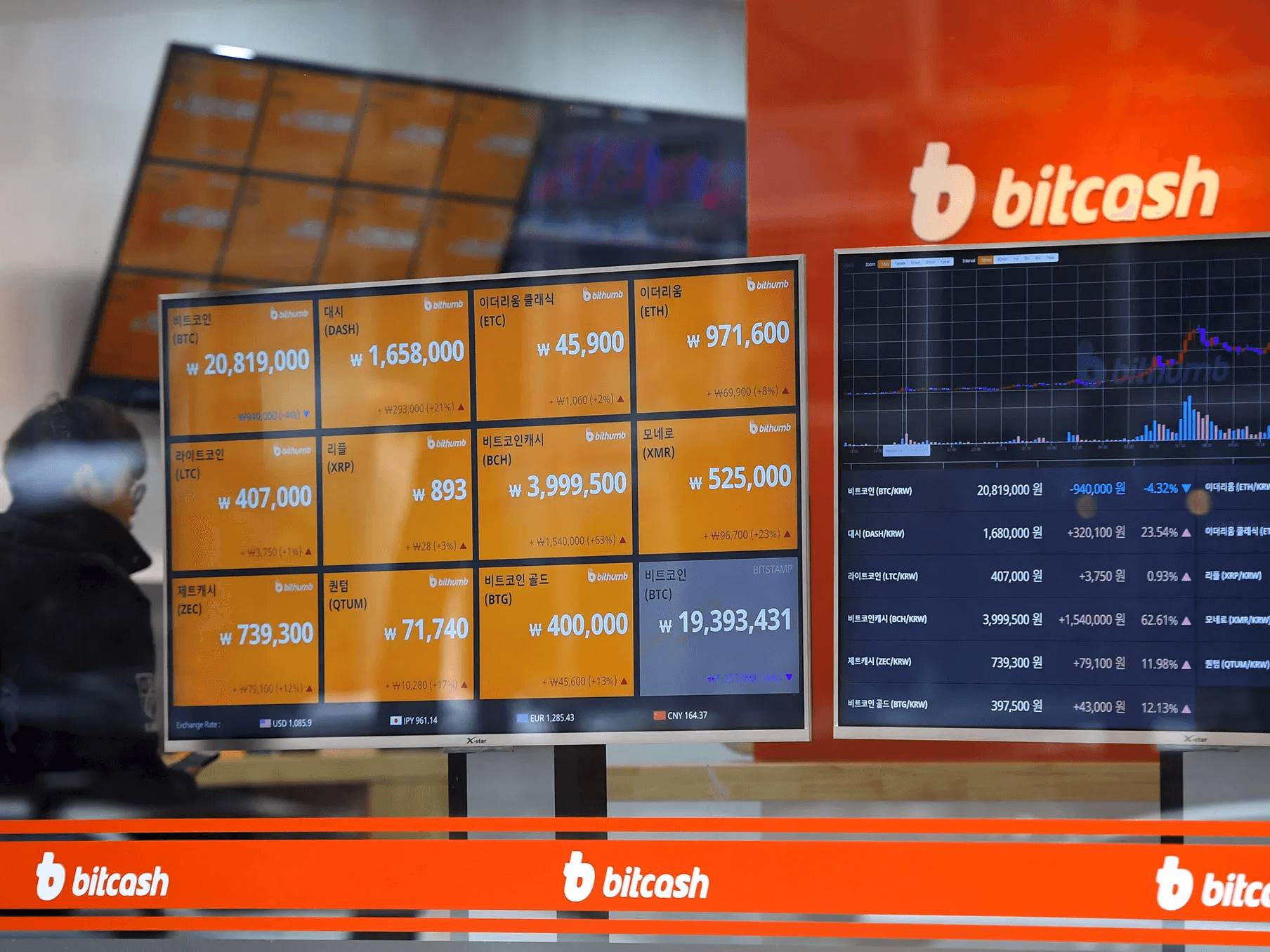
According to a report by Dong-A Ilbo, Democratic Party lawmaker Ahn Do-jeok disclosed on March 21 that data obtained from five major domestic cryptocurrency exchanges—Upbit, Bithumb, Coinone, Korbit, and Gopax—showed 9.667 million individuals held active trading accounts at the end of last year. This represents about 18.7% of South Korea’s population—an increase of 52.6% compared to the previous year. The total value of crypto assets held by these investors reached 105.01 trillion KRW (approximately $71.5 billion USD).
This crypto fever isn’t limited to retail investors—it has also deeply penetrated public officials. As revealed on March 27 by South Korea’s Public Officials Ethics Committee, more than 20% of the 2,047 government officials surveyed held cryptocurrencies, slightly above the national average. A total of 411 officials owned crypto assets worth 14.4 billion KRW ($9.8 million), averaging nearly $24,000 per person.
The surge in investor numbers has significantly boosted profits for South Korean crypto exchanges. According to The Korea Herald, Dunamu, operator of South Korea’s largest crypto exchange Upbit, saw its operating profit grow 85% year-on-year in 2024, reaching 1.19 trillion KRW ($811 million).
In reality, South Korean investors are not confined solely to local platforms. In recent years, there has been an increasingly evident trend of capital flowing to overseas exchanges. According to data disclosed in November by South Korea’s Financial Intelligence Unit (FIU), during the first half of 2023, the total value of crypto assets transferred from domestic to foreign exchanges amounted to 52.3 trillion KRW, with 203,000 users opting for platforms like Binance or Coinbase.
Besides large participation and significant capital inflows, South Korean investors exhibit notably aggressive risk appetites, showing strong preferences for highly volatile altcoins. On Upbit, approximately 80% of traded crypto assets are tokens other than Bitcoin and Ethereum, turning South Korea’s crypto market into a “speculative playground.”
So what exactly drives such intense enthusiasm for crypto investment among Koreans? According to Presto Labs’ report *Current State of the South Korean Cryptocurrency Market*, released last year, South Korea has consistently ranked among the world’s largest crypto markets since 2017, with the Korean won ranking second globally in fiat-to-crypto trading volume. The report attributes the country’s crypto investment boom to high internet penetration rates, a tech-savvy population, a risk-friendly investment culture, and cultural factors such as rapid trend diffusion within a homogeneous society.
Additionally, South Korean society’s deep-seated desire for wealth and material success has created fertile ground for speculation.
Materialism and the “Money Above All” Mentality
In recent years, the term “financial healing” (*geumyeong chiryu*) has become popular among young white-collar workers in South Korea—a concept referring to using money to heal emotional wounds, relieve depression, or reduce stress. It’s easy to imagine how exhausted office workers, worn down by long hours, suddenly feel joy when their salary or bonus hits their account—an instant relief from stress, sometimes even alleviating physical discomfort.
From a scientific perspective, this idea of “financial healing” may indeed be plausible. Humans are naturally wired for reward—they want their efforts to yield tangible returns. For M-generation (born 1981–1996) and Z-generation (born 1997–2010), who grew up in the era of globalization and the internet, money is often seen as a key measure of personal worth. At the same time, they face considerable economic pressures and place high importance on immediate returns. Thus, receiving financial rewards can effectively alleviate psychological stress.
To some extent, the widespread acceptance of “financial healing” among South Korea’s M and Z generations reflects how deeply ingrained it is to prioritize wealth accumulation under a system marked by weak economic stability and minimal social safety nets. The World Values Survey (WVS), in its latest round completed in 2018, confirmed this trend: 45% of South Koreans identified themselves as “materialists,” a rate significantly higher than Japan (21.6%), France (19.2%), and the United States (14.4%).

A November 2021 survey by Pew Research Center further found that South Koreans prioritize economic stability above all else, ranking “material well-being” as the top source of life meaning—above mental and physical health and family relationships. This stands in stark contrast to the other 14 countries surveyed, where “family and children” were considered the primary source of meaningful living. Under this mindset, money often dominates even interpersonal relationships.
This intense desire for wealth has led many South Koreans, especially younger generations, toward leveraged investing. According to statistics from South Korea’s Financial Services Commission (FSC), over the 12 months ending October 2024, total household debt in South Korea reached 476.9 trillion KRW, nearly 28% (134 trillion KRW) of which was borrowed by individuals in their 20s and 30s.
Moreover, jealousy and comparison are deeply embedded in South Korean society, exemplified by the proverb “When my cousin buys land, my stomach aches” (*sachoni ttangeul samyeon baega apeuda*). In such an environment, people are more likely to envy those who possess wealth. Especially when money becomes the ultimate benchmark for success, the craving for riches intensifies.
This hunger for financial gain makes ordinary investors idolize so-called successful traders, giving Korean crypto KOLs (key opinion leaders) immense influence. Through YouTube channels or Telegram groups, these influencers promote specific projects or urge followers to sign up via their referral links. Top-tier KOLs can earn millions of dollars monthly in commissions. Well-known streamer Inbeom even launched his own meme coin, BugsCoin. However, such figures often face serious accusations of “harvesting韭菜 (letting down followers),” yet retail investors in South Korea regenerate like weeds after every spring breeze—even after suffering massive losses from crises like Terra and FTX, they keep coming back.
Regarding these phenomena, Professor Jeon Hong-jin from the Department of Psychiatry at Samsung Medical Center noted that if one grows accustomed to “financial healing,” the craving for money intensifies over time. To achieve the same level of psychological satisfaction, ever-larger sums are required. But since material resources are finite, financial healing cannot serve as a permanent solution. He added: “If someone becomes addicted to cryptocurrency or stock investments merely to experience ‘financial healing,’ it could反而 trigger more severe mental health issues.”
Amid Rigid Wealth Structures, Crypto Emerges as an Escape Route
In South Korea, where class and wealth stratification are deeply entrenched, younger generations often lack opportunities for asset accumulation. Yet under the prevailing “money-first” ideology, the failure of traditional investment avenues combined with limited paths for wealth growth has paradoxically fueled the expansion of the domestic crypto market.
In South Korea, wealth accumulation has long relied on real estate and the stock market. Real estate, in particular, once considered the primary investment vehicle, has now become a drag on economic growth and a driver of social inequality. Both asset classes share a common trait: wealth accrual tends to benefit early entrants who hold long-term, forming powerful vested interest groups. These groups control pricing, policy influence, and market access, reinforcing a “Matthew effect” of wealth concentration—an ever-widening gap for ordinary citizens, especially youth.
With prohibitively high entry barriers in the housing market, young people—even with stable incomes—can no longer rely on traditional means to build wealth. Although the stock market has seen movements like the “Donghak Ants” (referring to retail investors), it remains largely dominated by institutional players, leaving individual investors with limited impact.
Han Young-seob, director of the Korea Society Financial Research Institute, stated: “South Korean society has shifted toward a survival-of-the-fittest mentality. Unlike Nordic countries, we don’t have a robust social security system. There are ongoing debates around issues like the depletion of national pensions. Older generations mainly discuss these problems from their own perspectives, leaving little room for youth voices.”
Against the backdrop of anxiety about present realities and future prospects, the cryptocurrency market offers an alternative path to wealth creation. Due to its decentralized nature, it is relatively free from control by established power structures. To beneficiaries of the traditional financial system, crypto may seem like an unfamiliar and illogical game—one that defies conventional financial logic and instead thrives on technology, community dynamics, and market sentiment.
Furthermore, because the crypto industry is still in its infancy, even those with limited capital can participate. Despite expectations that the market might undergo a bubble burst similar to the dot-com crash, many believe it will ultimately mature and enable wealth growth.
Under conditions of job insecurity, stagnant wages, and declining social mobility, cryptocurrency presents a new opportunity for economic advancement to those unable to improve their status through traditional routes. In essence, crypto has become a “symbol of hope.” Put differently, the crypto market may be a direct response to the inequalities generated by South Korea’s traditional wealth-building model.
Of course, this hope comes with risks.
Interestingly, contrary to common assumptions about investor demographics, recent disclosures by lawmaker Ahn Do-jeok also reveal a notable rise in middle-aged and elderly crypto investors: roughly one-quarter of crypto investors are over 50 years old. Among holders of over 1 billion KRW in virtual assets—the so-called “whales”—half are already past the age of fifty.
Professor Cho Yeon-sung from DaeSung Women’s University’s Department of International Commerce believes that before South Korea’s crypto market frenzy turns into full-blown mania, society must seriously consider viable solutions. At the core of these solutions should be strong regulation against the long-standing, law-defying monopolistic behaviors of vested interest groups, along with fundamental reforms to correct the severely skewed distribution of wealth.
Join TechFlow official community to stay tuned
Telegram:https://t.me/TechFlowDaily
X (Twitter):https://x.com/TechFlowPost
X (Twitter) EN:https://x.com/BlockFlow_News
 PANews