A brand-new mixing (washing) method: burn and mint again
TechFlow Selected TechFlow Selected
A brand-new mixing (washing) method: burn and mint again
The key technical point of EIP-7503 is that a contract on a blockchain can perform zero-knowledge verification of a burn transaction and mint an equivalent amount of new assets.
 Navigating Web3 tides with focused insights
Author: Huang Shiliang
Privacy and anonymity have always been central issues in the cryptocurrency space, and are among the most critical challenges facing the industry. Especially today, when nearly all crypto users rely on centralized, KYC-compliant exchanges—and with current U.S. policy pushing regulatory compliance into the mainstream—the crypto world is facing a severe crisis of broken anonymity.
A recent news story reminded me of an EIP I once came across, which I believe represents a revolutionary approach to restoring privacy on Ethereum—a fundamentally new way to address the collapse of transactional anonymity.
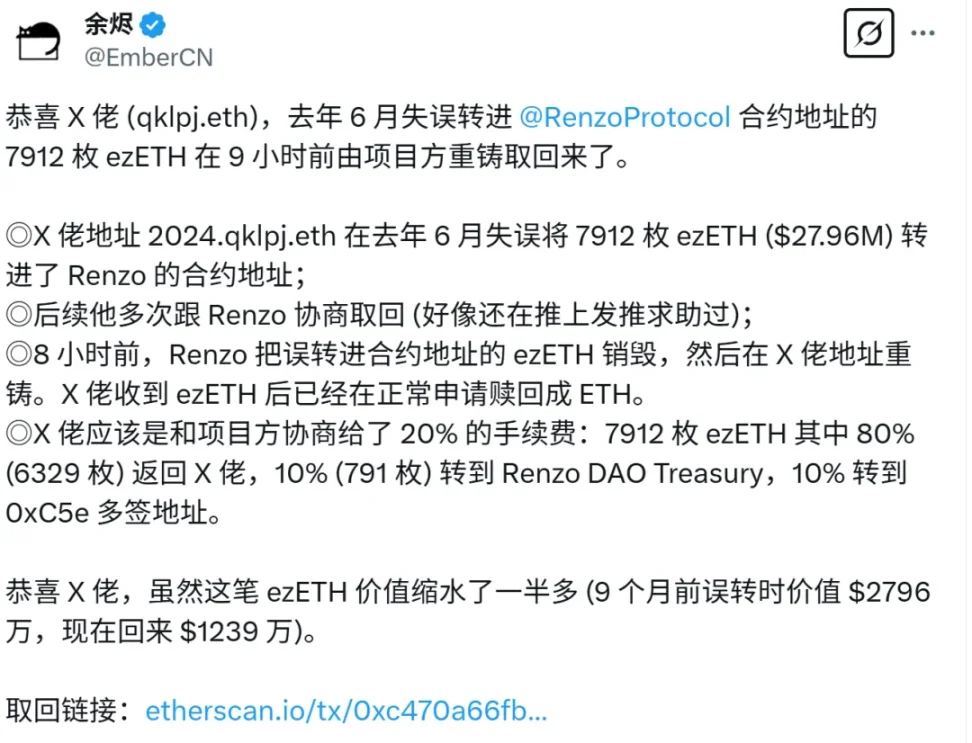
The story goes like this: half a year ago, someone accidentally sent a token (an ERC20 token with minting capabilities) to the project’s smart contract address. In theory, since that contract address has no private key, the assets were irretrievable—permanently locked. But surprisingly, the project team simply minted a new batch of tokens and sent them to the user. Effectively, they acknowledged that the original tokens were destroyed and issued an equivalent amount as replacement.
It's like sending USDT to a contract address from which it can never be withdrawn—unless the contract explicitly includes a withdrawal function. But instead of being stuck, you could contact Tether Ltd. and ask them to mint you a fresh batch of USDT, because they know your original coins are gone. So why not just issue new ones?
Now here’s the key point: if Tether directly sends the newly minted USDT to a completely new wallet address, wouldn’t that break the entire historical transaction trail of the original USDT?
This is, in essence, an entirely new form of coin laundering.
There’s actually an EIP designed specifically for this purpose: EIP-7503 (https://eip7503.org/).
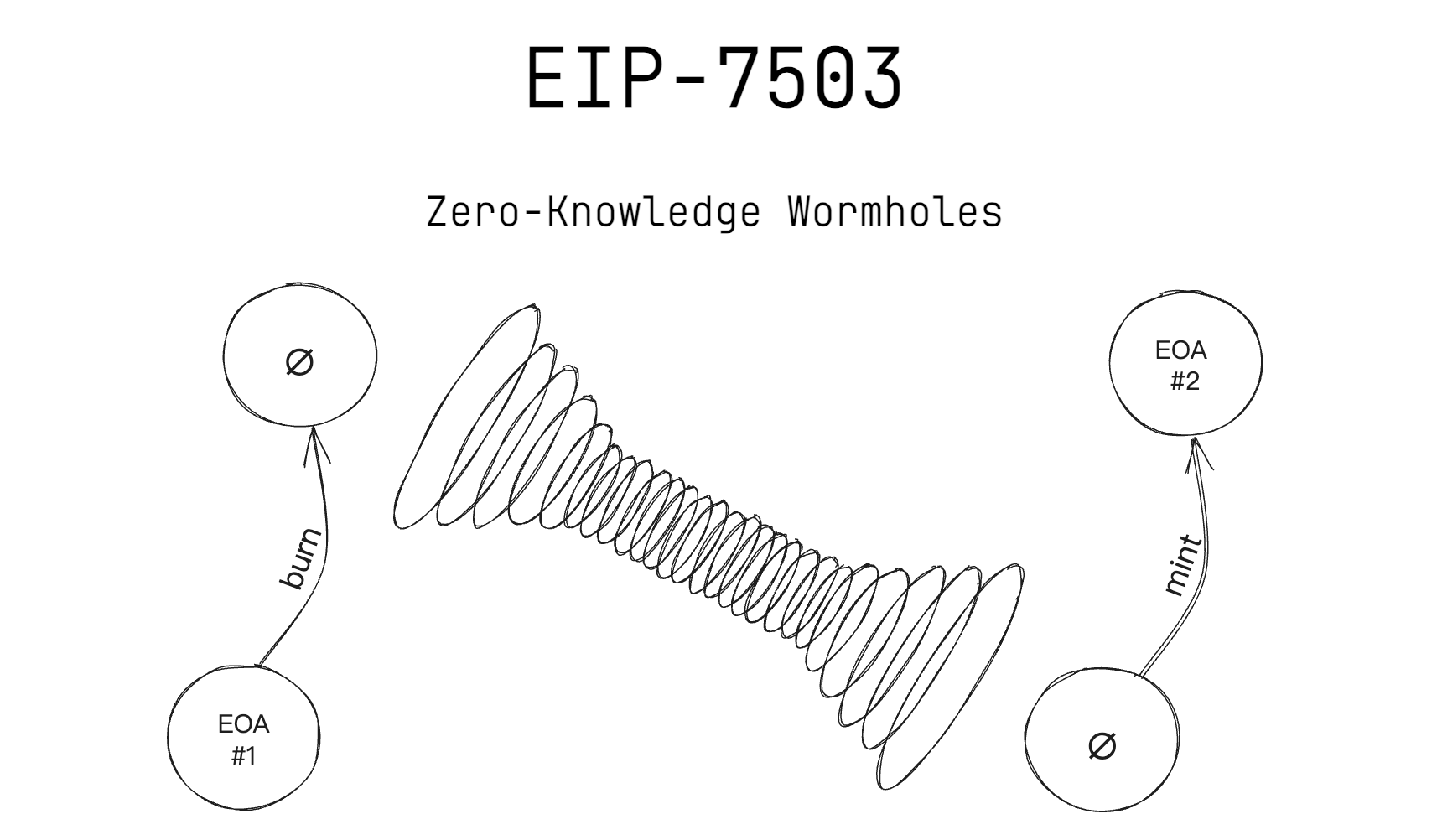
Here’s how EIP-7503 works:
Any address can send asset X to a burn address (the zero address, which has no private key—sending assets there equals destruction).
Using the transaction record of this burn and the user’s private key, a zero-knowledge proof can be generated.
This zero-knowledge proof can then be used to call a contract implementing EIP-7503, which mints an equal amount of asset X and sends it to a brand-new address—completely unrelated to the original one.
The key technical innovation of EIP-7503 is enabling a smart contract on-chain to verify the burn transaction via zero-knowledge proofs and then issue new, equivalent tokens.
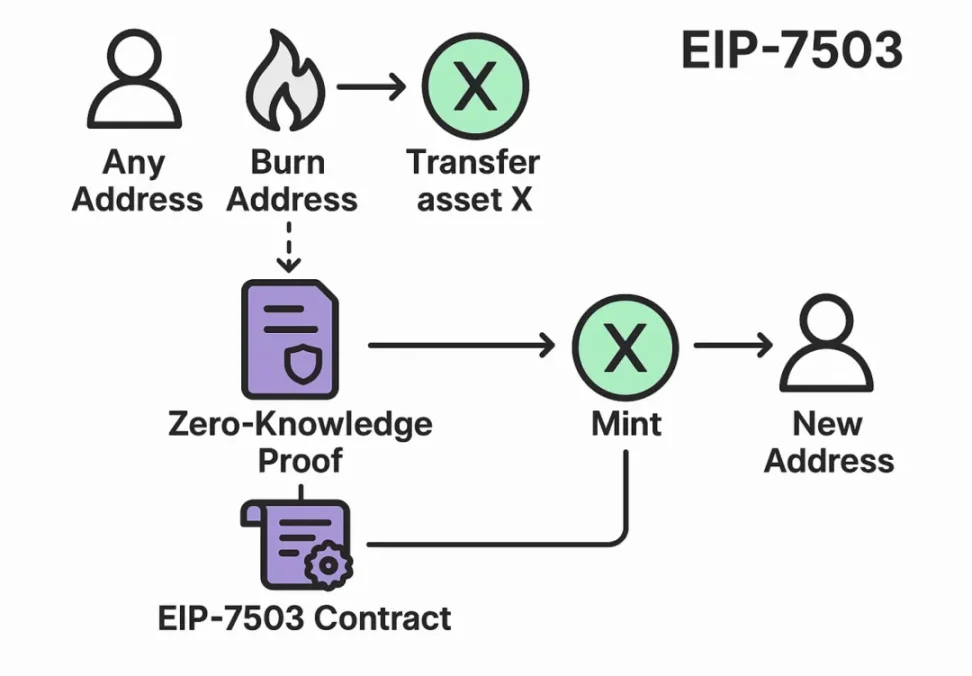
(Side note: ChatGPT 4o’s text-to-image generation is damn impressive at conveying textual concepts visually.)
Of course, under Ethereum’s current consensus mechanism, burning ETH and then using that burn transaction to request freshly minted ETH from a contract is impossible.
ETH can only be issued through PoS block rewards—this is one of Ethereum’s core rules, and it cannot be changed.
However, EIP-7503 can work in collaboration with ERC20 token issuers, or rather, ERC20 issuers could choose to implement EIP-7503 functionality directly within their own tokens.
For example, USDT could theoretically adopt such a feature. Although realistically, Tether probably won’t do this—it would undermine their blacklist mechanism—but let’s use it as an illustrative example.
Currently, USDT has only one issuer: the Tether-controlled USDT contract, which holds exclusive minting rights.
If Tether fully trusted EIP-7503, they could add a new function to the USDT contract allowing new USDT to be minted based on EIP-7503 rules—specifically, permitting calls to mint new tokens upon submission of a valid zero-knowledge proof proving prior destruction, with the newly minted tokens sent to a fresh, unrelated address.
This would completely sever the transaction history of the original USDT.
This is a profoundly effective method of laundering coins.
And if EIP-7503 is combined with Ethereum’s upcoming major upgrade, Pectra—which enables contracts to pay gas fees on behalf of users—then the anonymization becomes even more complete.
Because right now, using EIP-7503 still requires users to obtain some ETH elsewhere to cover gas fees. But imagine a scenario where after laundering via EIP-7503, the user receives funds in a brand-new Ethereum address that has no prior transaction history—not even gas. They could then spend these funds using Pectra’s contract-paid gas feature, achieving near-total anonymity.
Currently, EIP-7503 does not have support from the Ethereum Foundation. On the official Ethereum EIP list (https://eips.ethereum.org/all), EIP-7503 remains just a draft.
I think this idea is extremely important. There’s still a long road ahead.
Join TechFlow official community to stay tuned
Telegram:https://t.me/TechFlowDaily
X (Twitter):https://x.com/TechFlowPost
X (Twitter) EN:https://x.com/BlockFlow_News