Trump's Tariff Hikes: How Should Crypto Companies and Investors Respond?
TechFlow Selected TechFlow Selected
Trump's Tariff Hikes: How Should Crypto Companies and Investors Respond?
This article will review the tariff measures implemented during Trump's term and explore their potential impact on the cryptocurrency market as well as possible response strategies.
 Navigating Web3 tides with focused insights
Author: FinTax
One of the core economic strategies of the Trump administration is an aggressive foreign trade policy. During his first term, the U.S.-China trade war—centered on tariffs—drew global attention. Now that Trump has returned to the White House, his protectionist stance has become even more assertive, with renewed tariff hikes taking center stage. This will inevitably reignite global trade tensions, trigger a series of economic chain reactions, lead to economic volatility and even regional hot conflicts, and create profound uncertainty for the cryptocurrency market. This article reviews Trump's past tariff policies during his presidency and explores their potential impact on the crypto market as well as possible response strategies.
1. Overview of Trump’s Tariff Policy
1.1 Trump Tariff 1.0 in 2018
On March 23, 2018, Trump signed a trade memorandum targeting China, announcing tariffs on $60 billion worth of Chinese imports and restricting Chinese corporate investments and mergers in the U.S., officially igniting the U.S.-China trade war. Since then, the U.S. has continuously expanded its tariff scope, covering not only high-end manufactured goods but also daily consumer products such as aerospace equipment, industrial machinery and components, automobiles and auto parts, electronics, apparel, home goods like bags, furniture, and lighting. The imposition of tariffs on electronic products poses a threat to mining hardware manufacturers. For example, Bitmain, which once held 90% of the Bitcoin mining machine market share, was significantly affected by Trump’s 2018 tariffs and relocated some production lines from China to Southeast Asia. Beyond China, the U.S. also imposed tariffs on multiple countries and regions globally, aiming to reduce trade deficits and protect domestic industries through tariff measures—prompting retaliatory tariffs from other nations.
1.2 Trump Tariff 2.0 in 2025
On January 20, 2025, Trump signed the "First Trade Policy Memorandum of the United States," emphasizing the importance of protecting the American economy and national security, including addressing trade imbalances, investigating unfair trade practices, strengthening economic and trade relations with China, reviewing export control measures, and safeguarding the interests of American workers and manufacturers.
Following this, the U.S. gradually implemented new tariff measures against several countries. Initially, a 10% tariff was imposed on all goods imported from China, later increased by another 10%, effective March 4. The cumulative U.S. tariff rate on Chinese goods rose to 20%, and when combined with the previous 25% tariff under Section 301, key technology equipment (such as servers, storage devices, semiconductors) could face combined rates as high as 45%-70%, significantly impacting the crypto industry. Additionally, 25% tariffs were imposed on goods from Canada and Mexico. Treasury Secretary Bessent stated that reciprocal tariffs would be assigned to each trading partner. In addition to country-specific tariffs, Trump plans targeted measures on specific products such as agricultural goods, timber, steel and aluminum, automobiles, copper, semiconductors, and pharmaceuticals.
During his campaign, Trump expressed a desire for Bitcoin to be “mined, minted, and manufactured” in the U.S., indicating his tariff policies will inevitably affect the crypto sector. For instance, in January, the Bureau of Industry and Security (BIS) under the U.S. Department of Commerce updated export controls on advanced computing semiconductors and added certain entities in China and Singapore to the Entity List. These regulations target chips using “16nm/14nm nodes” or below, and include stricter due diligence requirements for foundries—directly affecting mining hardware manufacturers.
2. Potential Impact of Trump’s Tariffs on the Crypto Market
2.1 Overall Impact on the Crypto Market
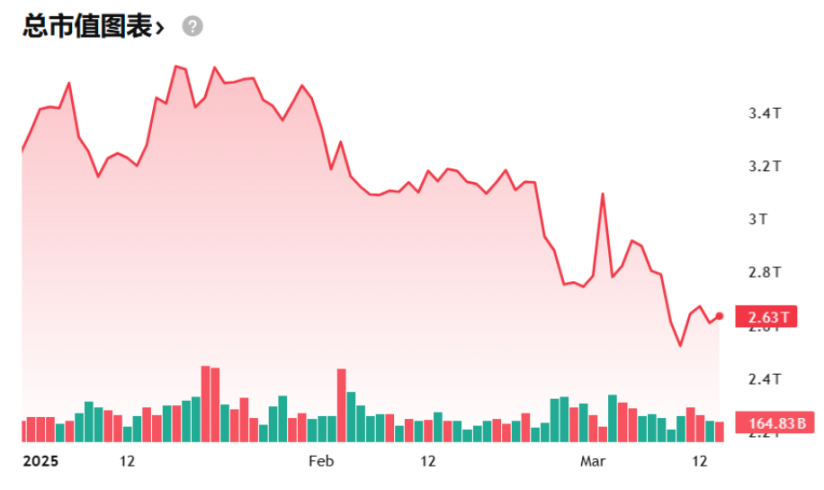
In the short term, Trump’s tariff increases have already negatively impacted the crypto market. In January, Trump issued an executive order calling for the formation of a working group to establish clear rules for U.S. cryptocurrency companies within six months and to study the creation of a potential crypto reserve, signaling support for digital assets. Following this announcement, the total market capitalization of cryptocurrencies rose to $3.65 trillion by the end of January—an increase of 9.14%. However, in February, the newly announced tariff policies quickly offset the positive effects of the earlier executive order, triggering a cascade of negative reactions in the crypto market. Particularly on February 3, after Trump announced long-term import tariffs on Canada, Mexico, and China, the crypto market mirrored the stock market’s decline—Bitcoin dropped 8% within 24 hours, Ethereum fell over 10%, total liquidations exceeded $900 million, and 310,000 investors were forcibly liquidated. Underlying this market volatility was investor fear over escalating trade tensions and concerns about the global economic outlook.
From a macroeconomic perspective, trade disputes cause global market fluctuations. The U.S. dollar strengthens further as a safe-haven asset, drawing capital back to the U.S. and intensifying volatility across global financial markets. Risk appetite for highly volatile assets declines, leading to widespread sell-offs in cryptocurrencies. Large funds and venture capital firms can amplify market swings; if their equity positions decline, they may liquidate crypto holdings to manage risk. Additionally, tariff policies may fuel inflation, weaken consumer purchasing power, and further suppress economic growth. In this environment, investors typically shift toward safer assets, making cryptocurrencies—highly volatile by nature—one of the first categories to be sold off, resulting in sharp price declines and depressed market sentiment.
However, in the long run, Trump’s tariff policies may produce positive effects on the crypto market:
First, U.S. tariff policies could increase market liquidity. While imposing tariffs, the Trump administration may pursue expansionary fiscal policies domestically, such as large-scale tax cuts and infrastructure spending. These measures could boost the U.S. economy in the short term but widen fiscal deficits. To cover funding gaps, the government might resort to bond issuance or monetary easing, increasing market liquidity—which could benefit the cryptocurrency market. For example, in 2020, the Federal Reserve’s balance sheet expanded by over $3 trillion, while Bitcoin surged more than 300% during the same period.
Second, tariffs raise import prices, and potential dollar depreciation could drive capital into the crypto market. Eugene Epstein, Head of Trading and Structured Products at Moneycorp, noted that if trade wars lead to inflation that weakens the dollar, Bitcoin could actually benefit. In the long term, as the dollar depreciates, global investors may seek alternative assets to hedge against currency devaluation, turning to fixed-supply anti-inflation assets like Bitcoin. Moreover, other countries might devalue their currencies in response to tariff shocks, making cryptocurrencies a potential channel for capital flight.
Finally, trade conflicts could accelerate de-dollarization. Escalating tariff wars deepen mistrust among nations, prompting efforts to reduce reliance on the U.S. dollar. For example, Russia and China are gradually reducing dollar usage in international trade, Middle Eastern countries are exploring energy settlements in RMB or other currencies, and Iran used Bitcoin mining in 2022 to circumvent oil export sanctions. This trend toward de-dollarization could increase global demand for cryptocurrencies, opening new development opportunities for the crypto market.
2.2 Impact on Investors
On one hand, investors must optimize their portfolios. Cryptocurrencies are still seen as speculative or high-risk/high-volatility assets. Against the backdrop of escalating trade tensions caused by tariff policies, investors may need to reassess their portfolios, reduce exposure to volatile assets, lower allocations to high-risk investments like crypto, and maintain appropriate proportions of cash, government bonds, or other safe-haven assets.
On the other hand, frequent shifts in Trump’s tariff policies undermine stable expectations and investor confidence. During his presidential campaign, Trump declared himself the “pro-innovation and pro-Bitcoin president,” announcing a package of crypto-friendly policies. Before his second inauguration, he even launched his own meme coin, “Trump Coin ($Trump).” After taking office, he sent signals supporting cryptocurrencies, such as forming a working group to study regulatory frameworks and a crypto reserve plan. However, macro risks triggered by tariff policies have neutralized market optimism around these favorable policies. Starting in February, Trump rolled out sweeping tariffs on China, Canada, and Mexico—tariff escalations bordering on frenzy, with erratic and hasty announcements creating chaos in the economy and financial markets. This uncertainty presents challenges for decision-makers across sectors, fuels market anxiety, damages investor confidence, and forces many to sell off crypto holdings or reduce new investments.
2.3 Impact on Related Enterprises
Trump’s tariff policies have multifaceted impacts on crypto businesses, especially upstream and downstream mining enterprises. First, tariffs affect hardware imports, raising costs for critical components and increasing overall mining equipment production expenses, thereby hurting profitability and potentially hindering R&D. Second, in the short term, mining machine supply may become constrained, driving up prices and increasing equipment upgrade costs for mining pools and miners—significantly increasing operational pressure. Third, in the long run, tariff policies may push mining hardware manufacturers and mining operations to relocate to regions less affected by trade wars, reshaping the global geographic distribution of crypto enterprises.
Exchanges are also affected. First, tariffs may heighten global trade tensions, stock market volatility, or economic uncertainty. In such conditions, some investors may view cryptocurrencies as hedging instruments, boosting trading volume, attracting more short-term traders, and potentially increasing exchange revenues from fees in the short term. Second, tariffs could prompt capital controls or foreign exchange restrictions, making crypto a viable alternative for cross-border fund flows and increasing deposit/withdrawal demands on exchanges. Finally, the Trump administration may adjust financial regulations alongside tariff policies, tightening scrutiny on cryptocurrencies—particularly around anti-money laundering (AML) and tax compliance—raising operational and compliance costs for exchanges.
Stablecoins are also impacted. Companies seeking to maintain profits amid tariff barriers may explore alternatives, with stablecoins emerging as a potential solution. In regions with strict capital controls like Asia and Latin America, USDT is a primary tool for bypassing USD conversion limits. If tariffs lead to depreciation of emerging market currencies (e.g., CNY), local users may increase USDT holdings to hedge risk, boosting demand for USDT. However, if U.S. sanctions target entities using USDT, its liquidity could be threatened. USDC, being more compliant, is widely used for institutional onboarding and regulated DeFi protocols. If rising tariff costs push U.S. firms to adopt crypto payments, USDC could become the preferred settlement tool. Should risk-aversion persist, institutional investors may increasingly treat USDC as a “safe stablecoin,” potentially eroding USDT’s market share.
3. Response Strategies for Stakeholders
3.1 At the Crypto Market Level
Tariff threats spark fears of trade wars and temporary risk-off sentiment, though such panic tends to be short-lived. Historical precedent shows that during periods like the 2018 U.S.-China trade standoff, market reactions to sudden tariff announcements typically evolve through three phases: “panic – digestion – recovery.” Initial panic is common, but over time, markets usually adapt and stabilize. Markets possess strong self-regulating capabilities and form stable expectations based on historical patterns and policy logic. Although the current tariff policy has caused short-term volatility, it won’t fundamentally alter the market in the long run—as previously discussed. The crypto market will continue to attract investors who believe in its long-term potential, and these investors often buy the dip during price declines, providing stability and support to the market.
3.2 At the Enterprise Level
First, crypto enterprises whose operations are affected by tariffs should consider diversifying suppliers to regions unaffected by tariffs—such as Southeast Asia—to avoid overreliance on U.S. or Chinese supply chains. Under tariff pressure, setting up manufacturing bases in countries like the U.S. or Russia could help mitigate import duties. Second, international traders and crypto firms can flexibly use stablecoins for settlements to reduce the impact of trade policies on cross-border payments, or leverage DeFi protocols to overcome traditional financial barriers caused by trade restrictions. Third, crypto companies can establish overseas subsidiaries or use offshore financing (e.g., in Singapore or Dubai) to navigate uncertain tariff and regulatory risks. Lastly, enterprises must strengthen compliance frameworks and actively engage with government agencies to safeguard and advocate for their rights.
3.3 For Individual Investors
First, investors should diversify their asset portfolios and prioritize risk management. In addition to crypto, investing in traditional assets such as stocks, bonds, and gold can help hedge against crypto volatility, enhancing portfolio resilience. Second, investors should adopt a long-term investment mindset (“HODL”), avoiding impulsive buying and selling, and instead patiently wait for market rebounds or optimal entry points. Third, staying informed about industry trends and policy developments enables smarter investment decisions. Fourth, even in the event of investment losses, individuals can minimize damage through pre-tax capital loss offsets. Under U.S. tax law, realized capital losses can be used to offset capital gains or ordinary income, helping investors save significantly on taxes amid volatile crypto markets. However, such tax calculations are often complex and require expertise. Given the high cost, inefficiency, and error-proneness of manual tax filing, individual investors may consider using FinTax for Individuals—a professional tax filing software that allows secure, accurate, and fast generation of compliant tax reports with just one click by importing wallet or exchange data.
4. Conclusion and Outlook
The Trump administration’s tariff policy is a direct manifestation of trade protectionism, delivering both direct and indirect shocks to the cryptocurrency market. In the short term, tariff-driven liquidity tightening may trigger synchronized declines in crypto markets. However, if sustained, these policies could, in the long run, accelerate the decentralization transformation of the crypto industry, promote stablecoins as new mediums for cross-border trade, generate positive outcomes, and spur the development of more compliant crypto financial products. In the current context, both enterprises and individuals can adopt flexible strategies to respond to tariff impacts, seize structural opportunities amid adverse conditions, and adjust their hedging needs during economic fluctuations to achieve optimal outcomes.
Join TechFlow official community to stay tuned
Telegram:https://t.me/TechFlowDaily
X (Twitter):https://x.com/TechFlowPost
X (Twitter) EN:https://x.com/BlockFlow_News
 TaxDAO