
Bitcoin Standard 1: The Underlying Logic from "National Choice" to a "Ten-Billion Dollar Position"
TechFlow Selected TechFlow Selected
Bitcoin Standard 1: The Underlying Logic from "National Choice" to a "Ten-Billion Dollar Position"
The return of sound money is not an overnight process, but a generational shift.
 Navigating Web3 tides with focused insights
By: Daii
Bitcoin is currently trading around $84,000—fairly dull and uneventful. If you've already invested using the DCA method described in this article, price should no longer be your primary concern. Instead, we need to continuously improve our understanding and strengthen our conviction, so we can hold Bitcoin more firmly and for longer.
Reading is undoubtedly the fastest way to achieve self-improvement. Starting today, let's read a book together: The Bitcoin Standard, known in traditional Chinese as The Bitcoin Standard and in simplified Chinese as The Future of Money.
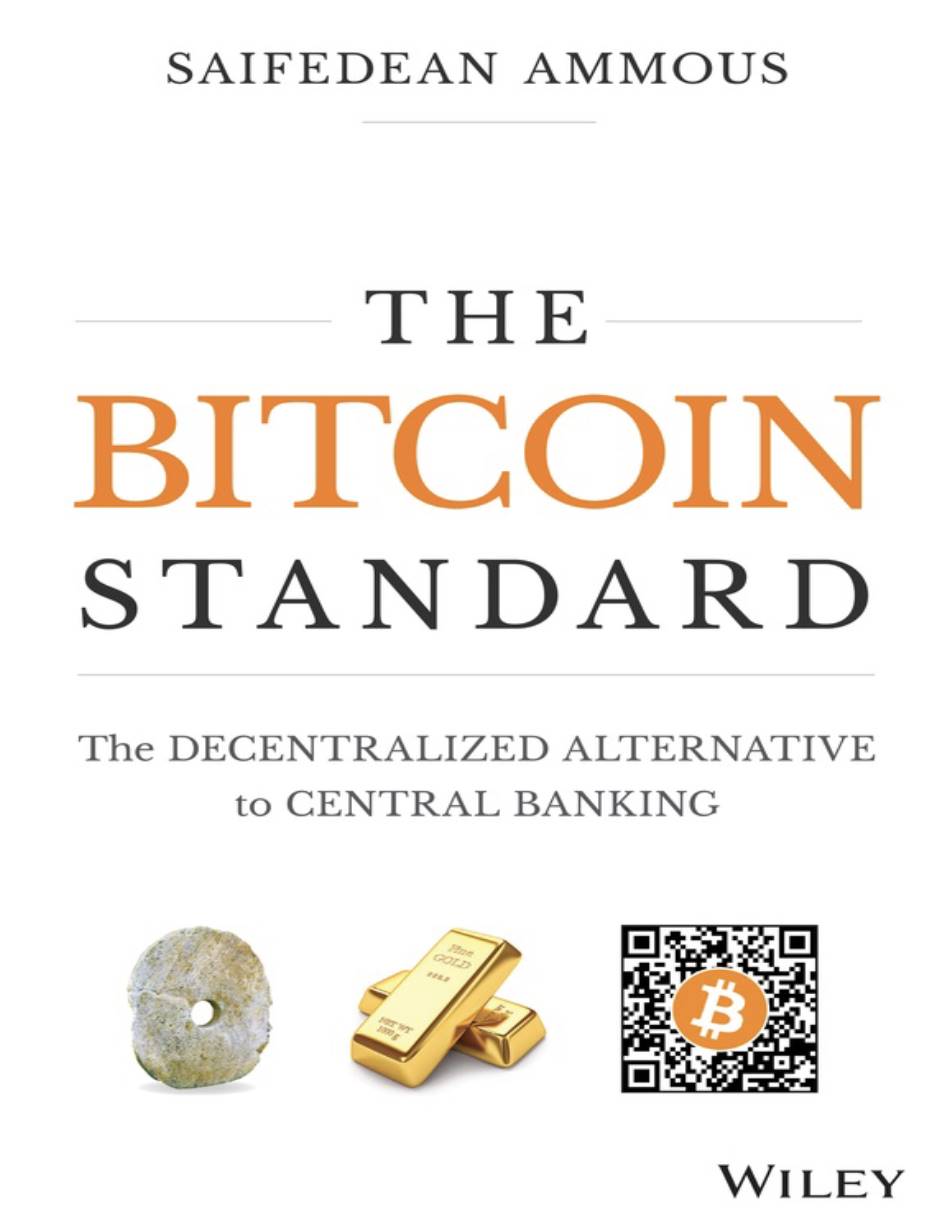
I prefer the title The Bitcoin Standard because it immediately draws a parallel with the historical Gold Standard, helping us grasp Bitcoin’s core value. Compared to abstract concepts like "standard" or "future," The Bitcoin Standard better highlights Bitcoin’s potential as the foundation of a new global monetary system.
Since its publication in 2018, The Bitcoin Standard has rapidly become one of the most influential books on Bitcoin economics worldwide, translated into 38 languages and impacting countless investors, scholars, entrepreneurs, and even government policymakers.
1. How influential is The Bitcoin Standard?
Today, The Bitcoin Standard is essential reading within the global Bitcoin community. Its profound impact manifests in several ways:
-
It prompted businesses and institutions to consider Bitcoin as a long-term reserve asset;
-
It made governments realize that Bitcoin could become a future global reserve currency;
-
It helped individual investors build conviction and stick with long-term holding despite short-term volatility;
-
It advanced Bitcoin economics into a legitimate academic research field.
Let’s examine each of these impacts in turn.
1.1 Institutional Investors’ Strategic Shift: Strategy (formerly MicroStrategy) Embraces the Bitcoin Standard
After The Bitcoin Standard was published, an increasing number of institutional investors began seriously evaluating Bitcoin’s long-term value. The most notable example is Strategy CEO Michael Saylor, who developed a deep resonance with Bitcoin’s monetary properties after reading the book.
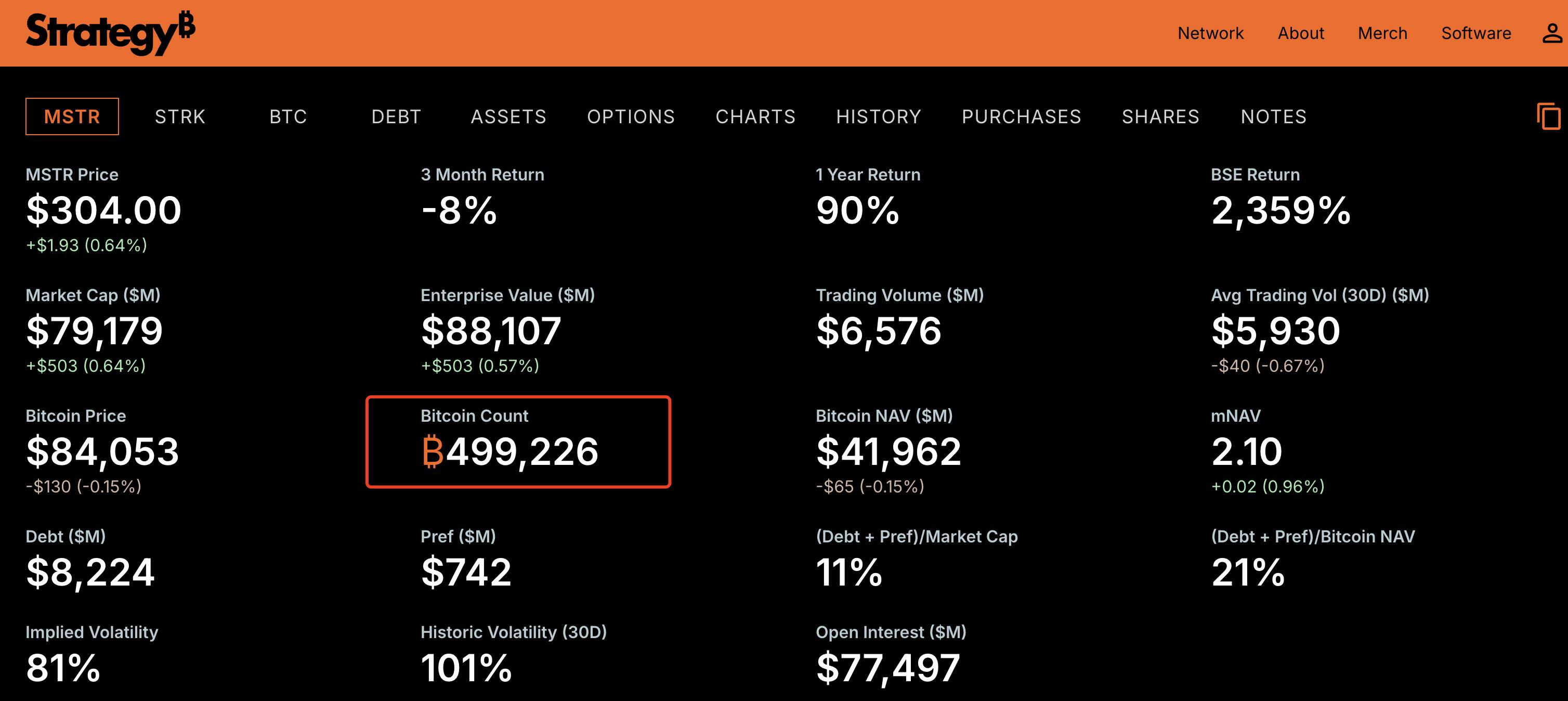
In 2020, Saylor decided to have Strategy purchase Bitcoin as a reserve asset. Today, the company holds 499,000 BTC—the largest Bitcoin position among publicly traded companies—as shown below.
Not only did Saylor actively promote the “Bitcoin Standard” corporate strategy, but he also encouraged other companies and institutions to allocate to Bitcoin.
He has repeatedly stated that The Bitcoin Standard was pivotal in shaping his investment philosophy in Bitcoin, recommending it to all entrepreneurs and investors interested in the space. I previously analyzed Saylor’s transformation in depth in my article The Bitcoin Dividend.
Saylor’s actions not only made Strategy the top publicly listed company holder of Bitcoin but also sparked a broader trend of institutional Bitcoin adoption, with companies such as Tesla and Square (Block) beginning to include Bitcoin on their balance sheets.
The theories in The Bitcoin Standard didn’t just influence corporate strategies—they had tangible effects on national policies.
1.2 Real-World Policy Impact: El Salvador’s Experiment with Bitcoin as Legal Tender
In 2021, El Salvador became the first country in the world to adopt Bitcoin as legal tender. During the decision-making process, the government referenced ideas from The Bitcoin Standard and invited Ammous himself to serve as an economic advisor, offering policy guidance for Bitcoin’s national-level implementation.
-
El Salvador’s president, Nayib Bukele, adopted Bitcoin as national currency, advancing global de-dollarization;
-
The country launched Bitcoin bonds ("Volcano Bonds") and a national Bitcoin wallet, Chivo, attempting to integrate Bitcoin into its fiscal system;
-
El Salvador’s move attracted global attention, prompting some developing nations to consider the feasibility of adopting Bitcoin as legal tender. While the policy still faces challenges, it set a historic precedent—Bitcoin is no longer merely an investment asset; it is becoming a national financial tool.
1.3 Shaping Mainstream Economics and Policy Discourse
The Bitcoin Standard influenced not only corporations and governments but also entered mainstream discussions in economics and public policy.
U.S. Congressman Warren Davidson praised the book as “one of the best books in recent memory,” citing its arguments multiple times during congressional debates;
Many traditional economists began re-evaluating Bitcoin’s economic significance, bringing renewed attention to the Austrian School’s free-market economic theories;
The book’s theoretical framework has been adopted by numerous Bitcoin education programs and is now standard reading at universities, research institutions, and online learning platforms.
This influence extends far beyond cryptocurrency circles, reaching broader financial, policy, and academic domains, establishing Bitcoin economics as a formal field of study.
1.4 Unifying the Bitcoin Community and Building Global Consensus
Bitcoin’s value isn’t derived solely from its technology—it rests on global consensus. The Bitcoin Standard provided the intellectual tools needed for Bitcoin holders to solidify their beliefs and understand why Bitcoin isn’t a bubble, but rather a monetary revolution.
The book elevated the rigor and depth of discourse within the Bitcoin community, helping people recognize that Bitcoin’s value transcends price fluctuations—it is a shield against inflation, a fortress against fiat money over-issuance, and the ultimate tool for achieving personal financial sovereignty.
Moreover, it inspired a wave of educational content based on its principles, with YouTube channels, podcasts, and social media platforms hosting countless discussions rooted in The Bitcoin Standard, spreading Bitcoin’s ideas more widely than ever.
1.5 Inspiring Further Research: Ammous’ Subsequent Works
Following the success of The Bitcoin Standard, Ammous continued exploring the economic logic of Bitcoin and published additional works, including:
The Fiat Standard (2021)—a systematic critique of the flaws in the fiat monetary system, revealing how it systematically erodes individual wealth while highlighting Bitcoin’s superiority;
Principles of Economics (2022)—reconstructing economics education from the Austrian School perspective, challenging Keynesian economics.
These follow-up studies further solidified Ammous’ economic framework and established Bitcoin economics as an independent academic discipline, attracting growing interest from scholars worldwide.
The immense impact of The Bitcoin Standard has cemented its status as a cornerstone text in Bitcoin’s history.
2. What Is the Historical Significance of The Bitcoin Standard?
Bitcoin’s history isn’t just about rising prices—it’s also about the gradual accumulation of consensus. In fact, without growing consensus, Bitcoin’s price couldn’t have risen so rapidly. Throughout this process, three books played decisive roles, with The Bitcoin Standard being one of them. The other two are:
-
Digital Gold (2011);
-
Mastering Bitcoin (2015).
2.1 Digital Gold: The Origins and Early Development of Bitcoin
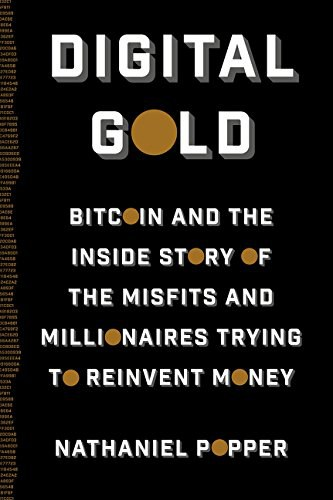
Published in 2011, Digital Gold was the first detailed account of Bitcoin’s early development, written by New York Times journalist Nathaniel Popper. The book narrates Bitcoin’s journey from Satoshi Nakamoto’s white paper to its gradual emergence into the mainstream by 2014.
Its core value lies in being a human-centered story. It vividly portrays Bitcoin’s earliest believers—cypherpunks, hacker geeks, libertarians, Wall Street traders, and even early users from gray markets like the Silk Road. The book details how Satoshi anonymously released the Bitcoin protocol, along with stories of key figures such as Ross Ulbricht (founder of Silk Road), the Winklevoss twins (early Bitcoin billionaires), and Charlie Shrem (founder of BitInstant), allowing readers to understand Bitcoin’s rise through personal narratives.
2.2 Mastering Bitcoin: Understanding Bitcoin’s Technical Foundations
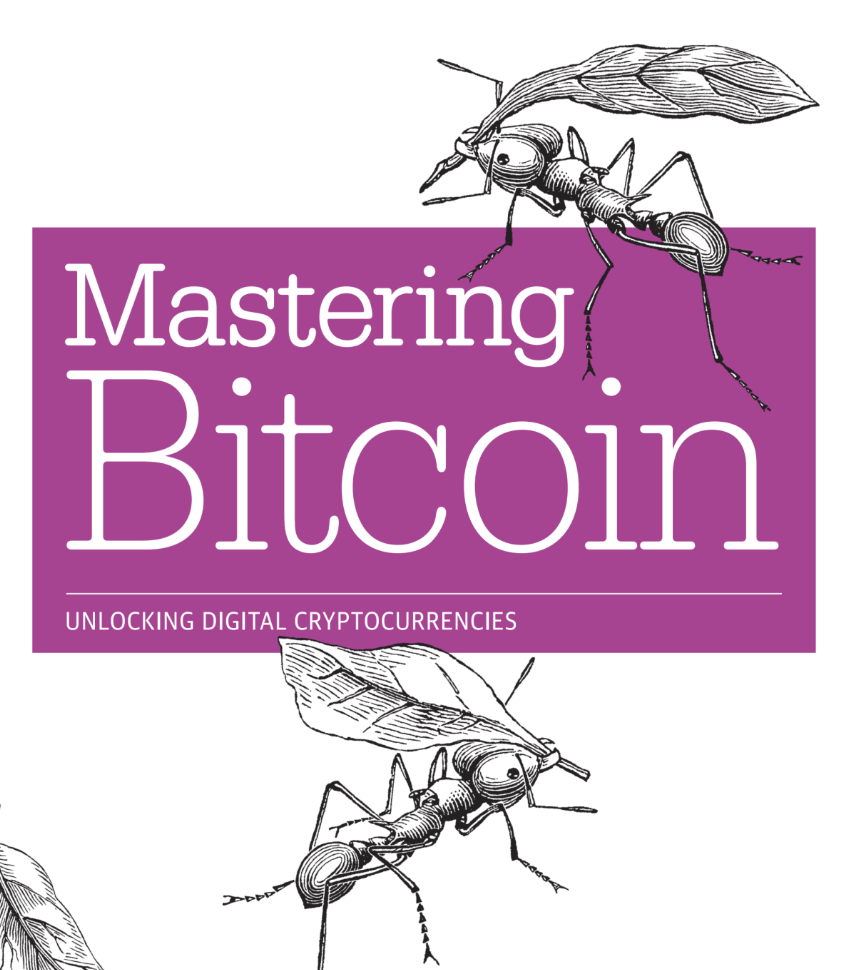
In 2015, Andreas Antonopoulos authored Mastering Bitcoin, hailed as the “bible” of Bitcoin technology, helping countless developers and enthusiasts truly grasp the underlying mechanics of the system.
If Digital Gold tells the story and history of Bitcoin, then Mastering Bitcoin serves as a technical guide. Its greatest strength is clarity and accessibility. It breaks down Bitcoin’s inner workings—including public-key cryptography, blockchain data structures, transaction scripts, mining mechanisms, and how to build Bitcoin applications—with clear language, code examples, and case studies, showcasing the technological brilliance behind Bitcoin.
The significance of this book is that it transformed Bitcoin from a mere financial concept into an open technical protocol—something anyone can learn, develop, and improve upon. Indeed, Mastering Bitcoin cultivated generations of developers for the Bitcoin ecosystem, turning Bitcoin from a speculative asset into a genuine decentralized financial network.
This book was also my own introduction to blockchain. I bought Bitcoin only after reading it. If you're still on the fence, give it a read. I’ve previously written an article recommending this book.
2.3 Why Does The Bitcoin Standard Hold Greater Historical Significance?
If Digital Gold documented Bitcoin’s origins and initial consensus, and Mastering Bitcoin laid its technical foundation, then The Bitcoin Standard was the first work to place Bitcoin squarely within an economic framework, treating it as sound money rather than just a novel technology.
The Bitcoin Standard teaches us that Bitcoin is more than an investment vehicle—it is digital-age gold, the cornerstone of the future global monetary system. It not only explains why Bitcoin possesses monetary attributes but also argues why Bitcoin surpasses gold, why central banking systems are collapsing, and why the world is transitioning toward a Bitcoin standard.
Together, these three books form Bitcoin’s knowledge base from three distinct angles: history, technology, and economics. Among them, The Bitcoin Standard stands out as the most important intellectual contribution to this financial revolution.
3. Why Has The Bitcoin Standard Had Such a Massive Impact?
The immense influence of The Bitcoin Standard doesn't stem from simplistic explanations of Bitcoin’s technical architecture, price trends, or investment strategies. Rather, Saifedean Ammous employed a rigorous economic methodology, situating Bitcoin’s rise within the broader evolution of monetary history. The book’s greatest value lies not in short-term market predictions, but in providing a foundational logic for understanding monetary evolution—one that allows us to look past short-term price swings and see the historical inevitability of Bitcoin becoming a global reserve asset.
Ammous’ core methodology includes several key dimensions:
3.1 The “Evolutionary Theory” of Money: Interpreting Bitcoin’s Rise Through Historical Patterns
Ammous does not analyze Bitcoin in isolation. Instead, he examines the history of money to reveal the historical logic behind Bitcoin’s emergence. He argues that money was not invented arbitrarily by governments or individuals, but emerged naturally through long-term market interactions—a concept rooted in the economic idea of “spontaneous order.” That is, monetary evolution is not the product of central planning, but the result of markets gradually optimizing transaction efficiency.
His approach mirrors Darwinian evolution:
Just as species evolve, different forms of money (shells, salt, gold, fiat) have competed throughout history, with the most advantageous surviving;
Key factors determining monetary competition include scarcity, verifiability, convenience, and stability;
Each major economic transformation in human history has coincided with the rise of a new form of money—for example, the agricultural revolution brought metallic currencies, the industrial revolution gave rise to fiat money, and the information revolution is now birthing Bitcoin.
Within this framework, Bitcoin is not a speculative instrument but the next stage in monetary evolution—just as gold replaced shells, and the dollar replaced gold, Bitcoin will eventually supplant unstable fiat systems.
3.2 Monetary “Survival of the Fittest”: Using Economic Principles to Prove Bitcoin’s Competitive Edge
Ammous doesn’t simply claim “Bitcoin is better than fiat.” Instead, he uses the principle of competitive selection to derive Bitcoin’s advantages through sound economic reasoning. He draws on several classical economic concepts:
Sound Money theory: Stable money must be low-inflation, highly credible, and capable of long-term value storage—qualities Bitcoin possesses but fiat lacks;
Time Preference theory: Bitcoin is a low time-preference money that encourages saving, whereas fiat, through inflation, incentivizes consumption and undermines long-term economic planning;
Monetary Network Effects: A currency’s value stems from the size of its user base, and Bitcoin is entering an accelerating phase of network effects, positioning itself as a global store of value.
His argument resembles natural selection: Currencies do not survive due to government decree, but through market choice. Fiat suffers from trust crises due to over-issuance; gold, though scarce, suffers from poor liquidity due to physical constraints. Bitcoin addresses both shortcomings—and thus is destined to become the dominant currency of the future.
3.3 The “Mathematization” of Money: Quantifying Bitcoin’s Economic Value with Data Models
Ammous’ analysis isn’t purely theoretical—he extensively uses mathematical models and data analysis to quantify Bitcoin’s economic properties. His methodology resembles that of financial analysts studying traditional assets, relying on data to test hypotheses rather than speculation.
Key tools he employs include:
-
Stock-to-Flow (S2F) model: A mathematical framework explaining why Bitcoin is scarcer than gold and forecasting its long-term value trajectory;
-
Comparison of Federal Reserve money supply growth vs. Bitcoin’s fixed issuance: Data shows how Bitcoin’s capped supply resists inflation while unlimited fiat printing erodes purchasing power;
-
Bitcoin price history vs. major economic events: Analysis of Bitcoin’s performance during the 2008 financial crisis and the 2020 pandemic-era money printing demonstrates its role as a global safe-haven asset.
The significance of this methodology is that it grounds Bitcoin’s value not in faith alone, but in quantifiable, verifiable economic models—making Bitcoin a “mathematically-backed monetary experiment” rather than just a speculative narrative.
3.4 The Political Economy of Money: How Bitcoin Reshapes Global Financial Power
Beyond pure economics, Ammous analyzes how Bitcoin affects global financial structures from a political economy perspective, akin to realist international relations theory:
Money is a manifestation of power. The fiat system is a mechanism for governments to control economies, while Bitcoin weakens state monopolies over money;
The dominance of the U.S. dollar relies on the dollar standard, and Bitcoin directly challenges this system—El Salvador’s adoption of Bitcoin as legal tender marks a significant step in global de-dollarization;
Bitcoin promotes economic freedom by enabling individuals to bypass capital controls and directly hold and transfer wealth without reliance on banks.
This analytical lens elevates Bitcoin beyond a mere technological or investment phenomenon—it becomes a catalyst for transforming the global financial order.
3.5 The Psychology of Money: Human Nature and Bitcoin’s Long-Term Value
-
Ammous doesn’t limit himself to technical or economic aspects—he also explores how human psychology shapes monetary choices. Using behavioral economics, he explains why Bitcoin is undervalued in the short term yet highly attractive over the long run:
-
Loss Aversion: People feel the pain of losing wealth far more intensely than the joy of gaining it. Bitcoin offers a way to hedge against fiat depreciation;
-
Herding Effect: As institutions enter the Bitcoin market (e.g., Strategy, Tesla, Bitcoin ETFs), more individuals and businesses will follow;
Incremental Consensus: Bitcoin adoption is a cumulative process—its value increases as more countries, institutions, and individuals adopt it.
Through these psychological models, Ammous explains why Bitcoin may experience extreme short-term volatility, yet its long-term value trajectory is irreversible.
Summary: Ammous’ Methodology
Ammous doesn’t simply tell you “Bitcoin will go up.” He constructs a comprehensive analytical framework combining history, economics, data modeling, political economy, and psychology to create a full understanding of Bitcoin.
This makes The Bitcoin Standard not just a book about Bitcoin, but a profound work on the nature of money, the structure of global finance, and the laws governing human economic evolution.
After reading this book, you won’t just remember Bitcoin’s price—you’ll gain deeper insight into the essence of money, how economic systems function, and how Bitcoin is reshaping the world. This is the true uniqueness of the book.
4. Who Is Saifedean Ammous?
Saifedean Ammous was born in 1980 in Nablus, Palestine. He spent his childhood in Saudi Arabia and Brazil before moving to Ramallah in the West Bank in 1990. Growing up in such a volatile region, he witnessed firsthand how currency devaluation, political conflict, and capital controls affect ordinary people’s lives.

Yet, Ammous’ academic background was initially unrelated to economics. He first studied mechanical engineering at the American University of Beirut, later shifting to social sciences and earning a master’s degree in development management from the London School of Economics (LSE). He then obtained a Ph.D. in sustainable development from Columbia University, focusing on energy economics, resource management, and monetary system stability.
This interdisciplinary training equipped him with a unique analytical toolkit, allowing him to approach monetary questions with the rigor of engineering, the modeling skills of energy economics, and the real-world insights of development economics.
After completing his doctorate, Ammous joined the Lebanese American University as an assistant professor of economics, teaching courses in capital markets, development economics, and energy economics. His early research focused on resource economics, particularly oil, energy supply chains, and global growth models.
Over time, however, he began questioning the sustainability of central banking and fiat money systems. Through teaching and research, he observed:
-
The inflationary mechanism of fiat enables constant redistribution of wealth to governments and financial institutions holding the “money printing press”;
-
Central bank policies are unpredictable—governments can devalue currency at will, leaving ordinary citizens to bear the cost of shrinking purchasing power;
While gold is scarce, it remains subject to government regulation and market manipulation in modern economies, preventing it from serving as truly free-market hard money.
During this period, he encountered Austrian School economics—particularly the works of Ludwig von Mises and Friedrich Hayek—and began exploring the concept of sound money.
What ultimately transformed his thinking was his deep dive into Bitcoin’s economic logic around 2013. He realized:
-
Bitcoin is the first fully decentralized, immutable, mathematically guaranteed scarce currency in human history;
-
Bitcoin’s issuance mechanism (halving block rewards) gives it superior inflation control compared to gold;
-
Bitcoin operates independently of governments and central banks—its value is determined entirely by market consensus.
This led him to gradually abandon mainstream Keynesian economics, embrace the Austrian School, and become one of Bitcoin’s most committed intellectual advocates.
Conclusion: The Bitcoin Standard, A New Global Consensus
From El Salvador integrating Bitcoin into national policy, to Strategy holding tens of billions of dollars worth of Bitcoin under its “Bitcoin Standard” strategy, these developments are not random—they are early signals of a fundamental shift in the global monetary system.
The Bitcoin Standard is not a short-term tactic, but a long-term paradigm.
In the past, gold served as the world’s reserve currency, but it cannot meet the liquidity demands of the digital age. Fiat money once underpinned the credit system, but its credibility is eroding under endless money printing. Bitcoin, with its fixed supply, inflation resistance, and decentralized nature, has emerged as the strongest candidate for sound money in this era.
Where capital and sovereignty converge, historic turning points are born.
When a sovereign nation adopts Bitcoin as legal tender, it resists global monetary hegemony. When a public company places Bitcoin at the core of its balance sheet, it resists monetary dilution. When capital and state actors independently gravitate toward Bitcoin, we are witnessing the formation of a new monetary consensus.
The return to sound money will not happen overnight—it is a generational shift. The winners of this transformation will not be short-term speculators, but those who truly understand the logic of the Bitcoin Standard and are willing to hold firm over the long term. Mastering the foundational logic of the Bitcoin Standard is equivalent to securing a ticket to the future of global finance.
Join TechFlow official community to stay tuned
Telegram:https://t.me/TechFlowDaily
X (Twitter):https://x.com/TechFlowPost
X (Twitter) EN:https://x.com/BlockFlow_News
 @yzdxs8