Crypto Millionaires' Space Dream: Spending $1 Billion to Build a Commercial Space Station
TechFlow Selected TechFlow Selected
Crypto Millionaires' Space Dream: Spending $1 Billion to Build a Commercial Space Station
The low-key billionaire behind Mt. Gox and Ripple is investing heavily to build the world's first commercial space station.
 Navigating Web3 tides with focused insights
By Kiel Porter, Loren Grush, Bloomberg Businessweek
Translated by Luffy, Foresight News
Jed McCaleb made a fortune in the world of cryptocurrency, and now he’s preparing to pour a significant portion of it into his dream of space.
The billionaire behind the infamous Bitcoin exchange Mt. Gox and the cryptocurrency XRP is personally funding an ambitious plan: building the world's first commercial space station and launching it into orbit.
If successful, his startup Vast Space LLC could win a NASA contract as early as next year—potentially worth billions of dollars—to replace the International Space Station. If not, McCaleb says he’s prepared to lose $1 billion. By the end of 2023, McCaleb controlled billions of dollars through two foundations funded entirely by his personal donations totaling $3.3 billion.
“It’s critical for humanity’s future beyond Earth,” said the 50-year-old McCaleb at the company’s headquarters in Long Beach, California. “Not many people are willing to commit as much time, resources, and risk as I am.”
Since then, he has hired a seasoned industry veteran as CEO, and SpaceX has begun providing partial technical support to Vast. Meanwhile, Elon Musk is urging the U.S. to accelerate the retirement timeline of the International Space Station—currently scheduled for late 2030. Founded in 2021, Vast uses certain components developed by SpaceX in its spacecraft, particularly a docking adapter that connects SpaceX’s Dragon capsule with the Vast space station, and a Starlink-based space internet system that provides Wi-Fi on the station. Vast has already booked launch services from SpaceX to deliver hardware into orbit and transport astronauts to the station, and SpaceX has agreed to ferry crew for Vast pending NASA approval.
Yet the task remains daunting, and McCaleb’s background offers little indication that he’s the right person for the job. A farm boy from Arkansas and a dropout from the University of California, Berkeley, he has no prior experience in aerospace. His career has been defined by getting in early on emerging technologies and pivoting before government regulation or other headwinds disrupt the industry—a short-term mindset that seems at odds with the long-term focus required to win a high-stakes race to create technological miracles.
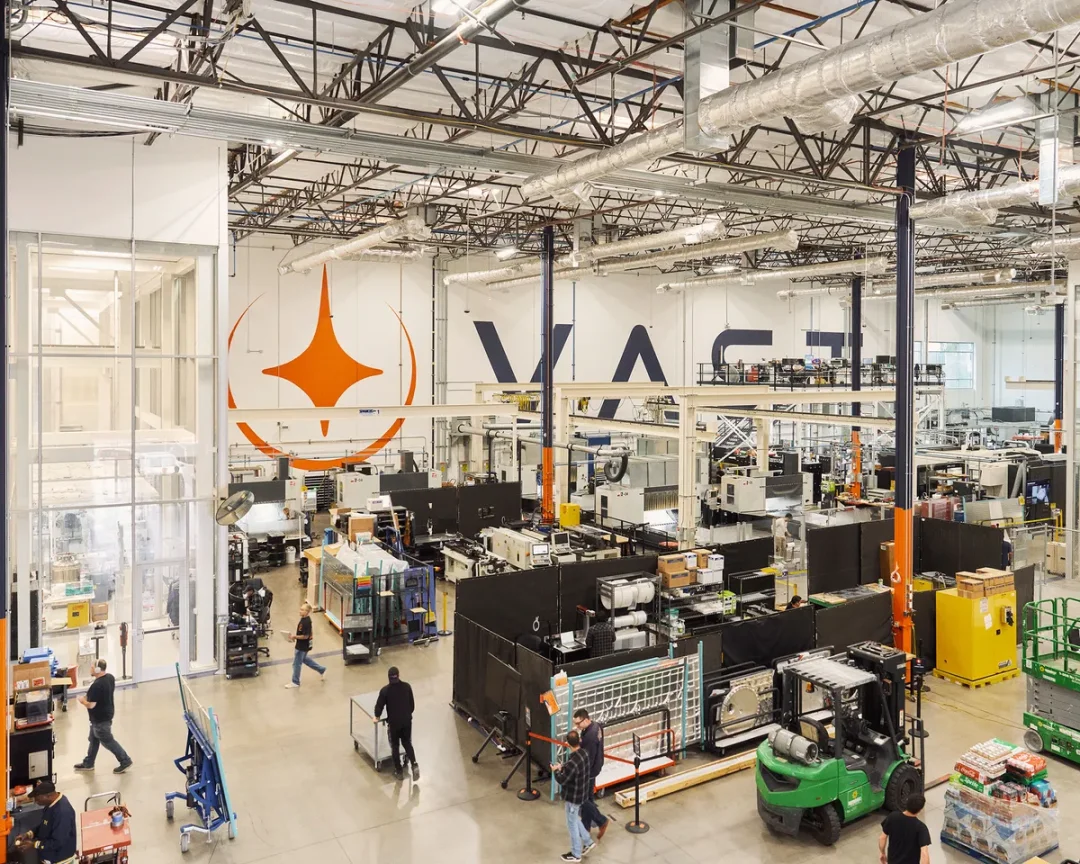
Vast’s headquarters in Long Beach, source: Bloomberg Businessweek
Sam Yagan, a friend of McCaleb’s who co-founded an online file-sharing company with him over two decades ago, is now co-founder and managing director at Corazon Capital. He describes the entrepreneur as a deliberate risk-taker. “He’s very rational about these things,” Yagan said. “But he’s willing to take enormous risks that you and I might shy away from—he’s a bit of a maverick.”
Many of Vast’s employees previously worked at SpaceX. In the parking lot at the company’s headquarters, Tesla vehicles—another Musk venture—dominate. One of them is a Cybertruck belonging to Max Haot, who joined Vast after McCaleb acquired his company in 2023. Haot later became CEO of Vast, allowing McCaleb—who drives a more modest Model 3—to fly down once a week from his home in San Francisco to oversee progress.
Prior to the acquisition, Haot wasn’t focused on space stations. Instead, he tried to follow in Musk’s footsteps by founding another rocket-launch startup called Launcher. The company raised $30 million and made progress developing rocket engines and launch vehicles, but both satellites built by Launcher failed after reaching space. In 2022, Haot met McCaleb while searching for investors.
McCaleb proposed an acquisition deal under which Haot would become president of Vast and eventually CEO. Haot was initially reluctant, but changed his mind when he realized Launcher wouldn’t be able to secure the funding it needed.
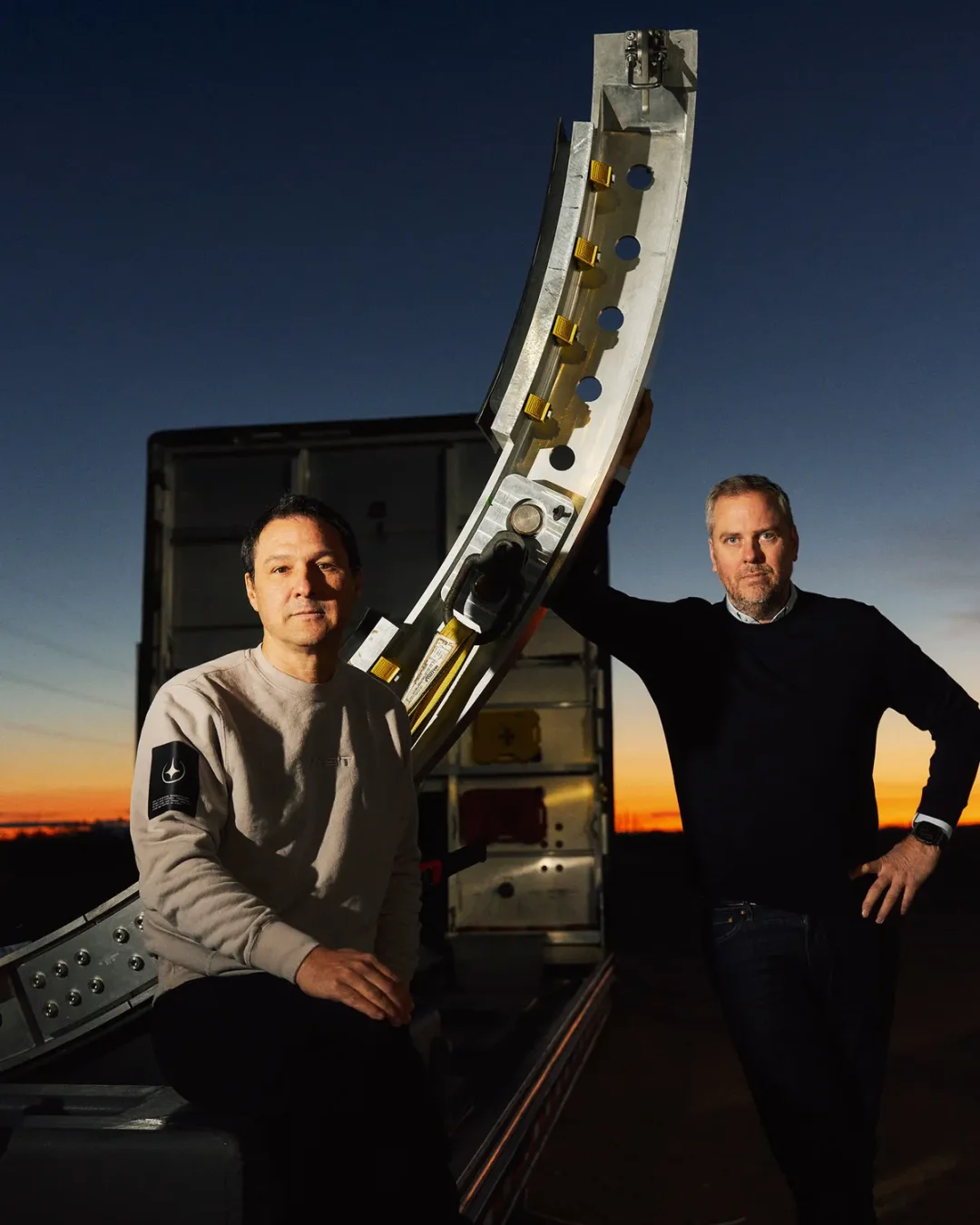
Vast founder and chairman Jed McCaleb with CEO Max Haot at the test facility in Mojave, California, source: Bloomberg Businessweek
Vast’s grand vision goes beyond simply building the first private space station. The company also aims to develop an artificial gravity system to simulate Earth-like conditions for future astronauts. This complex engineering challenge involves using centrifugal force to rotate large sections of the station in space. The idea is appealing because long-term human experience aboard the International Space Station shows that prolonged exposure to microgravity damages various biological systems.
But all of this remains far off. For now, Vast must get its first space station into orbit. The company has rapidly grown from fewer than 200 employees a year ago to 740 today, hiring talent ranging from engineers to spacesuit makers. Its headquarters operates around the clock, with engineers and construction workers rotating shifts—either expanding facilities in Long Beach or building Vast’s first prototype space station, Haven-1.
Space stations are staples of pop culture, from the Death Star in *Star Wars* to the namesake station in *Star Trek: Deep Space Nine*. Since astronauts first boarded the experimental Skylab in 1973, they’ve also been integral to American space exploration. Decades later, following the end of the Cold War, NASA partnered with Russia and others to build the larger International Space Station. Since November 2000, there has always been at least one astronaut aboard, often studying how materials and the human body behave in microgravity.
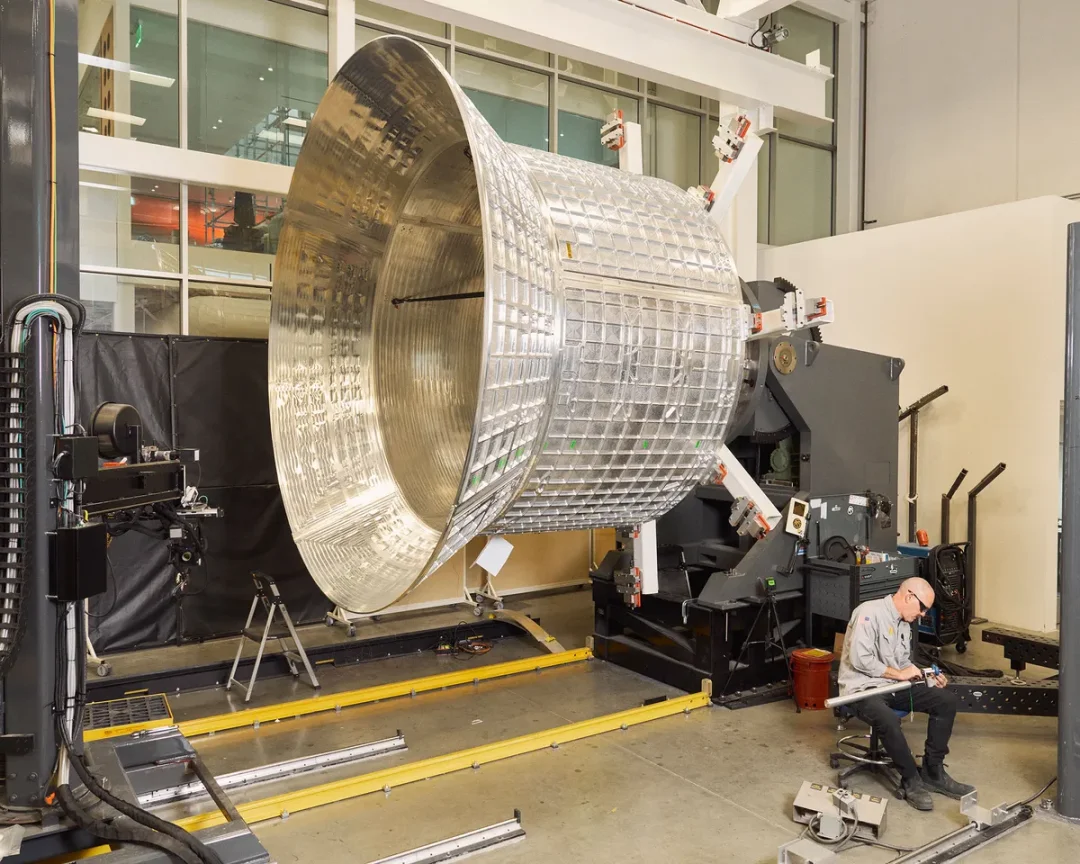
A technician at Vast’s headquarters, source: Bloomberg Businessweek
Haven-1 stands about 33 feet (10 meters) tall and 14.5 feet (4.4 meters) wide, designed to fit snugly within the nose cone of SpaceX’s Falcon 9 rocket. It will offer roughly 1,600 cubic feet (45 cubic meters) of habitable volume—about twice the size of a typical recreational vehicle. It will feature private sleeping pods, a large window, wooden paneling, and a table for four.
At least, that’s the goal. The company began constructing Haven-1 in January, aiming for a launch in May 2026—delayed from an initial target of August this year. Recently, the team tested a prototype to confirm its structure can withstand internal pressure, and they’re now developing power systems, propulsion, and other critical components for crewed missions. Its shell must endure the harsh environment and temperature extremes of space while maintaining atmospheric pressure and gas composition similar to what humans are accustomed to on Earth.
“Right now, we’re not a real space station company,” Haot said. “We’re an aspiring space station company.”
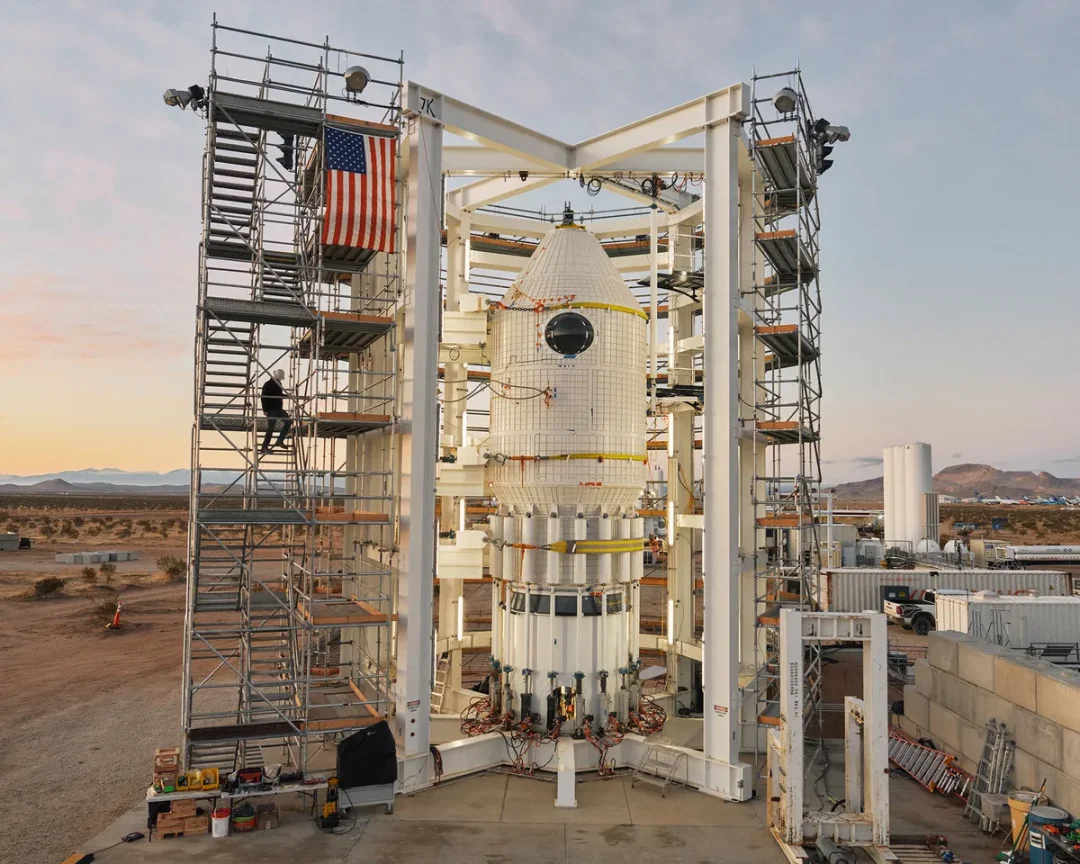
The main structure of Haven-1 awaits further testing at Vast’s Mojave facility, source: Bloomberg Businessweek
Assuming all goes well, after Haven-1 launches, Vast plans to send four astronauts into space aboard a Falcon 9 rocket to dock with the station. If the first mission succeeds, Vast intends to launch the first module of Haven-2 by 2028—a starting point for a larger base meant to succeed NASA’s International Space Station.
One of the biggest challenges will be creating an effective life support system. The International Space Station uses a regenerative system that recycles wastewater into drinking water and converts carbon dioxide into breathable oxygen. Such systems are essential for long-duration stays, but Haven-1 won’t have one, since astronauts are expected to stay only briefly. Vast plans to equip Haven-2 with such capabilities eventually, though the station likely won’t host permanent crews during its early years.
Competitors including Axiom Space, Blue Origin, and Voyager Space Holdings are also racing to build their own stations, but Vast holds a key advantage: McCaleb’s willingness to fund the project heavily. “Vast is the only company that’s primarily self-funded and ready,” said Chad Anderson, founder and managing partner of Space Capital, a firm focused on aerospace investing. “That makes them an interesting contender.” (Anderson has no financial ties to Vast but has invested in SpaceX.)
While these rivals have aerospace backgrounds and some launch contracts, none enjoys such close collaboration with SpaceX.
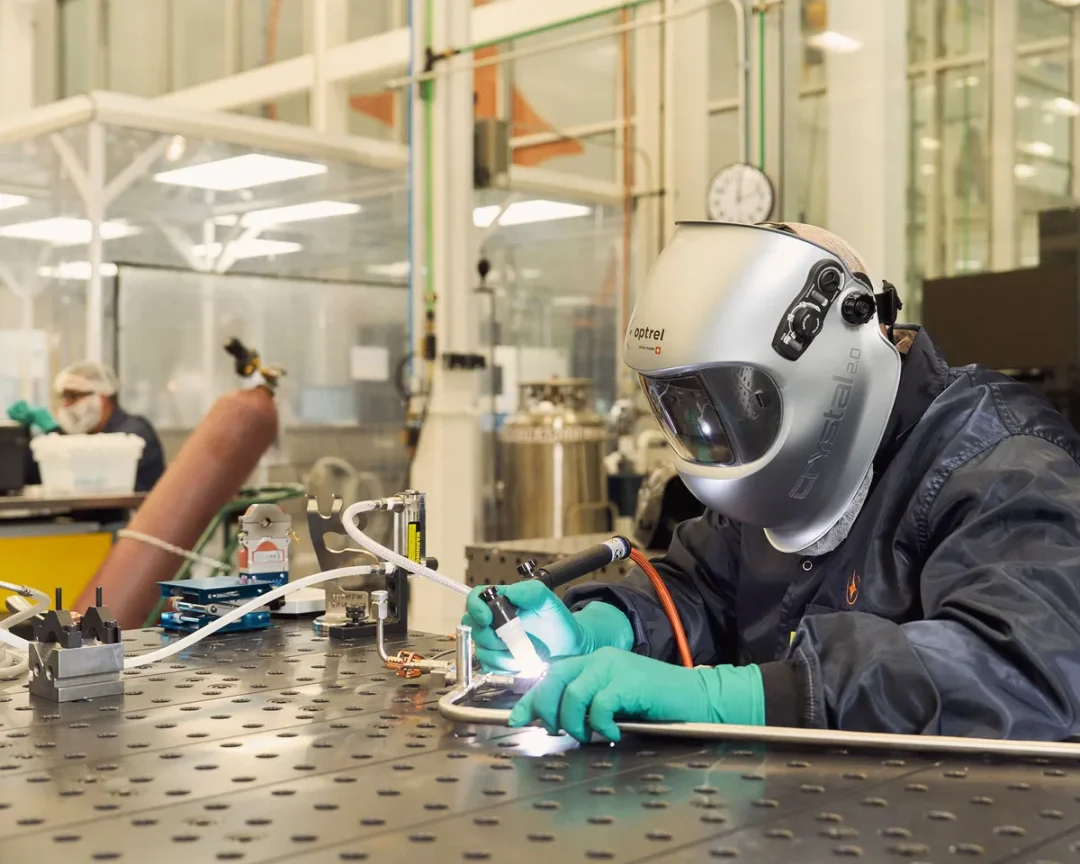
Engineers study the life support system in a cleanroom at Vast’s headquarters, source: Bloomberg Businessweek
McCaleb is eager to downplay any personal connection, saying he’s met Musk “a few times—he probably doesn’t even remember me”—even though both have invested in OpenAI. Despite differences in approach and demeanor, their interests and unconventional paths to wealth share striking similarities: both dropped out of college (Musk later), launched software ventures in emerging fields, and turned passions for fantasy and games into financial success.
McCaleb’s first project, eDonkey, was one of the earliest file-sharing services on the internet and an early rival to Napster. Founded in 2000, it allowed users to freely share music and movies, generating millions annually from advertising. In 2006, to avoid copyright infringement lawsuits, the company agreed to pay $30 million to the Recording Industry Association of America before shutting down.
His next success was Mt. Gox, one of the world’s earliest Bitcoin exchanges. McCaleb founded the site in 2010 and sold most of his stake the following year for an undisclosed amount. In February 2014, the exchange collapsed, with users losing over $400 million worth of Bitcoin at the time—the largest cryptocurrency disaster in history until FTX’s collapse in 2023. Although McCaleb remained a minority shareholder, he faced no sanctions and claims he also suffered losses in the incident.
By then, McCaleb had already moved on to his next venture: XRP, the cryptocurrency on the Ripple protocol, which he co-created. McCaleb originally owned 9% of all XRP. After a falling-out with co-founders, he left the company in 2013 but kept his holdings, gradually selling them over the following years. According to analysis by XRPScan, XRP’s value surged during the 2017 crypto boom, peaking at a market cap of $130 billion in January 2018. Between 2014 and 2022, McCaleb netted approximately $3.2 billion from selling XRP and Ripple equity.
“He’s one of the top ten founders in cryptocurrency, even though very few people truly know him,” said Nic Carter, founding partner at Castle Island Ventures, a firm focused on public blockchains. “What’s interesting is that the other major figures tend to be flashy, high-profile, extravagant types.”
Despite his success, McCaleb maintains a small social circle, working mainly with Yagan and other longtime associates. He owns a house in Costa Rica’s surf haven, another residence in Berkeley, and a private jet.
McCaleb provides a rare stable source of funding for an industry prone to volatility—where once-promising startups often collapse due to lack of capital. While a former employee sued Vast alleging cost-cutting shortcuts, the company appears free of the kind of negative publicity that has plagued SpaceX. Its billionaire CEO spends most of his time at home with his wife and three children rather than battling federal regulators.
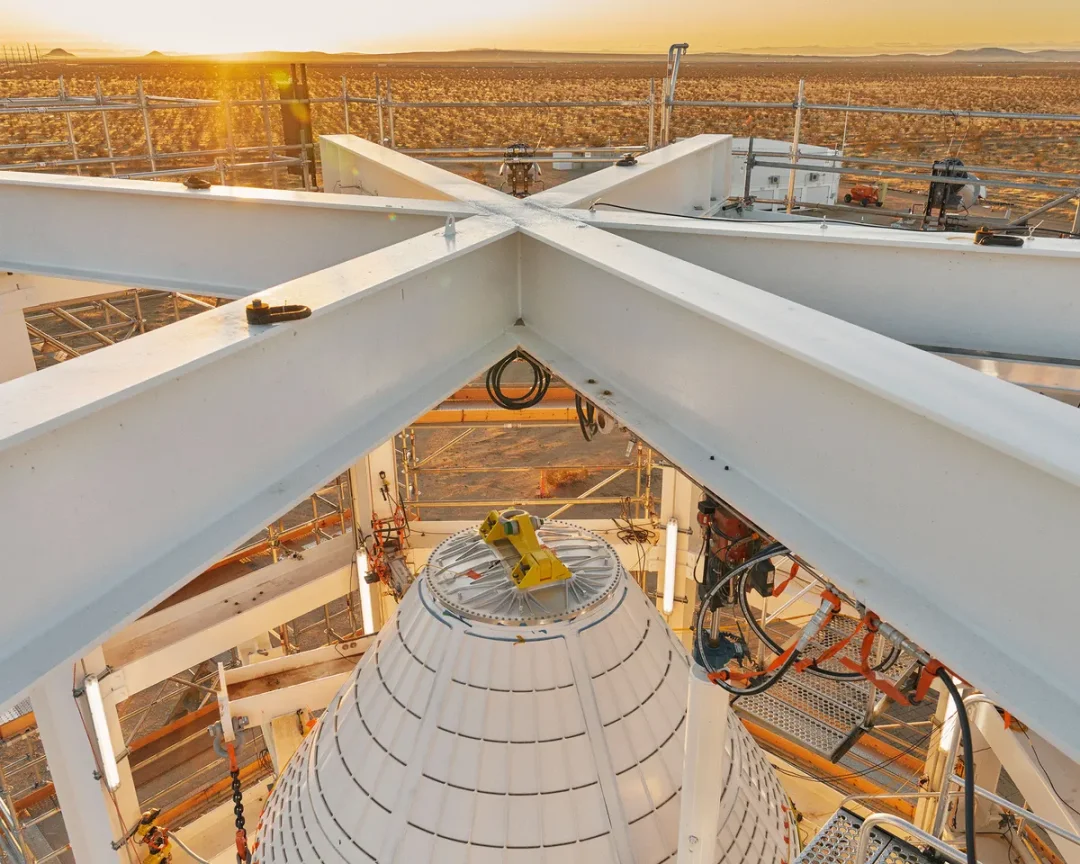
Haven-1 at Vast’s test facility, source: Bloomberg Businessweek
If McCaleb’s plans succeed, Vast has already booked multiple crewed missions with SpaceX to send astronauts into orbit—and both McCaleb and Haot say they’d be willing to fly themselves. “As a kid, I spent a lot of time outdoors exploring, looking up at the sky, amazed by its wonder,” McCaleb said. But first, the company must win NASA’s final contract under a program aimed at kickstarting commercial space stations that could replace the ISS. The program includes a soft guarantee that NASA will purchase time and space on any orbital station. The contract is expected to be awarded by mid-2026.
“Without the NASA contract, the commercial viability of any space station is questionable,” Haot said. “Winning this competition is existential for us.”
Join TechFlow official community to stay tuned
Telegram:https://t.me/TechFlowDaily
X (Twitter):https://x.com/TechFlowPost
X (Twitter) EN:https://x.com/BlockFlow_News
 @Bloomberg