Crypto Morning News: Trump to attend American Digital Assets Summit, Fed holds interest rates steady at 4.25%-4.50%
TechFlow Selected TechFlow Selected
Crypto Morning News: Trump to attend American Digital Assets Summit, Fed holds interest rates steady at 4.25%-4.50%
The Ethereum Foundation plans to activate the Pectra upgrade on the Hoodi testnet on March 26.
 Navigating Web3 tides with focused insights
Author: TechFlow
Yesterday's Market Developments
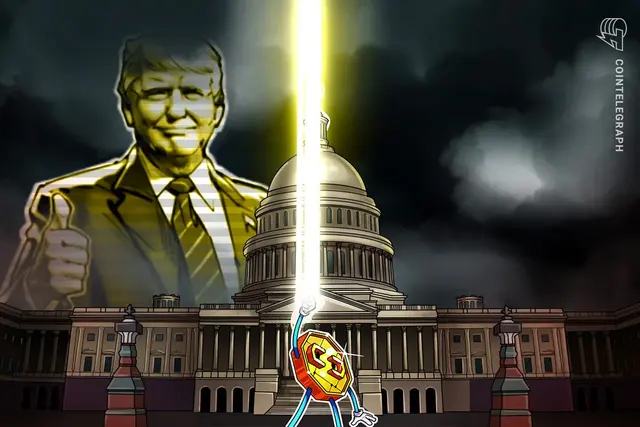
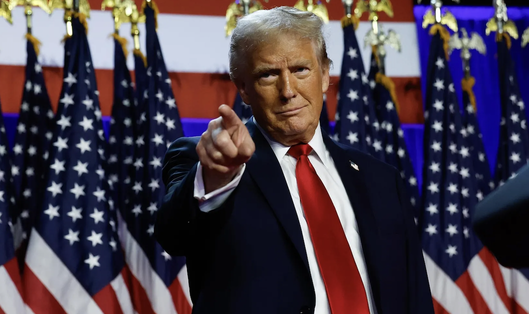
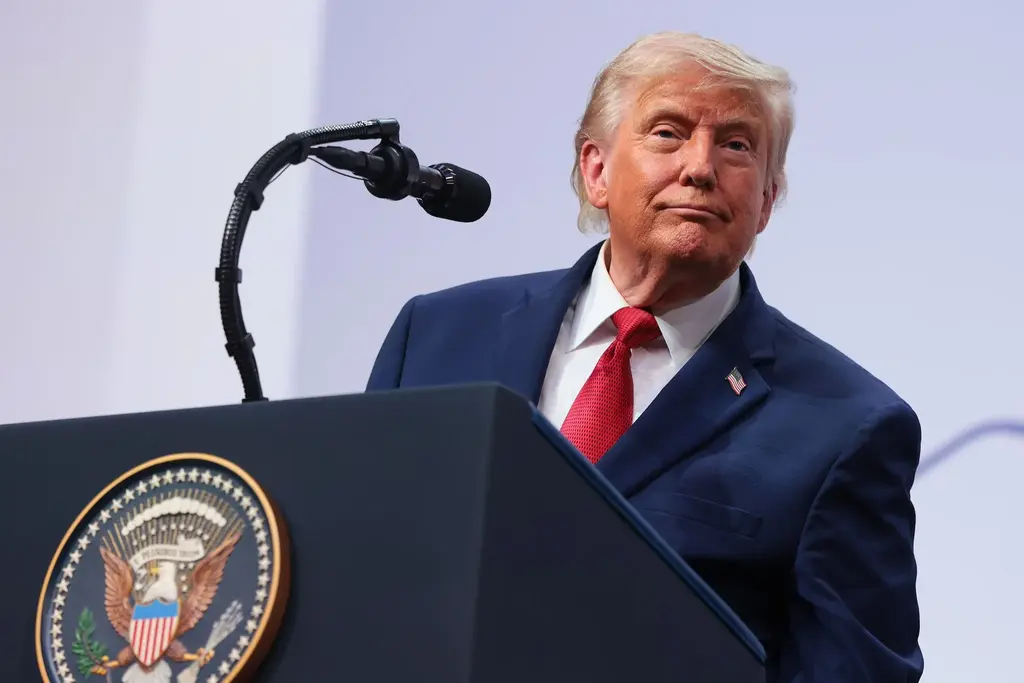
Trump to attend digital assets summit and deliver speech on March 20
According to Blockworks, former U.S. President Donald Trump will speak at the Digital Asset Summit in New York on March 20 local time.
The summit features numerous notable speakers, including Congressmen Ro Khanna and Tom Emmer, as well as Michael Saylor, CEO of Strategy, and Brad Garlinghouse, CEO of Ripple.
In addition, former FOX Business journalist Eleanor Terrett stated that Trump will unveil his follow-up cryptocurrency policies at the U.S. Digital Asset Summit.
Fed holds benchmark rate steady at 4.25%-4.50%, most officials project 50 bps of rate cuts in 2025
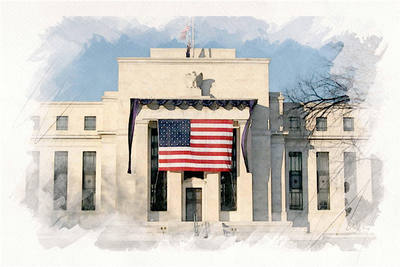
According to Jinshi Data, the Federal Reserve kept its benchmark interest rate unchanged at 4.25%-4.50%, in line with market expectations.
Starting April 1, it will slow the pace of balance sheet reduction by lowering the monthly cap on U.S. Treasury sales to $5 billion while maintaining the monthly cap on mortgage-backed securities (MBS) runoff at $35 billion.
The Fed’s dot plot shows that among 19 officials: 4 believe no rate cuts should occur in 2025 (up from 1 in December); 4 favor a cumulative 25 basis point cut (i.e., one rate cut) in 2025 (up from 3 in December); 9 support a total 50 basis point reduction (i.e., two cuts) in 2025 (down from 10 in December); 2 advocate for a 75 basis point decline (three cuts) in 2025 (down from 3 in December); none call for a 100 basis point cut (down from 1 in December); and none suggest a 125 basis point decrease (down from 1 in December).
Ripple CEO: SEC to drop appeal, marking a complete victory for Ripple and the crypto industry
Ripple CEO Brad Garlinghouse posted on X, stating, "The moment has finally arrived — the long-awaited moment. The U.S. Securities and Exchange Commission (SEC) will drop its appeal — this is a complete victory for Ripple, and by any measure, a win for the cryptocurrency industry. The future looks bright. Let’s build together."
"Hyperliquid 50x leverage whale" changes name to "MELANIA" on DeBank and verifies X account
According to monitoring by Yujin, the previously highlighted Hyperliquid 50x leverage whale has changed its DeBank profile name to "MELANIA" and verified its X account @qwatio. Currently, the trader still holds a 5x leveraged long position in MELANIA on Hyperliquid.
@qwatio stated in their pinned post, "ZachXBT’s allegations are baseless speculation — disappointing and surprising. I wish he would at least identify the so-called 'stolen funds.' At worst, perhaps we received minor ETH dust attacks from scammers; our wallet has received thousands of transactions from fraudulent addresses." The user concluded the post with a specific note: "Long MELANIA."
Binance Wallet's daily trading volume exceeds $90 million, capturing 54.1% market share
According to latest data from Dune.com analyst @lz_web3, Binance Wallet achieved a single-day on-chain transaction volume of $90.556 million on March 18, accounting for 54.1% of the total transaction volume across all crypto wallets that day, ranking first in the market.
Data shows GMGN Wallet ranked second with $38.679 million in daily volume, approximately 42.7% of Binance Wallet’s volume. In terms of active trading users, Binance Wallet led with 28,103 users, representing 29.5% of all active traders across the sector.
Binance Wallet currently supports 18 public blockchains including BNB Smart Chain and Ethereum, and its daily transaction volume has increased over 24 times since early March.
CZ updates X profile picture to photo wearing traditional Arab attire
Binance founder Changpeng Zhao (CZ) has updated his X profile picture to a new image showing him dressed in traditional Arab clothing.
Prior news indicated CZ expressed desire to replace his 11-year-old profile picture and asked the community for interesting suggestions.
Former World Bank President: Tariffs harm U.S.-China trade relations, these policies are not correct decisions
According to Jinshi Data, Robert Zoellick, former President of the World Bank and former U.S. Deputy Secretary of State, recently stated that increased tariffs not only raise business costs but also reduce productivity. Both China and the United States suffer negative impacts from such policies.
He emphasized that higher tariffs damage healthy economic and trade relations between the U.S. and China, and American-imposed tariffs on Canada and Mexico have severely impacted North America’s auto industry. "Therefore, I believe these tariff policies are not the right decisions," said Zoellick.
However, he also noted that tariffs are sometimes used as negotiation tools, with the U.S. potentially leveraging them to pressure other countries.
Reuters: Multiple crypto firms applying for state or national banking licenses
According to Cryptonews citing Reuters, several fintech and cryptocurrency companies are applying for state or national banking charters, hoping for faster approvals under the pro-crypto Trump administration.
Obtaining a banking license would allow crypto firms to offer broader financial services, enhance legitimacy in customers' eyes, and lower borrowing costs through deposit-taking. Carleton Goss, partner at Hunton Andrews Kurth, said this could also help companies reduce capital costs, though they would face stricter regulatory scrutiny.
Volatility Shares to launch two Solana futures ETFs on March 20
According to Cointelegraph, Volatility Shares will launch two Solana futures exchange-traded funds (ETFs) today: the Volatility Shares Solana ETF (SOLZ) and the Volatility Shares 2X Solana ETF (SOLT).
Solana co-founder apologizes for controversial ad: Foundation will focus on decentralization, stay clear of culture wars
Solana co-founder Anatoly Yakovenko (@aeyakovenko) apologized on X for the recent controversial Solana advertisement. He wrote: "That ad was truly awful, and it still makes me uneasy. I’m ashamed that I downplayed the issue instead of directly acknowledging its nature — a malicious attack targeting marginalized communities. I thank the developers and artists within our ecosystem who immediately spoke up publicly and privately. You were the only bright spots amid this mess. I will do everything I can to ensure the Solana Foundation focuses on its mission of decentralization and open-source software development, staying far away from culture wars."
The controversy stemmed from a now-deleted promotional video released by Solana featuring a character named "American" (symbolizing traditional American values) in dialogue with a counselor (representing certain modern social ideologies). The ad sparked strong backlash within the community, with critics arguing it targeted transgender and other marginalized groups while overlooking their significant contributions to open-source, cryptography, and security fields.
Ethereum Foundation plans Pectra upgrade activation on testnet Hoodi on March 26
According to the Ethereum Foundation’s official blog, Ethereum has launched a new testnet called Hoodi, with plans to activate the Pectra network upgrade on March 26. Hoodi will gradually replace the existing Holesky testnet.
This move comes after Holesky experienced significant inactive leakage in its recovery mechanism. Although finality has been restored, exited validators require about a year to be fully removed from the validator set, making Holesky unsuitable for testing full validator lifecycle operations within a reasonable timeframe.
Per the announcement, Holesky will remain supported until September 2025. Except for validator exits, all other Pectra features can still be tested on Holesky. Going forward, validators and staking providers should use Hoodi for validator testing.
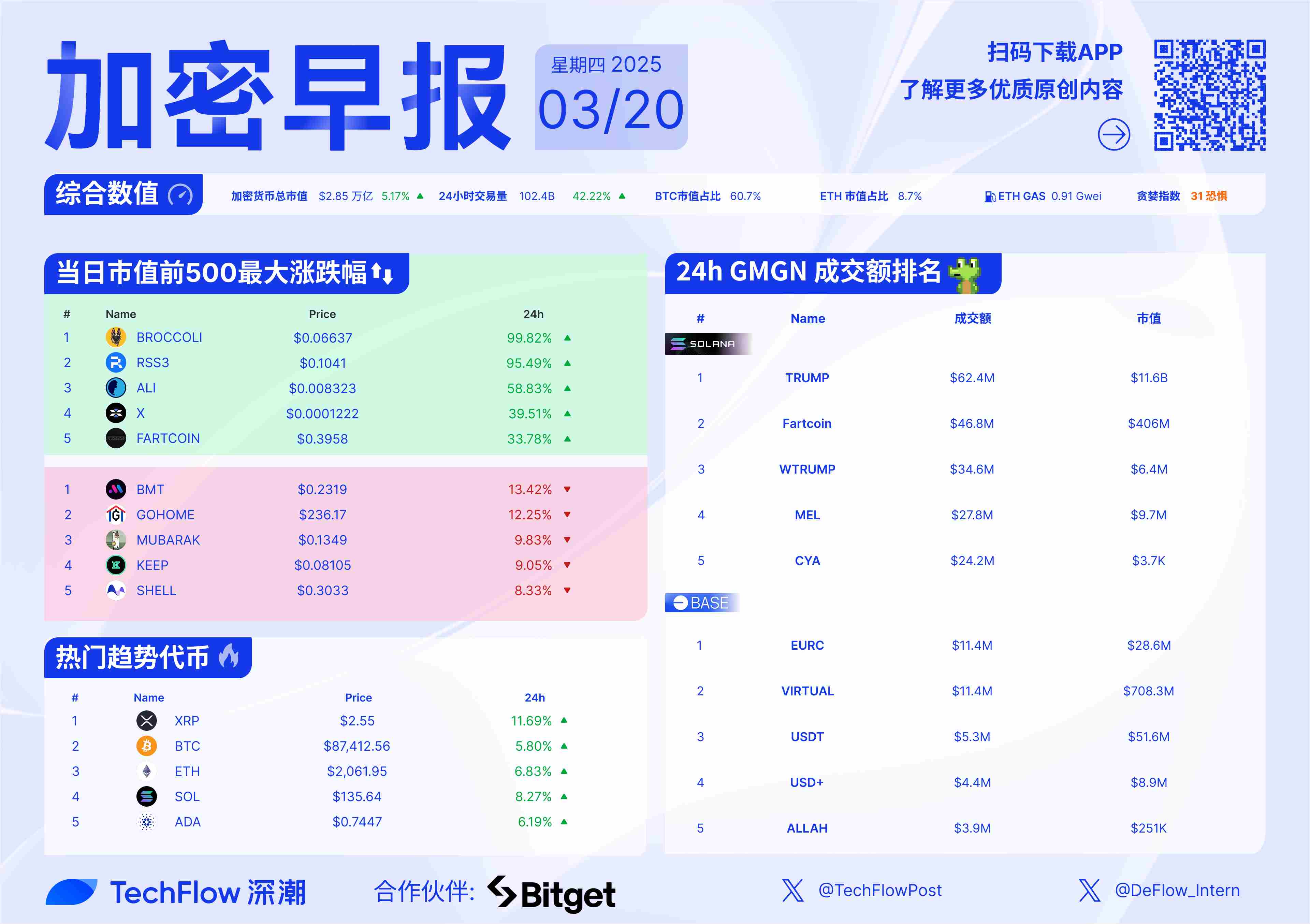
Market Overview
Recommended Reading
Son's Tron Meme is back — will this one succeed?
This article primarily discusses Sun Yuchen (Justin Sun) and his team’s recent market maneuvers and trending phenomena around meme tokens within the Tron ecosystem. It analyzes the high-risk nature of meme tokens, reviews past performance of Tron-based meme projects, and explores current market trends and appropriate investor attitudes.
As BSC declares war on Solana, Pump.fun and Raydium are already fighting internally
This article examines the inter-chain competition between BSC and Solana amid a bearish crypto market, as well as the internal rivalry between two major protocols on Solana — Pump.fun and Raydium. Each platform is launching new products to compete for liquidity and users, but given the overall liquidity drought, this battle may prove short-lived. The article emphasizes that breaking through the industry stalemate hinges on attracting new liquidity and enhancing overall appeal, rather than mere infighting.
This article focuses on how Bitcoin typically experiences strong rebounds following sharp market corrections, averaging a 190% gain over the following year. While short-term declines may occur due to market uncertainty, this “fall before rise” pattern presents excellent entry opportunities for long-term investors. Additionally, using discounted cash flow analysis, one can evaluate Bitcoin’s current value, which depends on long-term targets and risk assessments. Economic uncertainties like tariff issues might pressure Bitcoin in the near term, but its value as a hedge could strengthen further in the long run.
Inside the closed-door White House Crypto Summit: What proposals did industry leaders make?
This article reveals details from the White House Crypto Summit held in Washington, bringing together industry leaders and government officials to discuss various crypto policy proposals, including authorizing "white-hat hackers" to protect national interests, large-scale Bitcoin purchases, and advancing asset tokenization. While no formal commitments were made to adopt any proposal, both government and industry figures expressed strong approval of the summit outcomes.
Beyond profit and narratives, what else can crypto do for AI?
This article explores how cryptographic technologies can support the field of artificial intelligence, particularly in decentralized AI development, by addressing challenges such as high computing costs and insufficient data diversity through incentive alignment mechanisms, shared and verifiable computing resources, and decentralized data acquisition. These approaches enhance the verifiability and fairness of AI systems.
Join TechFlow official community to stay tuned
Telegram:https://t.me/TechFlowDaily
X (Twitter):https://x.com/TechFlowPost
X (Twitter) EN:https://x.com/BlockFlow_News
 深潮TechFlow